 0
0
 0
0
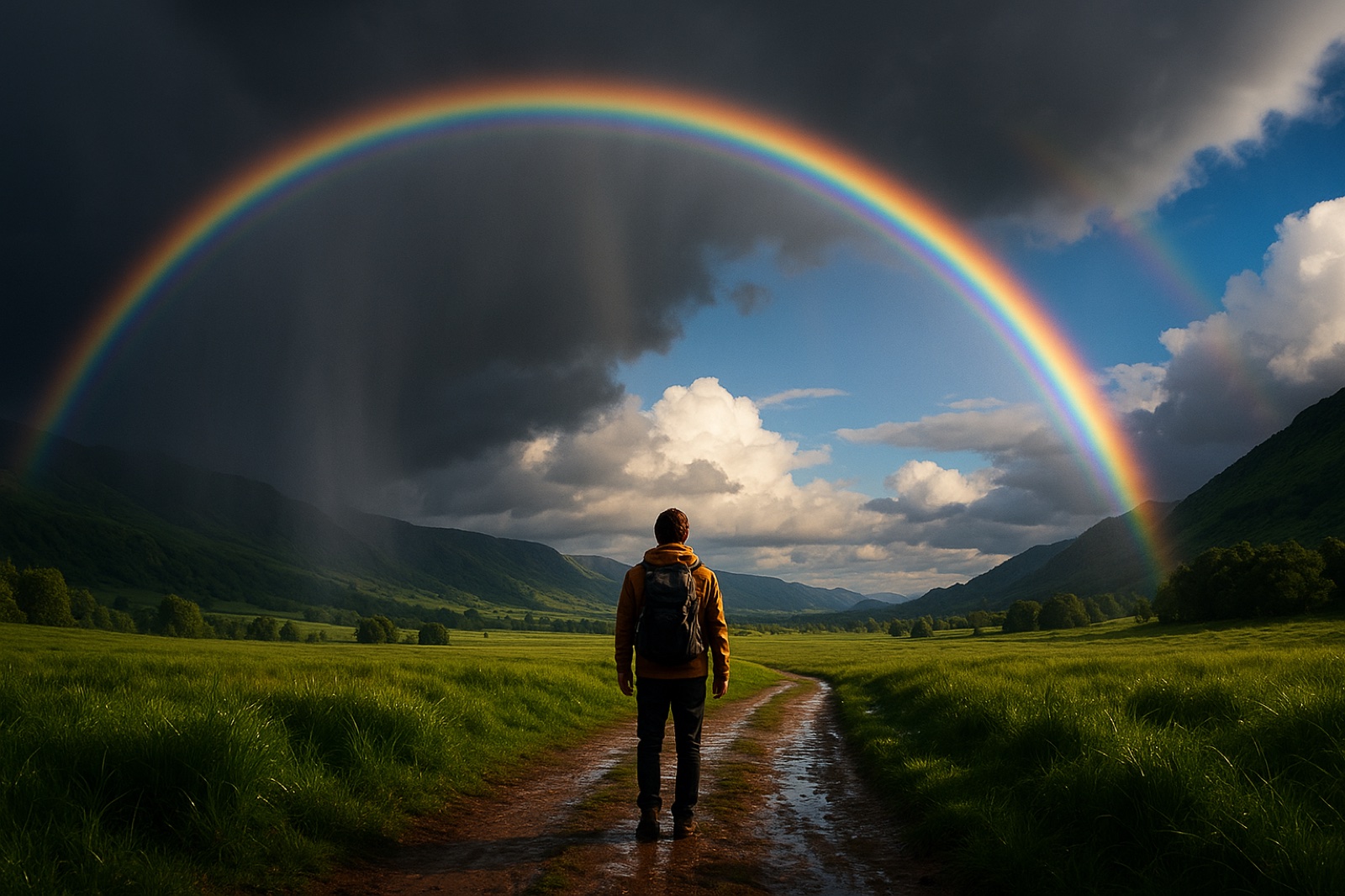
The rain stops. The sun comes out behind you. And somebody, a child or a grandmother or a stranger at the bus stop, points at the sky and says, “Look.”
Everybody looks. Nobody has to be taught to stop for a rainbow.
Maybe you were told as a child that the rainbow is God’s promise. That is true. But a promise of what? And to whom? If you have ever asked what does the rainbow mean in the Bible, the short answer is simple. The longer answer holds three details most of us were never shown, and one of them is hiding in a single small word.
What Does the Rainbow Mean in the Bible? The Short Answer
In the Bible, the rainbow is the sign of a promise God made after the great flood. The story is in Genesis 9. Noah and his family have just stepped out of the ark onto wet ground. Everything they knew is gone. And God speaks:
“And I will establish my covenant with you; neither shall all flesh be cut off any more by the waters of a flood; neither shall there any more be a flood to destroy the earth.” (Genesis 9:11, KJV)
Then God gives the promise a sign you can see:
“I do set my bow in the cloud, and it shall be for a token of a covenant between me and the earth.” (Genesis 9:13, KJV)
“Token” is an old word for a sign. A covenant is a binding promise. So the rainbow is the sign of God’s promise that a flood will never again destroy the earth. That is the plain meaning, and it is a good one.
But read the passage slowly and three surprises come up. Together they turn the rainbow from a pretty reminder into something much stronger.
The Rainbow in Genesis Is a War Bow
Here is the first surprise. In the King James Version, Genesis never uses the word “rainbow.” Look again at the verse: “I do set my bow in the cloud.”
The Hebrew word is qesheth (Strong’s H7198). It is the ordinary word for a bow, the kind that shoots arrows. It is the same word used when Isaac sends Esau out to hunt: “take, I pray thee, thy weapons, thy quiver and thy bow” (Genesis 27:3, KJV). It is also the word for an archer’s bow in battle. In Lamentations 2:4, judgment is pictured as a bow bent “like an enemy.”
Biblical Hebrew has no separate word for rainbow. It simply says “the bow in the cloud.” So the first people who heard Genesis 9 heard God say, “I set my bow in the cloud,” right after the most terrible judgment in the whole story.
Picture a soldier who comes home when the fighting is over and hangs the bow on the wall. That is how this verse has often been read. The flood is finished, and the weapon is put away where everyone can see it.
Some readers also point out that a rainbow curves upward, like a bow aimed away from the earth. The Bible does not say that in so many words, so hold it lightly. What the text does say is clear enough. The bow is set in the cloud, and God calls it the sign of a covenant “between me and the earth.”
Who Is the Rainbow For? Read Genesis 9:16
Here is the second surprise. Ask most people who the rainbow is for, and they will say it is for us. We see it, and we remember God’s promise.
That is not quite what God says:
“And the bow shall be in the cloud; and I will look upon it, that I may remember the everlasting covenant between God and every living creature of all flesh that is upon the earth.” (Genesis 9:16, KJV)
“I will look upon it, that I may remember.” The sign is for God’s eyes first.
Does that mean God might forget? No. In the Bible, when God “remembers,” it does not mean a lost thought came back. It means God is about to act on a promise. One chapter earlier, while the ark is still drifting on the water, the story says, “And God remembered Noah, and every living thing” (Genesis 8:1, KJV). The very next thing that happens is a wind, and the water starts to go down. When God remembers, God moves.
So think about what that means for you. The promise does not hang on your memory. It does not hang on whether you looked up today, or whether you felt anything when you did. God took on the job of looking.
A Promise With No “If” in It
Here is the third surprise. Read Genesis 9:8-17 and listen for Noah’s voice. You will not hear it. In this whole passage, Noah does not say one word. He makes no vow. He is not asked to promise anything back.
God says the word “covenant” seven times in these ten verses. And four times God names who it is with. Not only Noah, but “every living creature.” The birds. The cattle. The wild animals. We looked closely at that detail in Do Pets Go to Heaven?
A sparrow cannot keep its side of a deal. That is the point. This promise has only one side holding it up.
And God makes it with open eyes. Just before the rainbow, God says:
“I will not again curse the ground any more for man’s sake; for the imagination of man’s heart is evil from his youth; neither will I again smite any more every thing living, as I have done.” (Genesis 8:21, KJV)
Read that middle line again. People had not changed. The flood did not fix the human heart, and God says so plainly. The promise comes anyway. It does not rest on people getting better. It rests on who God is.
The Rainbow Around God’s Throne
The rainbow comes back later in the Bible, in two places you might not expect.
When the prophet Ezekiel tries to describe the glory of God, he says it looked like “the bow that is in the cloud in the day of rain” (Ezekiel 1:28, KJV). And when John sees the throne of heaven in the last book of the Bible, he writes, “there was a rainbow round about the throne, in sight like unto an emerald” (Revelation 4:3, KJV).
A throne is where a king rules and judges. In John’s vision, that throne has a rainbow around it. The sign of the promise is still there, right beside the seat of power.
What the Rainbow Means on a Stormy Day
Now bring this home.
Many of us live a little braced. Something goes wrong. A bad report from the doctor. Work that dries up. A grown child who will not call back. And a quiet thought comes: God must be angry with me. We look at the sky and expect arrows.
Genesis 9 paints a different picture. The bow is hung up. God set it down by choice, with no one asking, for people whose hearts God already knew.
And notice where the bow appears. “The bow shall be seen in the cloud” (Genesis 9:14, KJV). Not after every cloud is gone. A rainbow needs rain and sunlight in the sky at the same moment. You only ever see one when the storm and the light are there together.
So the rainbow does not promise a life with no storms. Genesis is careful about this, and we should be too. The promise is that the flood will never come back to destroy the earth. But the sign tells you something about the One who made the promise. God chose mercy, said so out loud, and then took on the work of remembering it.
You do not have to hold that promise up. You only have to look.
The same story holds other quiet signs. A dove comes back to the ark with one fresh leaf, which we explore in olive branch meaning. And before any of it came the long work of building, which the Bible measures in an unusual way. See how long it took Noah to build the ark.
A good place to start: The Beginner’s Guide to Feeling God’s Presence Every Day. It is a short, simple way to notice God in ordinary moments, on clear days and on stormy ones. Get the free guide. Free.
Actions to Take
- Read it out loud. Open Genesis 9:8-17 and read it aloud. It takes about two minutes. Count the word “covenant,” and notice that Noah never speaks.
- Name your storm. On paper or on your phone, finish this sentence: “Right now I am braced for…” Under it, copy God’s words from Genesis 9:16: “I will look upon it, that I may remember.”
- Pass it on. Today, tell one person what the word “bow” means in Genesis 9. A friend, a child, or a short message will do. Saying it to someone else helps it stay with you.
Journaling Prompts
- Where in your life are you waiting for God to be angry with you?
- What would feel different this week if the promise rested on God’s remembering and not on yours?
- When has light reached you while the rain was still falling?
A Prayer
God, I admit that when life goes wrong, I often think You are against me. Thank You for hanging up the bow, and for making a promise that does not depend on how well I remember it. When the clouds come this week, help me look for the light that is in the sky at the same time. I am glad that You are the one who looks and remembers. Amen.
Discussion Question
Why do you think God chose a sign that only appears when rain and sunlight share the same sky? Share your thoughts in the comments below.
Share This
- In Genesis 9, the Bible never says “rainbow.” It says “bow,” the same word as the weapon. After the flood, God hung it up in the clouds.
- “I will look upon it, that I may remember.” (Genesis 9:16) The rainbow is first a sign for God to look at. The promise doesn’t depend on my memory.
- A rainbow only shows up when rain and sunlight are in the sky together. Maybe that’s the point.
Questions People Ask About the Rainbow in the Bible
What does the rainbow mean in the Bible?
In the Bible, the rainbow is the sign of God’s covenant after Noah’s flood. In Genesis 9:13 God says, “I do set my bow in the cloud, and it shall be for a token of a covenant between me and the earth.” The covenant is God’s promise that a flood will never again destroy the earth. God makes that promise with Noah, with Noah’s descendants, and with every living creature.
Where is the rainbow first mentioned in the Bible?
The rainbow first appears in Genesis 9:13-17, right after Noah’s flood. The King James Version calls it a “bow” set “in the cloud” and does not use the word “rainbow” there. God names the bow “the token of the covenant” between God and all flesh that is upon the earth.
What is the Hebrew word for rainbow in the Bible?
The Hebrew word used for the rainbow in Genesis 9 is qesheth (Strong’s H7198). Qesheth is the ordinary Hebrew word for a bow that shoots arrows. The same word is used for a hunting bow in Genesis 27:3 and for a bow of war in Lamentations 2:4. Biblical Hebrew has no separate word for rainbow, so Genesis 9 speaks of God’s “bow in the cloud.”
Is the rainbow a reminder for God or for people?
Genesis 9 presents the rainbow first as a sign that God looks at. In Genesis 9:16 God says, “And the bow shall be in the cloud; and I will look upon it, that I may remember the everlasting covenant between God and every living creature of all flesh that is upon the earth.” In the Bible, God remembering means God acting on a promise, as in Genesis 8:1, and not recalling something forgotten. People can take comfort from seeing a rainbow, but the promise does not depend on human memory.
Where else does a rainbow appear in the Bible besides Genesis?
Outside Genesis 9, a rainbow appears in Ezekiel 1:28, where the glory of the LORD looks like “the bow that is in the cloud in the day of rain.” A rainbow also appears in Revelation 4:3 as “a rainbow round about the throne, in sight like unto an emerald,” and in Revelation 10:1, where a mighty angel comes down from heaven with a rainbow upon his head.