 0
0
 0
0
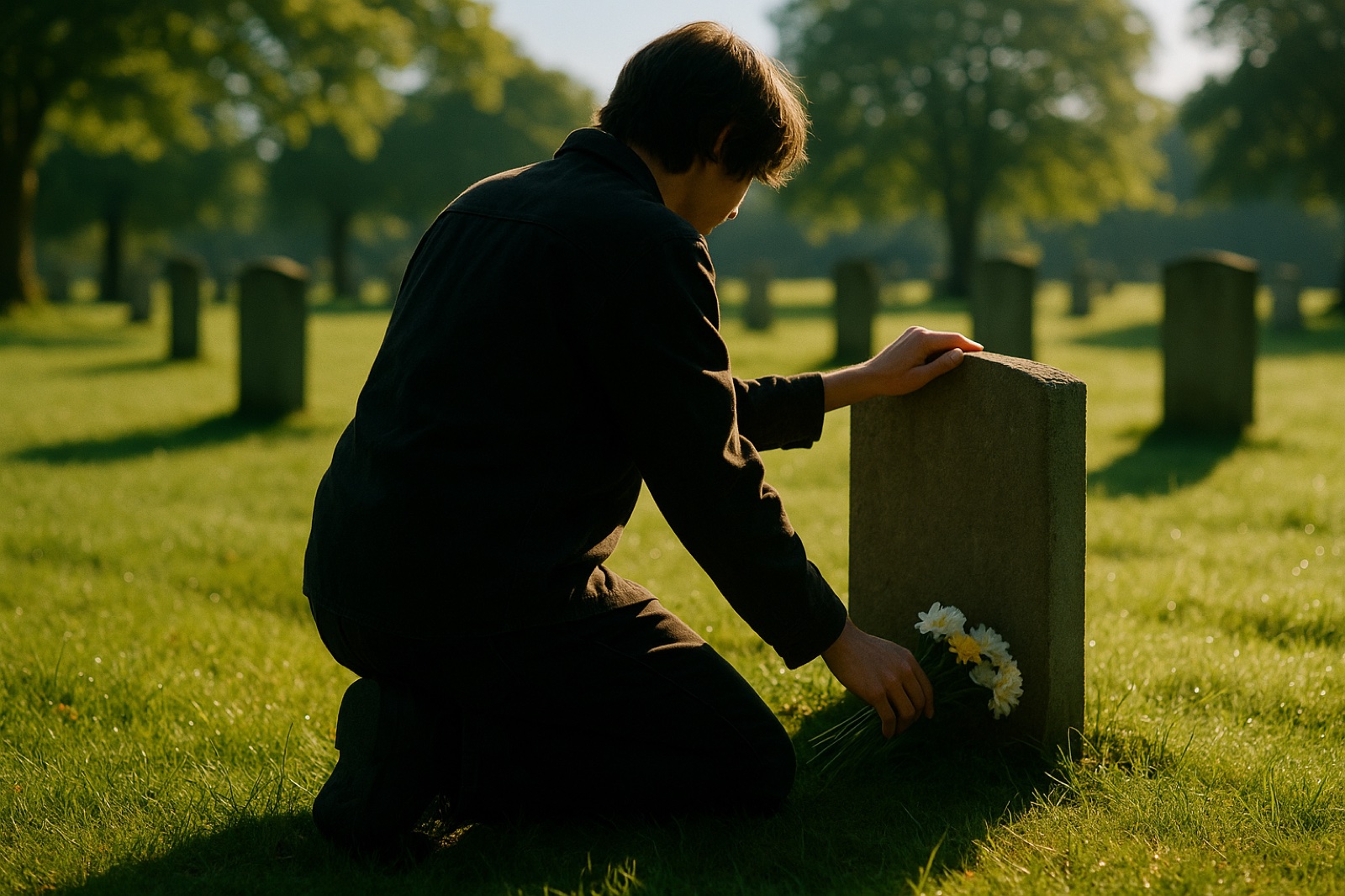
You park the car, or step off the bus, or walk the last stretch of dirt path. You know the way without looking now. You stand at the same stone, maybe pull a few weeds, maybe say a few words out loud. Then, on the way home, a quiet worry follows you.
Is this normal? Should I be over it by now? Is it even right for a Christian to keep coming here?
If you have ever wondered what the Bible says about visiting graves, you are not the first to ask. The honest answer is gentler than you might fear. And it ends with a scene most of us read past: the first person the risen Jesus spoke to was the one who would not leave the tomb.
What Does the Bible Say About Visiting Graves? The Short Answer
The Bible never forbids visiting graves. Not once. What it forbids is something different: trying to get answers, guidance, or messages from the dead.
Remembering is not the problem. Consulting is.
In fact, the Bible is full of people who marked graves, guarded bodies, travelled to tombs, and wept there. God did not scold them. More than once, God met them there.
The First Land Abraham Bought Was a Grave
Here is a detail almost nobody talks about. God promised Abraham the land of Canaan. But the first piece of that land the Bible records Abraham paying for was not a field to farm or a place to build. It was a burial plot.
When his wife Sarah died, Abraham went to the local people and said:
“I am a stranger and a sojourner with you: give me a possession of a buryingplace with you, that I may bury my dead out of my sight.” (Genesis 23:4, KJV)
He bought a field with a cave in it. The chapter ends by saying the field and the cave “were made sure unto Abraham for a possession of a buryingplace” (Genesis 23:20).
Think about that. Abraham’s first real foothold in the promise was the place where he laid someone he loved. A grave was not a place outside of faith. It was one of the first places faith put down roots.
Jacob Marked His Wife’s Grave “Unto This Day”
A generation later, Jacob’s wife Rachel died giving birth on the road to Bethlehem. Jacob could not stay. He had a family to move. But he did not leave her grave unmarked.
“And Jacob set a pillar upon her grave: that is the pillar of Rachel’s grave unto this day.” (Genesis 35:20, KJV)
Jacob built something people could find. Something that said, she was here, and she mattered. Whoever wrote those words down could still point to the spot. That is what a headstone is. It is not idol worship. It is love refusing to let someone vanish.
Families all over the world still do this. In the Philippines, whole families gather at cemeteries during Undas in early November. In many parts of Africa and Asia, tending family graves is simply part of loving your family. The Bible does not treat this instinct as strange. It records it.
Rizpah Would Not Leave
One of the most moving stories of grief in the whole Bible is also one of the least known. It is found in 2 Samuel 21.
Rizpah’s two sons were put to death during a terrible famine, along with other men from King Saul’s family. Their bodies were left out in the open. They were not buried. So Rizpah did the only thing she could do.
“And Rizpah the daughter of Aiah took sackcloth, and spread it for her upon the rock, from the beginning of harvest until water dropped upon them out of heaven, and suffered neither the birds of the air to rest on them by day, nor the beasts of the field by night.” (2 Samuel 21:10, KJV)
To be accurate, Rizpah was not visiting a grave. There was no grave yet. That was the whole grief. She stayed out on the rock from harvest until the rains came, keeping the birds and animals away, because nobody else would honour her sons.
And look what happened. Word of what she was doing reached King David (2 Samuel 21:11). The very next thing the Bible records is that David went and gathered the bones of Saul and Jonathan, and the bones of the men who had been hanged, and gave them a proper burial. Then comes this line: “And after that God was intreated for the land” (2 Samuel 21:14).
One grieving mother kept faith at the place of the dead, a king finally did what was right, and the land was healed after it. Her lingering was not weakness. It was love that would not quit.
Where the Bible Does Draw a Line
There is a real boundary in Scripture, and it is worth being clear about it so you are not afraid of the wrong thing.
In Deuteronomy, God tells Israel not to copy the spiritual practices of the nations around them. The list includes:
“Or a charmer, or a consulter with familiar spirits, or a wizard, or a necromancer.” (Deuteronomy 18:11, KJV)
A necromancer is someone who tries to contact the dead to get information or guidance. That is exactly what King Saul did at his lowest point, when he said, “Seek me a woman that hath a familiar spirit, that I may go to her, and enquire of her” (1 Samuel 28:7).
There is one more verse that sounds like it might be about grave visits. Isaiah 65 describes people who “remain among the graves, and lodge in the monuments” (Isaiah 65:4). But read the whole sentence. The same people are sacrificing in gardens, burning incense on brick altars, and eating food the law forbade. This is a picture of pagan worship. Many Bible commentators understand the graves part as spending the night in tombs to seek dreams or messages from the dead. It is not a picture of a widow bringing flowers.
So here is the line, as simply as I can put it:
- Remembering someone at their grave: not forbidden anywhere in the Bible.
- Crying, praying, or sitting quietly there: not forbidden anywhere in the Bible.
- Trying to get the dead to guide you, answer you, or give you signs: that is the thing Scripture warns against.
What about talking out loud at a grave? Plenty of grieving people do. Saying “I miss you” to a headstone is not a séance. It is grief finding words. If you have done it, you have not done something dark. You can bring those same words to God, who actually hears them.
(A related question many people carry: what happens to the body itself. We looked at that in what the Bible says about cremation.)
The One Who Stayed at the Tomb
Now come to the most important grave visit in history.
Early on the first day of the week, while it was still dark, Mary Magdalene went to the tomb where Jesus had been laid (John 20:1). She found the stone rolled away. She ran to get Peter and “the other disciple, whom Jesus loved” (John 20:2). They came, looked inside, saw the empty grave clothes, and then:
“Then the disciples went away again unto their own home.” (John 20:10, KJV)
They went home. That is not a criticism. It is just what people do. But the very next verse turns on one small word:
“But Mary stood without at the sepulchre weeping: and as she wept, she stooped down, and looked into the sepulchre.” (John 20:11, KJV)
But Mary stood. Everyone else left. She stayed at the grave. Crying. Looking in again at a tomb she already knew was empty.
Here is the part that is easy to miss. Listen to why she was crying. When the angels asked her, she said: “Because they have taken away my Lord, and I know not where they have laid him” (John 20:13).
Her grief was about the place. She did not know where his body was. She wanted somewhere to be near him. Anyone who has ever needed a grave to go to understands that exactly. Mary was doing what grieving people have always done. She needed a spot on the earth where love could go.
Then someone spoke behind her. She thought he was the gardener.
“Jesus saith unto her, Woman, why weepest thou? whom seekest thou?” (John 20:15, KJV)
Notice what Jesus does not say. He does not say, “Why are you still here?” He does not say, “You should have gone home with the others.” He asks her two gentle questions. Then he says one word:
“Jesus saith unto her, Mary. She turned herself, and saith unto him, Rabboni; which is to say, Master.” (John 20:16, KJV)
Mark’s Gospel says it plainly: “he appeared first to Mary Magdalene” (Mark 16:9). That verse is part of an ending to Mark that is missing from some of the oldest copies, but John’s account tells the same story in full. The first person to hear the risen Jesus speak her name was the person still standing at the grave.
(If you only know Mary Magdalene from the old story that she was a prostitute, you may want to read who Mary Magdalene really was. The Bible never says that.)
“Why Seek Ye the Living Among the Dead?”
Some people have heard Luke 24:5 used as a reason not to visit graves. At Jesus’ tomb, the angels asked the women, “Why seek ye the living among the dead?”
But look at the scene. The women had come with spices they had prepared (Luke 24:1). They had come to care for a body. The angels do not tell them off for coming. They give them news: “He is not here, but is risen” (Luke 24:6). The question was about Jesus, who was literally alive. It was not a rule for every grieving family after.
And here is where this old story turns toward your own life.
When you stand at the grave of someone you love, you are standing where Mary stood. In the place where death seems to have the last word. You came because you loved them. That love is not a failure to move on. That love is the very thing God made you capable of.
But the grave is not the only thing that is there with you. Mary came looking for a body and found a living Jesus standing right behind her, saying her name. You go to the grave to remember. And Jesus is the one who comes to find you there.
Paul put it this way to a church full of grieving people: “that ye sorrow not, even as others which have no hope” (1 Thessalonians 4:13). Read that slowly. Paul does not say do not sorrow. He says do not sorrow like people with no hope. The tears stay. The hopelessness goes. You can stand at a grave, cry your eyes out, and still be a person full of hope. Mary did exactly that, a few seconds before she heard her name.
Actions to Take
- Turn one sentence into a prayer. Next time you are at the grave, or right now if you cannot go, take the thing you usually say to the person you lost (“I miss you,” “I wish you were here”) and say it to God instead. Start with “God, I miss them.” That is a whole prayer.
- Make your own small pillar. Jacob set up a stone so Rachel would not be forgotten. Write one sentence about something your loved one taught you. Leave it at the grave, keep it in your phone, or put it where you will see it each day. This costs nothing and works even if the grave is far away.
- Don’t stay alone at the tomb forever. Mary stayed, but then Jesus sent her back to the others, and she went to tell them (John 20:18). Send a message today to one person who also loved the one you lost. Just say, “I was thinking about them today.”
Journaling Prompts
- When you leave a grave, what feeling follows you home, and where do you think that feeling first came from?
- Mary’s grief was about not knowing where Jesus was laid. What do you most need to know, or to have, in order to feel close to the person you lost?
- If Jesus asked you the same question he asked Mary, “whom seekest thou?”, what would your honest answer be today?
A Prayer for When You Stand at a Grave
God, I miss them. Some days I still come back to this place because I don’t know where else to put my love. I don’t want to talk to the dead, I want to talk to you, so here I am. Please meet me here the way Jesus met Mary in the garden, and say my name when I can’t see straight. Let me cry without losing hope, and help me walk home a little lighter than I came. Amen.
Quote to share: “The first person Jesus spoke to after rising was the one still standing at the grave.”
Discussion Question
Why do you think John made a point of telling us that the disciples went home but Mary stayed? Tell us what you think in the comments below.
Share This
- “I used to feel guilty for visiting my mum’s grave so often. Then I read that Jesus spoke first to Mary Magdalene, the one who wouldn’t leave the tomb. I don’t feel guilty anymore.”
- “The Bible doesn’t forbid visiting graves. It forbids consulting the dead. Remembering and consulting are not the same thing.”
- “‘But Mary stood.’ Everyone else went home. She stayed at the grave and cried. And she was the first to hear Jesus say her name. John 20:11-16”
Carrying something heavy that you can’t quite name? Our free Bible Verse for How I Feel tool lets you pick the feeling and finds a verse that meets you right where you are.
Questions People Ask About Visiting Graves
Is it a sin to visit a grave?
No. The Bible never says visiting a grave is a sin. Abraham bought a burial place for Sarah (Genesis 23), Jacob set a pillar on Rachel’s grave that people could still find years later (Genesis 35:20), and Mary Magdalene stayed weeping at the tomb of Jesus (John 20:11). What the Bible forbids is necromancy, which means trying to contact the dead for guidance or information (Deuteronomy 18:11).
Is it biblical to talk to a loved one at their grave?
Speaking out loud at a grave, such as saying “I miss you,” is a normal expression of grief and is not the same as necromancy. The Bible warns against seeking answers, guidance, or signs from the dead, as King Saul did in 1 Samuel 28. Many Christians find comfort in turning those same words into a prayer to God, who hears them.
What does “Why seek ye the living among the dead?” mean?
“Why seek ye the living among the dead?” is the question angels asked the women who came to the tomb of Jesus with spices in Luke 24:5. It was an announcement that Jesus had risen and was not in the grave. It was not a rebuke for visiting a tomb, and it is not a biblical rule against visiting the graves of loved ones.
Who was the first person to see Jesus after he rose from the dead?
According to John 20:11-16, Mary Magdalene was the first person the risen Jesus spoke to. She had stayed weeping at the empty tomb after Peter and the other disciple went home, and Jesus called her by name. Mark 16:9 also says Jesus “appeared first to Mary Magdalene,” though that verse is part of an ending missing from some of the oldest manuscripts of Mark.
How long should a Christian keep visiting a grave?
The Bible gives no time limit for visiting a grave or for grieving. Rizpah kept watch over her sons’ bodies from harvest until the rains came (2 Samuel 21:10), and Jacob’s pillar marked Rachel’s grave for generations. Paul’s teaching in 1 Thessalonians 4:13 is not to stop grieving, but to grieve with hope rather than “as others which have no hope.”