 0
 0
The first words the first brand-new believers in church history said out loud were not a prayer or a song. They were a question. Peter had just finished speaking in Jerusalem, and Luke records the crowd asking, “Men and brethren, what shall we do?” (Acts 2:37). That is the same question you are typing into a search bar when you look for a new believer Bible study plan. It turns out to be a very old question, and it has a very old answer.
Here is the part most guides skip. On the day those people said yes, there was no New Testament. Not one Gospel had been written. Not one of Paul’s letters existed, because Paul was not even a believer yet. So what did the first new believer Bible study plan look like, and what on earth did they study?
Four things, and three of them are not reading
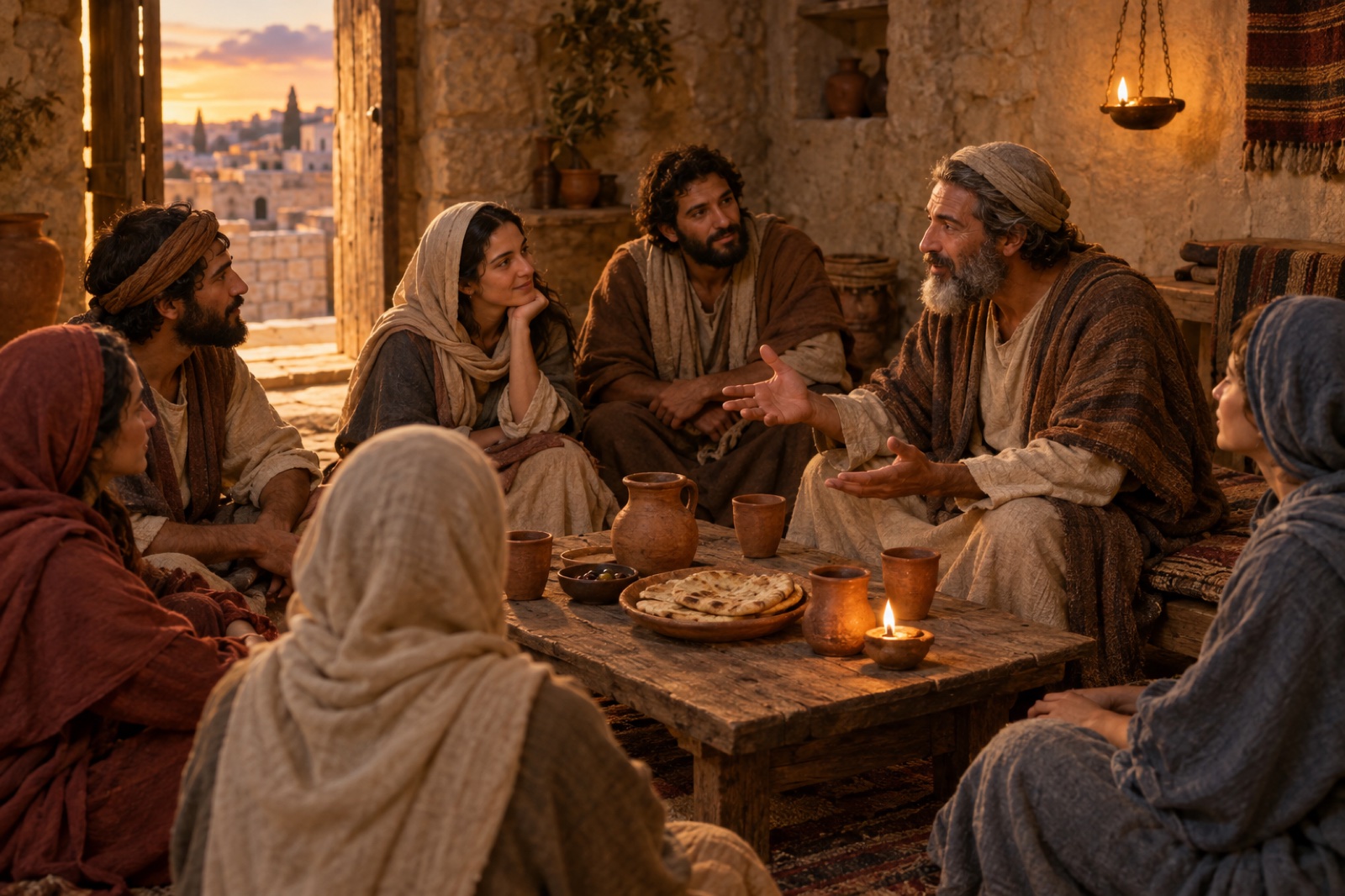
Luke gives the whole plan in one verse. “And they continued stedfastly in the apostles’ doctrine and fellowship, and in breaking of bread, and in prayers” (Acts 2:42).
Count the items. There are four: the apostles’ teaching, fellowship, breaking bread, and prayers. Only one of the four is anything like what we would call Bible study, and even that one was not a book. It was listening to people who had walked with Jesus describe what He said and did.
That matters if you are a new believer who feels behind. The plan that produced the first church did not start with a reading schedule or a stack of commentaries. It started with the story of Jesus told by people who were there, then a meal, then prayer. Luke says “about three thousand souls” joined that day (Acts 2:41), and this simple four-part rhythm is what he records them doing next.
What “the apostles’ doctrine” actually was
“Doctrine” sounds heavy. The Greek word under it, didache, just means teaching. And the apostles had one subject. They had followed Jesus through Galilee and Judea. They had heard the parables the first time anyone heard them. They had been in the boat. What they taught in those first weeks was the life of Jesus, from memory, to a crowd that had just decided to follow Him.
We know this is where the Gospels came from because Luke says so at the start of his own. He writes that the account was handed down “even as they delivered them unto us, which from the beginning were eyewitnesses, and ministers of the word” (Luke 1:2). The teaching in Acts 2 is the raw material that later became Matthew, Mark, Luke, and John. The first new believers were studying the Gospels before the Gospels were books.
So the plan the first church used was not Genesis to Revelation. It was the life of Jesus, one piece at a time, which is also why Genesis is not where a new believer should start. Begin where they began: with Him.
The same word twice, with “daily” added
“Continued stedfastly” is a single word in Luke’s Greek, proskartereo. It means to stick with something, to keep at it. Four verses later Luke uses the exact same word again, and this time he puts a clock on it: “And they, continuing daily with one accord in the temple, and breaking bread from house to house, did eat their meat with gladness and singleness of heart” (Acts 2:46).
Daily. Not a weekend retreat. Not a course you sign up for and finish in the spring. The plan was small and it was every day, and it ran “from house to house,” which means it ran in kitchens. Nobody owned a Bible. Most people could not have read one. They ate together and listened to the ones who had seen Jesus, and they did it again the next day.
Here is the gold nugget for anyone building a new believer Bible study plan: the first church did not grow because of one big study. It grew because of a small one, repeated. Luke closes the chapter with the result: “And the Lord added to the church daily such as should be saved” (Acts 2:47). The adding was daily because the walking was daily.
Peter’s sermon was a Bible study too
One more thing from that morning. Peter spoke at “the third hour of the day” (Acts 2:15), which is about nine o’clock. His sermon was itself a Bible study. He quoted the prophet Joel and two psalms, and he explained each one by pointing at Jesus. The crowd had known those scriptures their whole lives. What was new was the Person they were about.
That is the method the first believers inherited, and it is the method that still works. The Bible starts to make sense when you read it with Jesus in the middle of it. A new believer does not need to master the whole book first. You need to meet the One the book is about, and then the rest of it slowly begins to speak.
What your first thirty days could look like
Take the Acts 2 shape and shrink it to one person and one morning:
- One piece of the life of Jesus. A few minutes, read or heard. That is your “apostles’ doctrine.”
- One honest sentence back to God. That is your prayer. It can be short. The first believers’ prayers are not even written down.
- One other person, sometime this week. A text, a coffee, a question. That is fellowship, and “breaking bread” was literally dinner.
Under ten minutes. Every day. In your kitchen. Nobody is grading it.
Picture the end of the month. You are not someone who has heard about Jesus. You have spent thirty mornings watching what He did with a frightened father, a tax collector, a storm, a crowd that would not leave Him alone. You know how He talks. When something goes sideways on a Tuesday, you already have a picture of how He handles people who are in over their heads, because you watched Him do it yesterday. That calm is not a feeling you chase. It is a rhythm you keep.
If you do not have a church yet, that does not break the plan. Paul’s first church in Europe began at a riverside, and the Acts 2 believers were meeting in houses before anyone built anything.
The path that makes it daily
The hard part of a new believer Bible study plan is never day one. It is day nine, when the plan is still in your head and nothing is in your hands. That is what 30 Days Walking with Jesus is built for. It walks through the life of Jesus one day at a time, a beginner-friendly reading plan through the Gospels, in under ten minutes a day. Each day comes with a short devotional video under sixty seconds, a full-chapter audio reading you can play while the coffee brews, a PDF study guide with journal prompts for that one honest sentence, and five quick-reference scripture guides for when you need a verse fast. If you want to see how the thirty days are laid out before you begin, here is the reading plan built around the life of Jesus.
It is free. No payment, no card, no upsell, and it is yours on any device for as long as you want it. The words of Jesus should not sit behind a paywall. The first believers got the story for nothing from people who were there. You should too.
Questions People Are Asking
Q: What is a good new believer Bible study plan to start with?
A: Start with the life of Jesus rather than the beginning of the Bible. The first believers in Acts 2 learned the story of Jesus from the apostles who had been with Him, and that teaching later became the four Gospels. A simple plan is one short piece of a Gospel each day, one honest prayer, and a conversation with one other person during the week. Keep it small enough to repeat every day.
Q: How long should a new believer Bible study take each day?
A: Shorter than most people expect. Acts 2:46 describes the first believers “continuing daily,” and daily only works when each day is light. Under ten minutes is enough to read or listen to one passage about Jesus and say one sentence back to God. Consistency over a month does more than a long session once.
Q: Where should a new believer start reading the Bible?
A: Start in the Gospels, with the life of Jesus. The first church did not have a written New Testament at all; their study was the eyewitness teaching of the apostles about what Jesus said and did. Mark is short and fast-moving, and John explains who Jesus is in plain language. Genesis and the rest of the Bible make far more sense once you know the Person they point to.
Q: Can I do a new believer Bible study on my own without a church?
A: Yes. Acts 2:46 says the first believers met “from house to house,” in ordinary homes, before any church building existed. A church family is a real gift and worth finding when you can, but the daily rhythm of reading about Jesus and praying does not have to wait for it. One other person to talk with, even by text, covers the fellowship piece for now.
Q: What does Acts 2:42 mean for new Christians?
A: Acts 2:42 lists four things the first new believers kept doing: the apostles’ teaching, fellowship, breaking bread, and prayers. The word translated “continued stedfastly” means to stick with something, and Luke uses the same word four verses later with the word “daily.” For a new Christian it describes a small, repeatable rhythm built around the story of Jesus, shared meals, and prayer rather than a one-time study.