 0
0
 0
0
Some of the rocks that hold the world’s oldest dinosaur candidates may not be as old as we thought.
That is the quiet news behind a Tanzania fossil that was just given a name. It is not a dinosaur. It is a stocky, tusked plant-eater that lived about 240 million years ago. But it may end up changing the clock on when the first dinosaurs walked the earth.
Here is how one animal can move a date.
What the Tanzania Fossil Actually Is
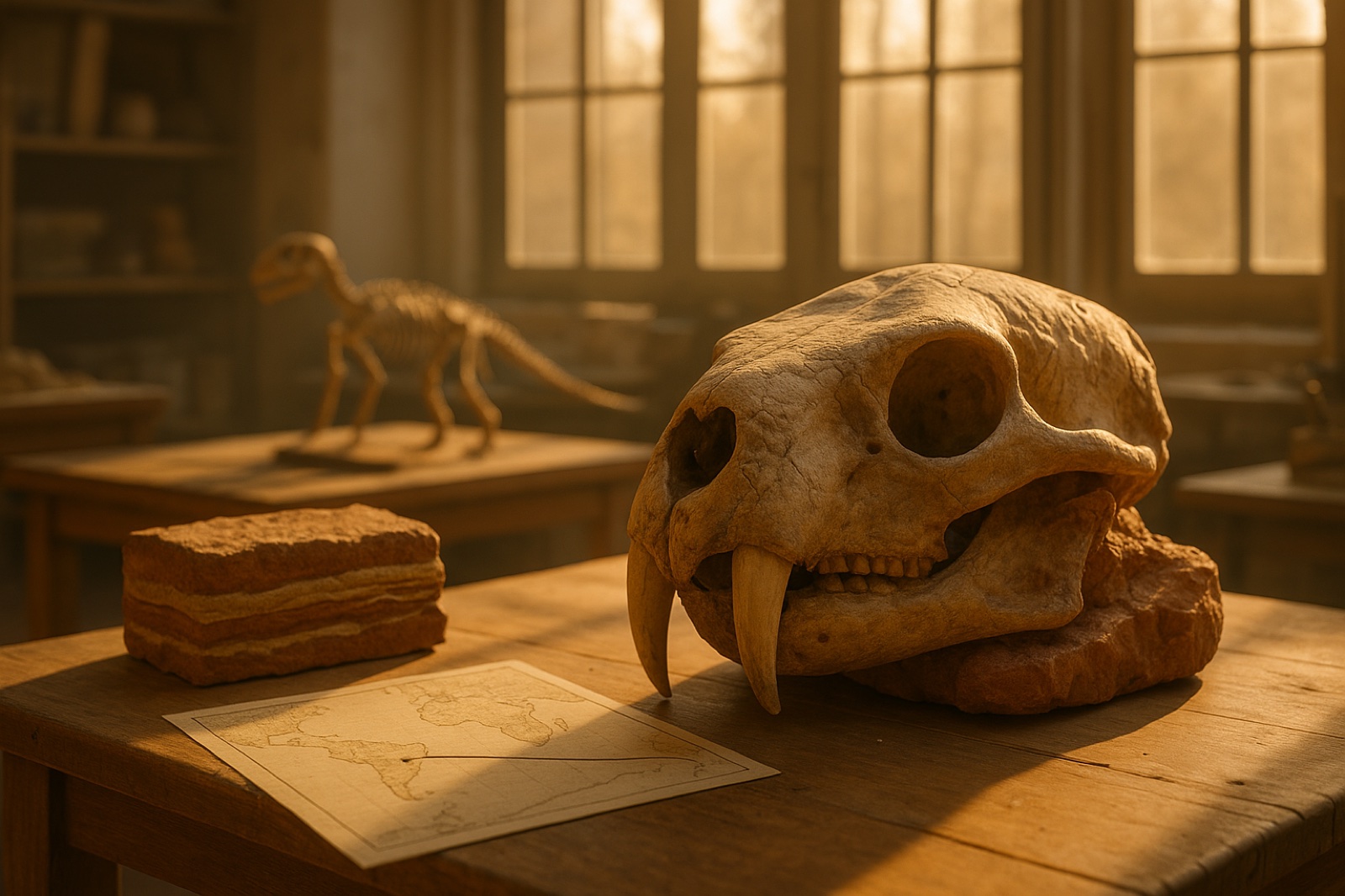
The new species is called Dinodontosaurus isiyavamanda. It belongs to a group called dicynodonts. These were plant-eaters from the mammal side of the family tree, not the dinosaur side. Most dicynodonts had a beak a bit like a turtle’s and a pair of tusks. They were common and widespread long before dinosaurs took over the land.
The bones come from the Manda Beds, a set of rock layers in the Ruhuhu Basin of southern Tanzania. The species name points to the land of the Wamanda people, who live in the region where the fossils were found. The study, led by Hady George, a PhD student at the University of Bristol, was published in the Journal of Vertebrate Paleontology.
Up to now, the genus Dinodontosaurus had only been confirmed in South America. This is the first confirmed record of it anywhere else.
Why the Oldest Dinosaur Rocks May Be Younger
Rocks do not come with dates printed on them. Scientists often date a layer by what is buried inside it. If the same kind of animal shows up in rocks on two continents, those rocks are probably from about the same time.
That is why this animal matters. Finding the same genus in Tanzania and in South America lets scientists line up the two rock sequences. The researchers say the deposits are likely equivalent in age.
And the South American side has recently been re-dated. New radiometric dates (a way of measuring age using the slow, steady decay of certain elements in volcanic ash) suggest the early dinosaur-bearing rocks there are as much as 10 million years younger than comparable rocks in South Africa.
Put those two pieces together and you get the headline. If Tanzania’s Manda Beds match South America’s rocks, then Tanzania’s rocks may also be younger than they were once assumed to be. The Manda Beds matter because they hold some of the fossils put forward as possibly the earliest dinosaurs, or their very closest relatives.
Lead author Hady George put it plainly: “This helps confirm that the oldest dinosaur candidates from Tanzania are probably no older than those from South America, refining the timeline of dinosaur origins.”
Notice the careful words. “Probably.” “Up to.” “Refining.” Nobody is saying the whole timeline was wrong. They are saying one part of it just got a little sharper.
The Detail Nobody Is Leading With
Here is the part that surprised us. This animal was not unknown until last week. It was simply unnamed.
The bones were collected by a British expedition in 1963 and sent to London’s Natural History Museum. In 1994, a student named Nigel Larkin studied the skeleton for his master’s thesis. “I studied this dicynodont skeleton for my MSc thesis … back in 1994 and judged it to be a species new to science,” he said.
He was right. It just took more than 30 years for the rest of the work to catch up and make it official. And the researchers say there is still a large amount of skeletal material from that expedition that nobody has fully studied yet.
So the date on the dinosaur story did not change because someone dug up something new. It changed because someone looked again, carefully, at something that had been sitting there all along. East Africa has a long record like this. We have written before about 1.4-million-year-old footprints in Kenya and about the Turkana Rift, where Africa is slowly splitting in two. East Africa keeps telling old stories, and we keep learning to read them better.
What This Says About Knowing Where Things Began
It would be easy to read this as “scientists got it wrong.” That is not really what happened. Science made a claim, kept checking it, found a better way to measure, and moved the date. That is science working exactly as it should.
But it also says something about all of us. The beginning of anything is the hardest part to see. The further back we look, the fewer clues we have, and the more we lean on guesses that feel like facts.
There is a very old piece of wisdom, far older than geology, that pictures God asking a hurting man one simple question: where were you when the foundations of the earth were laid? It is not a question meant to stop us from wondering. It is a question that puts our wondering in its right size. We arrived late to this story. Humility about beginnings is not the enemy of curiosity. It is what keeps curiosity honest.
That is what a patient student, a 60-year-old box of bones and a careful “probably” all have in common.
The next time a headline tells you it knows exactly how something started, you do not have to be cynical. Just leave a little room. Some of the best discoveries, like a single feather found in dinosaur poop, come from people who were willing to look again.
Common Questions About the Tanzania Fossil
What is Dinodontosaurus isiyavamanda?
Dinodontosaurus isiyavamanda is a newly named species of dicynodont, a plant-eating animal from the mammal side of the family tree that lived about 240 million years ago. Its fossils come from the Manda Beds in southern Tanzania and were described in 2026 in the Journal of Vertebrate Paleontology.
Is Dinodontosaurus a dinosaur?
No. Despite the name, Dinodontosaurus was not a dinosaur. It was a dicynodont, part of the synapsid group that includes the distant relatives of mammals. Dicynodonts were widespread plant-eaters before dinosaurs became the main land animals.
Why does a Tanzania fossil change the age of dinosaur rocks?
The genus Dinodontosaurus was previously confirmed only in South America. Finding it in Tanzania’s Manda Beds suggests those rocks are about the same age as the South American ones. South American rocks were recently dated as up to 10 million years younger than comparable rocks in South Africa, so the Tanzanian rocks, and the early dinosaur candidates inside them, may be younger than once assumed.
Were the oldest dinosaurs found in Tanzania?
Tanzania’s Manda Beds hold some fossils that scientists have proposed as among the earliest dinosaurs or their closest relatives. According to lead author Hady George of the University of Bristol, the new work suggests those Tanzanian candidates are probably no older than the early dinosaurs from South America.
When was the Tanzania fossil found?
The bones were collected by a British expedition in 1963 and kept at the Natural History Museum in London. Paleontologist Nigel Larkin judged the skeleton to be a new species in his 1994 master’s thesis, but it was only formally named in 2026.
What Do You Think?
When scientists change a date or a claim after new evidence, does that make you trust science more, or less? Tell us in the comments below.
Share This
A fossil sat unnamed in a London museum for 60 years. Now it may reset the clock on the first dinosaurs. Science that is willing to look again is my favorite kind. https://bgodinspired.com/?p=115890
Plot twist: the animal that may change the age of the oldest dinosaur rocks is not a dinosaur at all. It is a tusked plant-eater from Tanzania. https://bgodinspired.com/?p=115890
A student called it a new species in 1994. It took until 2026 to make it official. Sometimes being right just means being patient. https://bgodinspired.com/?p=115890