 0
0
 0
0
If you have ever had a toothache at night, you know the feeling. It throbs. You can’t sleep. And you will reach for almost anything that makes it stop.
Now picture that same night 25,000 years ago, on an island in what is now Indonesia. No dentist. No painkillers in a cupboard. Just a hard little nut from a palm tree that, if you held it in your mouth long enough, made the ache go quiet.
That may be how the earliest evidence of drug use in the world began. Not with a party. With pain.
The Earliest Evidence of Drug Use, Found in Two Sets of Teeth
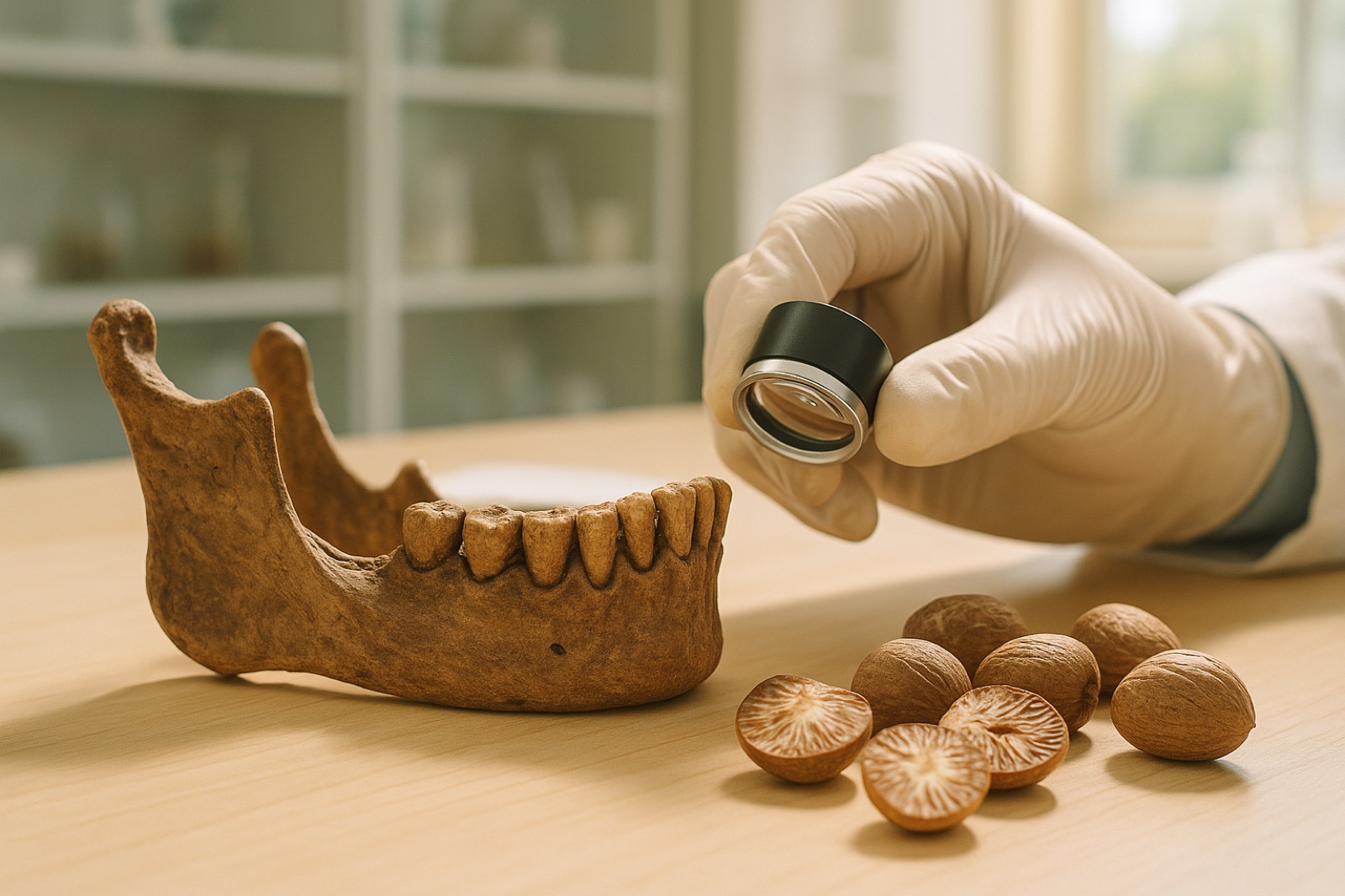
A team led by archaeologist Adam Brumm of Griffith University in Australia, working with Indonesian researchers from Hasanuddin University and the national research agency BRIN, studied the remains of two foragers from the island of Sulawesi. One lived somewhere between 25,000 and 16,000 years ago. The other lived between 7,600 and 6,300 years ago. Their findings were published this week in the journal Science Advances.
“Although they were separated by about 10,000 years of time, they had these really distinctive and very unusual tooth grooves,” Brumm told Australia’s ABC. “We couldn’t explain them.”
The grooves were deep and rounded. It is the kind of wear a tooth gets when something hard sits against it, day after day, for years. Brumm had a guess straight away: betel nut.
What Betel Nut Is, and Why It Counts as a Drug
Betel nut is the seed of the areca palm. Across much of South and Southeast Asia and the Pacific, people chew it every day, often wrapped in a leaf with a pinch of slaked lime. Brumm calls it “the world’s fourth most widely used psychoactive substance, after alcohol, caffeine and nicotine.” His team puts its users at about one in ten people alive today.
The active ingredient is a compound called arecoline. It changes how the brain works. It is also a natural painkiller. And long-term chewing is linked to mouth cancer as well as damaged teeth.
Carney Matheson, a member of the research team, found traces of arecoline in the dental tissue of both ancient foragers. That was strong evidence the grooves really did come from betel.
But there was a puzzle. Today, people add slaked lime because it releases the nut’s active compounds into the blood faster. These foragers seem to have had no lime. They appear to have simply sucked the whole nut, the way a child works on a hard sweet that lasts for ages. Brumm compared it to sucking a gobstopper. Would that even do anything?
So the team tested it. They soaked betel nuts in artificial saliva, then tested the liquid against human brain receptors grown inside frog eggs. It worked. “Just sucking on intact betel nuts will release arecoline in sufficient amounts to have a physiological effect, altering brain function,” Brumm said. It would be weaker, he added, “not to the extent of modern betel nut chewing with slaked lime.”
Until now, the oldest known evidence of people using a drug was beer brewed about 13,000 years ago in what is now Israel. This pushes the story back by at least 3,000 years, to long before anyone was farming. Sofia Samper Carro, an archaeologist at the Australian National University who was not part of the study, said the evidence “predates any published evidence by thousands of years.” Brumm thinks the habit is probably older still. Evidence that old is just very hard to find.
The Toothache the Cure Made Worse
Here is the part of the study that stays with you.
Because arecoline numbs pain, the researchers suspect people first reached for betel to ease a toothache. “I suspect that was the effect that they were after,” Brumm said.
But betel nuts are hard and rough. Sucking them for years ground the teeth down. In some cases the wear went so deep that it opened up the soft pulp inside the tooth, the part that holds the nerve. That would have been extremely painful. It would have made eating hard and let infection in.
In other words, the nut that eased the ache was also making the ache worse. And a worse ache meant more reason to reach for the nut.
“The more they sucked the nut for pain relief, the worse it damaged their teeth and the more they became addicted to sucking the nut to treat that,” Brumm told the ABC. “You can see the pretty serious negative health consequences and how humans have grappled with those for at least 25,000 years on this island.”
It is worth being careful here, the way the researchers are. The toothache idea is their best explanation, not a proven fact. Nobody can ask these two people why they did it. But the damage in their teeth is real, and the loop it points to is one almost everyone alive will recognise.
The Oldest Loop in the Human Story
“There’s no human society today that doesn’t use drugs of some kind,” Brumm said. You don’t need to be a scientist to believe him. You only need to be honest about your own evening.
The phone you pick up because the day was hard, which keeps you awake, which makes tomorrow harder. The drink that takes the edge off, until the edge comes back sharper. The snack, the scroll, the show. Researchers found that quitting alcohol changes the brain in ways nobody expected, because relief and craving are wired closer together than anyone would like. And when kratom poisonings climbed, the real question was what people were actually chasing.
Almost nobody starts because they want to be hurt. They start because they already are. The trouble is that some kinds of relief do not heal the wound. They only quiet it, and quietly make it deeper.
That is not a modern problem. Two foragers on Sulawesi had it with a palm nut, and it is written into their teeth.
Numbing Is Not the Same as Healing
People noticed this loop long before anyone could test a nut in a lab. An ancient proverb about wine describes a person bruised by the very thing they keep going back to: “They have beaten me, and I felt it not: when shall I awake? I will seek it yet again.”
Felt it not. Then: again. It is the betel loop in a single breath.
The people who kept that proverb also believed something else. They believed the deepest human pain is not meant to be numbed forever but healed, and that God is in the business of healing rather than numbing. Whatever you make of that, it names the real difference. One kind of relief takes a little more from you every time. The other kind gives something back.
A Question for the Next Time You Reach for Relief
You don’t need to fix your whole life tonight. Try one small thing instead. The next time you reach for whatever takes the edge off, pause for three seconds and ask: is this treating the pain, or just making me not feel it?
Sometimes the honest answer is “just for tonight, and that’s okay.” Sometimes the answer tells you the ache underneath has been waiting a long time for real attention: a hard conversation, real rest, a clinic if you can reach one, a friend who will listen. And if you keep circling the same relief and the same regret, you are far from the first to wonder why you keep going back.
Two people on an island in Indonesia carried their answer in their teeth for the rest of their lives. We get to ask the question a little earlier.
What Do You Think?
Do you think most habits start as a way to handle some kind of pain, or is that too simple an explanation? Tell us what you think in the comments below.
Share This
“The oldest evidence of humans getting high is 25,000 years old, in two sets of teeth from Indonesia. Researchers think it started as toothache relief that slowly made the toothache worse. Some loops are older than farming. https://bgodinspired.com/?p=108978”
“Two people who lived about 10,000 years apart had the same grooves worn into their teeth from sucking betel nuts. The painkiller was wrecking the teeth it was numbing. That is a very human story. https://bgodinspired.com/?p=108978”
“‘The more they sucked the nut for pain relief, the worse it damaged their teeth.’ A 25,000-year-old habit that sounds a lot like my phone at 1am. https://bgodinspired.com/?p=108978”
Questions People Ask About the Earliest Evidence of Drug Use
What is the earliest evidence of drug use by humans?
The earliest known evidence of human drug use comes from two ancient foragers on the island of Sulawesi, Indonesia. Their teeth carry deep, rounded grooves from habitually sucking whole betel nuts, and traces of arecoline, the nut’s active compound, were found in their dental tissue. One forager lived between 25,000 and 16,000 years ago and the other between 7,600 and 6,300 years ago. The study, led by Adam Brumm of Griffith University, was published in Science Advances on 10 September 2026. The previous oldest evidence was beer brewing from about 13,000 years ago in what is now Israel.
What is betel nut and what does it do to the body?
Betel nut is the seed of the areca palm, widely chewed across South and Southeast Asia and the Pacific, often with a leaf and slaked lime. Its main active compound, arecoline, alters brain function and also acts as a natural painkiller. Griffith University archaeologist Adam Brumm describes betel nut as the world’s fourth most widely used psychoactive substance after alcohol, caffeine and nicotine, used by about one in ten people worldwide. Long-term use is linked to mouth cancer and serious tooth damage.
Why did ancient people suck on betel nuts?
Researchers suspect that ancient foragers on Sulawesi first sucked betel nuts to ease toothache, because arecoline, the nut’s active compound, is a natural painkiller. The hard, rough nuts then wore their teeth down so badly that in some cases the soft pulp inside the tooth was exposed, which would have caused more pain. Study lead Adam Brumm described a cycle in which the more people sucked the nut for pain relief, the worse the damage became and the more they relied on the nut. This toothache explanation is the researchers’ best hypothesis, not a proven fact.
Does sucking a betel nut without lime have any effect?
Yes, according to a 2026 study published in Science Advances. Researchers soaked whole betel nuts in artificial saliva and tested the liquid against human brain receptors grown in frog eggs. They found that simply sucking an intact betel nut releases enough arecoline to have a physiological effect and alter brain function, although the effect is weaker than modern betel chewing with slaked lime, which releases the nut’s active compounds into the bloodstream faster.