 0
0
 0
0
You feel fine. You sleep, you work, you climb the stairs. Nothing hurts.
That is exactly how most of the 16,808 people in a big new heart study felt too. None of them had ever been told they had heart disease. Then doctors looked inside their arteries, and more than half of them had hidden artery plaque already building up.
Even among people aged 18 to 29, about 1 in 13 had it.
That sounds scary. But stay with this one, because the full story is more hopeful than the headline. Here is what the scans actually found, what they do not mean, and why being seen clearly might be the best news in it.
What Is Hidden Artery Plaque?
Your arteries are the tubes that carry blood away from your heart. Over time, fat, cholesterol and other bits can stick to their inside walls. That build-up is called plaque. Doctors call the process atherosclerosis.
Plaque is quiet. It usually causes no pain and no warning for years. When it finally does cause trouble, it can be serious: a heart attack or a stroke. That is why it is sometimes called “silent.”
For a long time, doctors could not easily see it early. So they did the next best thing. They guessed.
They looked at your age, your blood pressure, your cholesterol and whether you smoke, and put those numbers into a calculator that estimates your risk. If you are young and your numbers look fine, the calculator says you are fine.
This new study asked a simple question: what if we stopped guessing and just looked?
What the REACT Study Found
The study is called REACT. Researchers in Denmark and Spain scanned 16,808 adults aged 18 to 70. None had known heart or blood vessel disease. The results were presented at the European Society of Cardiology’s big meeting in late August 2026 and published in the New England Journal of Medicine.
They checked three places for plaque:
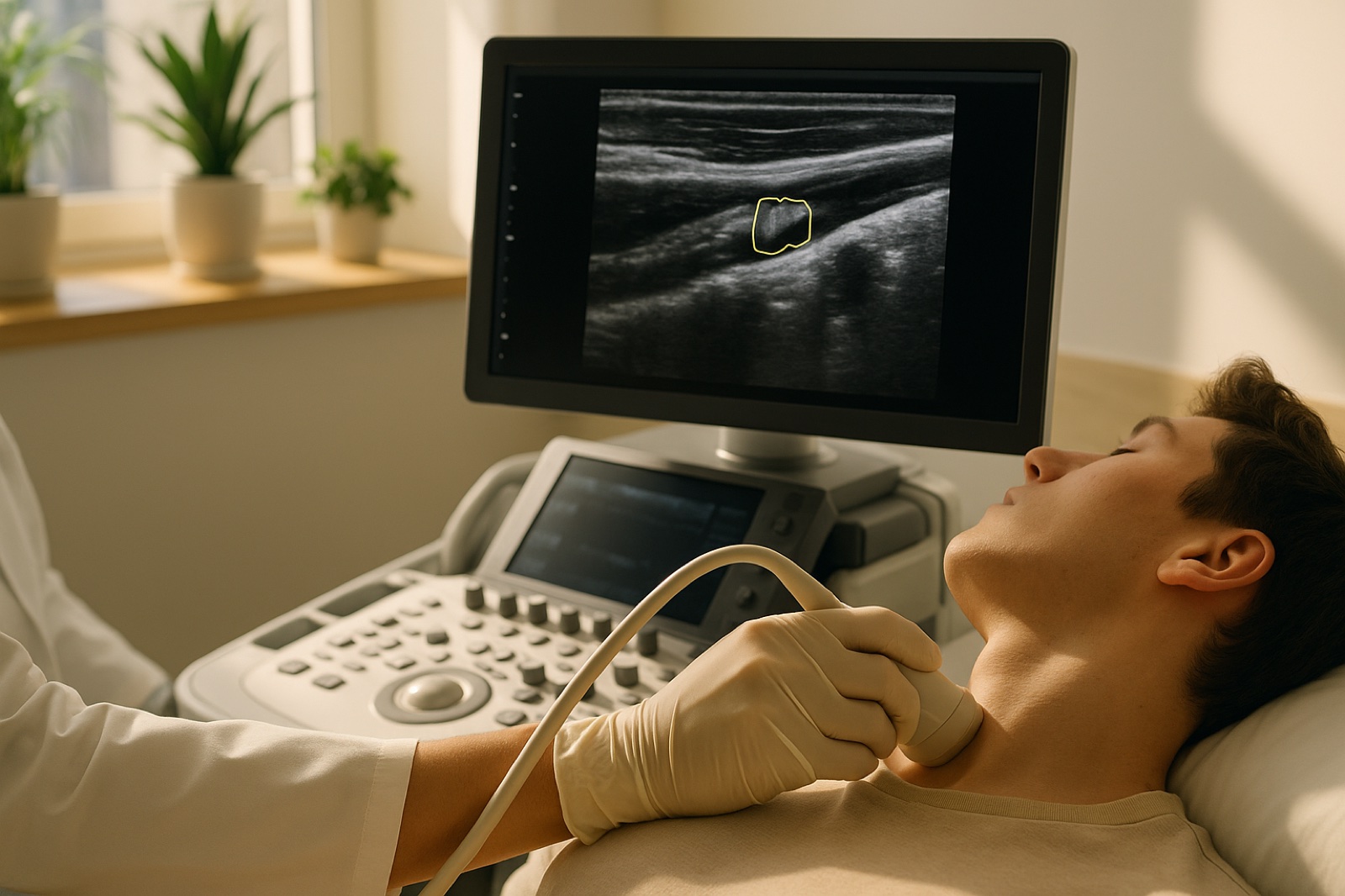
- The arteries in the neck (carotid arteries), with a 3D ultrasound
- The arteries in the legs (femoral arteries), with a 3D ultrasound
- The arteries of the heart (coronary arteries), with a CT scan
Here is what they saw:
- 57.1% of everyone had plaque somewhere.
- Among people aged 18 to 29, about 1 in 13 had it.
- Among people aged 60 to 70, about 9 in 10 had it.
- The amount of plaque grew fast with age, not slowly and steadily.
- Men tended to develop it 5 to 10 years earlier than women. Women showed a sharp climb in midlife, around the usual age of menopause.
One of the lead researchers, Professor Henning Bundgaard of Rigshospitalet in Copenhagen, put the big shift plainly: “Until now, preventive decisions have been based on an estimate of risk, but we did not know whether the disease was already present.”
You can read the research summary at ScienceDaily.
The Part Most Headlines Skipped
Two details in this study matter more than the scary numbers.
First, the risk calculators missed most of it. When researchers ran the standard European risk tool (called SCORE2) on the people who already had plaque, it marked only a small minority of them as high risk. The gap was biggest in younger people. In other words, the usual checkup math told many people they were fine when their arteries said otherwise.
Second, the heart was usually not the first place it showed up. Plaque found only in the heart arteries, and nowhere else, was uncommon at every age. In younger people, plaque was most often in the neck or leg arteries, and usually in just one of those places. Most people who did have plaque in the heart also had it in the neck or legs.
That second point is quietly good news. It means the neck and legs may work like an early window. A simple ultrasound there, which is cheaper and easier than a heart CT scan, could one day spot the problem years before the heart is involved. The researchers are already planning to test handheld ultrasound scanners for exactly this.
What Hidden Artery Plaque Does Not Mean
This is where it is important to slow down.
The researchers said it directly: having arterial plaque does not mean a person will definitely go on to develop disease that causes symptoms. Plenty of small plaques never cause a heart attack or a stroke.
And this study did not measure what happens next. It took a snapshot. It found plaque. It did not follow people for years to see who got sick, and it did not test whether finding plaque early actually saves lives. That is the next phase. A large trial is planned from 2027 to 2032 to find out whether treating people based on their scans prevents heart attacks, strokes and deaths better than the usual approach.
It is also worth knowing that everyone in the study came from two European countries. The pattern may look different in other places and populations.
So if you are 25 and feeling a little nervous right now, here is the honest version: you might have a small amount of plaque, like about 1 in 13 people your age in this study. If you do, it is the earliest and most treatable kind. That is not a reason to panic. It is a reason to pay attention.
Small Things Anyone Can Do
You do not need a fancy scan to start. Plaque grows slowly, and the things that slow it down are mostly free.
- Know your blood pressure. Many pharmacies and clinics check it for little or no cost. If you check it at home, how you rest your arm can change the number more than you would think.
- Move your body most days. A walk counts.
- Do not smoke, or get help to stop.
- Ask a doctor or nurse about your cholesterol if you ever get the chance, especially if heart trouble runs in your family. Researchers are working on new ways to bring it down, like the one-dose gene treatment that cut bad cholesterol in half for a year.
- Talk to your doctor before deciding anything about scans or treatment. This article is for understanding, not for diagnosing.
Changes like these tend to stick better with company, too. One two-year study found that people who made lifestyle changes with structure and other people did noticeably better than those who went it alone.
Looking Past How We Feel
There is something strangely familiar about this study.
We judge almost everything by the outside. How someone looks. How they seem. How we feel on a given morning. And most of the time, the outside is a poor report on what is really going on underneath.
There is a very old line of wisdom that says people look at the outward appearance, but God looks at the heart. It was first said about choosing a young shepherd nobody had noticed. It turns out to be true of arteries, too.
But notice what kind of seeing that is. It is not the kind that looks in order to condemn. In this study, the people who were seen clearly were not the ones in danger. They were the lucky ones. They found out early, while there was still plenty of time to do something. Being truly seen is usually how healing starts, not where it ends.
Most of us would rather be told we are fine. But “fine” based on a guess is not the same as fine. Sometimes the kindest thing is to be looked at honestly, by someone who wants you well.
The Hopeful Bottom Line
More than half of 16,808 healthy-feeling adults had hidden artery plaque. About 1 in 13 people under 30 had it. The usual risk tools missed most of it.
That is not a sentence. It is a head start. Plaque found early is plaque you can still do something about, and the scientists behind this study are now working out how to find it for more people, more cheaply, sooner.
You still feel fine. Good. Now you also know that how you feel is not the whole story, and that the story can still go well.
Common Questions About Hidden Artery Plaque
Can young adults have plaque in their arteries?
Yes. In the REACT study of 16,808 adults in Denmark and Spain with no known heart disease, about 1 in 13 people aged 18 to 29 already had plaque in at least one of the neck, leg or heart arteries that were scanned. In younger people, the plaque was most often in the neck or leg arteries and usually in just one place.
Does having artery plaque mean I will have a heart attack?
No. The REACT researchers stated that having arterial plaque does not mean a person will inevitably develop disease that causes symptoms. Many small plaques never cause a heart attack or stroke. Finding plaque early is generally seen as a chance to slow it down through lifestyle and, where a doctor advises it, treatment.
What percentage of healthy adults have hidden artery plaque?
In the REACT study, published in the New England Journal of Medicine in 2026, 57.1% of 16,808 adults aged 18 to 70 with no known cardiovascular disease had atherosclerotic plaque. The rate rose sharply with age, from about 1 in 13 at ages 18 to 29 to about 9 in 10 at ages 60 to 70.
Why did standard heart risk scores miss so much plaque?
Standard risk calculators such as SCORE2 estimate future risk from age, blood pressure, cholesterol and smoking rather than looking at the arteries directly. In the REACT study, SCORE2 classified only a small minority of people who already had silent plaque as high risk, with the biggest gap in younger adults.
How can I lower my risk of artery plaque without spending money?
Widely recommended low-cost steps include not smoking, moving the body most days such as walking, getting blood pressure checked at a pharmacy or clinic when possible, and asking a doctor or nurse about cholesterol, especially with a family history of heart disease. Anyone worried about artery plaque should talk to a doctor before deciding on scans or treatment.
Let’s Talk About It
If a cheap, quick scan could show whether you had early plaque, would you want to know at 25, or would you rather not? Tell us what you think in the comments.
If this news left your mind racing a little, you are not alone. Our free guide explains why the mind won’t slow down when you are worried, and the simple 5-step order that helps it settle.
Share This
“57% of people who felt totally healthy had plaque in their arteries. Even 1 in 13 under 30. The good news: found early, it’s the treatable kind. https://bgodinspired.com/index.php/health-and-wellness/hidden-artery-plaque/”
“I always figured feeling fine meant I was fine. This study scanned 16,808 ‘healthy’ adults and the usual risk calculators missed most of the plaque they found. Worth 5 minutes: https://bgodinspired.com/index.php/health-and-wellness/hidden-artery-plaque/”