
 0
0
 0
0
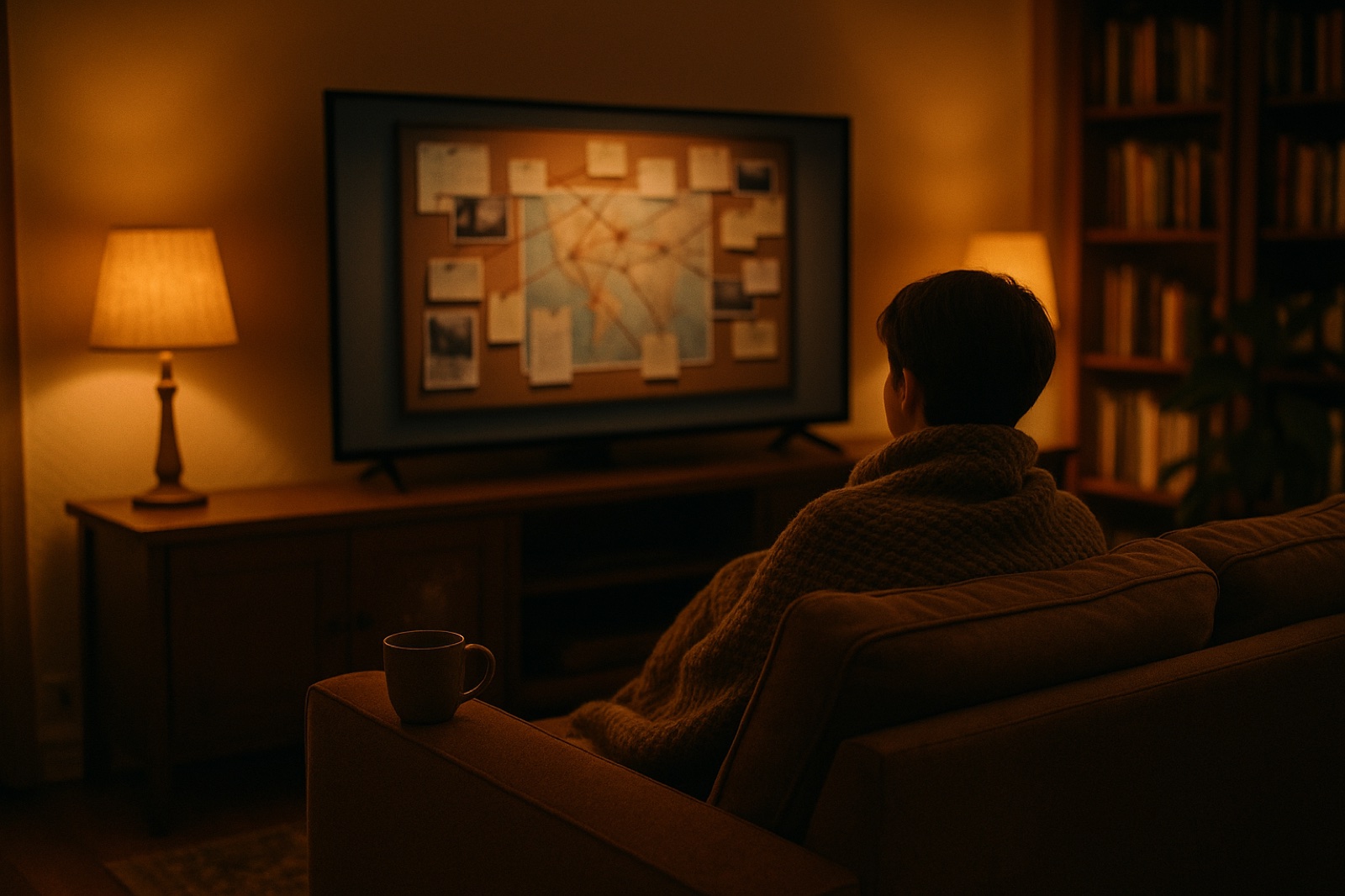
It is late. You told yourself one more episode about two episodes ago. A narrator is walking you through a timeline, a neighbour is describing what they heard through a wall, and somewhere at the back of your mind a small voice is asking why you are still awake watching this. If you have ever wondered why you are obsessed with true crime, you are asking something researchers have been chewing on for years — and the honest answer is stranger, and kinder, than “you must like gore.”
Because it is almost never the gore. Ask people who watch a lot of it what they actually remember, and it is rarely the violence. It is the timeline. The missed warning. The one decision that went the wrong way. Something else is going on here, and once you see it, you will not be able to unsee it in your own watching habits.
How Many People Are Actually Watching
More than you would guess — and the audience has a shape.
In 2023 the Pew Research Center examined the 451 most popular podcasts in the United States and found that true crime was the single most common topic on the list — 24% of the shows. Among Americans who listen to podcasts at all, 34% said they regularly listen to true crime.
Then there is the split. Among podcast listeners, 44% of women said they regularly listen to true crime, against 23% of men. Almost twice as many.
Those are figures for one country and one format, so treat them as a snapshot rather than a world map. But a gap that size is not a rounding error. It is a clue, and it points somewhere specific.
Why Are People Obsessed With True Crime? The Research Points Somewhere Unexpected
In 2010, psychologists Amanda Vicary and R. Chris Fraley published a study in Social Psychological and Personality Science with a title that does not flinch: “Captured by True Crime: Why Are Women Drawn to Tales of Rape, Murder, and Serial Killers?”
Across a series of studies they found the same split the podcast numbers show. Women were more drawn to true crime than men were. Men, meanwhile, were more drawn to other kinds of violent material — war stories, gang violence.
Sit with that for a second, because it quietly kills the easy explanation. If the pull were simply an appetite for violence, that split would not exist. Violence is violence. Something in this particular kind of violence is doing the work.
What the researchers landed on is this: the victims in these stories are very often women, and the stories are dense with usable information. How someone got out. What the warning signs looked like before anybody named them. Which ordinary moment turned out to be the hinge.
Read that way, the genre is not entertainment about death. It is rehearsal.
Which means you are not watching because something is wrong with you. You are watching the way a person studies the fire exits of a building they are afraid of being trapped in.
The Detail That Gives It Away: People Fall Asleep to It
Here is the part that sounds made up.
A lot of people put on a murder documentary specifically to fall asleep. Not despite the subject — because of it. It is common enough that news outlets have run straight-faced explainers on why it works.
Nothing about a story of violence should be restful. But if the pull is preparation rather than thrill, it starts to make an uncomfortable kind of sense. The danger in the story is sealed. It is somebody else’s night, already finished, already known, already narrated by a calm voice who has read the ending. The worst has happened and you are still here.
An open-ended worry can never give you that. A closed case can.
If that instinct feels familiar, it is a cousin of the reason you keep rewatching the same show — certainty is comfortable, and a story whose ending you already know cannot ambush you.
The Part the Researchers Themselves Would Not Claim
This is the detail almost nobody repeats, and it is the most interesting thing in the whole study.
Vicary raised the possibility of a loop: stories about crime feed fear, and fear drives people back toward more stories about crime. A closed circuit that keeps itself running. And then she declined to say it was true. Her own words: “It is not possible to state with certainty from these studies whether or not this vicious cycle occurs.”
That sentence is worth more than a shelf of confident takes. A researcher with a tidy theory and the platform to sell it, saying plainly that the data does not go that far.
What the research did note is a mismatch that is hard to shake once you have heard it: women report a heightened fear of crime despite being less likely to become victims of it.
So both things appear to be true at once. The preparation is real and rational. And the fear it is preparing for may already be running out ahead of the actual risk — which is its own quiet weight to carry, in the same family as the fear of death that peaks earlier in life than most people expect.
If you want a plain read on where your own baseline sits, the free How Anxious Am I? assessment takes a couple of minutes and will not sell you anything.
What All That Preparation Cannot Buy
Here is the trouble with rehearsal. It gives you information. Information is not the same as safety, and some part of you knows it. You can learn every warning sign ever catalogued and still not be able to promise yourself a single quiet night.
And listen to what people actually say about why they watch. It is not only “so it will not happen to me.” Underneath, there is a second thing, and it is louder in the unsolved cases: somebody should know. Somebody should say the name out loud. What sits so badly about a case that never closes is not really the missing fact. It is the possibility that a person could disappear and it could simply not count.
That instinct is old. One of the oldest stories people ever bothered to write down turns on exactly this — a killing with no witnesses, in an empty field, and the claim that the ground itself would refuse to stay quiet about it. Thousands of years before forensics, before courts, before anyone could test a thing, someone was already insisting that no life vanishes unnoticed by God, whether or not the case is ever closed.
It is a strange thing to find sitting underneath a modern binge-watching habit. But there it is.
If You Are Going to Keep Watching — and You Probably Will
None of this is a reason to stop. The instinct underneath it is a good one. A few small adjustments, though, cost nothing and change how you feel afterward:
- Check how you feel when the episode ends. Calmer and a little more awake to the world is the genre working. Getting up to check the locks a second time is the loop working.
- Favour closed cases. An unresolved one leaves the whole weight of it sitting in your lap with nowhere to put it down.
- Keep it out of the last hour before sleep if you are someone who surfaces at three in the morning. Contained danger is still danger as far as a half-asleep brain is concerned.
- Notice when you are studying rather than watching. That is the moment to ask what you are actually bracing for — the answer is usually not the one on screen.
Discussion Question
Do you think true crime makes people safer, or just more afraid — and is there a difference between the two? Tell us what you think in the comments.
Share This
- Turns out true crime fans are not there for the gore. Researchers think it is rehearsal — you are studying the fire exits. https://bgodinspired.com/
- 44% of women who listen to podcasts regularly listen to true crime. 23% of men. That gap is the whole story. https://bgodinspired.com/
- The psychologist behind the best-known true crime study wondered whether it feeds the fear it soothes — and then refused to claim it, because her data did not go that far. More researchers should do that. https://bgodinspired.com/
Questions People Ask
Why are people obsessed with true crime?
The most supported explanation is not morbid curiosity. A 2010 study by psychologists Amanda Vicary and R. Chris Fraley, published in Social Psychological and Personality Science, found that women are more drawn to true crime than men, while men are more drawn to other violent genres such as war and gang violence. The researchers concluded that because victims in true crime stories are often women, the stories carry useful information — warning signs, escape strategies, patterns that went unnoticed. On that reading, true crime functions less as entertainment about death and more as rehearsal for survival.
Do more women than men watch true crime?
Yes, by a wide margin in the available data. The Pew Research Center reported in 2023 that among United States adults who listen to podcasts, 44% of women regularly listen to true crime compared with 23% of men. Academic research going back to 2010 found the same pattern in true crime books.
How popular is true crime compared with other podcast topics?
It is the most common topic among top-ranked shows. Pew Research Center analysed the 451 most popular podcasts in the United States in 2023 and found true crime was the subject of 24% of them — a larger share than any other topic. Across all United States podcast listeners, 34% said they regularly listen to true crime.
Is it unhealthy to watch true crime?
There is no strong evidence that watching it is harmful in itself, and researchers have been careful not to overclaim. Amanda Vicary raised the possibility of a cycle in which crime stories increase fear and fear drives further consumption, but stated directly that “it is not possible to state with certainty from these studies whether or not this vicious cycle occurs.” A practical test is how you feel afterward: alert and informed suggests the genre is serving you, while repeated lock-checking and difficulty sleeping suggests it is feeding anxiety rather than easing it.
Why do some people fall asleep to true crime?
Because a finished case is contained. The danger in the story has already happened, is already known, and is being narrated calmly by someone who knows how it ends — so it does not have the open-ended quality that keeps ordinary worry running at night. Enough people do this that news outlets have published explainers on the habit. It does not work for everyone, and people who wake in the small hours often do better keeping it out of the hour before bed.



