 0
0
 0
0
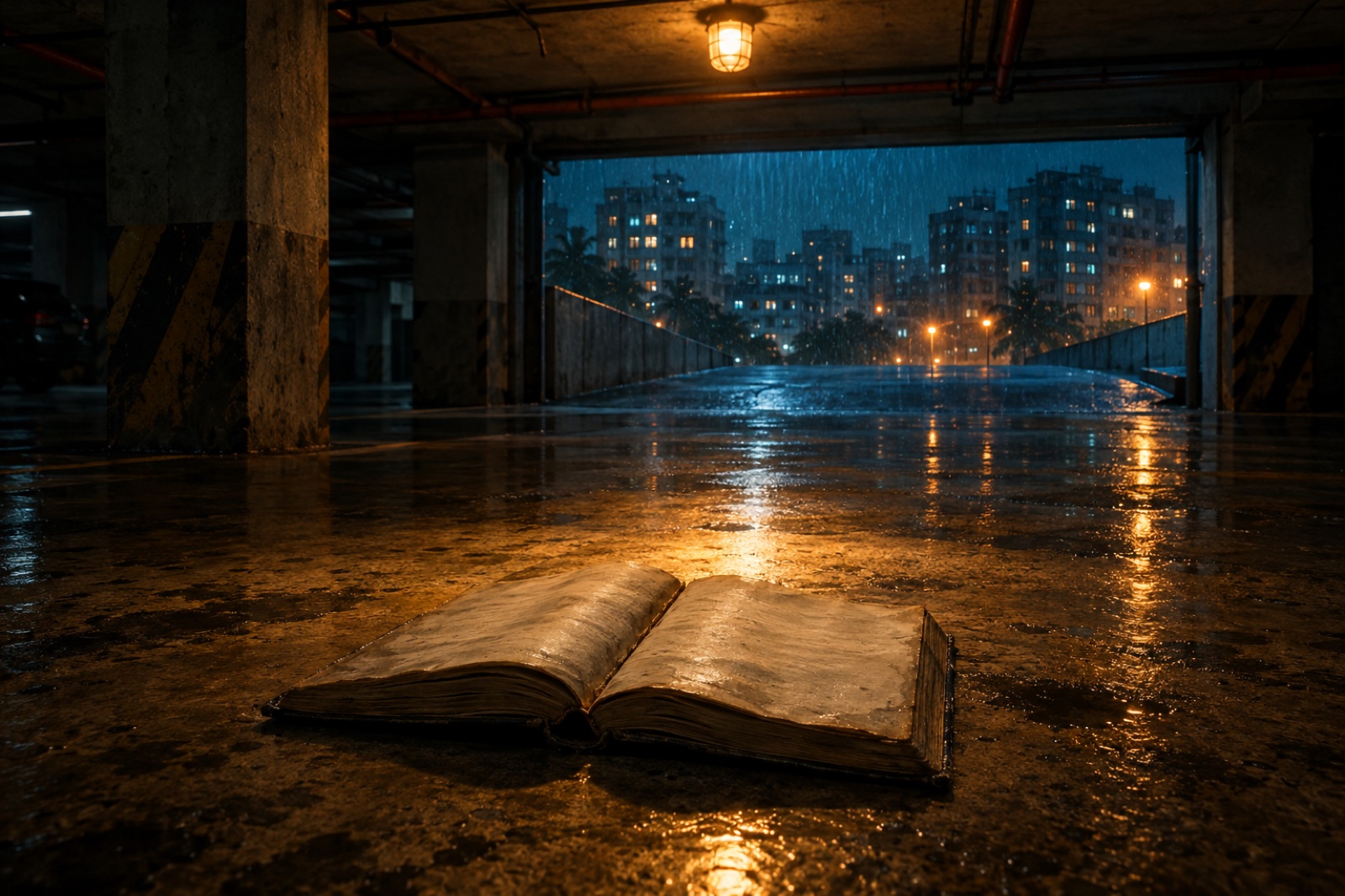
A police inspector sits in a Mumbai parking garage with a nuclear device on one side of him and a stolen holy book on the other. He is not praying over it. He is looking up a number.
That is the last thing Sacred Games asks you to watch. Sartaj Singh, who has spent sixteen episodes being lied to by almost everyone he reports to, turns the pages of a guru’s scripture hunting for a pattern he can type into a bomb. He does not believe the book. He has no reason to. He uses it anyway.
Then the screen goes black.
If you came here for the Sacred Games ending explained in plain terms, that is it — the series never tells you whether the bomb went off. Which sounds like a cop-out, and is actually the most consistent thing the show ever does.
Sacred Games ending explained: what actually happens
Sacred Games is the 2018 Netflix series created by Vikramaditya Motwane, adapted from Vikram Chandra’s 2006 novel of the same name, and written for the screen by Varun Grover, Vasant Nath and Smita Singh. Motwane and Anurag Kashyap split the directing on the first season — Motwane on Sartaj’s present day, Kashyap on Gaitonde’s past. For the second season Neeraj Ghaywan took Motwane’s chair and Motwane moved to showrunner. Two seasons, eight episodes each.
The last episode is called “Radcliffe.” It opens in 1947, with two sisters torn apart in the violence of Partition, and by the end of the hour you understand why that scene was there: Shahid Khan, the man carrying out the attack on Mumbai, is Sartaj’s cousin.
The city is given twenty-four hours. Khan arms a nuclear device in a parking garage. Inspector Majid Ali Khan’s team closes in and Majid is killed in the shootout. DCP Parulkar, who has spent the whole series administering Mumbai’s crime rather than stopping it, finally works out that he was used — he kills the politician Bhosale, then himself.
Sartaj arrives with the Kaal Granth, the book Khanna Guruji wrote and Ganesh Gaitonde stole. He uses it to work out the pattern-based code that will shut the device down. The evacuation is underway. Sartaj stays and tries.
Then the cut to black. No result, no epilogue, no number on the counter.
Everybody in Sacred Games is saving the city
Count them.
Gaitonde first. The first words anyone speaks in Sacred Games are a question about whether you believe in God, and the man asking answers it himself, crudely, before the policeman can get a word in. Gaitonde has been missing sixteen years. He calls a middling inspector out of nowhere and tells him he has twenty-five days to save Mumbai. His most-quoted line, carried out of the street Hindi he says it in, is roughly: sometimes I feel that I am God. He does not deliver it as a boast. He says it the way a man states his trade.
And notice how he tells his story. Gaitonde narrates his own half of the series in first person, from childhood to empire, in the register of a legend rather than a confession. He is not explaining himself. He is reciting himself. If you have watched a gangster build an empire he can never put down, the shape will be familiar — it is the same engine driving Tommy Shelby in Peaky Blinders, except Gaitonde has given it a theology.
Then Guruji. Khanna Guruji, played by Pankaj Tripathi, wants a world without conflict. His ashram’s method for getting there is to remove most of the people from it. He is the only character in the show who talks about peace all the time. A movement that is sure it has read the future, and is willing to spend other people to get there, is territory the Korean series Hellbound walks into from the other direction — there the crowd is certain about the verdict; here the ashram is certain about the schedule.
Shahid Khan wants to settle what was done to his family in 1947. Bhosale wants to be the man who handled it. Parulkar has run the city’s criminal economy so long that he has mistaken his management for order, and he is sincerely offended when the order breaks.
Every one of them is certain. Every one of them is, by the show’s own arithmetic, part of the reason the city needs saving at all.
And then Sartaj. He lives on sleeping pills. He refuses to sign a false statement in court, and his own superiors turn that refusal into leverage against him. He gets beaten, lied to, kept out of the room where things are decided. In sixteen episodes he never once describes himself as the man who is going to save Mumbai. He just keeps going to the next address.
The show does not present this as humility. It presents it as exhaustion. That turns out to matter.
Season two’s episode titles are the show telling on itself
Here is the thing almost nobody assembles, because nobody watches a series by reading its contents page.
Season one names all eight of its episodes out of one tradition. “Ashwathama” — the warrior cursed to live. “Halahala” — the poison that rose when the ocean was churned. “Atapi Vatapi.” “Brahmahatya.” “Sarama,” a dog. “Pretakalpa,” a text for the dead. “Rudra,” Shiva in his anger. “Yayati,” a king cursed with old age before his time. Eight doors, all opening into the same house. Gaitonde spends that season living inside a single story about himself, and the titles live in there with him.
Season two’s titles scatter.
“Matsya” is still Hindu — the fish. But “Siduri” comes from the Epic of Gilgamesh, the Mesopotamian tavern keeper who tries to talk a king out of chasing immortality. “Bardo” is Tibetan Buddhist: the gap between dying and being born again. “Azrael” is the angel of death in Jewish and Islamic tradition, usually pictured holding a scroll of names. “Apasmara” and “Vikarna” come back to Hindu myth, but by then the shelf is already mixed.
Then the final two stop being sacred at all. “Radcliffe” is the Radcliffe Line — a border drawn across a subcontinent by a commission in 1947, which is also the wound the whole last episode is built on. For what that line did to ordinary people who had no say in it, Khushwant Singh’s novel is still the hardest account anyone has written, and the man on the rope at the end of Train to Pakistan belongs in the same conversation as Shahid Khan’s mother. And “Torino” nobody has convincingly explained. Viewers have been arguing about it ever since, and the best offers on the table are still guesses.
Read the sixteen titles in order and you watch a vocabulary run out. One mythology. Then four. Then a surveyor’s line. Then a word that does not resolve.
That is exactly the shape of Gaitonde’s second season. A man who began inside his own scripture ends up borrowing everybody else’s, and then there is nothing left to borrow. He takes Guruji’s book. He takes Guruji’s ritual. He ends up hearing Guruji’s voice in his head, and it is that voice, not the police, that puts the gun in his mouth.
Worth saying plainly: the readings of those titles are what viewers and critics have worked out, not something the production has published. What is not interpretation is the list itself. The names really do leave the temple and end up at a border post.
Why Sacred Games cuts to black instead of showing you
Now the ending stops looking like a stunt.
Two seasons, one demonstration: certainty about saving people is the most dangerous substance in the city. Guruji’s certainty designs the bomb. Gaitonde’s certainty fills the graves on his way up. Bhosale’s certainty puts a politician in front of a microphone. Khan’s certainty arms the device.
If the show had let you watch Sartaj succeed, it would have handed him the one thing it spent sixteen hours identifying as poison. He becomes the man who saved Mumbai. The series ends by minting one more saviour, and everything it had argued quietly collapses into a thriller with a good last act.
If it had let you watch him fail, the certain men were right all along. The city was always doomed, the ashram read the schedule correctly, nothing anybody did mattered.
Black is the only ending that holds its own argument. What you are left with is a man who did the work and was not told the outcome — which, the show seems to think, is the ordinary condition of doing anything decent.
Sartaj never claims the job
Go back into the garage one more time, because there is something strange in it that the noise of a countdown hides.
Gaitonde and Guruji both wanted to be the holy thing. Gaitonde says he feels like God. Guruji writes his own scripture and gathers people who will live inside it. For both men the sacred is an identity — something you become, after which other people’s lives become raw material.
Sartaj does something no other character in the show does with a sacred text. He opens it looking for an instruction.
He has no faith in the Kaal Granth. He has read the file on the man who wrote it and he knows what that ashram built. He picks the book up because it is the only object in the room that might contain a usable pattern, and he does what he finds in it. Not I am the one. Just: what does this say to do next.
The oldest rescue stories have that shape and hardly anyone notices. The men who announce themselves — who build the tower so the name will last, who want the title — are never the ones who get sent. The ones who get used tend to answer the assignment with a question. Moses, standing in front of a burning bush with a nation to get out of Egypt, said: who am I? (Exodus 3:11) He was not being modest. He was raising a point of order, and the story treats the question itself as the qualification.
Appetite and assignment look nothing alike. One of them wants the title. The other one wants the instruction, and would mostly rather somebody else had been asked.
Sacred Games stages that difference in a parking garage and then refuses to grade it. A man with no belief, following a book he did not write, trying to do the one thing nobody appointed him to do. Whether it worked is withheld. Whether it was right is not.
Back in the garage
Watch the final sequence again and notice how little Sartaj says. Saif Ali Khan plays nearly all of it with his mouth shut. There is no speech, because there is nobody left to make one to. Majid is dead. Parulkar is dead. The voice on the phone that started all of this has been dead since the first episode.
That last detail is the one I keep coming back to. Gaitonde dies in episode one — Sartaj breaks into the hideout in time to watch him do it — and then narrates both seasons anyway. Every claim he makes about his own size reaches you from a man who has already finished. The show lets him talk and talk and talk, and the entire time you know exactly how it went for him.
Sartaj gets no narration at all. He gets a book, a keypad, and a cut to black.
Of the two of them, only one is still working when the lights go out.
Sacred Games Q&A
How does Sacred Games end?
Sacred Games ends mid-rescue. In the final episode, “Radcliffe,” Shahid Khan arms a nuclear device in a Mumbai parking garage, Inspector Majid Ali Khan is killed in a shootout, and DCP Parulkar shoots the politician Bhosale and then himself. Sartaj Singh reaches the device carrying the Kaal Granth, the book written by Khanna Guruji, and uses its pattern to work out the deactivation code while the city is being evacuated. The screen cuts to black before you learn whether he succeeds. That cut is the last image of the series as it stands.
Does Sartaj defuse the bomb in Sacred Games?
Sacred Games never says. Sartaj Singh finds the code pattern in the Kaal Granth and begins entering it, and the series cuts to black before the outcome is shown. The ambiguity reads as a choice rather than a loose end: the show spends two seasons arguing that the characters most certain they can save Mumbai are the reason it is in danger, so letting Sartaj be confirmed as the city’s saviour would undercut its own case.
What is the Kaal Granth in Sacred Games?
The Kaal Granth is the spiritual text written by Khanna Guruji, the guru played by Pankaj Tripathi in Sacred Games. Ganesh Gaitonde steals it after killing Guruji and later leaves it with his father. In the last episode Sartaj Singh tracks it down and uses the pattern inside it as the key to the bomb’s deactivation code — which makes it the only object in the series that functions as both scripture and a technical manual.
Is Sacred Games based on a book?
Yes. Sacred Games is adapted from the 2006 crime novel Sacred Games by Vikram Chandra. The Netflix series, created by Vikramaditya Motwane, keeps the novel’s central pairing of Inspector Sartaj Singh and the gangster Ganesh Gaitonde, but restructures and extends the material across sixteen episodes. The series was the first Indian original commissioned by Netflix.
What does Gaitonde mean when he says he is God in Sacred Games?
Ganesh Gaitonde’s best-known line in Sacred Games translates roughly as “sometimes I feel that I am God,” and he means it as a description of his position rather than a religious claim — he decides who lives, so he occupies the role. The series then undercuts him in two ways. He dies in the first episode and narrates the rest from beyond his own ending, and his certainty about his own importance is what leaves him open to Guruji, who hands him a bigger story and takes everything else.
Your turn
Does Sacred Games earn that cut to black, or does it owe you the result after sixteen hours of your life? Some people call it the bravest choice in Indian television and some people call it a season three that never came. Tell me which one you landed on, and what you think happened in that garage.
Share this
Just noticed Sacred Games names every season 1 episode out of Hindu myth, then season 2 scatters — Gilgamesh, Tibetan Buddhism, the angel of death — and the last two titles aren’t sacred at all. One is a Partition border. The vocabulary literally runs out.
Everyone in Sacred Games who is certain they can save Mumbai is the reason it needs saving. The one who might actually save it never claims the job, lives on sleeping pills, and ends up reading someone else’s holy book for instructions. That’s why it cuts to black.
Rewatching Sacred Games and this got me: Gaitonde dies in episode one and narrates both seasons anyway. Every brag about how big he is comes from a man who already finished. Sartaj gets no narration — just a book, a keypad and a cut to black.