 0
 0
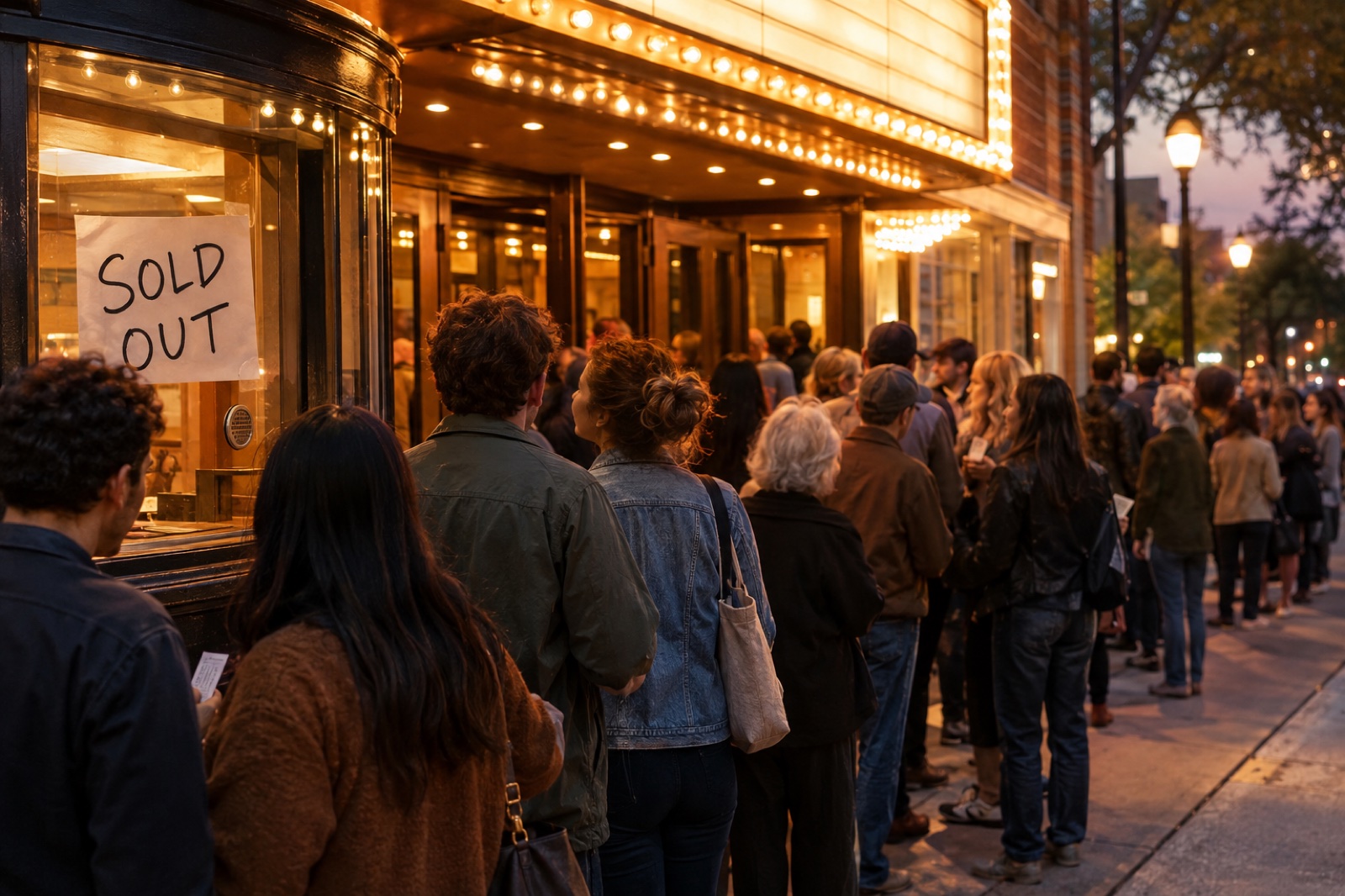
Last weekend, a lot of people did something that sounds strange when you say it out loud. They paid for a ticket, sat down in the dark, and watched a woman get ready to go to prison. Then they kept watching for nearly three hours.
The film is You Can See Everything, a documentary about Theranos founder Elizabeth Holmes, made by Nathan Fielder and Lance Oppenheim and released by A24. It was not supposed to be a hit. Documentaries almost never are. Industry forecasts expected it to open at around $7 million. It made about $15 million in North America in its first weekend, on roughly 855 screens, with more than 2,000 sold-out showings.
This piece is not really about her. It is about the rest of us, the people who filled those seats. Why did so many of us want to look this closely? And what did we think we would see?
What You Can See Everything actually is
The basic facts are public record. Holmes was convicted of fraud in 2022 over claims made to investors about her blood-testing company, and in May 2023 she reported to a federal prison camp in Texas to begin a sentence of more than eleven years.
Fielder and Oppenheim were filming before that happened. According to WBUR’s review, Holmes invited them into her rented home about five weeks before she reported, and the film follows the countdown. It runs 174 minutes. The first half is mostly conversation. Almost exactly at the midpoint, she goes to prison, and the film turns into something else: reenactments, the same footage replayed from new angles, a kind of hall of mirrors.
So the easy description, “three hours of watching someone wait to go to prison,” is only half true. The second half is the film watching itself, asking what all that footage actually proved.
How big was the opening, really?
Big enough that the trade press ran out of comparisons. Reports put it as the second-largest opening ever for a documentary that is not a concert film, behind only Fahrenheit 9/11 in 2004. It finished second for the whole weekend, behind a big-studio action film. It had premiered with no warning as a “secret screening” at the Telluride Film Festival in September, and the trailer that followed spread fast.
Here is the part that is easy to miss. The footage is three years old. Nothing in it is breaking news. Her trial is long over, the verdict is known, and the story has already been told in podcasts, a book, and a TV drama. People were not buying tickets to find out what happened.
They were buying tickets to look.
Why we line up to watch someone fall
Some of it is simple. Fielder has a devoted following, A24 has a loyal audience, and a strange premise is good marketing. But that does not explain a crowd this size for a three-hour documentary about events everyone already knows.
Think about what the title promises. “You can see everything.” According to the WBUR review, the phrase comes from Holmes herself, a promise she made to the filmmakers. The reviewer noted it “sounds more like a threat.” Either way, it names exactly what the audience came for. Total access. No editing room spin, no courtroom sketches. Just the person, up close, in her kitchen, for weeks.
Underneath that is a very old wish. When someone falls in public, we want to know what they are really like inside. Did they know? Are they sorry? Were they lying the whole time, or did they believe it? A verdict tells you what a person did. It does not tell you who they are. And not knowing that sits badly with us. So we lean closer to the screen.
It is worth being honest that the wish is not always kind. Sometimes we look closely because we want to understand. Sometimes we look because it is satisfying to watch a person who seemed to have everything lose it. Most of us have felt that small, guilty pleasure at least once. A Black Mirror episode once built an entire story around a crowd that pays to watch a punishment, and White Bear explained shows how sharply it turned the camera back on the viewer.
The closer the camera gets, the less you can see
This is the strangest thing about the film, and from the reviews, it seems to be on purpose.
Critics describe locked-down shots, careful lighting, tight close-ups. Everything about the camera is built to pull the truth out of a face. And according to the reviews, it does not work. Holmes comes across as calm and unreadable. The WBUR critic summed it up in one line: “We can see everything, and it will never be enough.”
That is the quiet joke at the center of the film. You were promised everything. You got hours of her face, her home, her voice. And you walk out not knowing the one thing you came to find out. Even the closest camera only ever shows the outside.
That is true of every person, not only famous ones. You can live with someone for thirty years and still be surprised by them. You can watch your own face in the mirror every morning and still not fully understand why you do what you do.
An old line about seeing
There is a line, close to three thousand years old, that says this better than any film review. It comes from a story about choosing a king. Everyone is judging by height, looks and presence. And the answer comes back that people look at the outward appearance, but God looks at the heart.
It is a humbling sentence for an audience. It does not say the heart is hidden from everyone. It says it is hidden from us. Whatever is really going on inside a person, the part no camera reaches, is not a mystery to God. Which means the job of seeing all the way in was never ours to begin with. It also means nobody is ever truly unseen, including the person on the screen, and including the person in the seat.
If you are curious where that kind of looking leads, there is an old saying about eyes being windows to the soul, and this piece on where that saying really comes from follows it somewhere unexpected.
A good place to start:
The Beginner’s Guide to Feeling God’s Presence Every Day
A short, plain guide to noticing that you are seen and known in the ordinary moments of your day, not just the big ones.
Get the free guide
Free.
What to do with all that looking
None of this means you should not have bought a ticket. By every account it is a remarkable, unusual film, and wanting to understand people is not a bad instinct. It is one of the best things about us.
But it might change what you walk out holding. Not a verdict on a stranger’s heart, which the film itself admits you cannot reach. Something smaller and more useful. A little more patience with how little we can know about anyone from the outside. A little less hurry to decide. And maybe the strange comfort that the part of you nobody can see is not invisible after all.
If you like thinking about films this way, you can also explore the themes in any movie with our free Movies & the Bible assistant, which opens in ChatGPT.
Discussion question
Do you think a camera can ever show you who a person really is, or only what they do? Have you seen the film, or would you? Tell me in the comments. I would honestly like to know where you land.
Social share posts
“You Can See Everything” sold out 2,000+ screenings with three-year-old footage. We weren’t there to learn what happened. We were there to look. https://bgodinspired.com/?p=119174
The title of the Elizabeth Holmes documentary is a promise: you can see everything. One critic’s verdict: “We can see everything, and it will never be enough.” Even the closest camera only shows the outside.
Three hours of close-ups and you still can’t see inside a person. There’s a very old line about that: people look at the outward appearance, but God looks at the heart.
Questions and answers about You Can See Everything
What is the documentary You Can See Everything about?
You Can See Everything is a documentary by Nathan Fielder and Lance Oppenheim, released by A24 in October 2026, about Theranos founder Elizabeth Holmes. It was filmed in 2023 in the weeks before Holmes reported to prison to serve her fraud sentence. The first half is mostly conversation with Holmes at home; the second half turns to reenactments and replays the earlier footage from new angles. It runs 174 minutes.
How much did You Can See Everything make in its opening weekend?
The A24 documentary You Can See Everything earned about $15 million in North America in its opening weekend in October 2026, on roughly 855 screens, with more than 2,000 sold-out showings. Reports describe it as the second-biggest opening ever for a non-concert documentary, behind Fahrenheit 9/11 in 2004, and roughly double what forecasters expected.
Why is the Elizabeth Holmes documentary called You Can See Everything?
According to WBUR’s review, the title You Can See Everything comes from a promise Elizabeth Holmes made to the filmmakers, Nathan Fielder and Lance Oppenheim. The reviewer observed that the phrase sounds more like a threat, and argued that the closer the film looks at Holmes, the harder she becomes to read.
Why do people want to watch someone’s downfall up close?
People often watch a public downfall closely because a verdict explains what someone did but not who they are, and that gap is uncomfortable. Viewers want to know whether the person knew, believed their own story, or feels sorry. Sometimes the motive is understanding and sometimes it is the guilty pleasure of seeing a powerful person fall. Even very close footage only shows a person’s outside, which is why that question usually stays unanswered.