 0
0
 0
0
If someone you love has ever forgotten your name, you’ve probably wished there was a way to switch off whatever is destroying their memory. For years, doctors have pointed to one protein as the villain: tau. In Alzheimer’s disease, tau tangles up inside brain cells, and the person who remains no longer quite recognizes the life they lived.
So when scientists announced a new discovery about tau protein and memory in the summer of 2026, most people braced for more bad news. They got the opposite.
What Tau Actually Does When It’s Not Causing Disease
Researchers from Flinders University, working with teams at the University of New South Wales and Macquarie University, published a study in Nature Communications in May 2026 that challenged something scientists had assumed for years: that tau only matters when things go wrong.
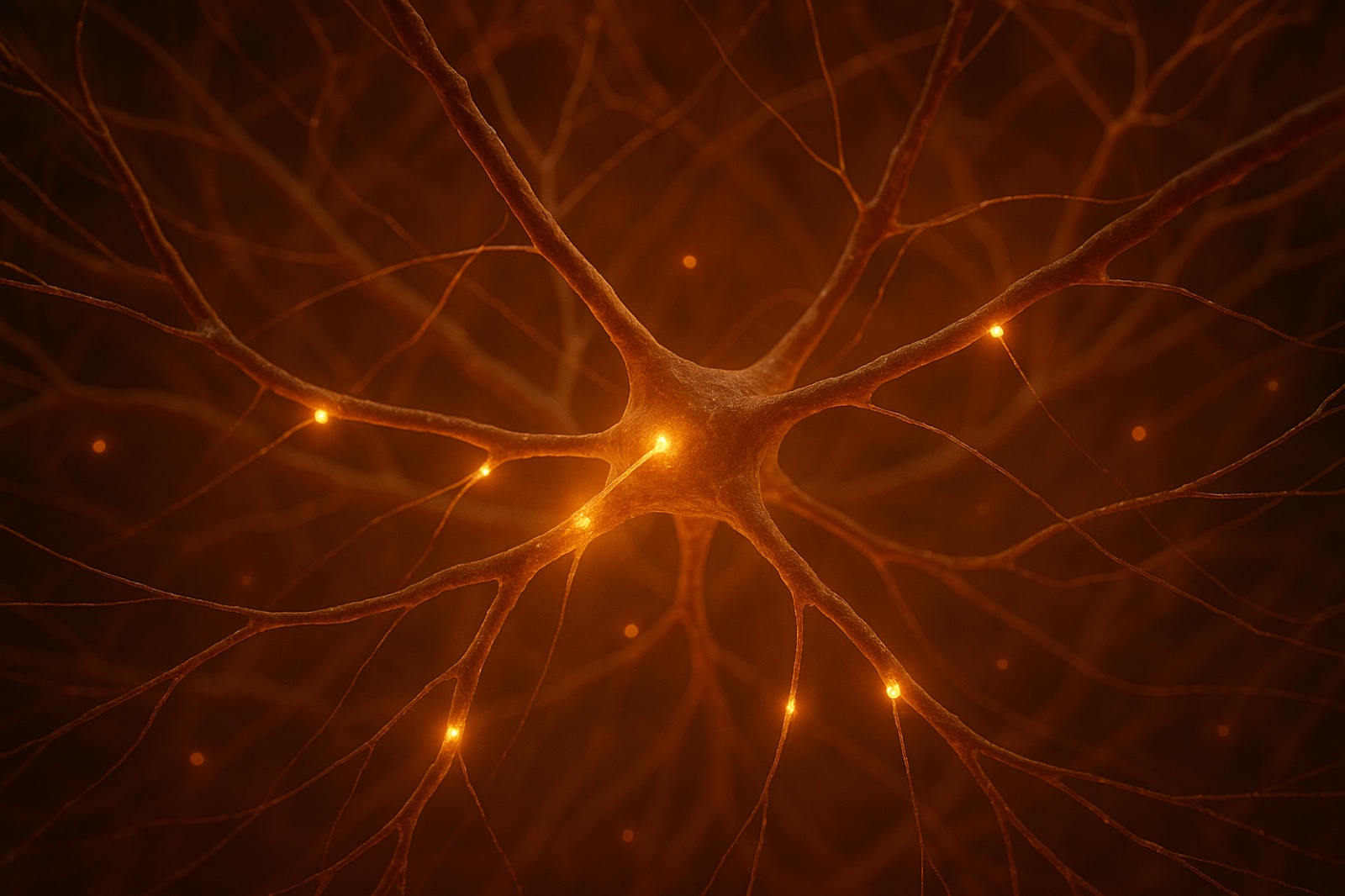
Instead, they found that tau is one of the tools a healthy brain uses to decide which memories get to last. Every new experience creates activity in what neuroscientists call engram cells — the specific brain cells that store a given memory. Tau doesn’t affect whether you learn something in the moment, and it doesn’t affect short-term recall. What it affects is whether that memory gets tagged for the long haul. Without tau doing its job, a memory can still form, but it stays weaker and fades faster. With it, the brain builds something durable.
The study’s title was almost clinical: “Tau T205 phosphorylation modulates engram cell recruitment and remote memory in mice.” But the implication wasn’t clinical at all. The same molecule blamed for erasing memory in Alzheimer’s is, in a healthy brain, part of what makes a memory permanent in the first place.
Why “Just Turn Off Tau” Might Be the Wrong Fix
A lot of proposed Alzheimer’s treatments work from a simple logic: tau is the problem, so suppress tau. This new research complicates that. If tau is also required for normal people to hold onto their most important memories, broadly shutting it down to fight disease could solve one problem while quietly causing another — trading tangled memories for none at all.
This isn’t the first time this year that Alzheimer’s research has forced a rethink of what looks, at first glance, like pure malfunction. Scientists have also identified the exact mechanism that kills brain cells in Alzheimer’s, and found that some brains resist the disease by nurturing their most vulnerable cells rather than discarding them. Piece by piece, the story of this disease keeps turning out to be less about a villain and more about a system doing something essential, in the wrong conditions.
Why We Never Stopped Building Memorials
There’s something almost strange about how insistent humans are on remembering things on purpose. We don’t just let memories happen to us — we build entire structures around holding onto them. Photo albums. Anniversaries. Statues. Scars we choose to keep instead of erasing. Names carved in stone long after the people who carried them are gone.
That instinct is older than photography, older than writing, older than most of what we’d call civilization. Some of the oldest religious texts in the world build entire holy days around a single repeated command: remember. Not because memory is a nice bonus feature. Because remembering, long before neuroscience could explain how, was understood as the thing that turns an experience into something that means something — instead of a moment that simply happens and disappears.
Tau doesn’t decide what you experience. It decides what you keep. That might be what makes it feel less like a design flaw waiting to happen, and more like a signature.
Maybe that’s the strange comfort tucked inside a disease that scares almost everyone. The reason a memory can hurt to lose is the same reason it was ever worth having in the first place — something in you was built to fight for it. So the next time you catch yourself repeating an old story out loud, pulling up a photo you’ve looked at a hundred times, or driving past a house you used to live in just to look at it a little longer, you’re not being overly sentimental. You’re doing exactly what that stubborn little protein in your brain has been doing all along.
Discussion Question
If your brain is quietly built to fight for the memories that matter most, what’s one memory you’d want it to protect above all the rest? Tell us in the comments below.
If any of this stirred up something bigger than curiosity — that quiet feeling that there’s more going on underneath the surface of ordinary life than we usually notice — there’s a free video guide and companion PDF built for exactly that feeling. It’s a simple way to start noticing what’s already there.
Share This
- Scientists just found out the Alzheimer’s protein tau might also be the reason your favorite memories never fade. Wild reframe of something we usually think of as only bad news.
- Turns out the brain protein blamed for erasing memory is also what makes memory permanent in the first place. Nature just published it. Rethinking a lot of things today.
- Not every “flaw” is actually a flaw. New 2026 research on tau protein and memory has me thinking about which of my own “problems” might secretly be load-bearing.
Common Questions
What is tau protein and why is it linked to Alzheimer’s?
Tau is a protein found inside brain cells that normally helps stabilize their internal structure. In Alzheimer’s disease, tau becomes abnormal and forms tangles inside neurons, which is one of the hallmark features doctors look for when diagnosing the disease.
Did scientists find a new use for tau protein in 2026?
Yes. A study from Flinders University, the University of New South Wales, and Macquarie University, published in Nature Communications in May 2026 and widely covered that July, found that tau also plays an essential role in helping healthy brains convert short-term experiences into stable, long-term memories.
Does tau protein cause memory loss or help memory?
Both, depending on context. In a healthy brain, tau helps select which brain cells will hold onto a given memory for the long term. In Alzheimer’s disease, tau becomes damaged and forms tangles that destroy the very cells it once helped preserve memories in.
Could removing tau completely cure Alzheimer’s?
Researchers now think broadly suppressing tau could backfire. Since normal tau is required for forming lasting memories, completely silencing it might prevent tangles while also preventing the brain from holding onto new memories at all.
Is there a connection between memory and meaning?
Many people find that memories carry more emotional weight than simple facts do, which is part of why we go out of our way to preserve them through photos, traditions, and stories. Ancient wisdom traditions have long treated the act of remembering as something closer to a spiritual practice than a passive brain function — a way of keeping meaning alive on purpose, not just letting it happen by accident.