 0
0
 0
0
Somewhere inside a flatworm — a creature simple enough that it doesn’t even have a brain — there’s a cell that does something almost hard to believe. When a threat shows up, this cell doesn’t run, and it doesn’t fight in any way we’d recognize. It explodes. In the time it takes to blink, it can wipe out threats surrounding as many as 70 neighboring cells. Then it’s gone completely, without a trace.
Stanford researchers just found this cell and gave it a name: the ruptoblast. It’s a discovery that’s rewriting part of what scientists thought they knew about the immune system — and it started with a question almost nobody was asking.
The Self-Sacrificing Immune Cell Scientists Just Named
The research, published in the journal Cell and picked up widely by outlets like ScienceDaily and EurekAlert, focused on flatworms — small, unassuming creatures that scientists have studied for decades because of their strange regenerative abilities. But this time, researchers weren’t looking at how flatworms heal. They were looking at how flatworms defend themselves.
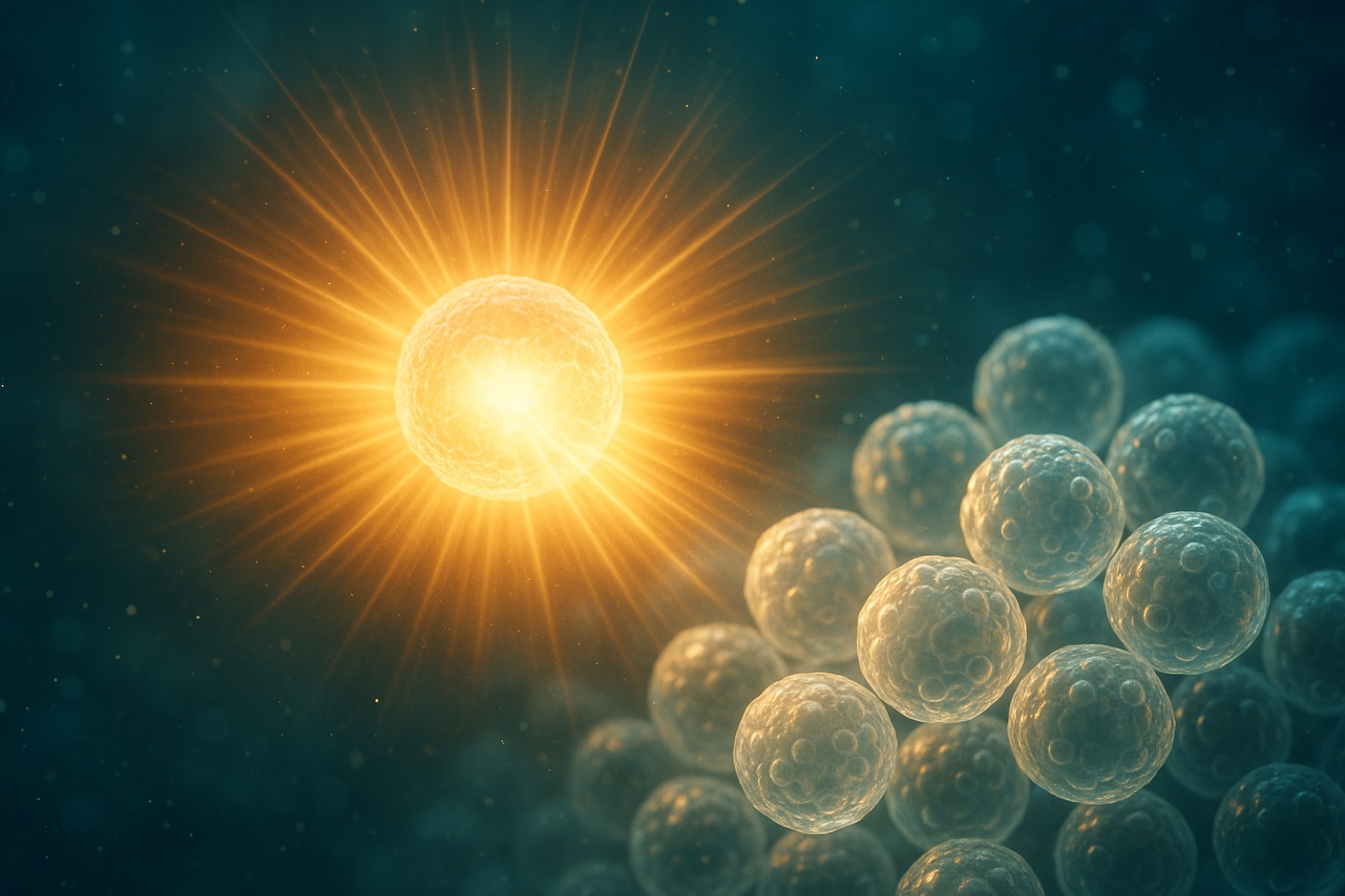
That’s when they found it: a self-sacrificing immune cell unlike anything cataloged before. Most immune cells work the way you’d expect — they patrol, they identify a threat, they neutralize it, and they move on to the next job. The ruptoblast does something different. It detects danger, and then it detonates on purpose, releasing a burst of toxic content that clears out harmful cells in the surrounding area — dozens of them, in a matter of minutes. The cell doesn’t survive the process. It isn’t built to.
How a Single Cell Clears a Threat in Under a Minute
What makes this finding significant isn’t just the discovery of a new cell type — it’s what the ruptoblast reveals about how the body’s defense systems are wired together. The study describes it as bridging two systems researchers used to think were separate: hormone surveillance and immune defense. In plain terms, this single kind of cell appears to be doing double duty — watching for signals from inside the body while also standing ready to sacrifice itself for a collective threat response.
It’s a reminder that the immune system is full of quiet specialists most of us never think about. Researchers have found other hidden immune “alarms” the body relies on — some of them so easily silenced that scientists are still learning how to keep them switched on. The ruptoblast is a different kind of alarm entirely: one that doesn’t just warn about danger, it removes it, at the cost of its own existence.
Why This Discovery Matters Beyond Flatworms
Flatworms are a favorite subject for biologists precisely because their basic systems — regeneration, immunity, cellular communication — often turn out to have echoes in far more complex animals, humans included. Scientists don’t yet know if something like the ruptoblast exists in people. But finding a cell this specialized, this deliberate, in an organism this simple raises a bigger question: how much of the body’s design, at scales too small to see, is still waiting to be discovered?
It’s the same question raised by every new find about what’s actually happening inside a living body — that the closer scientists look, the more intention they seem to find, not less. Even something as ordinary as a detail most of us never think twice about turns out to carry more design than expected once someone actually studies it.
A Kind of Sacrifice We’ve Always Recognized
Here’s the part that’s hard to shake once you sit with it. A cell — something without thought, without will, without any capacity to choose — behaves in a way that, if a person did it, we’d call the highest form of love there is. Giving up your own life, on purpose, so that others around you can keep living. We don’t have a scientific word that captures the weight of that. We only have old words. Ancient wisdom, long before anyone had a microscope, already had a name for exactly this kind of act: the greatest love there is, laying yourself down for someone else.
It’s strange to find that definition sitting inside a flatworm’s cellular biology, written into something too small to ever be seen with the naked eye. But maybe that’s exactly the point — that the deepest truths tend to show up in the smallest places first, quietly, long before anyone thinks to go looking for them.
What a Cell You’ll Never See Might Be Telling You
You will never see a ruptoblast. It lives and dies inside a creature you’ll never hold, doing its work in a fraction of a second, then vanishing entirely. And yet knowing it exists changes something — a small, quiet reminder that sacrifice, real sacrifice, isn’t a human invention. It’s stitched into life at every scale, all the way down to a single cell that never once considered doing anything else.
Maybe that’s worth carrying with you today. Not as a lesson. Just as something true.
What do you think?
If something too small to see can be built to give itself up for the good of others, what does that say about the kind of world we’re actually living in? We’d love to hear your take — leave a comment and let us know.
Share This
- A single immune cell just found in a flatworm can self-destruct to save 70 neighboring cells. Science keeps finding sacrifice built into life at every scale. 🧬 Read the full story
- Stanford scientists named a brand-new immune cell that detonates on purpose to protect the cells around it. It has no brain, no will — and it still gives everything it has for others. Here’s what they found
- This tiny cell dies so 70 others can live. Ancient wisdom had a word for that kind of love long before anyone had a microscope. Worth 3 minutes today.
Common Questions
What is a ruptoblast?
A ruptoblast is a newly identified type of immune cell, discovered by Stanford researchers studying flatworms. It detects threats and then deliberately self-destructs, releasing toxic content that can clear out harmful cells in its surrounding area — as many as 70 at once — before disappearing entirely.
Where was the ruptoblast discovered?
It was discovered in flatworms, small invertebrates that scientists frequently study because of their unusual regenerative and biological properties. The research was published in the journal Cell and covered widely by science outlets including ScienceDaily and EurekAlert.
How many cells can one ruptoblast protect?
According to the research, a single ruptoblast can eliminate threats to as many as 70 surrounding cells during its self-destructive response, all within a matter of minutes.
Do humans have cells like ruptoblasts?
Scientists haven’t yet confirmed whether an equivalent cell exists in humans. However, flatworms are commonly studied because their basic biological systems often reveal principles that apply to more complex animals, including people.
Why is this discovery considered significant?
The ruptoblast appears to bridge two systems researchers previously treated as separate — hormone surveillance and immune defense — suggesting the body’s protective systems may be more deeply interconnected than scientists realized, even at the smallest possible scale.