 0
0
 0
0
Astronauts on the International Space Station are running an experiment that has nothing to do with rockets, gravity, or Mars. They’re studying pneumonia. Specifically, they’re trying to answer a question that has quietly bothered doctors for years: why does a lung infection that clears up in a few weeks sometimes leave permanent damage in the heart?
The research is called MVP Cell-09, a partnership between NASA and researchers at the University of Alabama at Birmingham. It uses the extreme environment of space — where bacteria tend to behave more aggressively — to study Streptococcus pneumoniae, the bacteria behind most community-acquired pneumonia. In microgravity, this bacteria becomes more severe and more drug-resistant, and scientists are using that exaggerated response to see something that’s nearly invisible when the same infection plays out on Earth: exactly how pneumonia and heart damage are connected at the cellular level.
Here’s the number that makes this worth pausing on. More than a quarter of adults hospitalized for pneumonia go on to develop heart disease. Not eventually, in some vague future decades away — often within the following months and years. The infection ends. The cough goes away. The fever breaks. The chest X-ray comes back clear. And the heart keeps carrying something the rest of the body already let go of.
What Scientists Are Actually Looking For
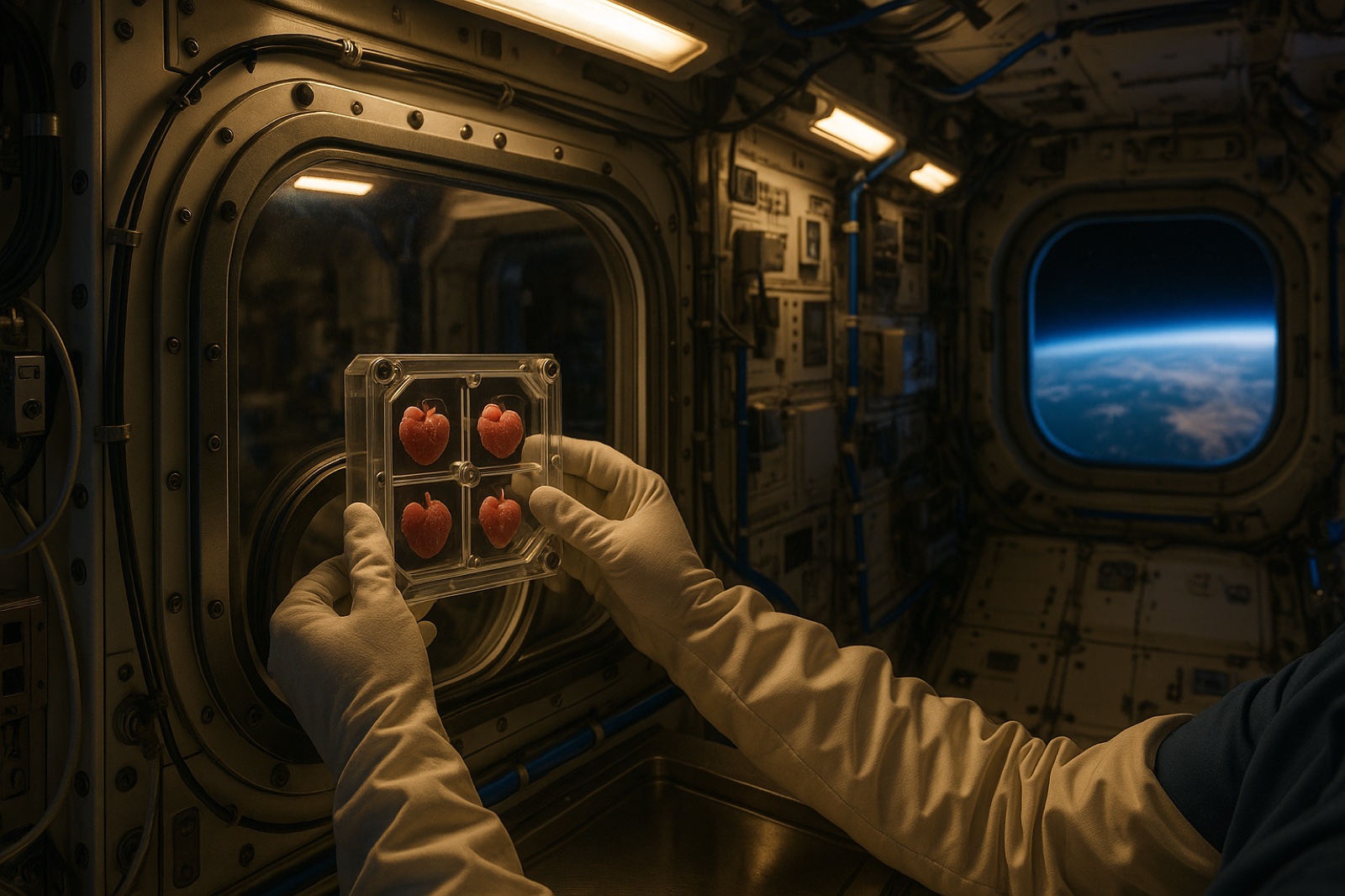
Up on the station, researchers are growing lab-made heart tissue from stem cells and exposing it to the pneumonia bacteria in orbit. Because bacteria misbehave more dramatically in microgravity, the damage that would take years to show up in a hospital patient becomes visible in a matter of days. That’s the whole point of doing this 250 miles above Earth instead of in a standard lab: space isn’t a gimmick here, it’s a magnifying glass.
What they’re hunting for is the exact mechanism — which cellular signals get triggered during the infection, and which of those signals are the ones that leave scarring behind after the bacteria are long gone. If they can isolate that, the payoff isn’t abstract. It means doctors could eventually screen pneumonia patients for heart risk while they’re still in the hospital, instead of finding out the hard way years later.
Why the Body Keeps Score
This is the part that tends to stop people when they actually sit with it: your heart doesn’t wait for permission to be affected, and it doesn’t check whether the infection has been officially declared “resolved” before deciding whether to change. Cells don’t read discharge paperwork. They only know what actually happened to them while it was happening — and that record doesn’t erase itself just because the symptoms did.
It turns out this isn’t only true of bacteria. Researchers have already found something strikingly similar happening with a completely different kind of wound. A 20-year study on what forgiveness actually does to the human body found that unresolved resentment shows up as measurable, physical strain — inflammation, elevated stress hormones, cardiovascular wear — long after the event that caused it is over. The body, in both cases, keeps a ledger the calendar doesn’t get a vote on.
An Old Warning About an Old Problem
Long before there was a stethoscope, before anyone knew what a bacterium even was, ancient wisdom literature made an oddly specific claim: guard your heart above everything else you guard, because everything else in your life flows out of it. It wasn’t talking about cardiology. It was talking about what a person quietly carries — grudges, grief, guilt, old wounds — the invisible residue of things that were supposed to be “over.”
And somehow, thousands of years before anyone could scan a heart for scarring, that observation landed on the same basic truth NASA is now measuring in a lab in orbit: what happened to you doesn’t just disappear because the visible symptoms did. It isn’t the first time modern research has circled back to something ancient wisdom said first — it’s becoming something of a pattern.
What This Might Mean for the Weight You’re Still Carrying
None of this is a reason to panic about an old cold. Most infections really do come and go without a trace. But the pattern researchers are chasing — a real, physical wound that outlasts the thing that caused it — is worth borrowing as a question for more than your bloodstream. What have you assumed was “over” simply because the loud part ended? A falling-out that got quiet but never got resolved. A loss you stopped talking about but never stopped carrying. A version of “fine” that’s really just the absence of a fresh flare-up, not the presence of healing.
Science is still years from finishing this particular study. But the question it’s built around — does the damage really end when the symptoms do? — is one you don’t have to wait for a lab result to start asking about your own heart.
A Small Next Step
If something in this stirred a little recognition — a name, a memory, a “huh, actually, maybe” — it might be worth a few honest minutes with yourself. Not to force anything. Just to notice. A short, private tool called Am I Ready to Forgive? was built for exactly this kind of quiet noticing — no pressure to act on what it shows you, just a clearer look at what your own heart might still be holding.
Something to Think About
Is there a hurt in your life you’ve assumed is “over” just because it’s gone quiet? What would it look like to actually check on that instead of assuming? Drop your answer in the comments — even a one-line thought helps someone else recognize the same thing in themselves.
Share This
NASA is studying how a lung infection leaves lasting damage in the heart — long after the illness is gone. Turns out ancient wisdom said something almost identical about the heart, thousands of years earlier.
“The heart doesn’t wait for permission to be affected — and it doesn’t check whether the wound has been officially declared over before deciding whether to change.” Wild thread on new NASA heart research.
Real question from a NASA study: does damage actually end when the symptoms do? Might be worth asking about more than your bloodstream.
Common Questions
Why is NASA studying pneumonia on the International Space Station?
NASA researchers, in partnership with the University of Alabama at Birmingham, are studying pneumonia bacteria in microgravity because bacteria become more aggressive and drug-resistant in space. This lets scientists observe cellular heart damage that would normally take years to appear on Earth in a much shorter window, through an experiment called MVP Cell-09.
Can pneumonia actually cause long-term heart damage?
Yes. More than a quarter of adults hospitalized for pneumonia go on to develop heart disease, often within the following months or years, even after the infection itself has fully cleared.
What bacteria is behind most pneumonia and heart damage cases?
Streptococcus pneumoniae is the leading cause of community-acquired pneumonia and is the bacteria being studied aboard the space station for its connection to lasting heart injury.
What is MVP Cell-09?
MVP Cell-09 is a spaceflight research experiment that grows lab-made human heart tissue from stem cells and exposes it to pneumonia bacteria in orbit, in order to identify exactly which cellular responses lead to permanent heart damage after infection.
Does the body hold onto damage from emotional wounds the same way it does from infections?
Research on forgiveness has found something similar — unresolved resentment and emotional wounds can produce measurable physical effects like inflammation and cardiovascular strain long after the original event is over, much like the lingering heart damage researchers are studying after pneumonia clears.