 0
0
 0
0
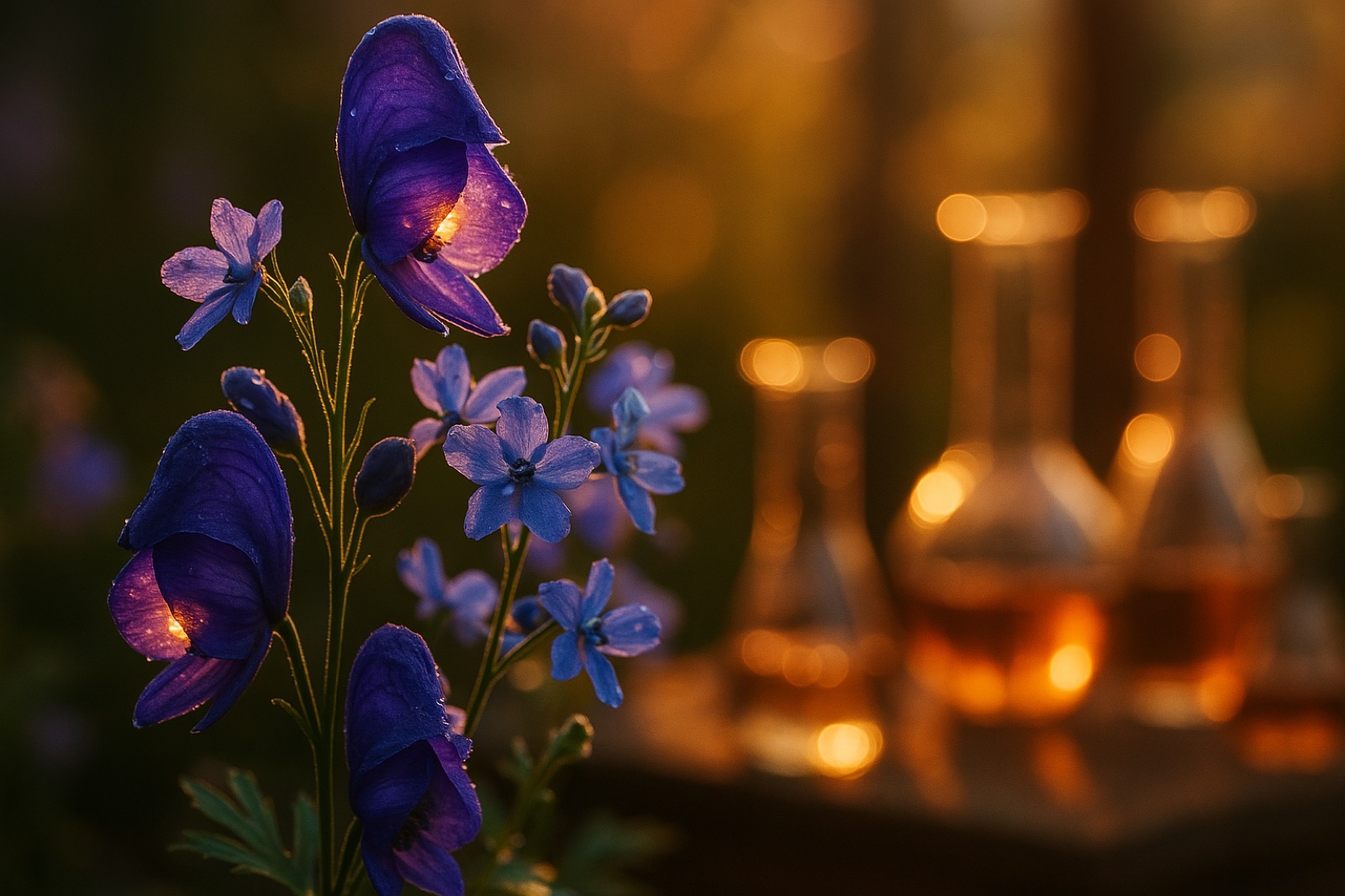
Wolfsbane and larkspur look like something you’d find in a cottage garden — deep violet hoods, delicate blue spurs, the kind of flowers that show up in a wedding bouquet. They are also, milligram for milligram, two of the deadliest plants on Earth. Wolfsbane (also called monkshood) has been used as an arrow poison and an execution method for thousands of years. Larkspur kills more cattle across the American West every year than almost any other range plant. A few grams of either, absorbed the wrong way, can stop a human heart within hours.
So it caught a lot of people off guard this month when researchers at Michigan State University and the Czech Academy of Sciences announced they’d mapped the exact biological pathway these two plants use to build their poison — and that the discovery opens a real door to turning that same chemistry into medicine for pain, cancer, and malaria.
The Poison in the Petals
The toxin in question belongs to a family of compounds called diterpenoid alkaloids. In wolfsbane, the most infamous of these is aconitine — a molecule so potent that ancient hunters in the Himalayas and the Alps coated their arrowheads with it, and Roman writers described it as the poisoner’s weapon of choice. It works by jamming open the sodium channels in your nerve and heart cells, so the electrical signals that are supposed to fire in careful sequence just keep firing. The heart can’t reset. That’s the mechanism behind the “death by a thousand cuts” feeling victims of aconite poisoning have described for centuries — numbness, then paralysis, then cardiac arrest.
Larkspur produces a close chemical cousin. Ranchers have fought it for generations because cattle that graze on young larkspur plants in spring can collapse and die within the hour.
Here’s the part that matters for medicine: the same molecular trick that overwhelms a nerve cell into shutting down can, in a controlled and precisely dosed form, be used to block pain signals instead of scrambling them. Researchers have known for years that some of these alkaloids have real potential as non-opioid painkillers, cancer-cell disruptors, and even antimalarial compounds. The problem was never whether the chemistry could heal — it was that nobody could produce the exact compound needed in a clean, controlled, scalable way. You can’t grow a pharmaceutical supply chain around foraging wild monkshood.
That’s what changed. By identifying the specific sequence of genes and enzymes wolfsbane and larkspur use to build these molecules — a pathway scientists are calling the atisinium route — researchers now have a genetic blueprint they can potentially engineer into other organisms, the same way insulin production was moved out of pancreases and into lab-grown bacteria. The poison stops being something you have to harvest from a dangerous plant and starts being something you can build on purpose, in exactly the dose a patient needs.
Danger and Cure Were Never Really Opposites
This isn’t actually a new idea in medicine — it’s just a new example of an old one. Digitalis, one of the most important heart medications ever discovered, comes from foxglove, a plant that’s toxic enough to kill a person who eats the wrong dose from their own garden. Botox is a purified form of one of the most lethal toxins known to science, and it’s injected into millions of people every year. The line between “this will kill you” and “this will heal you” was never really about the substance. It was about dose, precision, and understanding exactly what you’re holding.
Even the way scientists are learning to read the body’s own defenses follows this same pattern — researchers recently found the molecular switch cancer cells use to hide from the immune system, which means the same biology cancer exploits to survive can now be turned back against it. The danger and the answer keep showing up in the same place.
It’s a pattern researchers keep rediscovering — and, it turns out, a pattern much older than any laboratory.
An Old Story, Older Than Any Lab
Long before anyone understood sodium channels or biosynthesis pathways, an ancient story described the exact same principle. It’s tucked into one of the oldest layers of the Bible: a group of people, wandering through the wilderness, are suddenly overrun by venomous snakes. People are dying. There’s no antivenom, no medicine, nothing to reach for. And the remedy that’s described isn’t an herb or a cure hidden somewhere else. It’s an image of the very thing that was killing them — a serpent, cast in bronze, lifted up on a pole in plain sight of the whole camp. Anyone who looked at it lived.
Not because the danger was removed. Because the thing that could kill them became, when faced directly, the very thing that saved them.
Centuries later, in the Gospels, Jesus is recorded pointing straight back to that story to explain what was about to happen to Him — that He, too, would be “lifted up,” and that looking to Him would be the way people found life instead of losing it. The same shape shows up twice, thousands of years apart: the thing that looks like death becomes, when rightly understood, the way through it.
Scientists chasing a cure inside two of the deadliest flowers on Earth aren’t doing anything spiritual. But they keep landing on a pattern that got written down long before anyone had a microscope: sometimes the way out of the danger isn’t around it. It’s through it — faced directly, understood completely, and put in the right hands.
(If you want the fuller account of that bronze serpent story, it’s worth reading in full — it’s one of the stranger, more striking moments in the whole Bible.)
What This Actually Means Going Forward
None of this means wolfsbane tea is coming to a pharmacy near you. Turning a mapped biosynthesis pathway into an approved drug is still years of research, clinical trials, and regulatory review away. But the door that was closed — “we know this chemistry could heal, but we can’t produce it safely” — is now open. That’s a big deal in a field where new non-opioid pain treatments and new angles on drug-resistant cancers and malaria are genuinely hard to come by.
It’s also a reminder worth carrying past the headline: not everything in your life that feels toxic right now is only toxic. Some of the hardest, most dangerous seasons — the ones that felt like they might undo you — turn out, later, understood differently, held by the right hands, to be exactly the thing that ends up helping someone else survive theirs. The flower doesn’t stop being dangerous. It just stops being only dangerous.
A Question Worth Sitting With
Digitalis from foxglove, Botox from botulinum toxin, and now potentially pain and cancer treatments from wolfsbane and larkspur — the pattern keeps repeating: some of medicine’s biggest breakthroughs come from the most dangerous substances on Earth, properly understood. Does that change how you’d think about a genuinely hard season in your own life — the kind that felt purely like a threat while you were in it? We’d love to hear your take in the comments.
Share This
For X / Threads:
Two of the deadliest flowers on Earth just got mapped down to the gene level — and scientists say that’s the key to turning their poison into pain, cancer, and malaria medicine. Wild. https://bgodinspired.com/index.php/bible-resources/bible-and-science/deadliest-flowers-turned-into-medicine/
For Facebook:
Wolfsbane and larkspur can stop a human heart. Scientists just figured out exactly how these flowers build their poison — and that same discovery is opening the door to turning it into medicine. There’s an old story about this exact idea that’s honestly wilder than the science. Worth the read: https://bgodinspired.com/index.php/bible-resources/bible-and-science/deadliest-flowers-turned-into-medicine/
Short version:
The flowers that can kill you might be about to save someone else. https://bgodinspired.com/index.php/bible-resources/bible-and-science/deadliest-flowers-turned-into-medicine/
Frequently Asked Questions
Can wolfsbane and larkspur really be turned into medicine?
Researchers at Michigan State University and the Czech Academy of Sciences recently mapped the biosynthesis pathway these plants use to produce their toxic diterpenoid alkaloids. That genetic blueprint means scientists could potentially engineer the exact compounds needed for pain relief, cancer treatment, and antimalarial drugs in a controlled lab setting, rather than relying on harvesting the toxin from wild plants. It’s an early but real step toward new treatments, not an approved medicine yet.
Why are wolfsbane and larkspur considered so deadly?
Both plants produce diterpenoid alkaloids — aconitine in wolfsbane and a close chemical relative in larkspur — that overwhelm the sodium channels in nerve and heart cells, disrupting the electrical signals the body needs to function. In high doses this can cause paralysis and cardiac arrest. Wolfsbane has a documented history as an arrow and execution poison; larkspur is a leading cause of cattle deaths on Western rangelands.
How can a deadly poison also become medicine?
Many of medicine’s most important drugs come from toxic plants — digitalis (a critical heart medication) comes from foxglove, and Botox is a purified form of one of the most lethal toxins known. The difference between poison and medicine is almost always dose, precision, and control, not the substance itself.
What is the bronze serpent story in the Bible about?
It’s an account, found in one of the oldest parts of the Bible, describing a time when venomous snakes overran a group of people in the wilderness. The remedy wasn’t a hidden cure — it was a bronze image of the very serpent that was killing them, lifted up where everyone could see it. Anyone who looked at it survived.
Did Jesus reference the bronze serpent story?
Yes. In the Gospels, Jesus points back to that story to describe what would happen to Him — that He would be “lifted up,” and that looking to Him would be the way people found life. It’s one of the clearest Old Testament-to-New Testament connections in the Bible, tying an ancient wilderness story directly to the cross.