 0
0
 0
0
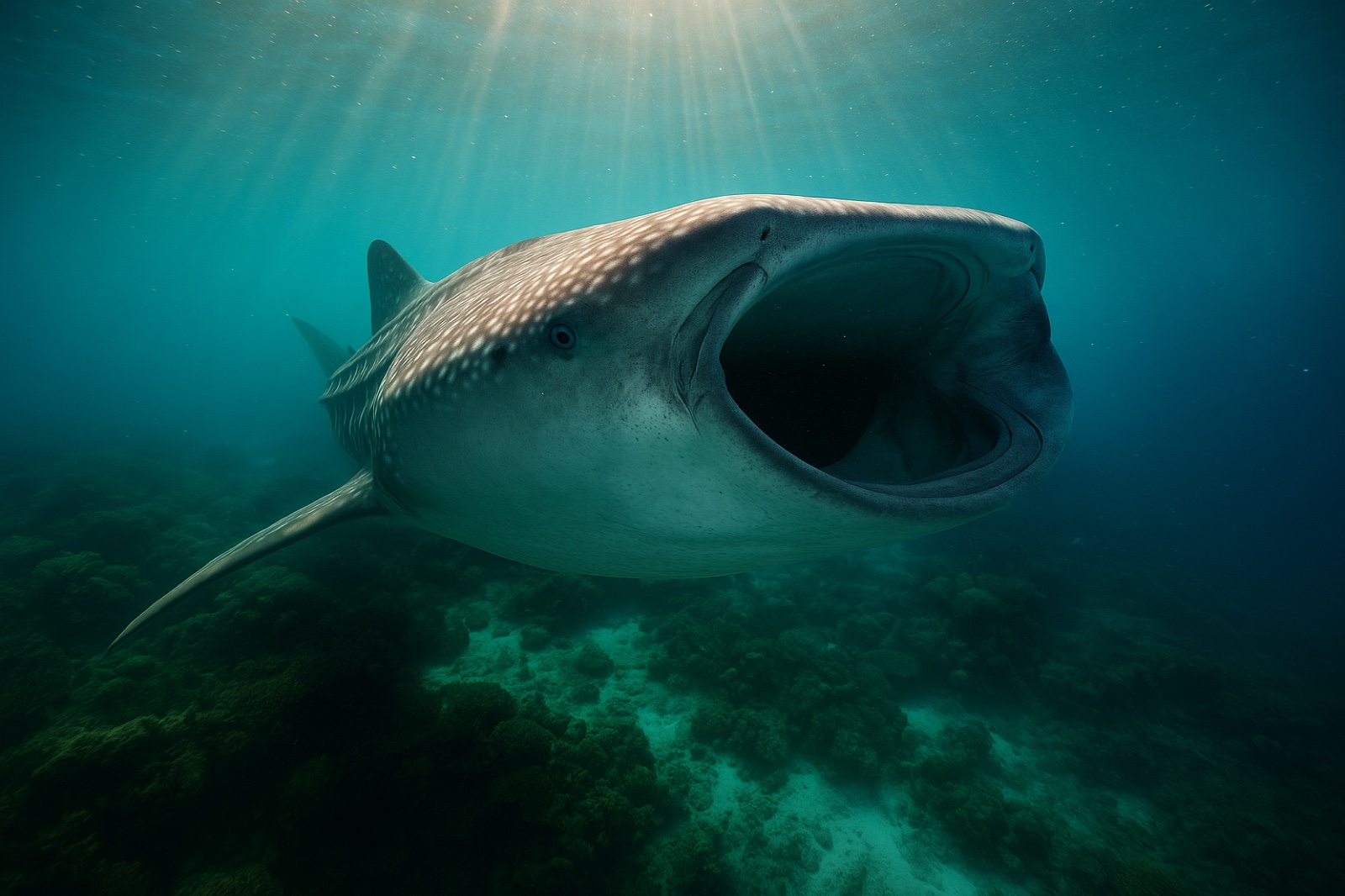
For as long as anyone has been watching, the whale shark has been an ocean celebrity that only shows off one trick. Snorkelers pay good money to swim alongside one doing it: gliding just under the surface, mouth open wide as a garage door, straining krill and small fish out of the water in slow, dramatic gulps. It’s the only whale shark feeding footage most of us have ever seen, so it’s the only whale shark feeding most of us assumed happened.
A team of marine biologists just proved that assumption wrong — and they didn’t do it by watching from a boat. They did it by riding along.
What Ten Whale Sharks Showed Scientists About Their Own Lives
Researchers Christine Barry, Luciana Ferreira, and colleagues attached camera tags to ten whale sharks feeding at Ningaloo Reef off Western Australia — a first for the species. The tags rode along on the sharks’ own fins, capturing more than 22 hours of footage from the animal’s own point of view, not a diver’s. When the sharks shed the tags on schedule, the cameras floated to the surface and were recovered.
What came back was the most detailed record ever made of what a whale shark actually does with its day. The team, publishing their findings in the journal Marine Biology on July 21, 2026, catalogued 36 distinct behaviors. Twelve of them were feeding behaviors. Six of those twelve had never been recorded in a whale shark before, by anyone.
The range surprised even the researchers. At one end sat the familiar surface gulping — what the team calls “active surface feeding,” the vigorous, visible chase after a dense krill swarm. But at the other end was something almost nobody had footage of: whale sharks sinking calmly to the seafloor, up to 70 meters down, mouths open, gliding in slow, unhurried passes through water most people would assume was empty. The team named it “gliding slow feeding,” and it turns out to be common — not rare.
The Real Pattern in Whale Shark Feeding: Most of It Happens Where No One Is Watching
Here’s the detail that changes the picture. Whale sharks, it turns out, spend most of their time doing exactly that quiet, low-density foraging — patiently working through water with scattered plankton, not chasing anything, not putting on a show. They save the dramatic active surface feeding for the rare moments they stumble onto a genuinely dense patch of prey. The spectacle everyone associates with a whale shark’s feeding — the one in every documentary, every tourist photo, every viral video — is the exception. The unremarkable, patient work in the deep is the rule.
It’s a pattern that keeps showing up as researchers get better tools for watching animals nobody could really watch before — a recent roundup of newly discovered shark secrets found the same theme again and again: the real story of how these creatures survive is almost never the part anyone gets to film.
For a species this large — the biggest fish in the ocean, by a wide margin — it’s a strange thing to realize we’ve been watching the smallest, most theatrical part of its life and mistaking it for the whole picture. The sustenance that actually keeps a whale shark alive for the 100-plus years it may live isn’t happening at the surface, in front of an audience. It’s happening seventy meters down, unfilmed, until now.
Why We Keep Assuming the Visible Part Is the Whole Story
There’s something worth sitting with here beyond marine biology. It’s easy to judge how well anything is being sustained — a body, a friendship, a life — by whatever part of it happens to be visible. We do it with people too: we assume the version someone shows in public is the version that’s actually keeping them going. But the part that sustains a life rarely is the part anyone applauds for.
Some of the oldest wisdom passed down about the inner life makes almost the same observation the marine biologists just did. The traditions that talk about prayer, or generosity, or any kind of quiet discipline tend to agree on one strange detail: the version done where nobody can see it is treated as the real one — not a lesser, hidden version of the “real” public practice, but the actual substance the public version was only ever a shadow of. Whatever is genuinely feeding a life, in other words, usually isn’t the part performing for an audience. It’s the part working quietly, seventy meters down, that nobody happens to be filming.
That reframes the question this study accidentally raises. Not just “how does a whale shark actually eat” — but where in your own life the real sustaining work might already be happening, unnoticed, while you’ve been watching for something more dramatic. It’s the same idea behind a well-documented historical figure who spent the overwhelming majority of his life completely out of public view before anyone ever saw the part they now remember him for.
What Happens to the Story Now
The Ningaloo team says this is just the beginning — with camera tags this detailed now proven to work at scale, more species are likely to get the same treatment, and more assumptions built on decades of surface-only observation are likely to fall. Marine biology’s central humbling lesson keeps repeating itself: the ocean’s most famous animals have been performing exactly one visible act for cameras, snorkelers, and tourists — while the actual work of staying alive happens in the dark, at depths nobody thought to check until they finally could.
The next time a whale shark documentary shows that slow-motion surface gulp, it’s worth remembering: you’re watching the smallest part of the story. The biggest fish in the ocean spent decades keeping the rest of it to itself — not because it was hiding, but because nobody had thought to look where it actually mattered. If that idea lingers — that the part of you doing the real, quiet work might be closer to something bigger than you realized — this two-minute reflection is a low-pressure way to sit with it a little longer.
Something to Think About
If you found out today that the most important part of something you thought you understood well had been happening completely out of view the whole time — would that change how you look for it going forward, or would you keep watching the same visible spot out of habit? Tell us in the comments.
Share This
- They put cameras on whale sharks for the first time ever — and found out the biggest fish in the ocean has been hiding the most important part of how it eats. https://bgodinspired.com/index.php/bible-resources/bible-and-science/whale-shark-hidden-feeding-study/
- Turns out the whale shark feeding you’ve seen in every documentary is the rare part. The real, constant work happens 70 meters down where nobody’s ever had a camera. https://bgodinspired.com/index.php/bible-resources/bible-and-science/whale-shark-hidden-feeding-study/
- New study: whale sharks do most of their real feeding completely out of sight. What we assumed was normal turned out to be the exception. https://bgodinspired.com/index.php/bible-resources/bible-and-science/whale-shark-hidden-feeding-study/
Quick Questions About This Study
What did scientists discover about how whale sharks feed?
Scientists attached camera tags to ten whale sharks at Ningaloo Reef in Western Australia and recorded more than 22 hours of footage from the sharks’ own point of view. They found that whale sharks spend most of their time in slow, quiet “gliding” feeding near the seafloor, at depths up to 70 meters, rather than the dramatic surface gulping most people associate with the species. The findings were published in the journal Marine Biology on July 21, 2026.
Is the surface feeding whale sharks are known for actually rare?
Based on this camera-tag study, yes. Researchers found that the vigorous surface feeding seen in most whale shark photos and videos only happens when the sharks encounter a dense patch of prey like a krill swarm. Most of their feeding time is spent in low-density water doing slower, less visible foraging closer to the seafloor.
How many new whale shark behaviors were recorded in this study?
Researchers catalogued 36 distinct behaviors across the ten tagged whale sharks. Twelve were feeding-related, and six of those twelve feeding behaviors had never been documented in whale sharks before this study.
Why is this whale shark study significant?
It’s the first time researchers have used camera tags to record whale shark feeding from the animal’s own perspective rather than from a boat or a diver. It overturns decades of assumptions built almost entirely on the one feeding behavior humans could actually observe — surface feeding — and reveals that most of a whale shark’s real feeding activity happens hidden, in deeper water.
Where can I read the original whale shark camera study?
The research was conducted by Christine Barry, Luciana C. Ferreira, and colleagues and published in the journal Marine Biology on July 21, 2026, based on fieldwork at Ningaloo Reef, Western Australia.