 0
0
 0
0
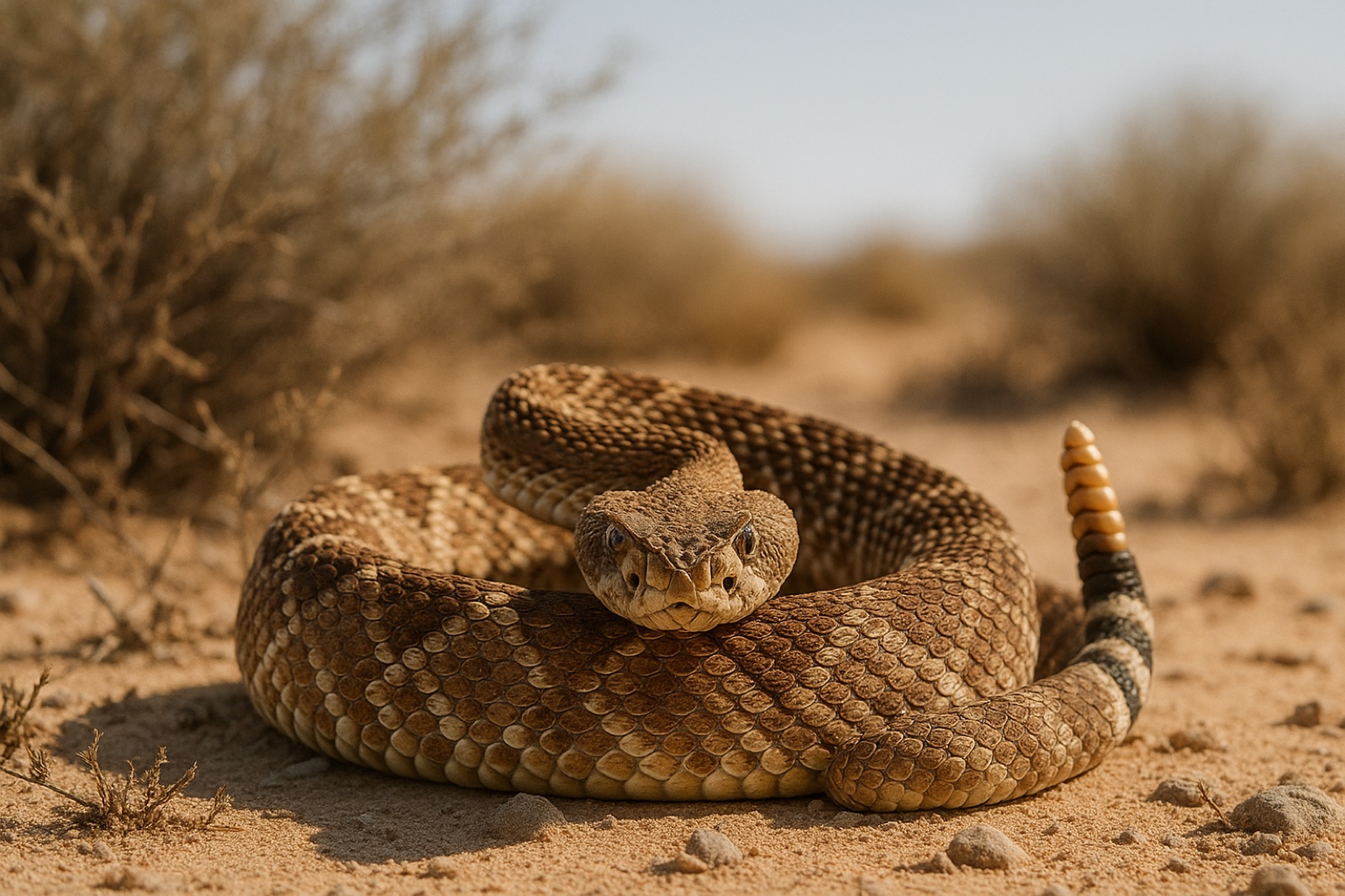
Here is a fact that sounds invented. The rattlesnake makes one of the more destructive venoms in the animal world — and it carries, in its own blood, a set of proteins that shut a large part of that venom down.
It has to. An animal that manufactures poison inside its own body needs a way not to be killed by its own inventory.
Biologists at the University of Maryland have now taken those proteins apart, mixed them in different combinations, and tested them against viper venom. Their results, published in the journal Proceedings of the National Academy of Sciences in July 2026, point toward a rattlesnake antivenom made from rattlesnakes — and in laboratory testing, the best combinations were roughly ten times more potent than the treatment used for these bites today.
That matters more in some places than others. The World Health Organization estimates that snakebite kills somewhere between 80,000 and 140,000 people a year, and leaves hundreds of thousands more with permanent damage — an amputation, a hand that no longer closes, a leg that never works properly again. Most of those people are farmers, herders and children in rural areas, a long way from a clinic that stocks antivenom, and further still from one that stocks the right antivenom.
The Block Is in the Blood, Not the Venom
This is the part almost every retelling gets slightly wrong, and the difference is the whole story.
The protection is not hidden inside the venom. It sits in the snake’s blood serum — a different compartment of the same animal. The snake keeps the weapon in one place and the block for it in another, and both are its own.
The proteins are called FETUA proteins. One of them, FETUA-3, was identified in 2022 as something that shuts down metalloproteinases — the family of venom toxins responsible for tissue destruction, the kind of damage that costs people fingers and limbs rather than their lives. The new study went looking at the rest of the family, to see what each one did.
One Protein Was Not Enough. The Combination Was.
Here is the finding most of the coverage skipped.
No single FETUA protein, on its own, was enough. Sean B. Carroll, the University of Maryland biologist who led the work, said plainly that not one of them completely prevented death from a bite by itself.
What worked was the mixture. Specific combinations of these proteins covered each other’s gaps, and together they fully neutralised the lethality of rattlesnake venom in testing. Apart, each was partial. Together, they were complete.
There is a second surprise sitting right next to it. These proteins are conserved, which means a protein taken from a western diamondback also bound to and blocked toxins from other rattlesnakes — including species separated from it by millions of years of evolution — and from several other vipers besides. A defence built for one animal’s own poison turned out to work on poisons it had never met.
“The ingredients are there,” Carroll told reporters. “We just have to keep testing various mixtures.”
Animals quietly carrying a defence nobody expected is turning into a pattern. Bats, for instance, run a second antibody system that no other mammal has, which is a large part of why they can carry viruses that would flatten us and go on about their evening.
The Antivenom We Already Use Comes From a Body That Survived
This is worth knowing, because it makes the new approach look less exotic and more like a shortcut.
The antivenom in hospitals today is not built in a chemistry lab from scratch. It is made by giving an animal — a horse for many venoms, a sheep in the case of the current rattlesnake treatment — small, carefully controlled doses of real venom, waiting for that animal’s immune system to work out a response, and then harvesting the antibodies it made.
So the treatment already runs on the same principle. Find a body that met the poison and lived. Borrow what that body learned.
What the Maryland work suggests is that we have been asking the wrong animal. The sheep has to learn. The rattlesnake already knows.
Nor is this the first time a thing that kills has turned out to be the raw material for a thing that heals. Two of the most poisonous flowers on earth became real medicine once somebody worked out what to do with them.
What the Rattlesnake Antivenom Study Does Not Say Yet
Three things, and they all matter.
- This is laboratory work. There are no human trials. Nobody has been treated with this. The distance between a result like this and a vial in a rural clinic is usually measured in years.
- It covers one family of toxins. A single snake venom contains around a hundred different toxin proteins across several families. The FETUA proteins handle the metalloproteinases. The researchers say so themselves, and are extending the work to other toxin families.
- The global burden is mostly not rattlesnakes. Most snakebite deaths happen in Africa and South Asia, caused by snakes that are not rattlesnakes at all. The cross-protection the team found is genuinely encouraging, but “blocked several other viper venoms in a lab” is not the same claim as “will work on the snake in your field.”
None of that makes the finding small. It just keeps it honest — the same care that was missing when a much-repeated anti-ageing headline turned out to rest on a study that ran only in mice and carried a caveat from its own authors.
The Idea Is Older Than the Laboratory
What stays with you afterwards is not the chemistry. It is the shape of it.
The cure was not somewhere else. Not in a rare plant on another continent, not in a mineral at the bottom of the sea. It was inside the animal everyone was afraid of, carried quietly in the same body that made the thing doing the harm.
People have been circling that idea for a very long time. There is an old desert story, thousands of years old, about a group of people dying of snakebite and the strange instruction they were given: make a snake, lift it up where everyone can see it, and look at it. Not run from it. Not pretend it was not there. Look straight at the shape of the thing that was killing them — and live.
It reads like superstition right up until you have spent an afternoon with a paper about serum proteins from a western diamondback. Then it reads more like somebody noticed something true about the way healing tends to arrive, a very long time before anyone had a word for a metalloproteinase inhibitor.
Whatever you make of where that story came from — and plenty of people read it as a record of God doing something deliberate — the instinct inside it is the one the laboratory eventually arrived at. The way out of a thing usually runs through it rather than around it. And what you are most afraid of is often carrying something you need.
Nobody Thought to Check Its Blood
The researchers are not finished. There are ninety-odd other toxins to account for, and a long road between a promising mixture and a treatment that reaches someone in the dark, hours from help.
But the direction has changed. For a century we asked animals that had never met the poison to learn it on our behalf. Now we are asking the animal that already knew.
It was carrying the answer the whole time. Nobody thought to check its blood.
A Question Worth Sitting With
Here is what we are curious about. When the solution turns up inside the problem — the antidote in the snake, the medicine in the poison — do you think that is simply how chemistry works out sometimes, or do you think it says something about the way the world is put together?
There is no wrong answer, and you do not need a science background to have a good one. Leave a comment and tell us what you think.
If You Want to Share This
- The rattlesnake carries the block for its own venom in its blood. In lab tests it beat the antivenom we make by about ten times. The cure was inside the thing everyone was afraid of. https://bgodinspired.com/index.php/bible-resources/bible-and-science/rattlesnake-antivenom-cure-inside-the-snake/
- Turns out the antivenom in hospitals is already made by borrowing what a sheep’s immune system learned from real venom. Researchers just asked the more obvious question: why not ask the snake, which never had to learn it? https://bgodinspired.com/index.php/bible-resources/bible-and-science/rattlesnake-antivenom-cure-inside-the-snake/
- No single protein in rattlesnake blood was enough to stop the venom. Only the combination worked. I keep thinking about that. https://bgodinspired.com/index.php/bible-resources/bible-and-science/rattlesnake-antivenom-cure-inside-the-snake/
Questions People Ask
Can a rattlesnake survive its own venom?
Largely, yes. Western diamondback rattlesnakes carry a group of proteins in their blood serum, called FETUA proteins, that block metalloproteinases — a major family of toxins in their own venom. The protection sits in the snake’s blood, not in the venom itself, so the animal effectively keeps the weapon in one compartment and the block for it in another.
What are FETUA proteins?
FETUA proteins are toxin-blocking proteins found in the blood serum of western diamondback rattlesnakes. One of them, FETUA-3, was identified in 2022 as an inhibitor of metalloproteinase toxins — the venom components that destroy tissue and cause the amputations and permanent damage associated with viper bites. A 2026 study in the Proceedings of the National Academy of Sciences found that combinations of these proteins were far more effective than any single one.
Is this new rattlesnake antivenom available to patients?
No. The research published in the Proceedings of the National Academy of Sciences in July 2026 was laboratory work. There have been no human trials, and no treatment based on these proteins exists for patients. Anyone bitten by a venomous snake should get to a hospital as quickly as possible and use the antivenom that is actually available there.
How is snake antivenom made?
Conventional antivenom is produced by giving a large animal — commonly a horse, or a sheep in the case of the current rattlesnake product — small, controlled doses of real venom, allowing that animal’s immune system to build antibodies against it, and then collecting and purifying those antibodies. The finished treatment is essentially borrowed immunity from an animal that met the poison and survived.
How many people die from snakebite each year?
The World Health Organization estimates that snakebite causes somewhere between 80,000 and 140,000 deaths a year worldwide, with hundreds of thousands more people left with permanent disabilities such as amputations. The burden falls most heavily on rural farming and herding communities in Africa and South Asia, where the distance to a clinic stocking the correct antivenom is often the deciding factor.