 0
0
 0
0
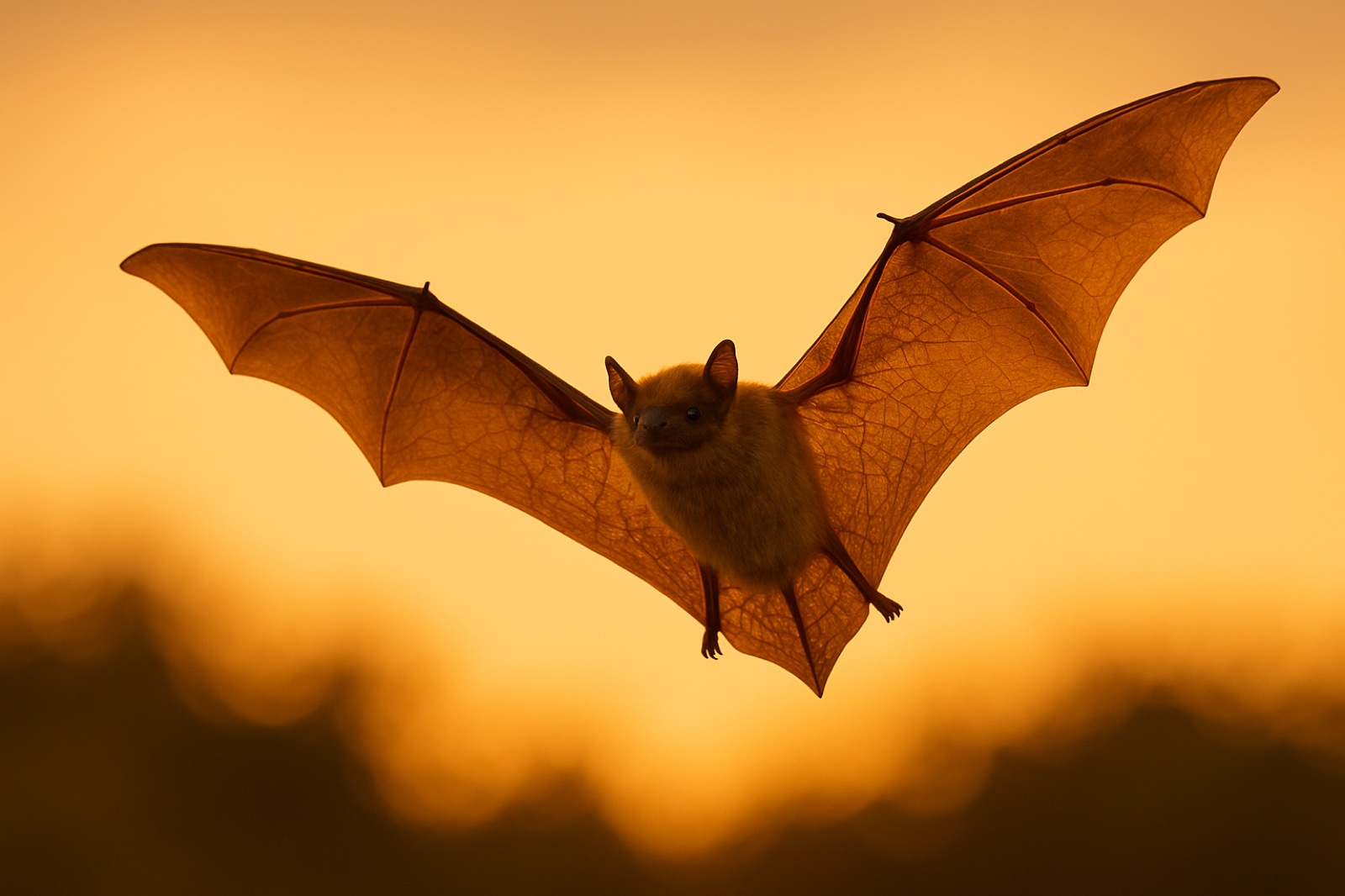
Somewhere tonight, a small brown bat is crossing a field, catching insects, doing nothing unusual at all. Inside its body is a virus that could put a person in hospital.
The bat is fine.
Not fighting bravely. Not slowly recovering. Just fine — hunting, feeding, going about its night as if nothing were there. Scientists have wanted to know why bats don’t get sick like this for a long time, and this year they found something they were not looking for.
Why Bats Don’t Get Sick Has Been a Puzzle for Years
Bats carry an unusual number of viruses that cause serious illness in other animals. They carry them quietly. That combination is rare enough that researchers have spent years trying to work out what is different about a bat.
Most of that work looked at one half of the immune system: the fast, general half. The part that reacts to anything unfamiliar within minutes, before the body knows what it is dealing with. Bats do seem to run that half differently. But it never fully explained the gap.
The other half — the slow, specific half that learns a particular enemy and remembers it — got much less attention. That is the half that makes antibodies. And that is where the surprise turned out to be hiding.
Scientists Found a Second Set of Antibody Genes
An antibody is a Y-shaped protein. It is built from two heavy chains and two light chains, and the tips of the Y are what grip onto a virus. The heavy chain genes are the blueprint library the body shuffles to build new grips it has never made before.
Every mammal ever studied has one of those libraries. One.
A team led by Hannah Frank at Tulane University, working with colleagues at Stanford and the US Centers for Disease Control, went looking through bat genomes and found two. Not a fragment, not a broken leftover copy — two complete, working heavy chain libraries, sitting on separate chromosomes. They screened the genomes of 34 bat species and found the arrangement in 26 of them. The work was published in Science Advances in July 2026.
All of those species belong to one family: the vesper bats. It is the largest bat family on earth, more than 500 species, living on every continent except Antarctica. If you have ever seen a bat at dusk, it was very likely one of these.
“We’ve never seen anything like this in a mammal before,” Frank said. “This completely changes our understanding of how mammalian immune systems can be organized.”
The closest thing anyone had seen was in bony fish, which carry a more limited version of the same trick. In a mammal, it was new.
The Surprise Was Not the Copy. It Was What the Copy Does.
This is the part worth slowing down for, because it is not what you would expect, and it is easy to read straight past.
Two libraries sounds like a backup. A spare. The same thing, twice, in case the first one fails.
That is not what the researchers found. The two libraries are not doing the same job at all.
One of them is small and quick. It holds around 33 variable genes, and it mutates rapidly — that is how the immune system sharpens an antibody until it fits one specific enemy exactly. It produces the refined, targeted antibody types. This is the library that learns.
The other one is much larger, holding close to a hundred variable genes. And it barely mutates at all. It produces the broad, first-contact antibody type — the one that recognises a wide range of things roughly, rather than one thing perfectly. Individual immune cells use one library or the other, not both at once.
So the bigger collection, the one holding the most raw variety, is the one that does not adapt.
Think about what that means. It is not a spare copy of the learning system. It is breadth, held permanently in reserve, deliberately unchanged — kept ready for something the animal has never met. The immune system’s usual strategy is to get better at what it has already seen. This is the opposite strategy, running alongside it.
If you find that kind of thing interesting, it is worth reading about the odd immune trait shared by people who live past 110 — another case where an unusual immune arrangement turned up somewhere nobody had thought to look.
What This Study Does Not Prove
It is worth being clear about the limits, because the headline version of this story overstates it.
Frank said so herself: “It doesn’t fully explain why bats are such effective viral reservoirs, but it reveals a level of immune variety we didn’t know existed and gives us an entirely new direction to explore.”
That is an honest description. The team found a structure. They have not yet shown that the structure is the reason bats tolerate viruses. Those are different claims.
There are practical gaps too. Very few of the cells sampled were using the second library, which left less statistical power than the researchers wanted. Nobody has mapped how much this varies between individual wild bats. And standard laboratory tools were built on the assumption that a mammal has one heavy chain library, so they were not designed to see both.
The honest summary is: something real and previously unknown is there, and it will take years to learn what it does.
One More Detail
The researchers also traced where the second library came from. Their analysis points to a single duplication event, far back — in the ancestor of the whole vesper bat family, or very early in its history.
Which means no particular virus caused it. It was not assembled in a crisis. It was already finished before any of the threats it now handles existed.
That is a strange shape for protection to have. The most useful thing the bat carries is the thing it never had to build, could not have anticipated, and did nothing to earn.
It is also not a new shape. Long before anyone could see a gene, people writing about God kept describing provision in almost exactly those terms: already there, already enough, arranged ahead of the need rather than thrown together once the need arrived. They had no idea what was inside a bat. They were describing something they had noticed about the way they were being carried.
Make of that what you like. It is a nice thing to notice.
What You Can Take From a Bat
You will never see any of this. It happens in cells too small to imagine, in an animal most people only glimpse as a shape at dusk.
But there is something quietly steadying in it anyway. The bat is not braced. It is not scanning the dark for what might be coming. It is just flying, and eating, and getting on with the night — and the reason it can is that the readiness was never something it built while afraid.
Most of what protects any of us was in place long before we knew we needed it. That is not a reason to stop being careful. It is just a reason to stop bracing quite so hard.
If you like the strange, specific ways living things are put together, we also built a free What Animal Am I? quiz — no sign-up, just a bit of fun. And for another case of something arriving that nobody planned, there is the Norfolk field that grew a wildflower meadow with no seeding at all.
Questions People Ask About Bats and Viruses
Why don’t bats get sick from viruses that make people ill?
Nobody has a complete answer yet. Bats appear to run several parts of their immune system differently from other mammals, and in 2026 researchers found one previously unknown difference: vesper bats carry two separate sets of antibody heavy chain genes instead of the single set found in every other mammal studied. The researchers state clearly that this does not by itself explain bats’ tolerance of viruses — it is a new lead, not a solved case.
What did the 2026 bat antibody study actually find?
Researchers led by Hannah Frank at Tulane University, with collaborators at Stanford University and the US Centers for Disease Control, screened the genomes of 34 bat species and found 26 of them carry two complete, functional immunoglobulin heavy chain gene libraries on separate chromosomes. Every other mammal ever studied has one. The finding was published in Science Advances in July 2026. A similar but more limited duplication is known in bony fish, but it had never been seen in a mammal.
Are the two antibody gene sets in bats identical copies?
No. They are genetically and functionally different. One library is compact, mutates rapidly, and produces the refined antibody types the immune system uses to target a specific enemy precisely. The other is considerably larger, rarely mutates, and produces the broad first-contact antibody type used for wide-ranging recognition. Individual immune cells use one library at a time rather than both.
What is a vesper bat?
Vesper bats are the family Vespertilionidae, the largest family of bats in the world, containing more than 500 species. They live on every continent except Antarctica and include common small insect-eating bats such as the big brown bat. Most bats people see at dusk in temperate regions are vesper bats.
Could this discovery lead to new medicines for humans?
Not yet, and it would be premature to say it will. The researchers describe the finding as opening a new direction for study rather than producing a treatment. Several practical obstacles remain: very few sampled cells were using the second gene library, variation between individual wild bats has not been mapped, and standard laboratory tools were designed on the assumption that mammals have only one such library.
Your Turn
Bats carry a defence they never had to earn and could not have planned for. Do you think that makes them a rare exception — or is it more likely that every living thing is carrying something like it, and we simply have not found it yet? Tell us what you think in the comments.
Share This
- Bats carry viruses that would put a person in hospital, and they’re just fine. Scientists finally looked at their antibody genes and found two complete sets. Every other mammal has one. https://bgodinspired.com/index.php/bible-resources/bible-and-science/why-bats-dont-get-sick/
- The strangest part of the new bat immunity study: the bigger set of antibody genes is the one that never mutates. It’s not a backup — it’s breadth kept permanently in reserve for something the animal has never met. https://bgodinspired.com/index.php/bible-resources/bible-and-science/why-bats-dont-get-sick/
- Reading about bats tonight and got stuck on this: the thing that protects them best is the thing they never had to build. It was finished before any of the threats existed. https://bgodinspired.com/index.php/bible-resources/bible-and-science/why-bats-dont-get-sick/