 0
0
 0
0
In 1989, a Danish museum packed up its fossil collection for a move across the country. Somewhere between the old building and the new one, several massive shark vertebrae — bones from one of the biggest predators to ever swim the ocean — seemed to disappear. For more than three decades, paleontologists assumed the specimens had been destroyed in the shuffle.
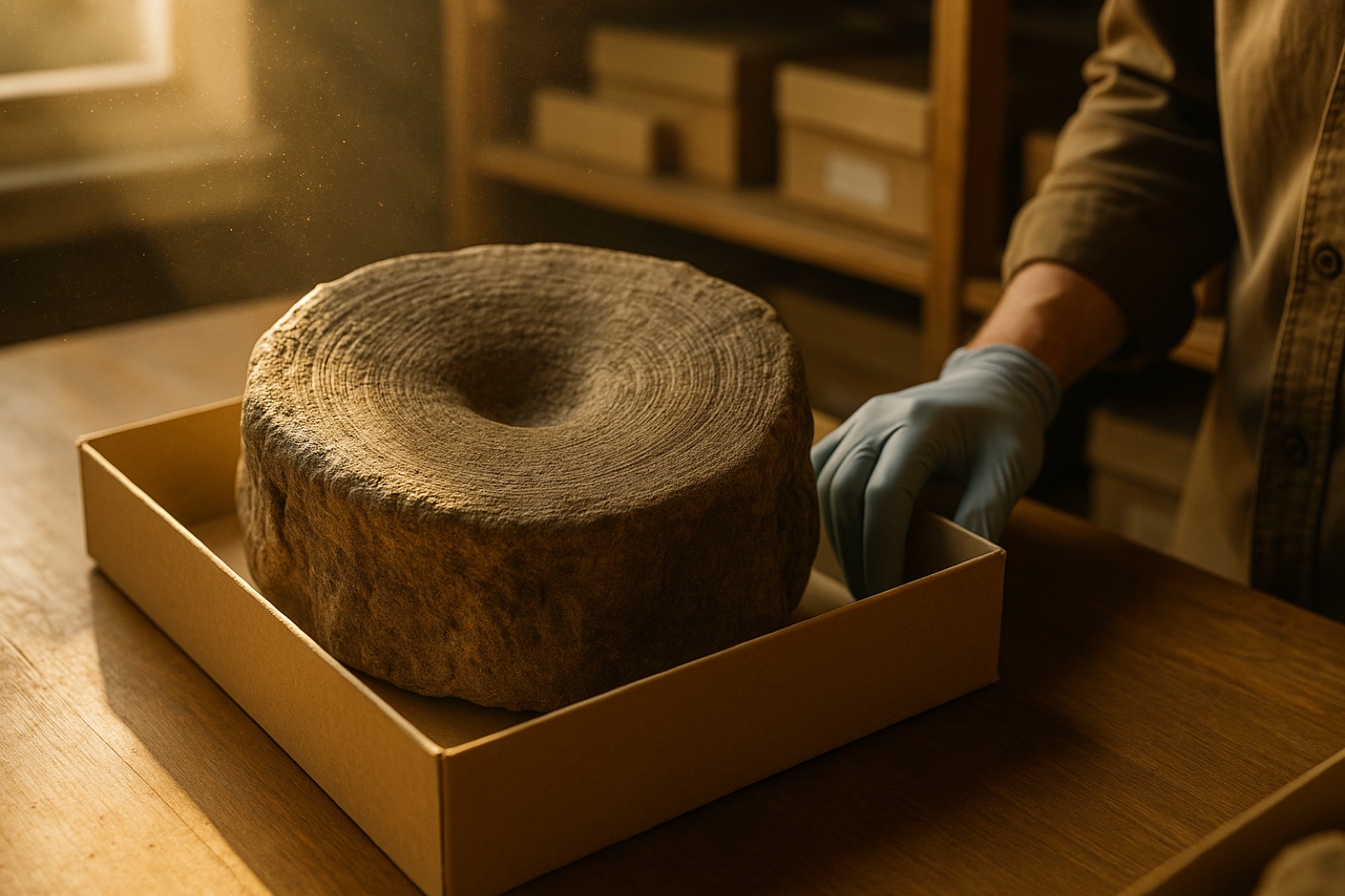
Then, in a storage room at the Natural History Museum of Denmark, a researcher opened an unmarked box and found them. Exactly where they’d been sitting the entire time.
A Fossil Nobody Thought They’d See Again
The vertebrae belong to Otodus megalodon — the extinct super-predator that makes today’s great white sharks look small by comparison. They were originally cataloged at the Geological Museum of Copenhagen, now part of the Natural History Museum of Denmark. In 1989, when specimens were transferred to the Museum of Southern Jutland, the bones seemed to vanish. For over 30 years, they were presumed lost — maybe damaged, maybe misplaced for good during the move.
They weren’t. They were sitting in a box, unlabeled, on a shelf.
When paleontologist Kenshu Shimada and a team of researchers finally tracked the specimens down and ran a fresh analysis, they realized what they were holding: the largest megalodon vertebrae ever documented — about nine inches across, from an 11-million-year-old shark. The size alone reshapes the math. Based on the proportions of these bones, researchers now estimate this megalodon may have exceeded 79 feet in length — longer than two school buses parked end to end — and could have lived close to a century, with newborn pups already measuring around 12 feet at birth.
Stories like this tend to open a door to bigger questions than just sharks — the kind of questions people ask quietly, on their own terms. If you’re the type who likes sitting with those, we put together something free that might be worth a look:
A Fish Story That Keeps Getting Bigger
Megalodon has always been more legend than data. Since sharks are made of cartilage, not bone, almost nothing survives fossilization except teeth and, rarely, vertebrae like these. Every real find is a chance to replace guesswork with actual evidence — and this one, published in the journal Palaeontologia Electronica, is doing exactly that.
The rediscovered vertebrae are giving scientists a fuller picture of how megalodon grew, how long it lived, and how it gave birth — details a single tooth can’t tell you. It’s the difference between knowing a creature existed and actually understanding how it lived. And it only happened because someone finally opened the right box.
You can read more about how researchers are still uncovering the ocean’s oldest secrets in our coverage of the first-ever footage of a living goblin shark and what scientists just learned about how whale sharks actually feed — two more reminders that the ocean is still full of things we haven’t seen yet.
Why a Missing Box Matters More Than a Trivia Fact
Museum collections are enormous, and specimens get misfiled more often than people realize. This isn’t the first time a “lost” fossil turned up decades later in the very building it was supposed to be in — it happens with dinosaur bones, ancient coral, and old field notes too, like the T. rex tooth recently found still lodged in a dinosaur skull after 66 million years. Every time it happens, it’s a reminder that “gone” and “lost track of” aren’t always the same thing.
For scientists, that distinction is everything. A specimen assumed destroyed gets written off — nobody studies it, nobody double-checks it, nobody expects new information from it ever again. A specimen that’s simply misplaced is still full of answers. It just needs someone patient enough, or lucky enough, to go looking one more time.
What Waited Quietly Enough to Be Found
There’s something quietly strange about knowing an object this important was there the whole time. Nobody threw it away. Nobody destroyed it. It just needed the right person, in the right room, at the right moment, to actually look. It’s easy to miss if you only think about loss as something final — a closed door, an ending.
Old wisdom has said something similar for thousands of years: that nothing entrusted to something bigger than us is ever truly wasted, even when it looks buried, forgotten, or gone for good. Sometimes it’s just sitting there, quietly, waiting to be noticed again.
Whatever happens to the fossils next — more study, maybe a museum display — the story already did something interesting on its own. It turned a “we lost it” into a “we just hadn’t looked yet.” Which, it turns out, might be true more often than we assume.
Something to Think About
If you found out something you’d assumed was gone for good had actually been sitting nearby the whole time, what would you want it to be?
Tell us in the comments — we’d genuinely love to hear it.
Share This
- A 79-foot shark’s bones were “destroyed” in 1989. Turns out they were just sitting on a shelf the whole time. 🦈
- Scientists just found the largest megalodon vertebrae ever recorded — decades after everyone assumed they were gone for good. The full story is wild.
- Nothing is ever really gone, apparently. Not even a shark bigger than a school bus.
Questions People Are Asking
What did scientists just discover about megalodon?
Researchers rediscovered massive megalodon vertebrae that had been presumed destroyed since 1989, and new analysis of the bones suggests the ancient shark could have grown longer than 79 feet.
Why were the megalodon bones thought to be destroyed?
The vertebrae went missing during a 1989 move between two Danish museums — the Geological Museum of Copenhagen and the Museum of Southern Jutland — and were assumed lost or destroyed in the process. They had actually been sitting untouched in storage the entire time.
How big was megalodon really?
Based on the newly analyzed vertebrae — the largest known megalodon specimens on record — researchers estimate the shark could have exceeded 79 feet in length, lived close to a century, and given birth to pups already about 12 feet long.
Where were the missing megalodon bones found?
They were found in storage at the Natural History Museum of Denmark, sitting in a box that had gone unexamined since the 1989 museum transfer.
Is megalodon still alive today?
No. Megalodon went extinct roughly 3.6 million years ago. The vertebrae studied in this discovery are about 11 million years old, from when the species was still thriving in ancient oceans.