 0
0
 0
0
On a cluster of volcanic islands 600 miles off the coast of Ecuador, a plant just handed scientists one of the clearest real-world examples of convergent evolution ever caught happening in real time.
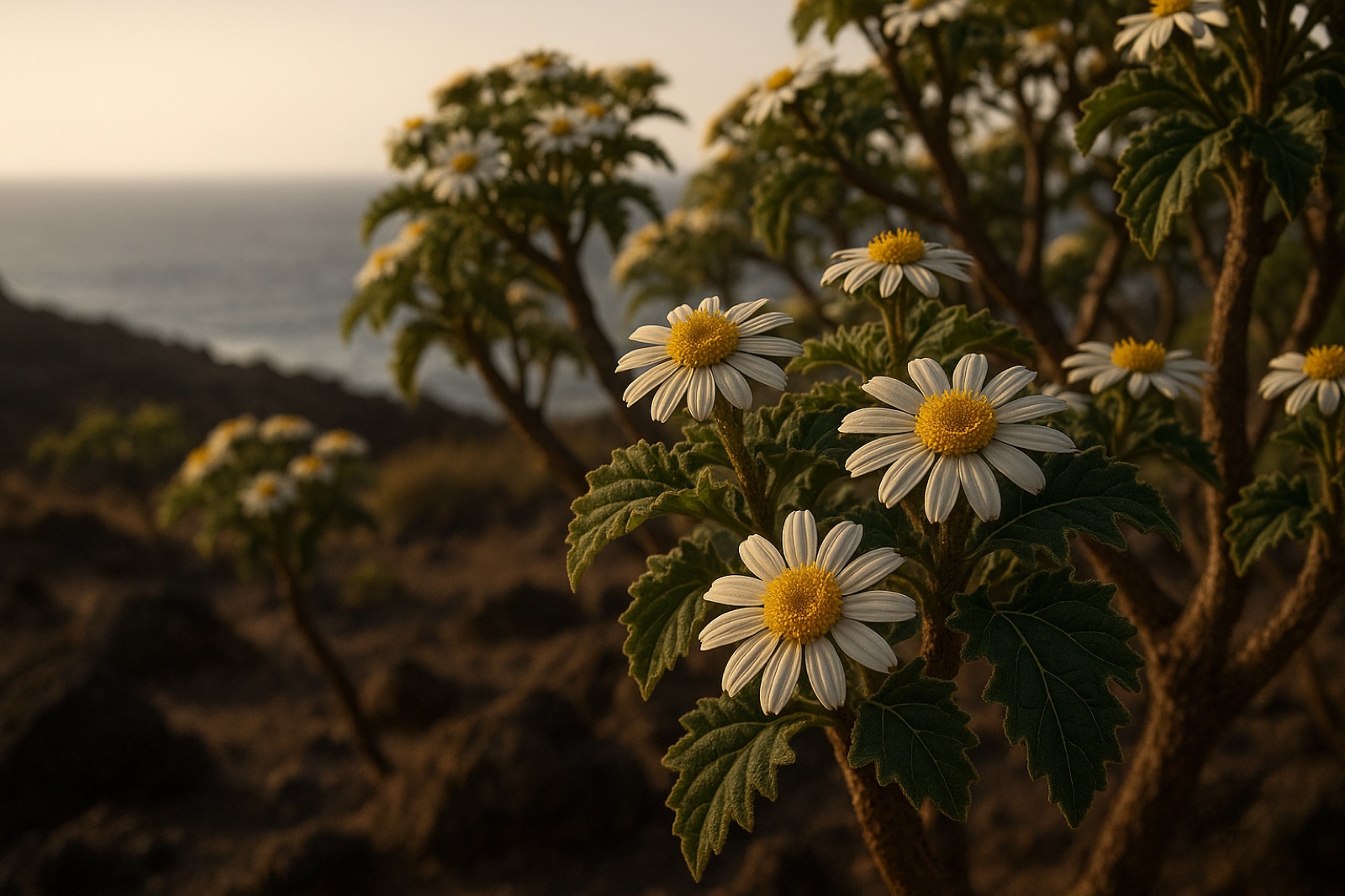
The Galápagos giant daisies — a group of plants called Scalesia — look nothing like the daisies in your backyard. Some grow into full trees, twenty feet tall, with trunks and bark. They exist nowhere else on Earth, and biologists have been fascinated by them since Charles Darwin first stepped onto these islands in 1835. Scientists sometimes call them “botany’s answer to Darwin’s finches” — the plant version of the famous birds that helped Darwin figure out how evolution works in the first place.
And a study published on July 30, 2026, in the journal Nature Communications just found something about these daisies that nobody expected: evolution has been solving the exact same problem, on separate islands, in completely different ways — and getting the exact same answer every time.
What Scientists Found: Convergent Evolution Caught in the Act
Researchers from the Norwegian University of Science and Technology, working with international partners, set out to map the full genetic family tree of every known Scalesia species — all 15 of them, built from genetic data pulled from nearly 400 individual plants across the islands.
Here’s what makes these daisies strange in the first place: this whole family of plants is young, evolutionarily speaking. All 15 species branched off from each other in roughly the last million years — a blink of an eye by evolutionary standards. In that short window, they’ve spread into wildly different environments across the islands, from humid highland forests to hot, dry lowland scrub.
And in the hottest, driest spots, something kept happening. Independently, in separate lineages that don’t share a recent common ancestor, the leaves of these daisies started developing deep lobes and jagged, serrated edges — like an oak leaf instead of a smooth one. It’s not decoration. Deeply lobed leaves lose less water and shed heat more efficiently, which is exactly what a plant needs to survive when the sun is unrelenting and the ground is dry.
This is called convergent evolution — when unrelated organisms independently evolve the same trait because they’re facing the same problem. It’s not rare in nature. Dolphins and ichthyosaurs (an extinct marine reptile) both evolved streamlined, fin-shaped bodies for swimming, despite one being a mammal and the other a reptile separated by millions of years. Cacti in the Americas and euphorbias in Africa independently evolved nearly identical thick, water-storing, spine-covered bodies, despite not being closely related plants at all. Convergent evolution is evolution’s way of saying: when the problem is the same, the solution tends to look the same too.
The Same Answer, Built a Different Way Every Time
What made this particular study remarkable wasn’t just that the daisies converged on the same leaf shape. It’s how they got there.
When researchers looked at the actual genes responsible for the lobed leaves in each separate lineage, they expected to find the same genetic switch flipped each time — one master gene doing the same job across the board. That’s usually how convergent evolution works under the hood: a shared genetic toolkit gets reused.
That’s not what they found. Each lineage arrived at the same leaf shape through a different combination of genes. Same destination, different roads — every single time.
As researcher Vanessa Bieker, who worked on the study, put it: this is nature “arriving at the same solution multiple times, but through different genetic pathways,” rather than leaning on one controlling gene passed down and reused. The genetic analysis also turned up something else — isolated populations on different islands showed large enough genetic differences that new daisy species may be forming right now, in real time, close enough to the present that scientists can watch it happening.
It’s not the only place biology solves a problem more than one way. Doctors treating aggressive cancers have found something similar: tumors that keep adapting to outsmart a single treatment can often be beaten by switching strategies before resistance sets in — the goal staying fixed while the method changes. Different problem, same underlying pattern: there’s often more than one legitimate way to arrive at the right answer.
What This Actually Means
Here’s the part that’s easy to miss in a headline about plant genetics: the fact that separate lineages, cut off from each other by miles of ocean and thousands of years, kept arriving at the exact same functional answer — through entirely different genetic routes — is a strange kind of consistency. It suggests the outcome mattered more than the path.
People tend to assume that if something is well-made, there must be one right way to build it — one correct method, one approved blueprint. What these daisies suggest is closer to the opposite. Something can be genuinely, precisely made for its purpose, and still get there through more than one route. The plant on the north-facing slope and the plant on the south-facing slope aren’t identical. They just both ended up exactly equipped for where they were planted.
There’s an old idea, older than Darwin, that nothing here was left to chance — that even the paths that look different from the outside can be aimed at the same intentional design. It shows up in the strangest places once you start looking for it, including in how people talk about being made on purpose, not just made. A goblin shark that’s lived exactly as it was built to for 125 million years, mostly unseen, and a daisy on a volcanic island reaching the same leaf shape by an entirely different genetic road, aren’t really telling two different stories. They’re telling the same one, twice.
Discussion Question
If two completely different paths can lead to the same well-fitted outcome, does that change how you think about the “right way” to get somewhere in your own life — or does it only apply to plants? Tell us what you think in the comments.
Share This
- “Scientists just found daisies on the Galápagos Islands evolving the exact same leaf shape on separate islands — using completely different genes every single time. Nature really does have more than one way to get somewhere.”
- “A 2026 study found isolated Galápagos daisy populations independently evolving identical heat-tolerant leaves through totally different genetic routes. Same answer, different roads, every time. 🌼”
- “Different genes. Different islands. Same exact leaf shape. Scientists are calling it one of the clearest cases of convergent evolution ever mapped at the genetic level.”
Frequently Asked Questions
What are Galápagos giant daisies?
Galápagos giant daisies, scientifically called Scalesia, are a group of 15 plant species found only in the Galápagos Islands. Unlike the small daisies most people picture, some Scalesia species grow into full trees up to 20 feet tall with woody trunks. They evolved from a single common ancestor within roughly the last million years and have spread into dramatically different habitats across the islands.
What is convergent evolution?
Convergent evolution is when unrelated species independently evolve similar traits because they face similar environmental pressures, rather than because they share a recent common ancestor. Classic examples include dolphins and extinct ichthyosaurs both evolving streamlined swimming bodies, and cacti and euphorbias independently evolving similar water-storing, spiny bodies despite living on different continents.
What did the 2026 Galápagos daisy study find?
Published July 30, 2026, in Nature Communications, the study found that separate lineages of Galápagos giant daisies independently evolved the same deeply lobed, heat-tolerant leaf shape in hot, dry environments — but each lineage used a different combination of genes to get there, rather than one shared genetic switch.
Why did the daisies evolve lobed leaves?
Deeply lobed, serrated leaves help plants survive hot, dry conditions by increasing air circulation around the leaf surface and reducing water loss, which allows the plant to shed heat more efficiently than a smooth-edged leaf would.
Are new Scalesia daisy species still forming today?
Genetic analysis in the study found significant genetic differences between isolated daisy populations on different islands, suggesting new species may currently be in the process of forming — evolution happening on a timescale close enough that researchers can observe it directly.
Whatever you’re building your way toward right now — a career, a recovery, a relationship, a version of yourself you haven’t fully arrived at yet — it might be worth remembering that the daisies on the north slope and the daisies on the south slope never looked identical along the way. They just both, eventually, turned out exactly suited for where they were standing.