 0
0
 0
0
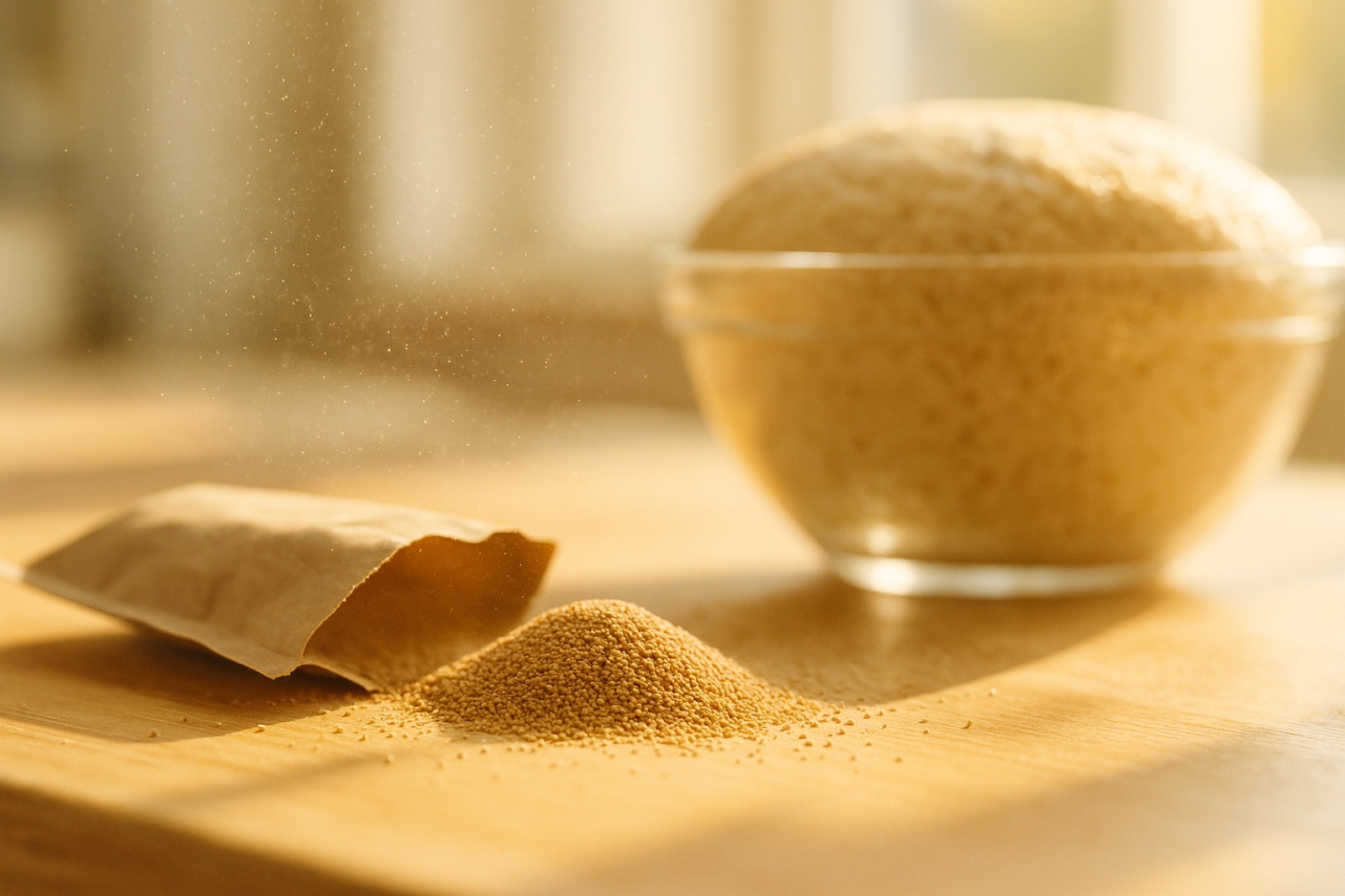
The least impressive thing in most kitchens is a packet of yeast. It costs about a dollar. It sits in a drawer behind the measuring spoons, half-forgotten, doing nothing. You would never point at it and say that is the powerful one.
A team of researchers in Dublin just spent four years pointing at it anyway. In a study published in Cell Reports, scientists from Trinity College Dublin and University College Dublin fed mice a supplement made from ordinary yeast beta-glucan and watched something happen that immunology textbooks said should not be possible. The animals’ immune systems did not just respond better. They appeared to learn.
What Yeast Beta-Glucan Actually Did
Beta-glucan is a fiber found in the cell walls of baker’s yeast. It is not exotic. It is already sold as a food-grade supplement, already sitting on shelves, already approved for people to eat.
The researchers added it to the food of mice for four to twelve weeks. Some of the mice ate a standard diet. Others ate a high-fat diet designed to make them obese, because obesity is known to quietly wreck the immune system’s ability to spot and attack tumors. Then the team challenged all of the animals with three different kinds of cancer cells: colorectal, skin, and breast.
The mice that had been eating yeast beta-glucan mounted a measurably stronger anti-tumor response. And in the obese mice, whose defenses had been blunted, the supplement restored something that had been lost.
Two things are worth saying plainly before going further, because the headlines on this study have not always said them. First, this was done in mice. It is preclinical work, not a treatment, and nobody involved is suggesting otherwise. Second, nothing here is medical advice, and no one facing cancer should read a mouse study as a reason to change what they are doing. What makes this research interesting is not a product. It is a mechanism.
The Part That Broke the Textbook
Here is the piece that makes immunologists sit up.
For most of the last century, the immune system was taught as two halves with two very different jobs. The adaptive half is the clever one. It meets a threat, files it away, and remembers it for years. That is why a childhood chickenpox infection or a vaccine still protects you decades later.
The innate half was supposed to be the other kind. Fast, blunt, and forgetful. It attacks whatever is in front of it and retains nothing. No memory. No learning. That was the rule.
Over the past decade that rule has been coming apart, under a name researchers gave it: trained immunity. And this study is the first demonstration that you can induce it through diet alone.
What the Dublin team found is that the yeast beta-glucan was not acting on the immune cells already circulating in the blood. It was reaching further back, into the bone marrow, and changing the stem cells that produce immune cells in the first place. The reprogramming happened at the source. Every new cell coming off the line inherited it.
“We wanted to investigate whether a common dietary supplement could reprogram early-stage immune cells in the bone marrow to produce long-lasting anti-tumor responses,” said Dr. Anna Ledwith, the study’s first author.
Professor Helen Roche described it as the first demonstration that dietary delivery of yeast beta-glucan is enough to induce trained immunity on its own. Associate Professor Frederick Sheedy noted that because the supplement is already food-grade and commercially available, the path to human trials is unusually short.
The Finding Nobody Expected
Buried in the results is a detail that has almost nothing to do with yeast, and it is the one worth carrying around.
The obese mice had a damaged anti-tumor response. That much was expected. What surprised the researchers is that the damage did not go away when the weight did. The immune system’s impairment persisted after weight loss, as a kind of memory of its own — a bad lesson the bone marrow had learned and would not stop repeating.
The yeast beta-glucan reversed it. Not by removing anything. By teaching the same cells something else.
That is a strange and hopeful shape for a finding to have. It says the body keeps a record of what it has been through, in places far below anything you can feel or see. It also says the record is not final. Something small and steady, applied at the right depth, can write over it. Science keeps turning up versions of this — from chemicals everyone called permanent until they weren’t, to the immune cells in the aging brain that turn against it around fifty. The pattern underneath keeps holding: what looks like a fixed verdict is often just a process nobody has interrupted yet.
Why the Humblest Ingredient Keeps Winning
What lingers about this study is not the tumor data. It is the casting.
The thing doing the work is a fiber from the wall of a yeast cell. It is not a designer molecule that took a decade and a billion dollars. It is the cheapest, most ordinary biological material imaginable, the same organism people have used to make bread and beer for six thousand years without knowing what it was. And it does not work by force. It works by getting inside a system and quietly changing what that system produces from then on. Nothing about it looks like power. It just does not stop.
People have noticed this shape before. Long before anyone had a microscope, someone trying to explain how the largest and most important thing in the world actually spreads reached past armies and kings and empires, and picked yeast. A pinch of it, hidden in a great heap of flour, working invisibly, until every part of the dough was changed. No announcement. No visible force. Just something small, buried where nobody was watching, and then eventually — everything different.
It was a strange image to choose. It is a stranger thing to find a research team in Dublin, some twenty centuries later, running the experiment.
What This Does and Doesn’t Mean
It does not mean yeast fights cancer in people. That study has not been done. It means the door to doing it is open wider than it was, using an ingredient that is already sitting in a supermarket, which is a genuinely unusual place for cancer immunology to find itself.
And it means the innate immune system — the half we wrote off as incapable of learning — has been quietly taking notes the entire time. Biology keeps doing this. The cell we assumed was disposable turns out to be the one that ruptures on purpose to save everything around it. The system we called forgetful turns out to remember more than we do.
The packet in the drawer is still just a packet in the drawer. But the next time you look at it, it is worth remembering that the most consequential thing in a room is almost never the thing announcing itself.
A Question Worth Sitting With
Do you think the most important changes in a life usually arrive as one big, obvious event — or as something small and unremarkable that had been working quietly for a long time before anyone noticed? Tell us what you think in the comments.
Share This
- “Scientists just fed mice ordinary baker’s yeast and their immune systems got better at fighting cancer. Not the cells in their blood — the stem cells in their bone marrow. It reprogrammed the factory.”
- “Turns out obesity leaves a mark on your immune system that stays there even after you lose the weight. A yeast supplement reversed it in mice. The body remembers more than we thought.”
- “Everything I was taught said the innate immune system can’t learn. A study out of Dublin just said otherwise, using a dollar packet of yeast.”
Common Questions About Yeast Beta-Glucan and Immunity
What is yeast beta-glucan?
Beta-glucan is a natural fiber found in the cell walls of baker’s yeast. It is already produced as a food-grade dietary supplement and is widely available commercially. In the 2026 Cell Reports study from Trinity College Dublin and University College Dublin, researchers added it to the diets of mice for four to twelve weeks to see how it affected immune function.
Does yeast beta-glucan fight cancer?
In mice, dietary yeast beta-glucan improved the immune system’s response to colorectal, skin, and breast cancer cells. This has not been demonstrated in humans. The work is preclinical, meaning it establishes a mechanism worth testing rather than a treatment, and it should not be used as a basis for any medical decision. Anyone facing cancer should talk to their own doctor.
What is trained immunity?
Trained immunity is the finding that the innate immune system — the fast, general-purpose half long believed to have no memory — can in fact be reprogrammed to respond more strongly to future threats. The Dublin study showed this reprogramming happening in the bone marrow stem cells that produce immune cells, which is why the effect lasts rather than fading as individual cells die off.
Why does obesity affect the immune system’s response to tumors?
Obesity is known to impair the innate immune system’s ability to detect and attack tumor cells. The striking part of this study is that the impairment persisted in mice even after weight loss, suggesting the bone marrow retains a lasting record of the metabolic state. Yeast beta-glucan supplementation reversed that persistent defect in the animals studied.
Is this study relevant to humans yet?
Not directly. The results are in mice. What the researchers highlighted is that because yeast beta-glucan is already food-grade, safe, and commercially available, human dietary intervention trials could begin relatively quickly compared with a newly developed drug. The full paper is published in Cell Reports.