 0
0
 0
0
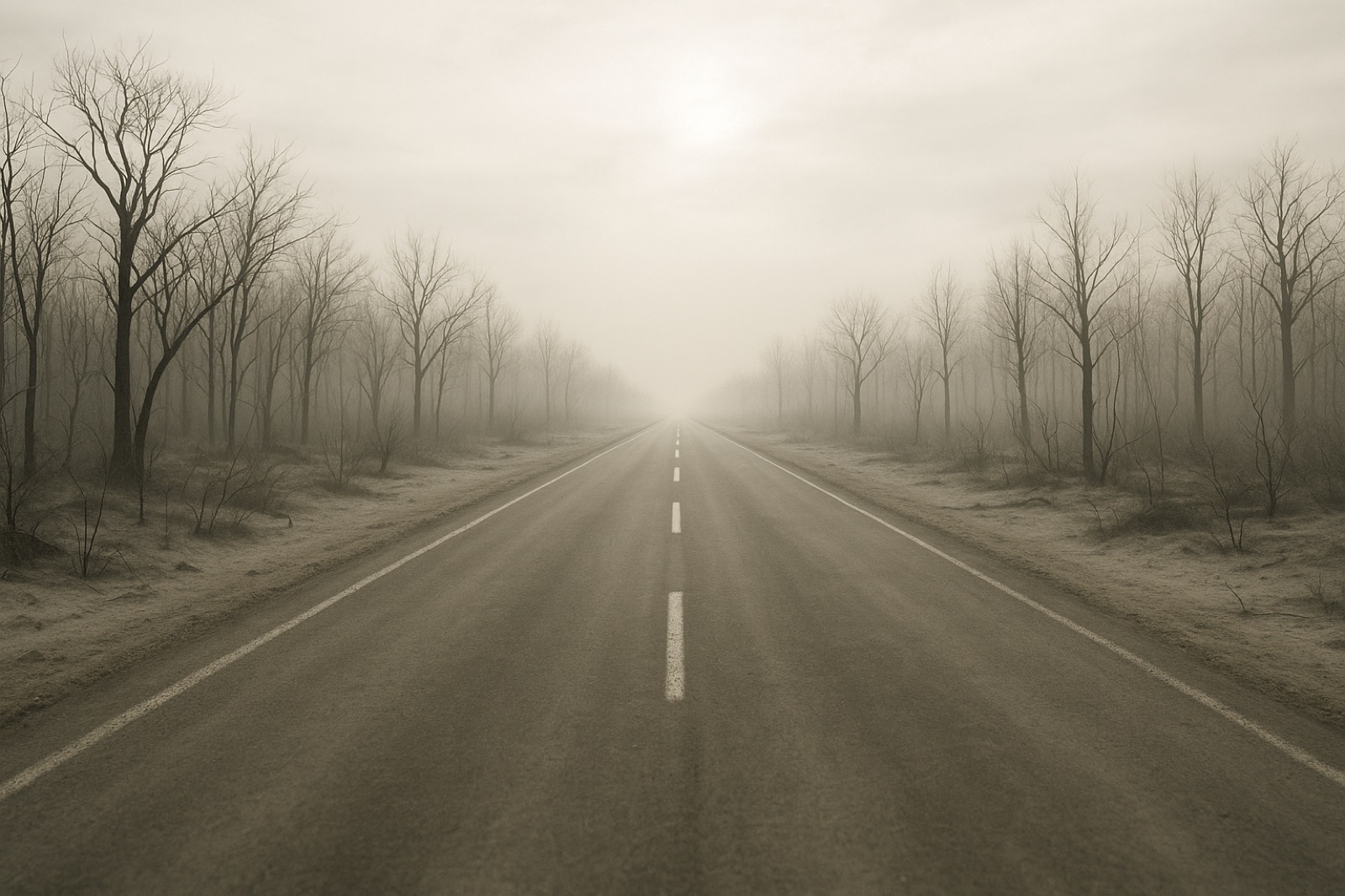
Somewhere in the middle of Cormac McCarthy’s The Road, a boy asks his father a question he has clearly asked before. He wants to know whether they are still the good guys. The father says yes. They are still the good guys. They are carrying the fire.
It happens again. And again. It is close to the only comfort the man has to offer, and by the third or fourth time you notice something odd about it: he never once explains what it means.
Readers have been arguing about that phrase since the novel came out in 2006. The usual answers are good ones. But there is a detail sitting in plain sight that changes the question, and most people read straight past it.
What “carrying the fire” means in The Road
Start with what everyone agrees on, because it is correct as far as it goes.
The fire is the moral line. It means you do not eat people — which in this book is not a metaphor, it is the actual dividing line between the two kinds of humans left. It means basic decency in a world that has stopped rewarding it. It means the species is still worth continuing.
All true. But notice how McCarthy has built the book around it.
The Road withholds almost everything. The father and son have no names — they are “the man” and “the boy” for three hundred pages. The catastrophe is never explained; you get a flash of light and clocks stopping and nothing more. There is no date, no country, barely any geography. McCarthy even strips out the quotation marks, so dialogue arrives with nothing marking it off from the ash.
When a writer removes that much, what survives the removal is what he wants you to look at.
And what survives is a vocabulary. A very small one. The good guys. The bad guys. Carrying the fire. That is close to the entire moral language of the novel — four or five phrases the man uses over and over, none of which he will define.
The detail almost everyone reads past
Here it is: the boy was born after.
He has no memory of the old world. None. He has never seen a functioning society, never met a stranger who wasn’t a threat, never watched ordinary people be ordinarily decent to each other for no reason. His entire experience of humanity is his father, his dead mother, and the men on the road who would kill them both.
Now go back and look at the father’s vocabulary again.
“The good guys.” The boy has met exactly one. “Carrying the fire.” Fire, in the boy’s lived experience, is a thing you hide so nobody sees the smoke. Every single moral term the man uses points at a world the boy has never laid eyes on.
Which reframes the father’s refusal to define the phrase entirely. It is not evasion, and it is not McCarthy being coy. You cannot define something by pointing at it when the thing you would point at no longer exists. The man cannot say “decency is like that” and gesture, because there is no that left anywhere on the continent. The ordinary way of teaching a child what goodness looks like — showing them people being good — has been taken away from him.
So he is left with the only method still available. He carries it in front of the boy and hopes it transfers.
This is why I think the novel’s actual subject is not survival. Survival is the plot — the food, the cart, the cold, the road south. The subject is transmission: whether something can be handed from one person to the next when every piece of evidence supporting it has been destroyed.
The man has no argument available to him. He cannot prove the fire is worth carrying. The world contradicts him on every page, and both of them know it. What he has instead is testimony — his own conduct, repeated in front of a child, without proof.
Why this is not really a post-apocalyptic problem
It is worth sitting with how ordinary that situation actually is once you strip the ash away.
Nobody derives their ethics. You did not reason your way to kindness at four years old after weighing the alternatives. Someone showed it to you, repeatedly, long before you were able to evaluate whether they were right — and you took it on their word, because they were the one holding you. The evidence came later, if it came at all.
Every generation is handed a set of convictions it cannot verify, by people who cannot prove them, on the strength of having watched those people live. We do not usually notice, because the world around us supplies enough corroboration that the handover looks like something else. Like education. Like common sense.
McCarthy just removes the corroboration. He burns the world down to the point where a father’s ethics have to travel on testimony alone, with nothing left to point at — and then shows you that they still travel.
The oldest description of that in English is a line from Hebrews, which calls faith “the evidence of things not seen.” It is usually read as a religious claim. It is also, quite precisely, a description of what the boy is being asked to do. He is not being asked to believe in God. He is being asked to believe in goodness — in a world that offers him no evidence for it — on the word of one man who remembers when it was real.
The ending, and what it actually gives you
The man dies. He was always going to.
The boy grieves on the road for days, and then a family finds him — people who had been following them, it turns out, for some time. They take him in.
Plenty of readers find this ending too convenient, and it is worth saying that it very nearly is. But watch what the boy does when the stranger appears. Before he agrees to anything, he asks the man whether he is carrying the fire.
He does not ask if they have food. He asks if they have the vocabulary.
That is the whole of what McCarthy gives you, and it is much smaller than hope for the world. The world is not saved. Nothing is repaired. One phrase, which one man refused to define and simply kept saying, made it into one child and out the other side — and the child is now using it to test strangers, which means it is not a comfort any more. It has become a standard.
The novel’s last paragraph does something strange, and it is the reason the ending does not read as sentimental. It abandons the boy entirely. It turns away and describes brook trout in mountain streams, in the world before all of this, in language of unembarrassed beauty — and it does not tell you whether the boy lives. McCarthy leaves you holding the same thing the man left the boy holding: no evidence, and something worth carrying anyway.
Which is, when you think about it, a fairly demanding thing for a book to ask of a reader. It is also why people are still arguing about that phrase twenty years later.
If the underlying question interests you — how anyone holds a conviction with nothing to show for it — this piece on staying confident with zero proof works the same territory without the ash. And the most famous doubter in Western literature turns out to have been badly mistranslated for centuries, which is its own kind of interesting.
Over to you
Is the ending of The Road genuinely earned, or is it McCarthy blinking at the last moment? Serious readers land on both sides of this. Tell us where you come down, and why.
Share this
- The thing almost everyone misses in The Road: the boy was born after. Every moral word his father uses — “the good guys,” “carrying the fire” — points at a world the boy has never seen.
- The father never defines “carrying the fire” and it isn’t evasion. You can’t define a thing by pointing at it when there’s nothing left to point at.
- When the stranger finds the boy at the end of The Road, the boy doesn’t ask if they have food. He asks if they’re carrying the fire. The phrase stopped being a comfort and became a standard.
Questions people are asking
What does “carrying the fire” mean in The Road?
In Cormac McCarthy’s The Road, “carrying the fire” is the father’s phrase for the moral line the two of them refuse to cross — most concretely, the refusal to kill and eat other people, which is what separates the “good guys” from the “bad guys” in the novel’s ruined world. More broadly it stands for basic human decency continuing when nothing rewards it. Notably, the father never defines the phrase, even when his son asks directly.
Does The Road ever explain what caused the apocalypse?
No. The Road never identifies the catastrophe. The reader gets a brief memory of a flash of light and clocks stopping at a particular moment, and nothing further — no cause, no timeline, no location. The withholding is consistent with the rest of the book, which also declines to name the characters or the country, and its effect is to keep attention on the father and son rather than on explanation.
What happens at the end of The Road?
The father dies of illness and injury after telling his son to keep carrying the fire. The boy stays with the body for several days, then is approached by a man who says he has been following them. That man’s family — a woman, two children and a dog — take the boy in. Before agreeing to go, the boy asks the stranger whether he is carrying the fire. The novel closes with a passage describing brook trout in mountain streams in the world before the catastrophe, without confirming what becomes of the boy.
Why are the father and son unnamed in The Road?
McCarthy refers to them only as “the man” and “the boy” throughout. The novel withholds names alongside almost everything else — the date, the location, the cause of the disaster, and even conventional quotation marks around dialogue. The effect is to strip the story to its essentials, so that what remains visible is the relationship itself and the small moral vocabulary the father is trying to pass on.
Is The Road a hopeful book?
Only in a very narrow sense, and readers disagree sharply about it. The world is not saved, the catastrophe is not reversed, and the novel never confirms that the boy survives. What it does show is one phrase surviving one handover, from a dying man to a child who then uses it to judge strangers. The Road won the 2007 Pulitzer Prize for Fiction, and much of the continuing argument about it concerns whether that ending is earned or is a softening of an otherwise unsparing book.