 0
0
 0
0
Somebody gave you this verse once. Maybe it was stitched on a pillow, printed on a graduation card, or tattooed on a wrist you saw in a coffee shop. “For I know the plans I have for you… plans to prosper you and not to harm you, plans to give you hope and a future.” It felt like a promise made just for you — that whatever you’re waiting on right now would resolve soon, and resolve well.
Then the waiting kept going. And the verse started to feel less like a promise and more like a question: if God really said this, why does it still feel like nothing is moving?
Here’s what almost nobody tells you about Jeremiah 29:11: it was never written to one person hoping for a quick turnaround. It was written to an entire nation who had just been told, in the same letter, to settle in for a wait most of them wouldn’t live to see the end of.
What Jeremiah 29:11 Actually Says
The King James renders it this way: “For I know the thoughts that I think toward you, saith the LORD, thoughts of peace, and not of evil, to give you an expected end.”
That’s the verse everyone quotes. But it’s the sentence right before it that changes everything: “For thus saith the LORD, That after seventy years be accomplished at Babylon I will visit you, and perform my good word toward you.” Seventy years. Jeremiah 29:11 isn’t a standalone promise floating in space — it’s the second half of a sentence about a seven-decade wait.
The Letter Nobody Wanted to Hear
Jeremiah 29 is a letter. A real one, sent from Jerusalem to the Jewish exiles already living in Babylon after the first wave of deportations. And it opens with instructions that would have landed like a punch to the gut: build houses and live in them. Plant gardens and eat what grows. Marry off your sons and daughters. Have grandchildren. Seek the peace and prosperity of the very city that conquered you, and pray for it — because your peace is tied to its peace.
In other words: stop waiting to start living. This exile isn’t a two-year layover. Settle in.
That instruction landed hard because, just before it, a prophet named Hananiah had stood in the Jerusalem temple and promised the opposite — a fast rescue, the exile broken within two years, the temple treasures returned any day now. It was the message everyone wanted. Jeremiah’s letter said something much less comfortable: seventy years, not two. Most of the people reading that letter would grow old and die in Babylon. Their grandchildren would be the ones who walked home.
It’s only after that — after houses, gardens, grandchildren, and seventy years — that the letter says: I know the plans I have for you. Thoughts of peace, not evil. An expected end.
The Hebrew Word Hiding Inside “Hope”
Two details in the original language make this land differently.
The word translated “thoughts” or “plans” is machashabah — from a root that also describes skilled weaving, the kind of intricate, deliberate handwork used for the tabernacle’s curtains. This isn’t a passing thought or a vague wish. It’s something worked, thread by thread, with intention.
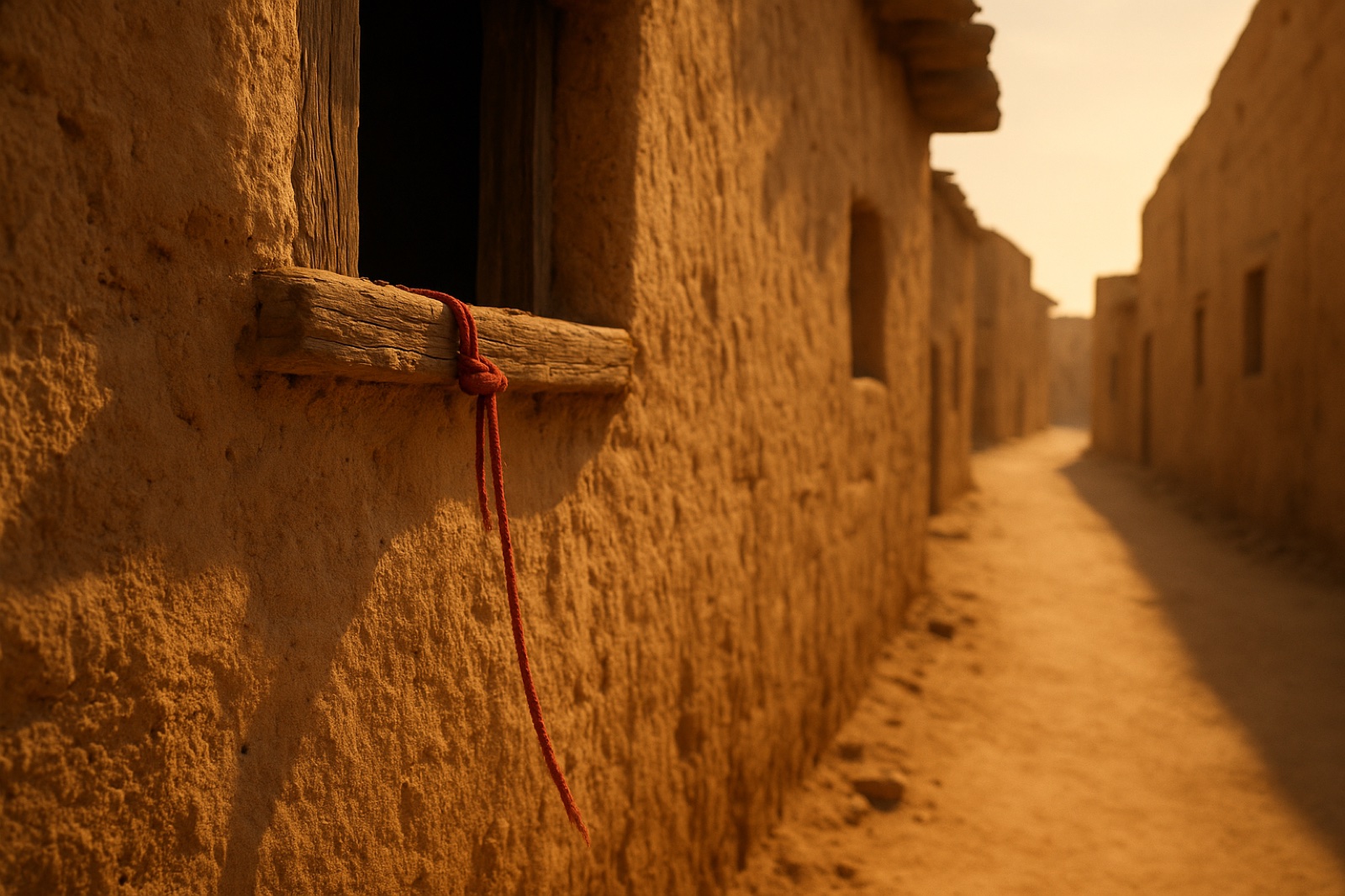
And the phrase the KJV compresses into “an expected end” is actually two Hebrew words: acharith, a future, a latter end — and tikvah, hope. That second word shows up in one other unforgettable place in Scripture: Joshua 2, the story of Rahab, the woman in Jericho who hid Israel’s spies and hung a scarlet cord from her window as the sign that would save her household. The Hebrew word for that cord is the same word translated “hope” in Jeremiah 29:11.
Hope, in the language this verse was written in, isn’t a feeling you talk yourself into. It’s something physical to hold onto — a line you’re tied to while you wait for what’s on the other end of it.
What This Verse Was Never Promising
Here’s the turn: Jeremiah 29:11 was never a promise that your circumstances change fast. It was a promise that you are held — deliberately, intentionally, like woven thread — through however long the actual wait turns out to be. The exiles weren’t promised an early exit. They were promised a cord that didn’t let go, for seventy years, until the day it was time to walk home.
That reframes what it means when this verse doesn’t feel true yet. It was never a timeline. It was a tether. The waiting itself was never evidence the promise had failed — the waiting was the part the promise was actually written for.
What This Means for Your Waiting Season
If you’re in a season that looks nothing like “prosper and not harm you” right now, this verse was written for exactly that season — not for the one after it. The same pattern shows up again and again in Scripture: the wilderness always seems to come before the calling, and Scripture keeps circling back to seasons of waiting long enough that the number 40 shows up as its own quiet signature for exactly this kind of stretch. It’s not a sign of being forgotten. It’s the shape the promise has always taken.
The practical shift is this: stop treating the wait as the thing standing between you and the promise, and start treating it as the place the promise is already at work — the way “build houses” and “plant gardens” were instructions for right now, not for after. (If digging into where a word actually comes from in Scripture is something you enjoy, the Hebrew word behind “strength” carries a similar surprise.)
Actions to Take
- Name your “Babylon.” Take two minutes right now and write down, in one sentence, the specific situation you keep waiting to be over. Naming it plainly is the first honest step.
- Do one “build a house” thing today. Pick one thing you’ve been putting off until your circumstances change — a phone call, an appointment, a room you’ve stopped decorating — and do it anyway, this week, as an act of settling in rather than stalling out.
- Write your own “seventy years” sentence. Finish this sentence in your journal or notes app: “Even if this takes longer than I want, I know I’m not letting go of the cord, because ___.” Keep it somewhere you’ll see it again.
Journaling Prompts
- Where in your life have you been treating “the wait” as wasted time instead of as part of the plan itself?
- If hope is a cord you’re tied to rather than a feeling you’re supposed to conjure, what would it look like to hold onto it today — practically, specifically?
A Prayer for the Waiting Season
God, I’ll be honest — this wait has felt like proof that something’s wrong, not like a plan being woven. I don’t know how much longer this season lasts, and some days that scares me more than I say out loud. Help me stop measuring your faithfulness by how fast things change. Help me build the house, plant the garden, live the life in front of me, instead of just enduring it until something better arrives. Thank you for being a cord I can actually hold onto, even in the dark. I’m not letting go. Amen.
A Question Worth Sitting With
If hope in Scripture is pictured as a cord to hold onto rather than a feeling to work up — does that change how you’d define hope in your own life? What would you call it instead of “hope” if you had to describe what you actually mean?
Share This
- “I always thought Jeremiah 29:11 was about getting rescued fast. Turns out it was written to people who had to wait 70 years — and I needed to hear that today.”
- “The Hebrew word for ‘hope’ in Jeremiah 29:11 is the same word used for Rahab’s scarlet cord. Hope isn’t a feeling. It’s something you hold onto.”
- “Jeremiah 29:11 was never a promise things change fast. It was a promise you’re held while they change slow.”
Questions People Ask About Jeremiah 29:11
What does Jeremiah 29:11 actually mean?
It’s part of a letter Jeremiah sent to Jewish exiles living in Babylon, telling them to settle in for a seventy-year wait rather than expect a quick return. The verse promises that God’s intentions toward them were peace, not harm, even across that entire long wait — not a promise of immediate rescue.
Who was Jeremiah 29:11 originally written to?
The exiled community of Judah living in Babylon after the first deportations from Jerusalem, not a single individual — it’s addressed to “all that are carried away captives” as a group.
Why do people misquote Jeremiah 29:11?
Because the verse is usually shared on its own, without the seventy-year timeline and the instructions to build houses and plant gardens that come right before it — which makes it read like a promise of fast, personal rescue instead of long-term faithfulness through a wait.
What does “expected end” mean in Jeremiah 29:11?
In the original Hebrew, it’s two words — acharith (a future, a latter end) and tikvah (hope). The same word for hope is used elsewhere in Scripture for a physical cord, picturing hope as something to hold onto rather than just a feeling.
How do I apply Jeremiah 29:11 to a hard season I’m in right now?
Treat the waiting itself as part of the plan rather than a delay to the plan — settle into your current season (build the house, plant the garden) instead of pausing your life until it’s over.