 0
0
 0
0
You have been waiting so long you have started to wonder if you missed something. No answer. No open door. No next chapter — just the same quiet room and the same unresolved question, week after week. You keep asking whether God forgot the plan, or whether you did something wrong to end up parked here.
Then you go back and actually look at the people God used the most in Scripture, and you notice something almost every one of them shares. Before God used any of them, He sent them into the wilderness first.
A Pattern Hiding in Plain Sight
It is easy to read Bible stories one at a time — Moses here, Elijah there, Jesus somewhere else — and miss what happens when you line them up side by side. The wilderness is not a detour that happened to a few unlucky people on their way to greatness. It is the road every single one of them walked. Not after the calling. Before it.
Moses Spent Forty Years Herding Sheep Before He Freed a Nation
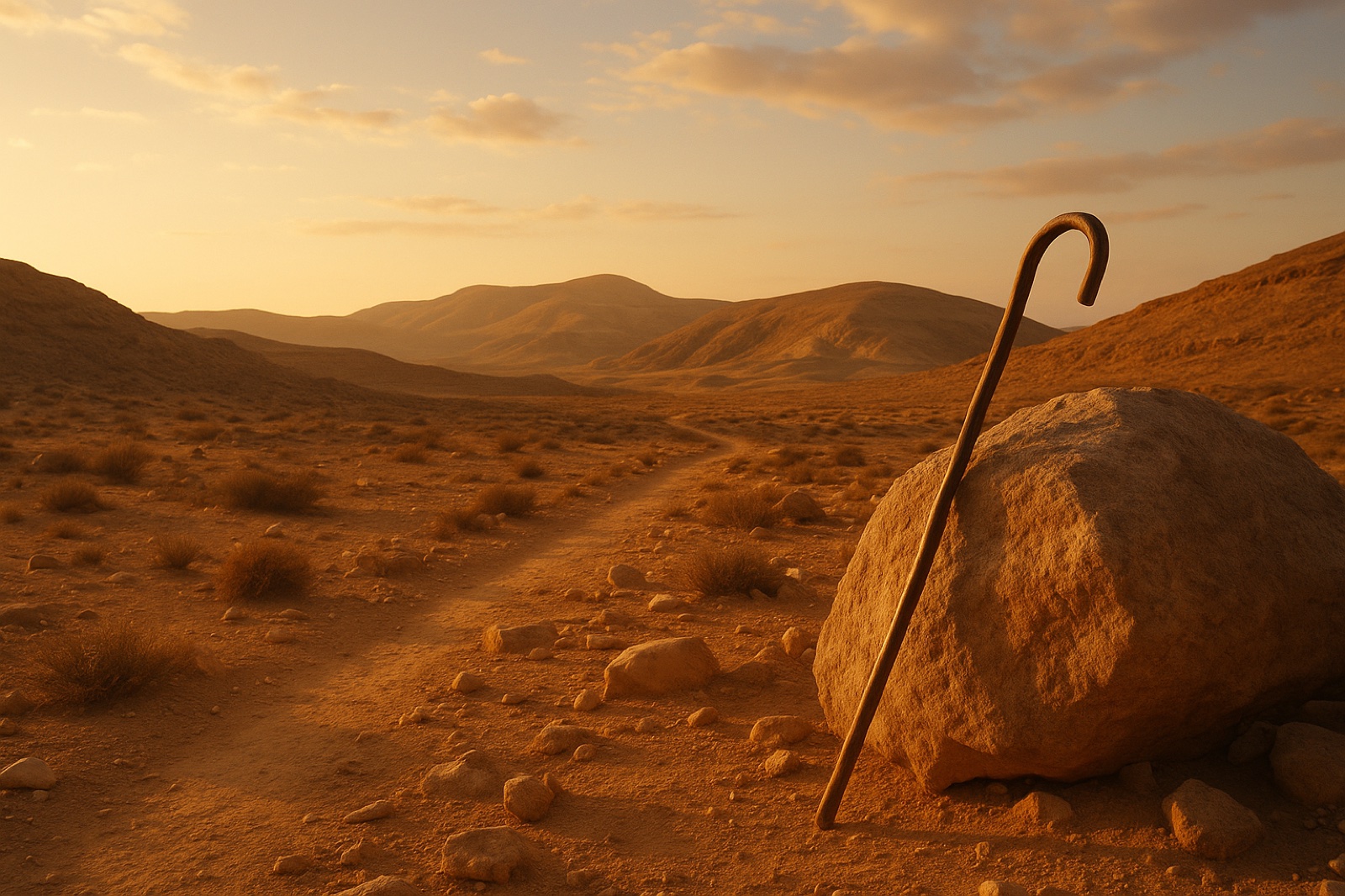
Moses did not go from the palace to the burning bush. He went from the palace to exile — a fugitive who fled Egypt after killing a man, landed in the middle of nowhere called Midian, and spent the next four decades doing something as unglamorous as it gets: tending another man’s sheep in the desert (Exodus 2-3). By the time God finally spoke to him from that bush, Moses was eighty years old. He was not being groomed. He looked, by every visible measure, forgotten. If you have ever wondered how Moses carried the weight of an entire nation without collapsing, this is part of the answer — the wilderness had already stripped away everything he once relied on before God ever asked him to lead.
Israel Wandered Forty Years Before They Ever Reached the Promise
The whole nation went through the same shape of story on a bigger scale. God led them out of Egypt toward a land already promised to them — and then let them wander the wilderness for forty years before they set foot in it (Deuteronomy 8:2). Not because God was lost. Because there was something in them that needed to be tested and formed before the promise could be trusted with them. The wilderness came first, on purpose, both times.
Elijah Collapsed in the Wilderness Right After His Biggest Victory
This is the one that surprises people most. Elijah’s wilderness season did not come before his ministry started — it came right after his greatest public win, the fire-from-heaven showdown on Mount Carmel. One threat from Jezebel later, he is alone under a broom tree in the desert, telling God he has had enough (1 Kings 19). God does not scold him. He feeds him, lets him sleep, and eventually meets him — not in the wind, not in the earthquake, not in the fire, but in a quiet voice at Horeb. Only after that wilderness stretch does Elijah get his next assignment. If Elijah could crack after a victory that big, your own exhaustion after a season of showing up faithfully is not proof you are failing. It might be the same pattern.
John the Baptist Grew Up in the Desert, Not the Temple
John was born into a priestly family — the expected path was the temple, the robes, the predictable career his father Zechariah had. Instead, Luke tells us the child grew up and became strong in spirit, living out in the wilderness until the day he appeared publicly to Israel (Luke 1:80). His formation years were not spent learning the family trade. They were spent in the desert, away from everything that would have made sense to the people around him, until it was time.
Jesus Was Led Into the Wilderness Before He Preached a Single Sermon
And then there is Jesus, right at the hinge point of His own story. He is baptized in the Jordan. The Spirit descends. The Father speaks. It is the highest confirmation moment of His life so far — and what happens immediately next is not a crowd, not a pulpit, not a miracle. Scripture says it plainly: “And Jesus being full of the Holy Ghost returned from Jordan, and was led by the Spirit into the wilderness” (Luke 4:1, KJV). Forty days there, tested, before He ever preached, healed, or called a single disciple. If the wilderness was the road even Jesus walked before His calling began in earnest, it was never a sign that something had gone wrong.
The Turn: Your Wilderness Isn’t Punishment. It’s Preparation.
Here is what changes when you actually see the pattern instead of just one story at a time: the wilderness stops looking like proof God stepped away, and starts looking like the specific place God does His most careful work. Not the polished stage. The empty, uneventful stretch where nobody is watching and nothing seems to be moving. That is where Moses’ pride got emptied out. Where Israel’s dependence got built. Where Elijah’s exhaustion got tended to instead of judged. Where John’s identity got settled before the crowds ever showed up to test it. Where Jesus, fully God and fully man, still went through it — not because He needed fixing, but because the pattern itself matters enough that even He walked it. If you have felt simply stuck rather than specifically called anywhere, this is the same purpose showing up in your ordinary life, not a smaller, lesser version of it. The waiting is not the absence of the plan. For every one of these people, the waiting was the plan, working exactly on schedule, just not on the schedule they could see.
What to Do With Your Own Wilderness Season
Seeing the pattern is one thing. Living inside your own version of it is another. Here are three concrete ways to respond to a wilderness season today, not someday.
- Name the season out loud, today. Before you do anything else, say it plainly — to yourself, or to God directly: “I think I’m in a wilderness season, not a punishment.” Naming it correctly changes how you carry it. This takes two minutes and it is the whole hinge point of everything else on this list.
- Write down what the wilderness has already changed in you. Get a piece of paper or open a note on your phone right now and list one thing about your character, your priorities, or your patience that is different than it was when this season started. Moses did not walk out of Midian the same man who walked in. Neither will you.
- Pick one thing you would do “when this season ends” — and do a small piece of it this week. Not the whole plan. One phone call, one application, one conversation, one skill practiced for twenty minutes. Elijah still got his assignment after the wilderness. Yours is still coming. Practicing it in small pieces now keeps you from arriving unprepared when the door finally opens.
Journal It Out
- When was the last time you assumed a quiet, uneventful stretch of your life meant God had stepped back? What if it meant the opposite?
- What is one thing about who you are right now that you would not have become without a waiting season you’ve already walked through?
- If you knew for certain this season was building something specific in you, what would you stop worrying about today?
A Prayer for the Waiting
God, I’ll be honest — I’m tired of waiting and I don’t always believe You’re doing anything with this silence. But I don’t want to keep treating this season like it’s wasted when it might be exactly where You’re forming something in me. Help me see what this wilderness is actually building, even when I can’t see the other side of it yet. Give me the patience to stay faithful in the small, unseen things today. I trust that You haven’t forgotten me out here. Amen.
A Question Worth Sitting With
Do you think modern faith culture is too quick to treat a slow, quiet season as a sign something’s wrong instead of a sign something’s being built? Tell us what you think in the comments below.
If This Spoke to You, Someone Else Needs to Hear It Too
- “Moses, Israel, Elijah, John the Baptist, even Jesus. Every one of them went through the wilderness before their calling. Maybe I’m not stuck. Maybe I’m being formed.”
- “I keep asking God why this is taking so long. Turns out the wilderness wasn’t the delay. It was the plan.”
- “If Jesus walked through the wilderness before His calling began, mine isn’t a sign I’ve been forgotten.”
Questions People Ask About the Wilderness in the Bible
Why does the Bible use the wilderness so often as a place of preparation?
The wilderness strips away the distractions, comforts, and false securities people normally lean on. With those removed, what a person actually trusts — themselves or God — becomes impossible to hide from, which is exactly what makes it such a formative setting throughout Scripture.
Did every major figure in the Bible really go through a wilderness season?
Not literally every person named in Scripture, but the pattern shows up remarkably often among the ones God used most significantly — Moses, the nation of Israel, Elijah, John the Baptist, and Jesus among them — enough that it reads as an intentional pattern rather than a coincidence.
How long does a wilderness season usually last?
Scripture doesn’t give a formula. Israel’s lasted forty years, Jesus’s lasted forty days, and Moses’s lasted roughly forty years of his life before his calling began — the length varies, but the purpose behind each one stayed the same: formation before assignment.
What’s the difference between a wilderness season and just being stuck?
From the inside, they can feel identical. The difference shows up in what you do with the time — a wilderness season becomes formative when you stay faithful in small things and let it shape you, rather than simply enduring it and waiting for it to pass.
What should I do if I think I’m in a wilderness season right now?
Start by naming it honestly instead of assuming the worst about it, then look for what it might already be building in you — patience, dependence on God, clarified priorities — while continuing to take small, faithful steps toward what comes next.