 0
0
 0
0
You are not entirely your parents’ child. Not genetically, anyway.
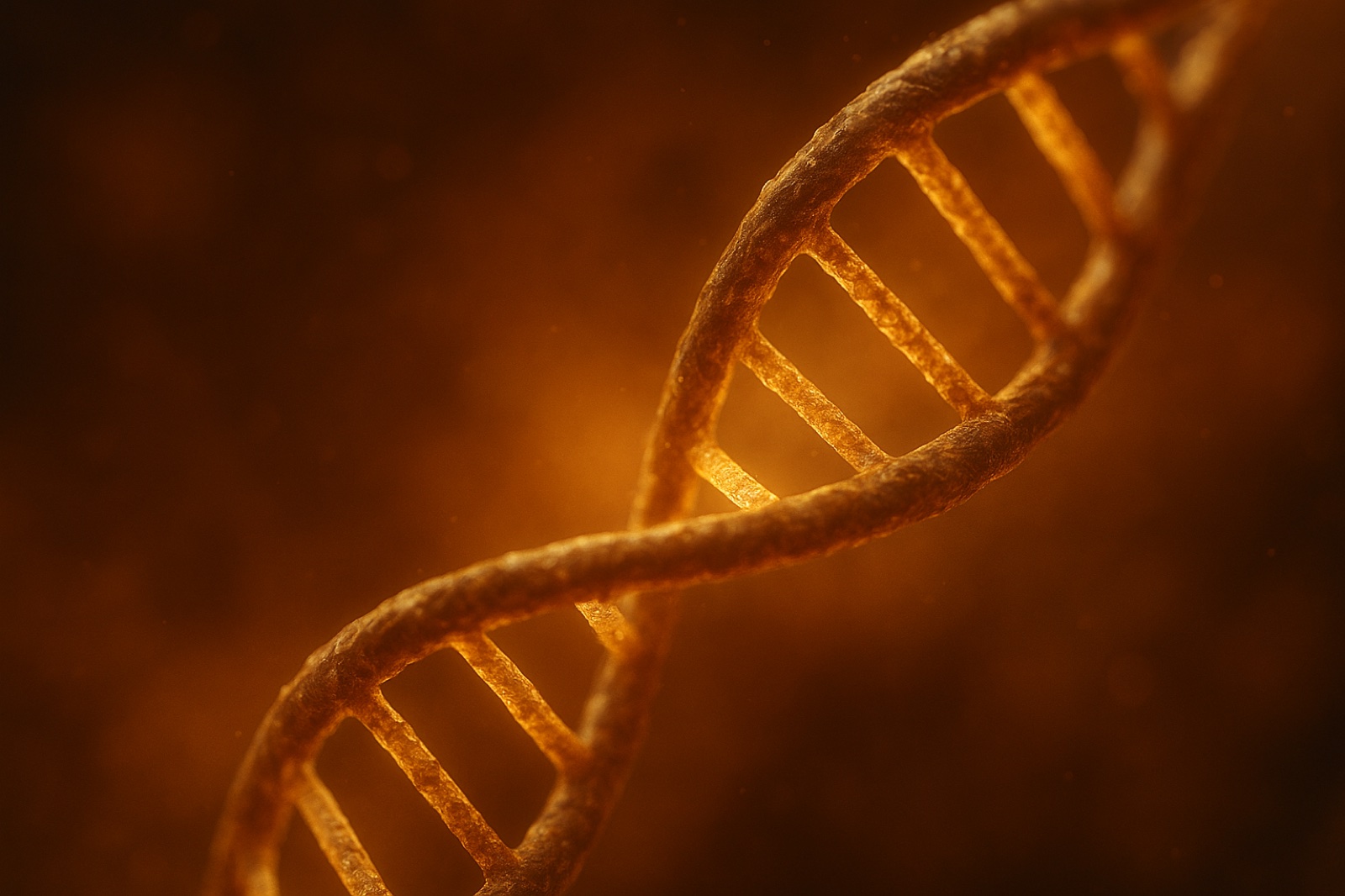
In late July 2026, a team of geneticists announced something strange: buried inside every living person’s DNA are fragments from two ancestors science can’t name, can’t date precisely, and has never found a single bone of. Researchers are calling them “ghost” lineages — genetic relatives who left no fossil, no grave, no artifact. The only proof they ever existed is written into the DNA of everyone alive today, including yours.
What Scientists Actually Found
The study, led by researchers connected to UC Berkeley and published in the journal Science, identified two previously unknown branches on the human family tree. The first is described simply as a “ghost” ancestor — a population that interbred with modern humans in Africa more than 50,000 years ago. Their genetic fingerprint now makes up somewhere between 0.5% and 1% of every human genome on Earth. Not some humans. Every human.
The second is older and stranger: evidence of a “super-archaic” lineage that split off from the rest of the human family roughly 1.8 million years ago — long before Neanderthals, long before Denisovans — and later re-merged with the Denisovan line more than 200,000 years ago. Its legacy survives faintly today, mostly in populations with Denisovan ancestry in Oceania.
Neither of these groups has ever been physically found. No skull. No femur. No cave site. They exist only as a pattern, hiding in plain sight in the genetic code of billions of living people.
How Do You Find an Ancestor You’ve Never Seen?
This is the part that made geneticists sit up. Traditionally, tracing an extinct human relative meant digging one up — a jawbone in a Siberian cave, a fragment of skull in a South African quarry, and then, if you were lucky, some degraded DNA left inside it. That’s how Neanderthals and Denisovans were identified: bones first, genetics second.
This discovery flipped that order completely. Researchers reconstructed these two ghost populations with zero physical remains, using nothing but the DNA inherited by people alive right now. By carefully mapping how small segments of genetic code have been passed down, generation after generation, they could spot the fingerprints of ancestors who left no other trace at all — the way you might figure out a stranger’s face by studying nothing but a thousand descendants who all share the same nose.
It’s not the first time DNA has told a story bones couldn’t. Researchers combing ancient DNA from a 4,000-year-old Chinese city recently uncovered a brutal social order no written record had preserved. Genetics keeps turning out to be a kind of memory that outlasts everything else — memory nobody chose to keep, written into people who never knew they were carrying it.
What This Means for You, Specifically
Somewhere in your own genome, right now, are fragments of people who left no name, no grave, no story anyone ever told. You are, in a very literal sense, more than the family tree you can trace. You are also the ending of two stories nobody wrote down.
It raises a question most of us never think to ask: how much of what makes you you is something you’ll simply never know? Not repressed, not forgotten — just permanently out of reach, too deep in the code to ever surface as a name or a face. Scientists studying a gene that protects the brain under stress found something similar: protective design built into people millions of years before anyone could explain why it was there. We keep discovering we were built with more forethought than we gave ourselves credit for.
The Part That’s Older Than the Science
That question — what’s quietly built into you that you’ll never fully see or measure — isn’t actually new. Long before anyone had a microscope, let alone a genome sequencer, ancient wisdom already assumed something like it: that a person’s inner workings, down to the parts hidden even from themselves, were never actually a mystery to the one who made them. Not guessed at. Not reconstructed from patterns generations later. Known, completely, from the very beginning.
It’s a strange kind of comfort, once you sit with it. The parts of you that science can only detect as a shadow — a pattern with no name attached — were apparently never the mystery you assumed they were. Just to you.
So Who Were They?
We may never know their names, what they looked like, or what they believed. The geneticists studying them openly admit there’s a lot they can’t say for certain — this is still a young and evolving area of research, built on statistical inference rather than direct evidence. But the fragments are real, sitting quietly in your cells right now, proof of two entire branches of the human story that would otherwise have vanished without a trace.
Maybe that’s worth carrying with you the next time someone asks the old question — where do you really come from? The honest answer, as of this summer, is: further back, and stranger, than anyone thought to ask.
An anatomist who spent fifty years showing people what was actually inside a human body used to say the design never stopped surprising him, no matter how many times he opened one up. This is just the newest version of that same surprise — one layer deeper than he ever got to look.
One Question Worth Sitting With
If part of who you are will always be a pattern nobody can fully trace — not a mystery you’re supposed to solve, just one you’re supposed to carry — does that change how you think about the parts of yourself you can’t explain, either? What would you actually want to know, if you could ask your own DNA one honest question about where you come from?
We’d genuinely like to know what you think. Drop your answer in the comments — even a sentence is enough to start the conversation.
Share This
“Every person alive is carrying DNA from two ‘ghost’ ancestors science has never found a single bone of. Wild. https://bgodinspired.com/index.php/bible-resources/bible-and-science/ghost-ancestors-hidden-dna/”
“Scientists just proved you’re carrying pieces of human history nobody wrote down and no one alive remembers. That’s not nothing. https://bgodinspired.com/index.php/bible-resources/bible-and-science/ghost-ancestors-hidden-dna/”
“The story of where we come from just got a lot bigger — and a lot more mysterious. Worth five minutes: https://bgodinspired.com/index.php/bible-resources/bible-and-science/ghost-ancestors-hidden-dna/”
Quick Questions, Answered
What are “ghost ancestors” in human DNA?
“Ghost ancestors” is the term geneticists use for extinct human relatives who are known only through fragments of their DNA surviving in living people today — not through any fossil, bone, or physical remains ever found. A 2026 study identified two such lineages hidden in every modern human genome.
How much of my DNA comes from these ghost ancestors?
According to the 2026 study, one of the two newly identified lineages — described simply as a “ghost” ancestor that interbred with humans in Africa more than 50,000 years ago — makes up roughly 0.5% to 1% of every living person’s genome.
How can scientists find an ancestor with no fossil evidence at all?
Researchers reconstructed these ghost lineages by mapping how small segments of DNA have been inherited and passed down across many generations of living people. The patterns left behind in modern genomes can reveal the genetic “shape” of an ancestor even when no physical remains have ever been discovered.
Are ghost ancestors the same as Neanderthals or Denisovans?
No. Neanderthals and Denisovans were identified from actual fossils and bones, and their DNA has been directly sequenced from those remains. The two newly identified “ghost” and “super-archaic” lineages are different, older or more obscure branches of the human family that have never been physically found — only detected statistically through DNA inheritance patterns.
Why does this discovery matter?
It shows that a significant part of human ancestry is still unknown and possibly unknowable through fossils alone — meaning everyone alive today is carrying genetic evidence of entire branches of human history that would otherwise have left no trace at all.