 0
0
 0
0
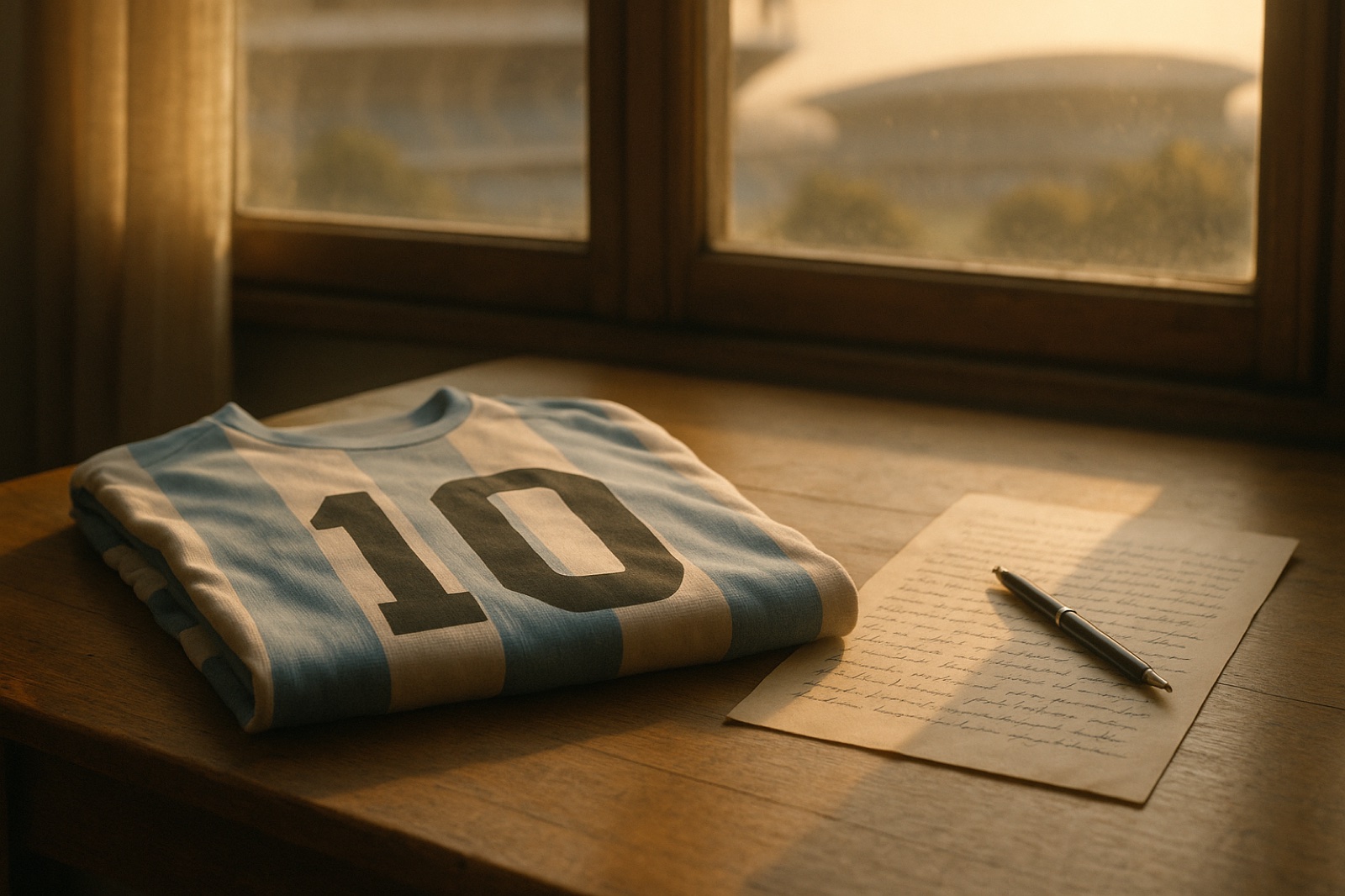
On 19 July 2026, Argentina lost the World Cup final to Spain, 1-0 after extra time. Two days later, Lionel Messi sat down and wrote a letter by hand, saying goodbye to the national team.
Then he did something that is easy to miss. He did not post it.
The letter stayed private for six weeks. It only went up on his Instagram on 31 August. The Messi retirement everyone read that day was not a decision made that morning. It had been sitting on a page, dated and finished, since July.
That wait is the most interesting part of the whole story. To see why, you have to go back ten years, to the last time Messi quit.
The Night Messi Quit the First Time
June 2016. The Copa América Centenario final, against Chile, in a stadium outside New York. The game ended 0-0 and went to penalties. Messi stepped up and missed his. Chile won.
It was his fourth lost final with Argentina. Within the hour, still at the stadium, he told reporters he was done. His words were widely translated as: “The national team is over for me.”
The world took him at his word. Headlines everywhere called it the end.
It lasted less than two months. On 12 August 2016, Messi reversed it. And the reason he gave is worth reading slowly:
“A lot of things went through my mind on the night of the final and I gave serious thought to quitting but my love for my country and this shirt is too great.”
On the night of the final. He named the problem himself. It was not that the decision was stupid. It was when he made it, and how loudly he said it.
If your own big decisions tend to arrive late at night, while your mind keeps replaying the thing that went wrong, you are not unusual. This free guide explains why the mind refuses to quiet down at night, and the simple order of steps that helps it settle.
Everything He Won Came After the Quit He Took Back
Here is the detail that turns this from a sports story into something bigger.
When Messi said “the national team is over for me” in 2016, he had never won a major senior trophy with Argentina. Not one.
After he came back, he won the Copa América in 2021. He won the World Cup in 2022. He won the Copa América again in 2024. By the time he finally left, ESPN counted 207 caps and 125 goals, both national records.
Every trophy that now defines his international career came after a decision he made in the worst hour of his football life, and then unmade.
That does not mean every hard-night decision is wrong. It means the night is a bad judge of whether it is right. We looked at the ache of that 2026 final itself in Argentina’s World Cup final loss. This story is about what comes after the ache.
Messi’s Retirement in 2026: What Was Different This Time
It would be easy to say Messi learned to decide slowly. That is not quite what happened.
Look at the dates again. The final was on 19 July. The letter was dated 21 July. He decided almost as fast as he did in 2016. Two days is not a long, careful process.
What changed was not the speed of the decision. It was what he did next. In 2016, the decision went straight out into the world, while the feeling was still at its loudest. In 2026, the decision went onto paper and stayed there, while the feeling had time to fade.
That is a test, not a delay. If a decision is only the loss talking, it tends to loosen once the loss stops shouting. If it is still standing weeks later, it is probably yours.
His statement, in the English translation that circulated widely, opens like this: “After all this time since the final, and after thinking about it a lot, I want to tell everyone that I’m retiring from the national team.”
After all this time since the final. He is telling you, in his first sentence, that the wait was part of the decision.
And the wait did not only let feelings fade. Life kept happening inside it. His father, Jorge, died in early August. Messi wrote that the loss left him even more sure of his choice. The decision held through the hardest weeks of his year. That is how he knew.
Why Big Decisions Feel So Certain Right After a Loss
You do not need a World Cup final for this. Most people know the shape of it.
The exam goes badly and you decide you are dropping the course. The argument ends and you type out the message that ends the friendship. The job rejection comes in and you tell yourself you are finished with that whole career.
In the moment, those choices do not feel emotional. They feel clear. Obvious, even. That is exactly what makes them risky. Pain is very good at making one option look like the only option.
Messi’s two retirements, ten years apart, are almost a controlled experiment. Same man. Same team. Same kind of loss. The same decision, both times. The difference was only whether the choice was allowed to wait before it became real.
If you are weighing a different kind of leaving right now, we worked through that question in how do I know if God wants me to quit my job.
The Old Story About Quitting in the Dark
There is a much older story with the same shape, and it comes from the Gospels.
A fisherman named Peter had failed the friend he loved most, on the worst night of his life. Afterwards, he did what people do. He announced he was going back to his old job. “I’m going fishing.” It was a quit, made in the dark, said out loud.
What is striking is what the story does next. Nobody scolds him. Early in the morning, the friend he had let down is standing on the beach with a small fire going, cooking breakfast. There is no lecture. Just a meal, and a question.
Maybe that is what grace looks like in practice. Not a rule that says you must never decide anything on a terrible night, but Someone waiting on the shore after you do, ready to hand you back the thing you walked away from.
A Simple Way to Let Your Own Decision Wait
- Write it down and date it. Paper or your phone’s notes. Say exactly what you have decided, in one or two sentences. It costs nothing and takes two minutes.
- Do not send it anywhere yet. No post, no message, no resignation email. The decision exists. It just is not public.
- Pick a date to read it again. A week for small things, longer for big ones. If it still reads true when the feeling has gone quiet, it is probably yours to keep.
For what it can feel like on the other side of a finished chapter, see what happened when another athlete’s career ended and the question of identity arrived.
Discussion Question
Was Messi right to take back his 2016 retirement, and should athletes ever announce a decision that big on the same night as a loss? Tell us what you think in the comments.
Share This
- Messi wrote his Argentina retirement letter two days after the World Cup final, then didn’t post it for six weeks. In 2016 he quit on the night of a final and took it back. Same decision. Different wait.
- Every major trophy Messi won with Argentina came after a retirement he announced in the worst hour of his career and then reversed. The night is a bad judge.
- New rule for my own big decisions: write it down, date it, don’t send it, read it again next week. If it still stands, it’s mine.
Questions People Ask
When did Lionel Messi retire from the Argentina national team?
Lionel Messi announced his retirement from the Argentina national team on 31 August 2026, in a handwritten statement posted on Instagram. The letter was dated 21 July 2026, two days after Argentina lost the 2026 World Cup final to Spain 1-0 after extra time. Messi kept the statement private for about six weeks before publishing it.
Why did Messi retire from Argentina?
In his 2026 statement, Lionel Messi said he had thought about the decision at length since the World Cup final and that different chapters of his career were coming to an end. He also wrote that the death of his father, Jorge Messi, in early August 2026 left him even more convinced that retiring from the national team was the right choice.
Did Messi retire from Argentina before 2026?
Yes. Lionel Messi first announced his international retirement in June 2016, straight after Argentina lost the Copa América Centenario final to Chile on penalties, a shootout in which Messi missed his own kick. He reversed that decision on 12 August 2016, saying a lot of things had gone through his mind on the night of the final. After returning, he won the 2021 Copa América, the 2022 World Cup and the 2024 Copa America with Argentina.
Is Messi still playing football after retiring from Argentina?
Lionel Messi’s 2026 retirement applies to international football with the Argentina national team. When he announced it, he was still playing club football for Inter Miami in Major League Soccer, the club he joined in 2023.
Is it a bad idea to make a big decision right after a loss or failure?
A decision made immediately after a painful loss is not automatically wrong, but strong emotion tends to make one option feel like the only option. A practical safeguard is to write the decision down, date it, avoid acting on it publicly, and reread it after the emotion has faded. A choice that still feels right weeks later is more likely to reflect what a person actually wants.