 0
0
 0
0
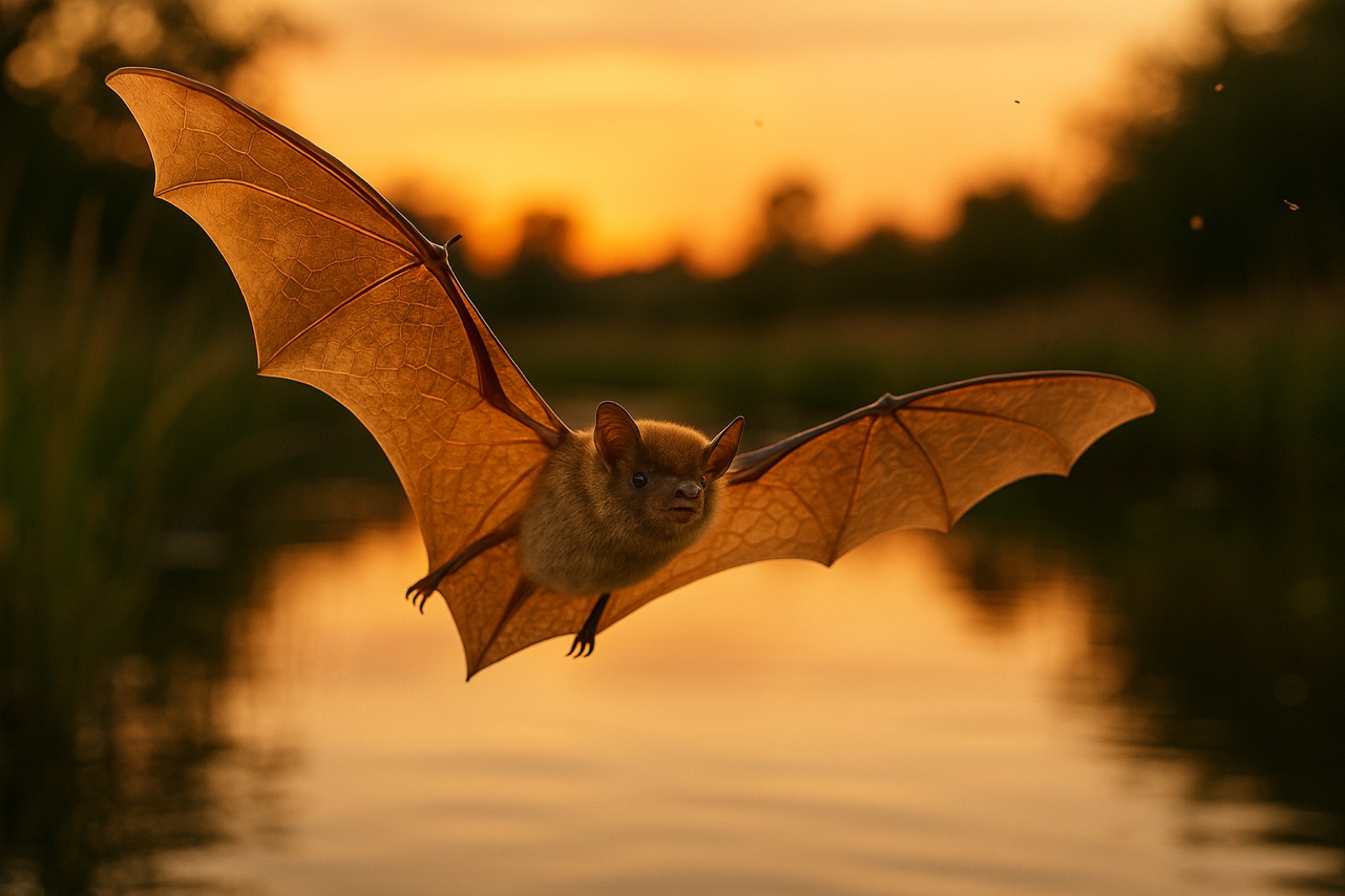
Pick up a little brown bat and you would hardly feel it. It weighs about 5 grams. That is less than a coin.
Most small animals burn fast and live short lives. That is the normal rule. But the bat lifespan story breaks that rule so badly that scientists have spent years trying to work out how. Some of these tiny bats keep flying, hunting and raising young for decades.
In late August 2026, a team of researchers published a study in the journal Nature that points to part of the answer. And the part that surprised them most was not about what these bats fix. It was about what they let go.
Bat Lifespan: The Numbers That Don’t Make Sense
Here is how strange this is.
The study looked at eight closely related bats from one group, called Myotis. They are small, brown, and look much alike. You would struggle to tell some of them apart.
Yet their lives are wildly different in length. The black myotis of Central and South America lives about seven years. Brandt’s myotis, a close cousin, can live around half a century. According to the University of California, Berkeley, one Brandt’s bat that was banded in Europe was caught again 50 years later.
Juan Manuel Vazquez, who led the work while at Berkeley and is now at Penn State, put it simply: “If you look at two bats of the same size, one lives 3 years and the other lives 30 years.”
Same size. Same body plan. Very different lives. So something inside must be different.
What the Nature Study Actually Looked At
The team built nearly complete genome maps for all eight bat species. A genome is the full set of instructions inside every cell. Comparing eight close cousins let them ask a clean question: what do the long-lived ones have that the short-lived ones don’t?
They also did something hands-on. Vazquez took tiny skin samples from the bats’ wings and grew those cells in the lab. That meant the team could not only read the instructions. They could watch the cells respond to trouble.
The researchers came from several places, including Berkeley, Penn State, the University of Vermont, the University of Arizona and a university in Lyon, France.
The Result Nobody Expected
The team gave the bat cells a harsh chemical that damages DNA. Then they watched which genes switched on.
The obvious guess was repair. When a cell’s instructions get damaged, the usual response is to call in the repair crew and patch the damage.
That is not what the longest-lived bat in the group did. In the little brown bat, the chemical did not switch on the genes for DNA repair. It switched on the genes that make a damaged cell die.
“We found the literal opposite of what we expected if you treat the bats with a lethal dose of this chemical,” Vazquez said. “The longest-lived bat in North America decides ‘I can’t save this ship’ and immediately switches gears to prioritize killing off the cells that are damaged.”
That sounds harsh at first. It is actually a kind of care for the whole body.
Why Letting a Cell Go Can Help a Body Live Longer
A patch is not always a good patch.
When badly damaged DNA gets repaired, the repair can leave small mistakes behind. Those mistakes get copied every time the cell divides. Over years, enough mistakes can build up to turn a cell into a cancer cell.
So the little brown bat takes a different road. Instead of trying to save a cell that is too far gone, it clears that cell out. A fresh, healthy cell takes its place. Fewer broken instructions get passed on. Less risk builds up over a long life.
The bats are not the only animals doing this. The Berkeley team noted that elephants, another long-lived animal that rarely gets cancer, use the same strategy. When a cell can’t be saved, it goes.
Elise Lauterbur of the University of Vermont, one of the study’s authors, said of these bats: “They just don’t seem to turn up with tumors like you would expect.”
One fair note, so this isn’t overstated: the researchers also describe these bats as good at both repairing and removing damaged cells. It isn’t that they never repair. It is that when the damage is severe, the longest-lived bat is quick to stop patching and start over.
The Hidden Link Between Viruses and Long Life
The study found a second surprise, and it is just as odd.
Bats live alongside a lot of viruses. The Myotis genomes turned out to carry an unusually large number of genes that deal with DNA viruses, such as herpes viruses.
One defence gene, called PKR, stood out. In every other mammal the team knew of, there is one copy. Some of these bats had one copy, some two, and some three.
And when the team compared lists, the genes linked to long life and the genes linked to fighting viruses overlapped more than chance would predict. In these bats, the machinery for staying alive a long time and the machinery for handling infection seem to be tangled together.
If you enjoy this kind of discovery, another recent study found something just as unexpected in a different family of bats: why bats don’t get sick from viruses that hurt people. It is a separate piece of work, and the two fit together well.
What This Study Does Not Tell You
It is worth being careful here, because headlines about “the secret to longer life” run ahead of the science.
The University of Vermont’s own summary says it plainly: it may be too early to use these bat adaptations to solve human disease. Nobody is about to turn this into a pill.
Vazquez added a point that matters: “Every mammal seems to have their own strategy for longevity and immunity that’s informed by their evolutionary history.” What works for a bat is not automatically what works for a person.
And there is a hard irony in the story. The little brown bat, the long-lived champion of this study, is also the species hit hardest by a deadly fungal disease called white-nose syndrome. A body that is brilliant at handling damage on the inside can still be badly threatened by something from the outside. A long life is not the same as a safe one.
The Tiring Work of Patching
There is something in this that reaches past bats.
A lot of us live like the patch-it-up response the scientists expected to see. Something breaks, and we tape over it. A habit we hate, an old hurt, a version of ourselves we are tired of. We fix it on Monday and it tears again by Friday. So we patch the patch.
That is exhausting. Anyone who has tried to hold themselves together that way knows it.
There is a very old piece of wisdom that says nobody sews a patch of new cloth onto an old coat, because when the new cloth pulls, the tear only gets worse. The people who first passed that saying on were not really talking about coats. They were talking about what God does with a person — which, in their telling, was never mainly patching. It was making new.
That is a different kind of hope than “try harder at the repairs.”
What You Can Take From a Bat at Dusk
Next time you see a small shape flicking over water as the light goes, it may be one of these bats. Five grams. Decades old, maybe. Still flying.
Part of what keeps it going is a quiet kind of honesty inside its cells: knowing when something can be fixed, and knowing when it is time for something fresh.
You don’t have to fix everything tonight. Sometimes the healthiest thing is to stop patching and let something new begin.
Curious which animal you’re most like? Our free What Animal Am I? quiz takes a couple of minutes, with no sign-up. And for another case where the answer was hiding inside the animal all along, read how the cure for a rattlesnake bite was found inside the rattlesnake.
Questions People Ask About Bat Lifespan
How long do bats live?
Bat lifespan varies enormously by species. Many small bats live for years or even decades, which is far longer than most mammals of the same size. Within a single group of closely related bats called Myotis, the black myotis of Central and South America lives about seven years, while Brandt’s myotis can live around 50 years; one Brandt’s bat banded in Europe was recaptured 50 years later, according to the University of California, Berkeley.
Why do some small bats live so long?
Scientists do not have a complete answer, but a study published in the journal Nature in August 2026 found several clues in eight Myotis bat genomes. Longer-lived species showed stronger cancer-fighting and immune-related genetic features, and cells from the long-lived little brown bat responded to severe DNA damage by switching on cell-death genes rather than DNA-repair genes, clearing out damaged cells before they could accumulate cancer-causing mutations.
What did the 2026 Nature study on Myotis bats find?
Researchers led by Juan Manuel Vazquez, with colleagues at UC Berkeley, Penn State, the University of Vermont, the University of Arizona and a university in Lyon, France, built near-complete genomes for eight Myotis bat species and grew bat cells from wing skin samples. They found an unusually large number of genes that interact with DNA viruses, extra copies of a virus-defence gene called PKR in some species, more overlap than expected between longevity genes and virus-related genes, and a cell-death response to DNA damage in the long-lived little brown bat.
Do elephants and bats resist cancer the same way?
In one respect, yes. The UC Berkeley researchers behind the 2026 Myotis bat study noted that elephants, another long-lived and cancer-resistant animal, share the strategy seen in the little brown bat: when a cell’s DNA is too badly damaged to save, the cell is killed off rather than repaired, which reduces the chance that mutations build up into cancer.
Can bat genes help humans live longer?
Not yet, and it would be premature to claim they will. The University of Vermont’s summary of the 2026 Myotis bat study says it may be too early to use bat immune adaptations to solve human disease, and lead researcher Juan Manuel Vazquez noted that every mammal appears to have its own longevity and immunity strategy shaped by its evolutionary history. The findings are a direction for future research, not a treatment.
Your Turn
The longest-lived bat survives partly by knowing when to stop repairing and start fresh. Do you think people are better at patching things up or at letting something go and starting over — and which one do you think is harder? Tell us what you think in the comments.
Share This
- A bat that weighs about 5 grams can live for decades. Scientists found the longest-lived one doesn’t patch badly damaged cells — it clears them out and starts fresh. https://bgodinspired.com/index.php/bgodinspired-news/bgodinspired-science-news/bat-lifespan-damaged-cells/
- Two bats the same size: one lives 3 years, one lives 30. A new Nature study looked inside their cells to find out why, and the answer was “the literal opposite” of what the researchers expected. https://bgodinspired.com/index.php/bgodinspired-news/bgodinspired-science-news/bat-lifespan-damaged-cells/
- Read about bats tonight and can’t stop thinking about this: sometimes the healthiest move isn’t another repair. It’s knowing when to let something go and start new. https://bgodinspired.com/index.php/bgodinspired-news/bgodinspired-science-news/bat-lifespan-damaged-cells/