 0
0
 0
0
What Defines the Observable Universe? Exploring the Boundaries of Our Cosmos
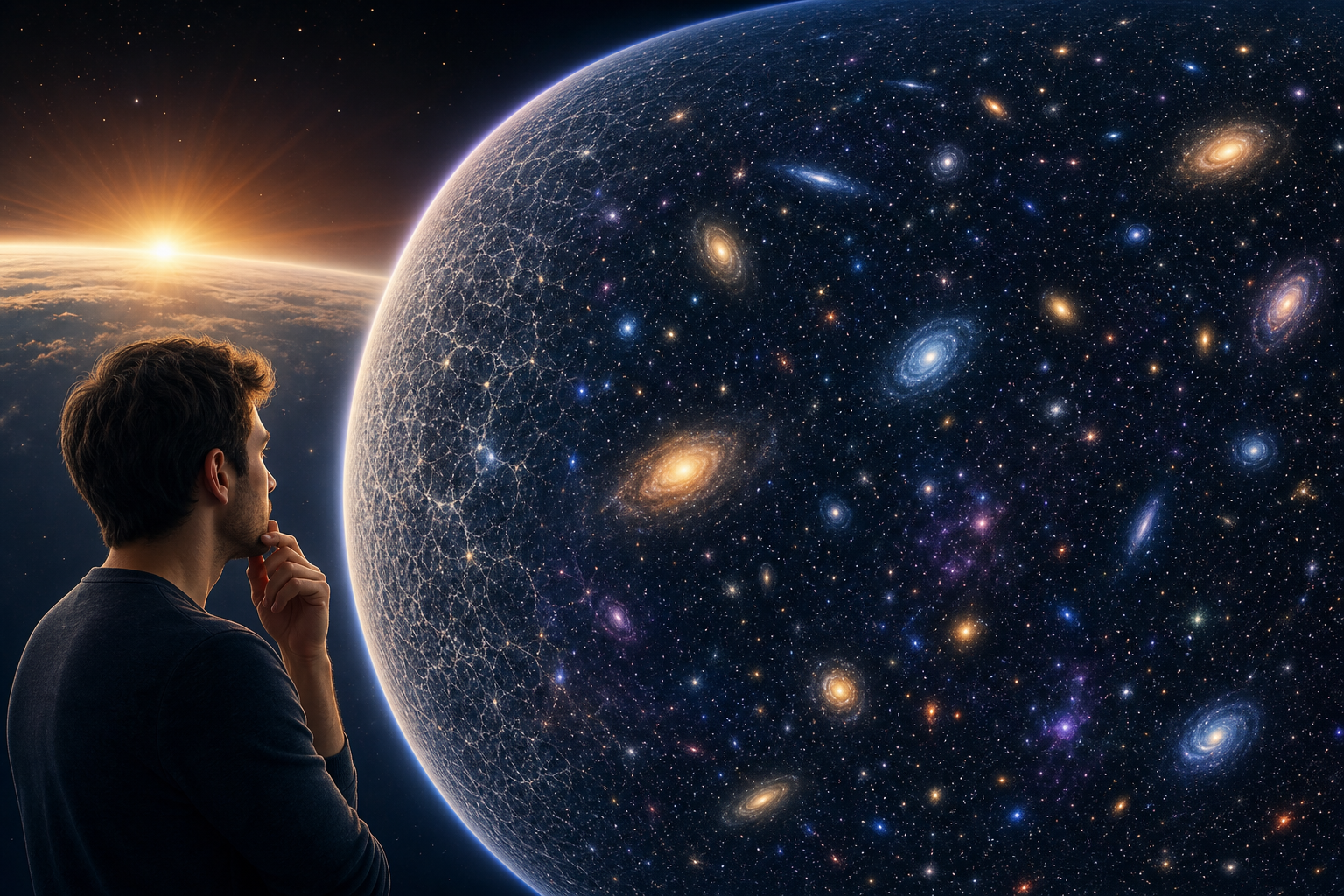
In a fascinating inquiry into the nature of our cosmos, astrophysicist Ethan Siegel explores a question that has intrigued both scientists and philosophers alike: What sets the size of the observable universe? The limit of this observable universe, which extends approximately 46.5 billion light-years in every direction, is not merely a measure of distance but a profound reflection of our quest for understanding and the intricacies of the cosmos.
At the heart of this inquiry lies the concept of the speed of light—approximately 186,282 miles per second—serving as our cosmic speed limit. This speed defines how far light can travel in the time since the Big Bang, effectively delineating the boundary of what we can observe. Yet, the observable universe is not a static entity; it continuously expands as more galaxies move away from us due to the universe’s ongoing expansion. Thus, our understanding of the universe is ultimately shaped by both our observational capabilities and the fundamental laws of physics.
Curiously, this fascinating exploration of the universe’s boundaries can also resonate with biblical teachings. The Book of Isaiah contains a compelling reminder of the vastness of creation: "To whom will you compare me? Or who is my equal?" (Isaiah 40:25). The verse encourages reflection on the divine nature of creation, implying that while we seek to understand the cosmos, we are also part of a greater plan.
As we grapple with the mysteries of the universe, we are reminded of the smallness of our earthly problems in the grand scheme of creation. The expansion of our observable universe can be seen as a metaphor for personal growth and understanding. Just as scientists push the boundaries of knowledge, individuals and communities can expand their horizons by embracing curiosity and faith.
The exploration of the observable universe invites a broader spiritual lesson: Just like the cosmos, our lives and relationships are constantly evolving. Embracing change and seeking understanding fosters growth, both intellectually and spiritually.
As you contemplate the grandeur of creation, consider how each step you take in seeking knowledge can mirror a journey of faith. While the cosmos may be vast and full of unknowns, remember that each discovery brings us closer to understanding our place within it. Let that curiosity inspire you to explore both the universe and your inner self. After all, as Psalm 139:14 reminds us, "I praise you because I am fearfully and wonderfully made."
In the great journey of life, may we continually seek, discover, and grow—both in knowledge and in spirit.
If you want to want to know more about this topic, check out BGodInspired.com or check out specific products/content we’ve created to answer the question at BGodInspired Solutions
If positive Biblical wisdom matters to you, I’d love your support of the mission
Q&A about
How does the size of the observable universe relate to God’s creation?
The vastness of the observable universe showcases the majesty of God’s creation, reflecting Psalm 19:1, which says that the heavens declare the glory of God. Such immensity reminds us of our smallness and God’s greatness, emphasizing that He is the Creator of all things, seen and unseen. This perspective can deepen our appreciation for His handiwork.
Can God still be involved in our lives despite the universe’s vastness?
Absolutely, the size of the universe doesn’t diminish God’s personal involvement in our lives. Jesus reminds us in Matthew 10:29-31 that even the sparrows are important to Him, illustrating that He knows and cares for each one of us perfectly. This should encourage us that no matter how vast the universe is, God is intimately engaged with our individual lives.
Does understanding the universe’s size challenge my faith?
Understanding the universe’s size can actually strengthen your faith by highlighting God’s omnipotence. Ephesians 3:20 speaks of God’s ability to do immeasurably more than we can ask or imagine, encouraging us to see life through a lens where God is bigger than any scientific concept. This perspective can foster a sense of peace and trust in His divine plan.
How should I balance scientific knowledge about the universe with my Christian beliefs?
Balancing science with faith can be enriching, as both can reveal truths about God’s creation. Colossians 1:17 tells us that all things hold together in Christ, inviting us to see scientific discovery as a way to marvel at God’s design. Approaching science with a faith-filled heart can lead to a deeper understanding of both God and His creation.