 0
0
 0
0
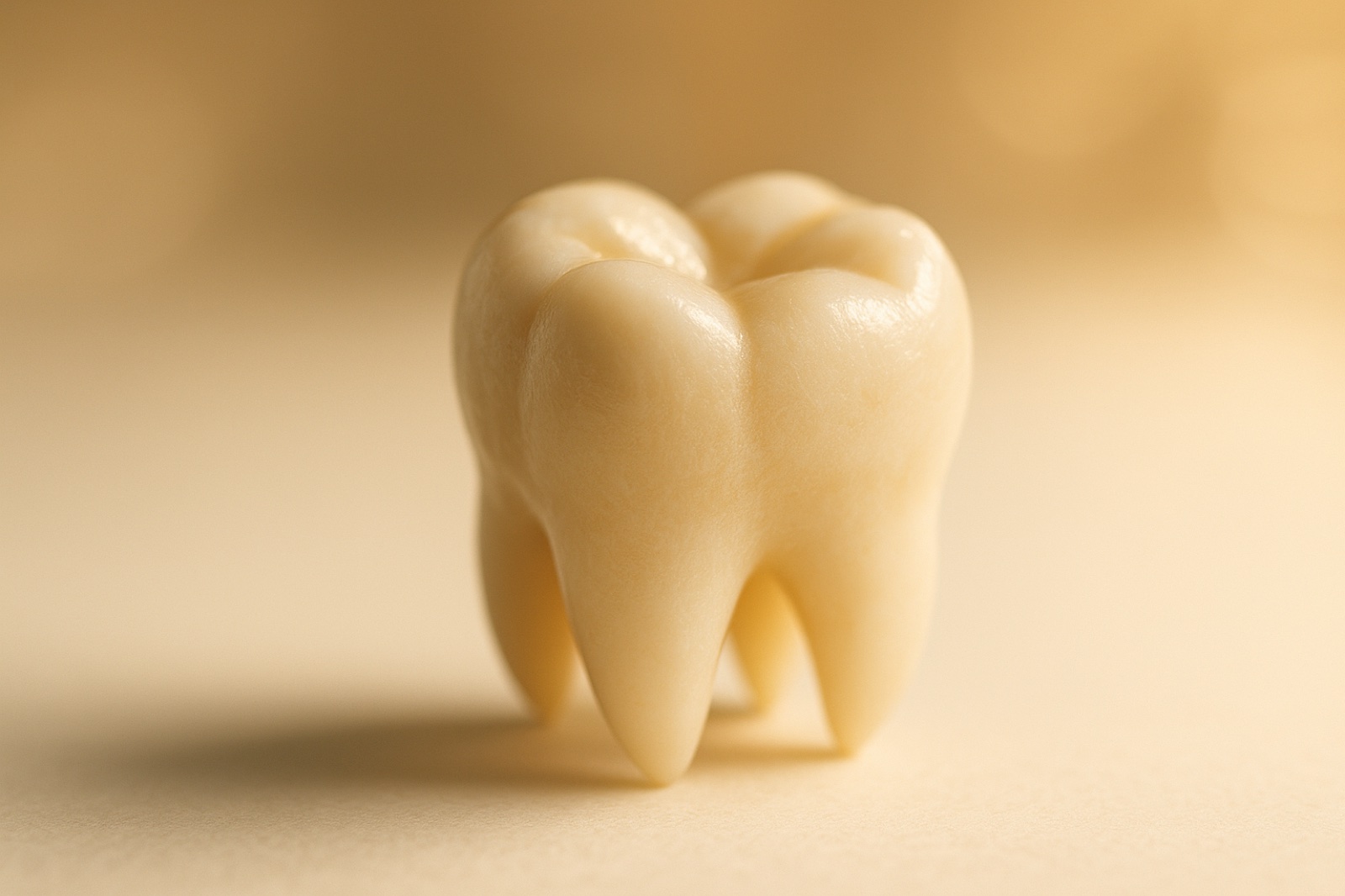
Every dentist has told you some version of the same thing: once enamel is gone, it’s gone. It doesn’t grow back. It doesn’t heal the way a cut on your arm closes on its own or a broken bone knits itself back together over a few weeks. Enamel is supposed to be the one part of your body that, once damaged, stays damaged — permanently, for the rest of your life. That isn’t a scare tactic dentists use to get you to floss. It’s a basic fact of human biology that’s been repeated in dental schools for over a century.
Except a research team just found a loophole.
Researchers at the University of Nottingham published a study on July 23, 2026, in the journal Nature Communications describing a fluoride-free gel that triggered real, new enamel growth on human tooth samples in lab testing — not just hardening or polishing the surface, but building new mineral structure onto it. It’s early. It’s lab-stage. But it’s the first serious scientific crack in a rule that was never supposed to have an exception.
Why Enamel Was Never Supposed to Come Back
To understand why this matters, it helps to know why enamel is so stubborn in the first place. Almost every other tissue in your body has some way of repairing itself. Skin has living cells that multiply to close a wound. Bone has cells that rebuild it after a fracture. Even your liver can regenerate a portion of itself if part of it is removed.
Enamel doesn’t have any of that. It’s built by cells called ameloblasts, but those cells only exist while a tooth is developing — largely before it ever erupts through the gum. Once the tooth is in place, the ameloblasts that built it are gone. Mature enamel has no living cells, no blood supply, and no nerve endings running through it. There’s no biological machinery left to call in for repairs. Whatever enamel you have by adulthood is, structurally, the same enamel you’ll have for the rest of your life — unless something wears it away.
And plenty wears it away: acidic foods and drinks, teeth grinding, acid reflux, age, and even brushing too aggressively. The damage shows up as sensitivity, yellowing, rough edges, and a higher risk of cavities, and until now, the only real tools available were preventive — fluoride to harden what’s left, or a dentist’s drill and filling material to patch what’s already lost.
The Study That Broke the Rule
The Nottingham team’s approach didn’t try to replace enamel with something artificial. Instead, their gel is built around a peptide designed to imitate amelogenin, the natural protein that guides enamel crystals into place while a tooth is still forming in early development. Applied to existing tooth surfaces in the lab, it prompted new mineral crystals to grow directly onto the enamel that was already there — integrating with it, rather than just sitting on top of it the way a fluoride treatment does.
That distinction is the whole story. Fluoride can make weakened enamel more resistant to further damage. It cannot add new enamel. This is the first approach shown to trigger actual new growth of the material itself.
It’s not the only headline this year about science undoing something everyone assumed was final. Researchers recently restored an antibiotic that drug-resistant superbugs had already beaten — not by inventing a new drug, but by removing whatever had been blocking the old one from working. There’s a pattern showing up in lab after lab lately: things declared permanently defeated turning out to have more give in them than anyone accounted for.
How Big a Deal Is This, Really?
Worth saying plainly: nobody is getting this gel at their next cleaning. What’s been published is lab testing on tooth samples, not human clinical trials. Getting from “this works on a sample in a lab” to “this is a treatment your dentist offers” typically takes years, sometimes many of them, and plenty of promising lab results never make that jump at all.
But the mechanism itself — new enamel crystal growth, on demand, on a surface that was supposed to be biologically incapable of it — is now published, peer-reviewed, and public. That’s a different category of news than a rumor or a press release. It joins a growing list of moments where medicine has quietly handed people tools that didn’t used to exist, like a blood test that can flag heart disease risk fifteen years before symptoms appear. The timeline to your dentist’s chair is unclear. The fact that “permanent” just moved is not.
The Part That Isn’t About Teeth
Here’s what sat with me longer than the chemistry did. For as long as modern dentistry has existed, “permanent” has been the final word on enamel loss. Not slow to heal. Not difficult to treat. Permanent. Full stop, end of discussion.
And most of us are carrying around the same verdict about something that has nothing to do with teeth — a mistake, a relationship, a version of ourselves that got worn down over years of ordinary wear and was quietly declared unfixable somewhere along the way. Not by a doctor. Just by time, and by our own tired conclusion that some things don’t come back.
There’s an idea a lot older than modern dentistry that says otherwise — that nothing worn down by time is actually too far gone to be restored. Not covered over. Not managed. Restored, the way this gel doesn’t just coat the tooth but rebuilds it from where the damage actually is. It’s the same quiet logic showing up in a lab in Nottingham: sometimes what looks structurally final is just waiting on someone, or something, willing to rebuild it from the inside. Scientists have been finding that kind of thing hiding in plain sight more than once lately — even materials that had been sitting there, unnoticed, since creation itself, only waiting for someone to look closely enough.
Maybe restoration was never actually as rare as “permanent” made it sound.
What Happens Next
The realistic version: this gel needs years of further testing before it’s anywhere near a dental office, and there’s no guarantee it clears every hurdle between a lab sample and an approved treatment. The honest version: for the first time, “enamel doesn’t grow back” has an asterisk next to it, and that asterisk didn’t exist a year ago.
Whatever it ends up meaning for your next dental visit, it’s worth sitting with for a moment outside of that context, too — the reminder that wear, even the kind everyone agreed was final, doesn’t automatically get the last word.
A Question Worth Sitting With
If a treatment like this eventually clears human trials and reaches your dentist’s office, would you want it right away — or would you rather wait years and let other people go first? What would it actually take to convince you a “permanent” problem had a real fix? Leave your answer below — it’s a more interesting question than it first sounds.
Share This
- Your tooth enamel was supposed to be the one part of your body that never heals itself. Scientists in the UK might have just broken that rule.
- Wild: a fluoride-free gel just triggered actual new enamel growth in lab tests. We’ve been told for a century this was biologically impossible.
- Everything I thought I knew about “permanent” tooth damage just got a lot more complicated.
Questions People Are Asking
Can tooth enamel actually grow back?
Not naturally, and not yet in any dental office. But in July 2026, University of Nottingham researchers published lab test results showing a fluoride-free gel triggered real new enamel crystal growth on human tooth samples for the first time, published in Nature Communications.
What is the new tooth enamel regrowth gel made of?
It’s built around a peptide designed to mimic amelogenin, the natural protein that guides enamel crystals into place while a tooth is developing before it erupts. Unlike fluoride, which hardens existing enamel, this peptide triggered new mineral crystals to form directly onto the tooth surface.
Why doesn’t tooth enamel heal itself like skin or bone?
Enamel is built by cells called ameloblasts that are only present while a tooth is forming. Once a tooth erupts, those cells are gone, leaving enamel with no living cells, no blood supply, and no nerve tissue — nothing left to trigger a natural repair process.
Is the enamel-regrowing gel available to patients yet?
No. The July 2026 results are lab tests on tooth samples, not human clinical trials. Reaching an actual dental treatment typically takes years of further testing, and there’s no guaranteed timeline yet.
Where was this enamel regeneration study published?
The findings came from a research team at the University of Nottingham and were published July 23, 2026, in the peer-reviewed journal Nature Communications.