 0
0
 0
0
Somewhere there’s a family photo with a little too much space between certain people. Maybe it’s yours. A stepdad standing at the edge of the frame. Half-siblings who see each other twice a year. A holiday table where everyone’s smiling for the camera and nobody’s quite sure who’s supposed to sit next to whom. If you’ve ever felt like your family doesn’t look like the ones in the greeting cards – blended, rearranged, held together by something other than a tidy origin story – you’re not as far from the Bible as you might think.
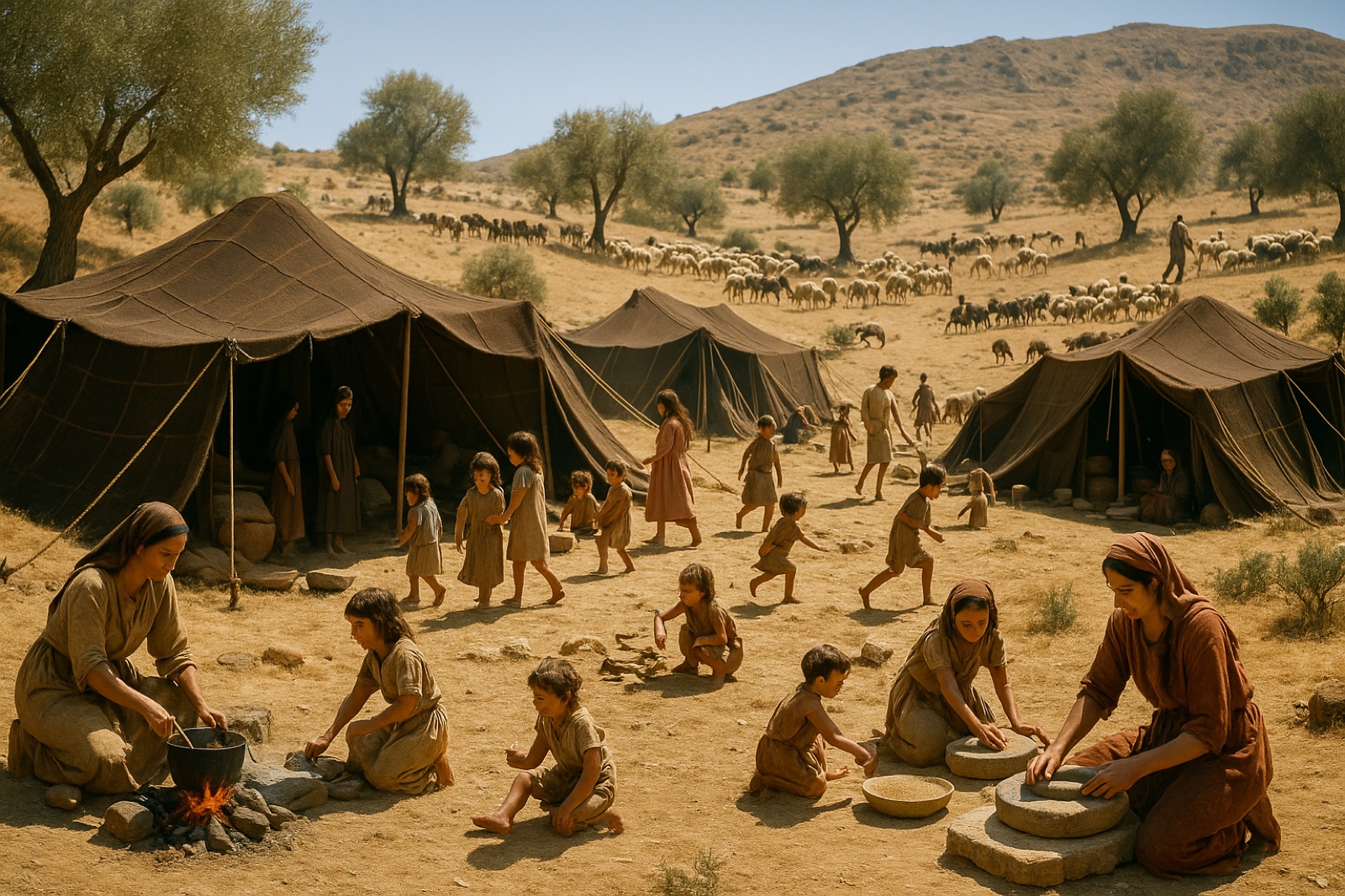
Jacob’s family didn’t look like a greeting card either. Two wives who couldn’t stand each other. Two more women added to the household as part of the deal. Twelve sons who grew up watching their mothers compete for the same man’s attention. And out of that exact household, God built the twelve tribes of Israel – the entire nation He would carry His promises through for the rest of the Bible.
A Household Nobody Would Call Healthy
Here’s how it actually happened, and it’s messier than most sermons let on.
Jacob loved a woman named Rachel and worked seven years to marry her. On the wedding night, his father-in-law Laban switched brides on him – Jacob woke up married to Rachel’s older sister Leah instead. He worked another seven years for Rachel too, which meant Jacob ended up with two wives who both knew he’d only wanted one of them.
Scripture doesn’t soften what that did to the household. Genesis 29:31 says, “And when the LORD saw that Leah was hated, he opened her womb: but Rachel was barren.” Leah kept having sons, hoping each one would finally win Jacob’s love. Rachel, desperate and childless, gave Jacob her servant Bilhah so she could have children through her. Not to be outdone, Leah did the same with her servant Zilpah. At one point the sisters were literally negotiating with mandrake plants to determine which one got to sleep with their shared husband that night.
Four different mothers. One father who never hid which wife he preferred. Sons who grew up inside that rivalry from birth – you can hear it in the names. Leah named one son Reuben, saying it meant God had “looked upon her affliction.” She named another Simeon because God had “heard that she was hated.” These weren’t neutral baby names. They were prayers, and complaints, and scorekeeping, given permanent form and repeated out loud every single day.
It didn’t get better as the sons grew up. Reuben later slept with his father’s concubine Bilhah – a betrayal so serious Jacob never forgot it, even on his deathbed. And the brothers’ jealousy toward Rachel’s firstborn, Joseph, ran so deep they eventually sold him into slavery and lied to their father about it for years. This is the family. Not a footnote to the story – the actual foundation of it.
Twelve Tribes, Built on This
And yet. When Jacob gathered his sons before he died, he didn’t skip anyone. He didn’t quietly leave out the sons of the servants, or the sons of the unloved wife, or the son who’d betrayed him. He named and blessed all twelve – Reuben, Simeon, Levi, Judah, Dan, Naphtali, Gad, Asher, Issachar, Zebulun, Joseph, and Benjamin. Those twelve names became the twelve tribes of Israel. Every promise God made to Abraham, every covenant, every prophecy about a coming Messiah, ran through this specific, unresolved, complicated family tree. Judah – Leah’s son, born out of that painful competition for love – became the tribal line King David and, generations later, Jesus would come from.
God Didn’t Wait for This Family to Get Healthy
Here’s what’s easy to miss reading this story fast: God didn’t fix Jacob’s household first and then build something out of it. He built the twelve tribes of Israel through the rivalry, through the favoritism, through the resentment that never fully healed between these brothers in their lifetime. The dysfunction isn’t cleaned up before the covenant moves forward. It’s simply present, the whole time, and the covenant moves forward anyway.
That’s a different claim than “God can use anybody.” It’s more specific than that. God didn’t need Leah to stop feeling second-best. He didn’t need Rachel’s envy to disappear, or the brothers to reconcile before Joseph’s story could unfold the way it did, or the servant-wives’ place in the family to become less complicated. He built something eternal directly through the mess, not around it and not after it.
If your family looks like Jacob’s – blended through circumstances nobody planned, carrying tension that hasn’t resolved, held together by something more complicated than a simple story – that’s not a disqualifying detail God is waiting to edit out. It might be exactly the kind of family history He tends to work through.
What This Looks Like Today
Belonging in a family that didn’t come together simply isn’t something you have to manufacture by force. Rachel and Leah never stopped being rivals in this life, and God still wrote both of their sons into the twelve tribes. You don’t have to wait for every relationship in your family to heal before you can trust that God is doing something real in it right now.
That doesn’t mean pretending the hard parts don’t exist. Leah’s ache to be loved was real. Rachel’s grief over years of infertility was real. Joseph’s brothers carried guilt for the rest of their lives. Scripture names all of it instead of skipping past it – which is worth noticing if you’ve been taught that faith means acting like your family’s history doesn’t hurt.
Three Things You Can Do Today
- Text one person in your blended or complicated family something specific you appreciate about them. Not “love you,” but one true, specific thing – “I noticed how patient you were with the kids Sunday” or “Thanks for still showing up to these dinners.” Specific breaks the script faster than general affection does.
- Write down one relationship in your family you’ve been waiting to feel resolved before you engage with it. Then ask yourself: what’s one small, low-stakes way to show up in it this week anyway, without waiting for the resolution first?
- Look up your own family’s story – however it was built – and name one place you can now see God was present in it, even in a season nobody would have called healthy. Say it out loud, even if it’s just to yourself.
Something to Sit With
Before you move on, take a minute with these. Don’t rush to answer them the way you think you should – just let them sit.
- Where in your own family history have you been waiting for healing to happen before you could believe God was actually present there?
- If you had to name one person in your family the way Leah named her sons – turning a real feeling into a permanent word – what would that name be, and what would it tell you?
- What would change if you believed God was already building something through your family exactly as it is, instead of only after it’s fixed?
A prayer for today, if you want to pray it:
God, my family doesn’t look simple, and honestly, some of it still hurts. I’ve been waiting for things to feel resolved before I could believe You were doing anything good here. Thank You for not waiting on Leah and Rachel and their sons to get it all right before You built something eternal through them. Help me see what You’re already doing in my family, right in the middle of what’s still unfinished. I just want to trust that You’re here in it, even now. Amen.
One Question Worth Discussing
If God built the twelve tribes of Israel through a family this complicated, what does that say about the idea that you need a “healthy” family before God can do something meaningful through yours? Drop your answer in the comments – I’d genuinely love to hear how you’d put it.
Share This
- “God didn’t wait for Jacob’s family to get healthy before He built the twelve tribes of Israel through it. He’s not waiting on mine either.”
- “Leah, Rachel, Bilhah, Zilpah, and twelve sons who didn’t all get along – that’s the family Israel was built from. Complicated isn’t disqualifying.”
- “Turns out the foundation of Israel wasn’t a healthy family. It was a real one. #FaithOverPerfect”
Quick Questions About Jacob’s Family
Q: How many wives did Jacob have?
A: Jacob had two wives, Leah and Rachel, who were sisters. He also had children with their two servants, Bilhah and Zilpah, following the marriage customs of the time.
Q: Why did Jacob end up married to both Leah and Rachel?
A: Jacob agreed to work seven years for Laban to marry Rachel, but Laban secretly substituted Leah, Rachel’s older sister, on the wedding night. Jacob then worked another seven years to also marry Rachel.
Q: Who were the twelve sons of Jacob?
A: Reuben, Simeon, Levi, Judah, Dan, Naphtali, Gad, Asher, Issachar, Zebulun, Joseph, and Benjamin. These twelve sons became the ancestors of the twelve tribes of Israel.
Q: Which son did the tribe of Judah – and eventually Jesus – come from?
A: Judah, one of Leah’s sons. The line of King David, and later Jesus, traces back through the tribe of Judah.
Q: What does Jacob’s family teach us about blended or complicated families today?
A: That God doesn’t require a family to be resolved, simple, or free of tension before He works something meaningful through it. He built the twelve tribes of Israel through real rivalry and real pain, not around it.
Jacob’s story isn’t the only place in Scripture where God builds something real out of a family that didn’t come together the easy way. Hagar knew what it was to be the outsider in someone else’s family story, and Leah’s own story is worth sitting with on its own. If your family doesn’t look like the ones in the greeting cards, you’re in good biblical company.