 0
0
 0
0
You know the feeling. You show up. You try. You give everything you have to a relationship, a job, a family role — and somehow it’s never quite enough to be the one who’s chosen first. Someone else gets picked. Someone else gets the easy love, the effortless attention, the “of course” instead of the “well, actually.” You keep hoping that if you just do a little more, love a little harder, wait a little longer — it will finally land. And it doesn’t.
That ache has a name in Scripture. And it belongs to a woman most people skip past on their way to the more “interesting” characters in Genesis — Leah.
Leah in the Bible: The Marriage Nobody Chose For Her
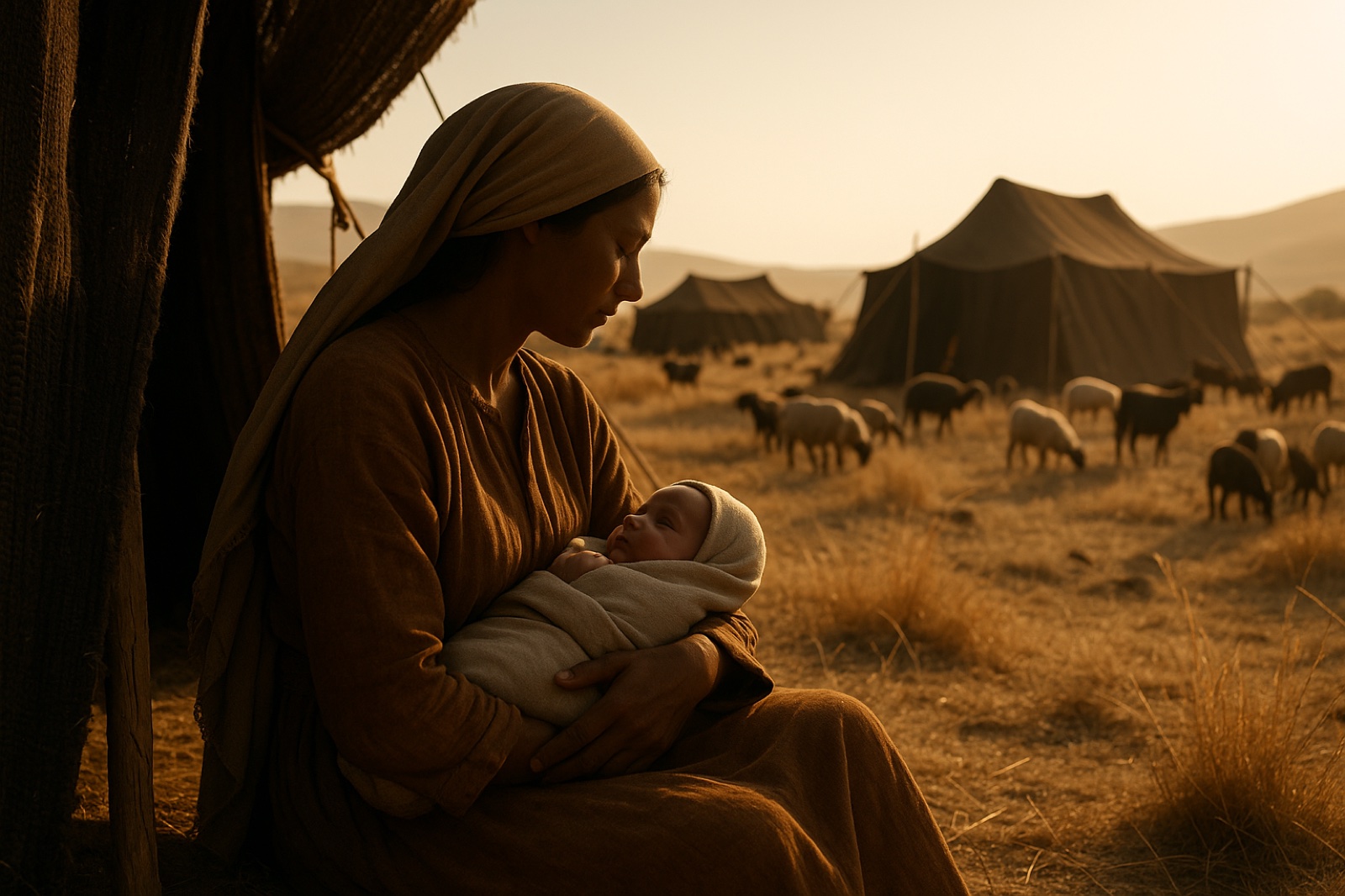
Leah’s story starts with a deception she didn’t ask for. In Genesis 29, Jacob had fallen in love with her younger sister, Rachel, at first sight, and worked seven years for the right to marry her. But on the wedding night, under the cover of darkness and a bride’s veil, Laban sent Leah into the tent instead. Jacob discovered the switch the next morning — married to a woman he never chose, still in love with the one he did.
Scripture doesn’t hide how this left Leah. Genesis 29:31 says it plainly: “And when the LORD saw that Leah was hated, he opened her womb: but Rachel was barren.” Not “less loved.” Not “second choice.” Hated. That’s the word the text uses for how Jacob felt about the wife circumstance handed him.
Leah spent years in a house where her presence was tolerated, not treasured — sharing a husband with a sister everyone, including that husband, preferred.
Four Sons, Four Confessions
What makes Leah’s story so revealing isn’t just what happened to her — it’s what she named her children. In the ancient world, a name wasn’t just a label. It was a testimony, spoken out loud, over and over, every time someone called that child in from the field. Watch what happens across four names:
Her first son, she named Reuben — “she said, Surely the LORD hath looked upon my affliction; now therefore my husband will love me” (Genesis 29:32). Read that carefully. She thanks God, but the sentence ends aimed at Jacob. She’s still hoping the baby will be the thing that finally earns his love.
Her second son, she named Simeon — “Because the LORD hath heard I was hated, he hath therefore given me this son also” (Genesis 29:33). Still naming her pain. Still measuring her worth by what Jacob feels.
Her third son, she named Levi — “Now this time will my husband be joined unto me, because I have born him three sons” (Genesis 29:34). Three sons in, and she’s still running the math. Still convinced that if she just gives enough, does enough, produces enough — the love will finally arrive.
Then something shifts.
The Turn: The Name That Stopped Chasing Jacob
Her fourth son, she named Judah — “Now will I praise the LORD: therefore she called his name Judah; and left bearing” (Genesis 29:35).
No mention of Jacob. No math about how many sons it takes to be loved. For the first time in four pregnancies, Leah isn’t naming her pain or her hope for her husband’s approval — she’s naming her praise. Something in her stopped reaching for a love that was never going to reciprocate the way she needed it to, and turned instead toward the One who had been paying attention the entire time.
That’s not resignation. Giving up on Jacob loving her isn’t the same as giving up. It’s the moment Leah stopped outsourcing her worth to someone who had already told her, in a hundred small ways, that he wasn’t going to supply it — and let God be the one who got to define her instead.
And here’s the detail that turns this from a nice life lesson into something staggering: Judah — the son named at the exact moment Leah stopped trying to be loved by the wrong person — becomes the ancestor of King David, and ultimately, the line through which Jesus Christ is born (Matthew 1:2-3). The unwanted wife, in the moment she finally stopped performing for a man’s love, gave the world the tribe the Messiah would come from. God didn’t just see Leah’s affliction. He built something eternal out of the exact moment she stopped needing Jacob to.
What This Means for the Love You’re Still Chasing
Maybe your version of Jacob isn’t a husband. Maybe it’s a parent whose approval you’ve been performing for since childhood. A boss who never quite says “good job” no matter what you produce. A friend group that tolerates you but never quite makes you first. A version of yourself you keep trying to earn acceptance from.
Leah isn’t the only woman in Genesis whose story turns on being seen by God when a person wouldn’t see her. Hagar found the same thing alone in the wilderness, years later, when she gave God a name of her own: the God who sees me.
Leah’s story isn’t telling you to stop trying in your relationships, or to stop hoping people can change. It’s showing you where to put your identity while you wait. The math of “if I just do enough, they’ll finally love me” is the same math Leah ran for three sons. It doesn’t have to be the math you run for the rest of your life. If the ache of feeling like you have to earn love resonates, this look at what the Bible actually says about self-worth goes even deeper.
Actions to Take Today
- Name what you’re actually chasing. Take 60 seconds and finish this sentence honestly: “I keep hoping ___ will finally make me feel like enough.” Write it down. You can’t stop chasing something you haven’t named.
- Send one act of praise instead of one act of performance. Before you send the next message, favor, or gesture aimed at earning someone’s approval today, pause and thank God out loud for something specific He’s already done for you. Let it be your “Judah moment.”
- Read Genesis 29:31-35 out loud, slowly, using your own name in place of Leah’s. Notice where the story stops being about her and starts being about you.
A Prayer for the Wife, Friend, or Child Still Waiting to Be Chosen
God, I’m tired of doing the math on whether I’ve done enough to be loved. You saw Leah when no one else did, and I believe You see me too — the parts of me that feel overlooked, the effort nobody’s noticed, the love I keep hoping will finally land. Help me stop performing for people who were never going to be able to fill this. Let me praise You today instead of just hoping in someone else one more time. Amen.
A Question Worth Sitting With
Do you think it’s possible to fully stop seeking someone’s approval while still loving them well — or does real love always require a little of that ache? Tell us what you think in the comments.
Share This
- “Leah named her fourth son the moment she stopped trying to earn her husband’s love. That son’s tribe gave us Jesus.”
- “I’ve spent years doing the math on whether I’ve done enough to be loved. Genesis 29 just told me to stop.”
- “Reuben, Simeon, Levi, Judah — watch a woman’s prayers turn from performance to praise in four verses. Genesis 29:31-35.”
Questions People Ask About Leah in the Bible
Who was Leah in the Bible?
Leah was the older daughter of Laban and the first wife of Jacob, given to him by deception on his wedding night in place of her sister Rachel, whom Jacob had originally intended to marry (Genesis 29:16-25).
Why did Jacob marry Leah instead of Rachel?
Laban tricked Jacob by sending Leah, heavily veiled, into the marriage tent instead of Rachel. Jacob had already worked seven years for the right to marry Rachel, but under the culture’s rule that the older daughter married first, Laban substituted Leah, and Jacob didn’t discover the switch until morning (Genesis 29:21-25).
What does the name Judah mean?
Judah comes from a Hebrew root meaning “praise.” Leah named her fourth son Judah specifically because, as Genesis 29:35 records, she said, “Now will I praise the LORD” — marking a shift from naming her sons after her pain to naming one after her worship.
Why does Leah matter in the story of Jesus?
Leah’s fourth son, Judah, became the ancestor of the tribe of Judah — the royal line that produced King David and, generations later, Jesus Christ (Matthew 1:2-3). The unloved wife’s moment of turning toward God instead of toward her husband’s approval produced the lineage of the Messiah.
Did Leah and Rachel ever reconcile?
Scripture doesn’t record a clean resolution between the sisters — their rivalry continues through later chapters of Genesis (see Genesis 30). But both women became mothers of the twelve tribes of Israel, and God used both of their lives, imperfect relationship and all, to build the nation He promised Abraham.