 0
0
 0
0
The Apple Adam and Eve Never Actually Ate
Picture the felt board from Sunday school. A tree in the middle. A snake curled around the trunk. And in the woman’s hand — red, round, shiny. An apple.
It’s everywhere. The Adam’s apple in your throat. The poisoned apple Snow White bites into. The apple emoji that shows up any time someone jokes about temptation online. Somewhere along the way, “apple” became shorthand for the entire story of the Fall — so completely that most people would bet money it’s in the text.
It isn’t. Genesis never says Adam and Eve ate an apple. Not once. The word doesn’t appear anywhere in the chapter, in the original Hebrew, or in the earliest translations of it.
Which raises two questions. First: if it wasn’t an apple, what does Genesis actually say they took? And second, more important one: why has almost nobody noticed the fruit itself was never really the point?
What Genesis Actually Says They Took
Here’s the command God gave, back when there was only one rule in the whole garden:
“And the LORD God commanded the man, saying, Of every tree of the garden thou mayest freely eat: But of the tree of the knowledge of good and evil, thou shalt not eat of it: for in the day that thou eatest thereof thou shalt surely die.” (Genesis 2:16-17)
No apple. No fruit variety named at all. Just “the tree of the knowledge of good and evil” — a tree defined entirely by what it represented, not by what it looked like.
Then comes the moment itself:
“And when the woman saw that the tree was good for food, and that it was pleasant to the eyes, and a tree to be desired to make one wise, she took of the fruit thereof, and did eat, and gave also unto her husband with her; and he did eat.” (Genesis 3:6)
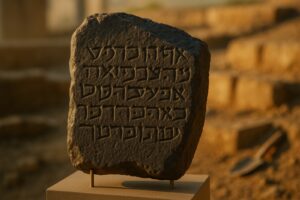
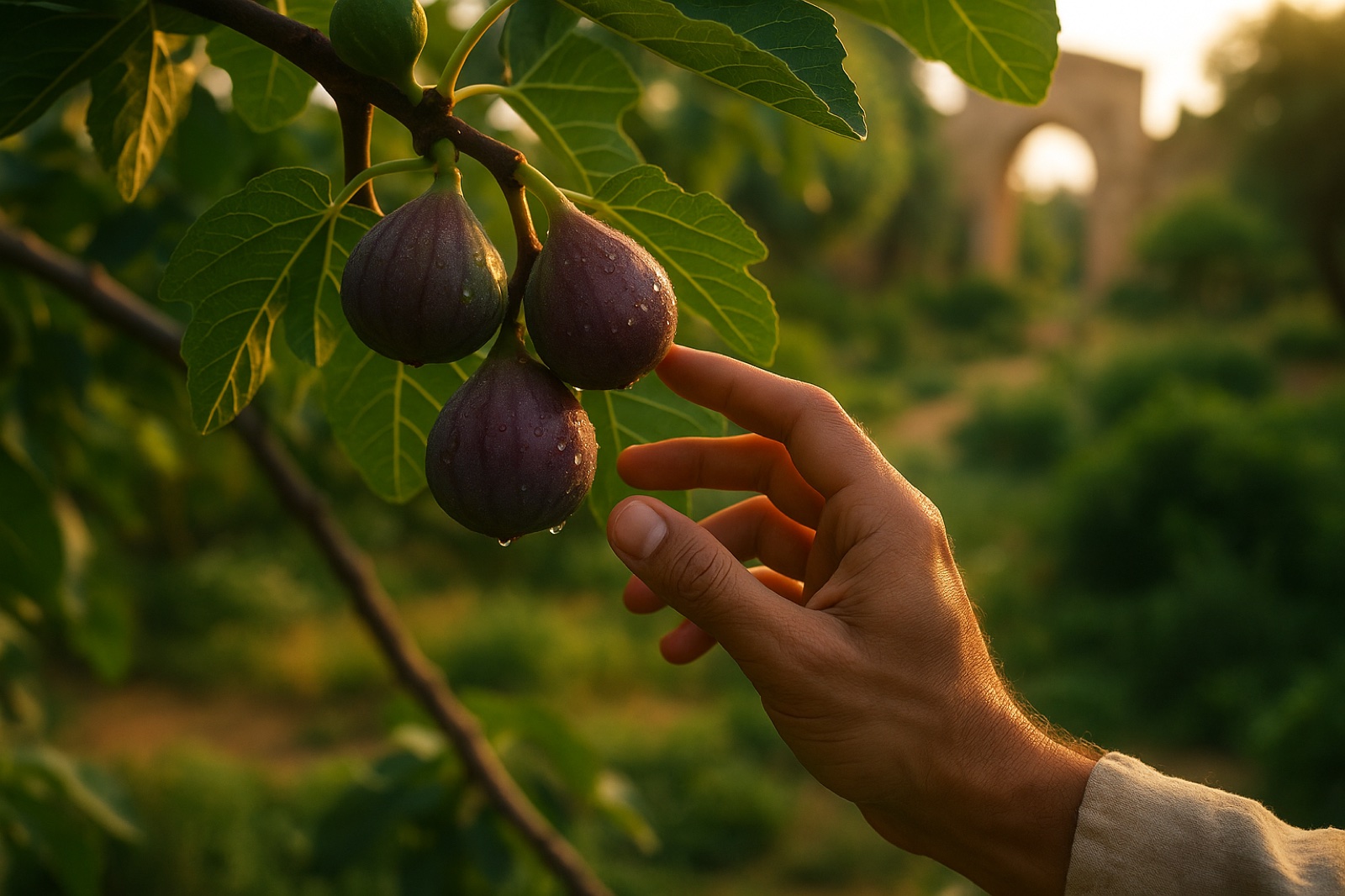
“Fruit.” That’s the word. In the original Hebrew, it’s peri — the same generic word used for the fruit of any tree, anywhere in the Old Testament. Figs, pomegranates, dates, olives — all of them are peri. The text simply never narrows it down. Whatever grew on that tree, Genesis leaves it deliberately unnamed.
So Where Did “Apple” Actually Come From?
If it’s not in the Bible, where did an entire visual tradition come from?
Most scholars trace it back centuries, to when the Bible was translated into Latin. In that translation, the word used for “fruit” was malum — which happens to also be the Latin word for “apple.” It’s a coincidence of language: malum meaning “evil” and malum meaning “apple” come from two different root words that just happen to look and sound identical in Latin. A pun hiding inside a translation.
From there, it stuck. Painters across Europe — the ones who gave us most of our mental images of Bible scenes centuries before photographs existed — ran with the apple. Church art, stained glass, and eventually poems like Milton’s Paradise Lost cemented it further. By the time it reached your Sunday school felt board, “apple” wasn’t a translation choice anymore. It was just the story.
An accident of Latin wordplay became the most famous fruit in human history — while the actual text quietly kept saying something else the entire time.
The Tree’s Real Name Was the Point
Here’s what gets lost when the conversation is all about produce: the tree already told you what it was about. Not “the apple tree.” The tree of the knowledge of good and evil.
The serpent understood that better than anyone. Watch what he actually offers Eve — not a snack, but a claim about power:
“For God doth know that in the day ye eat thereof, then your eyes shall be opened, and ye shall be as gods, knowing good and evil.” (Genesis 3:5)
That’s the actual pitch. Not “this tastes good.” It’s: you get to decide what’s right and wrong for yourself — you don’t need to take God’s word for it anymore. The fruit was never the prize. Self-rule was the prize. The fruit was just the door.
It Was Never About the Fruit
Read the temptation again and notice where it actually starts — before anyone’s hand ever touched anything:
“Yea, hath God said, Ye shall not eat of every tree of the garden?” (Genesis 3:1)
That’s the real first move. Not an offer of food. A question that quietly rewrites what God said. God had given Eve nearly unlimited freedom — “of every tree of the garden thou mayest freely eat,” with one single exception. The serpent reframes that as restriction: did God really say you can’t eat from any of the trees? He wasn’t selling produce. He was selling a different narrator for God’s own words.
That’s the Turn most retellings skip past entirely. The sin in the garden wasn’t really “breaking a food rule.” It was trusting a stranger’s summary of what God said over what God had actually said. Eve didn’t fail a diet. She swapped narrators.
And if that’s the real story, it stops being ancient history. You’ve stood in that exact spot. Maybe not under a literal tree, but in the moment where something — a scroll, a decision, a relationship, a shortcut — gets recast in your head as “God’s just being restrictive here” instead of “God already told me what’s good for me.” The specific object almost never matters. What matters is whose version of the truth you’re trusting in that moment.
What This Means for Monday Morning
You probably don’t have a literal forbidden tree in your backyard. But you almost certainly have a version of this happening somewhere in your week — a place where you already know what God’s word says, and a quieter voice is offering you a more flexible interpretation of it.
The apple was never the issue. The question underneath the question always is: whose voice are you letting rewrite what you already know is true?
That’s not a rule to follow harder. It’s a pattern to notice — the same one Eve faced, dressed differently for your particular Tuesday.
Actions to Take
- Name your own “fruit.” Think of one specific thing right now that you’re quietly rationalizing — a purchase, a text you’re drafting, a corner you’re about to cut. Write down, in one sentence, the story you’re telling yourself about why it’s actually fine. That sentence is worth reading twice.
- Put God’s actual word next to the rationalization. If you know a verse, value, or promise that speaks directly to that situation, write it right underneath the sentence from step one. Look at the two side by side. Notice which one sounds like Him and which one sounds like a reframe.
- Say the real question out loud to one other person. Not “pray about it” in the abstract — literally tell a friend, spouse, or family member the specific thing you’re weighing, today, before you decide. The serpent worked in isolation. Bringing another voice in breaks that pattern fast.
Journaling Prompts
- Where in your life right now is something being reframed as “restrictive” that God actually meant for your good?
- What is your version of “it’s just one bite” this week — the thing that feels small enough not to matter?
- If the real failure in Eden was trusting a different narrator, not breaking a rule, whose voice have you been letting narrate a situation in your own life lately?
A Prayer
God, I don’t always notice when I’ve stopped trusting what You actually said and started trusting my own reframe of it. Show me where I’ve done that this week — where I’ve called something restrictive that You meant as protection. I don’t want a stranger narrating my life back to me. I want to hear it from You directly. Help me recognize Your voice, and help me choose it, even when the other one sounds more reasonable. Amen.
Discussion Question
What’s another Bible detail you always assumed was in the text — until you actually went looking and found out it wasn’t? Tell us what it was in the comments.
Share This
- “I just found out the Bible never actually says Adam and Eve ate an apple. It just says ‘fruit.’ The whole apple thing came from a Latin pun. My mind is a little blown right now.”
- “The tree in Eden wasn’t the ‘apple tree.’ It was ‘the tree of the knowledge of good and evil.’ The name was the whole point, and somehow we all forgot that.”
- “Turns out the real temptation in Genesis 3 wasn’t a piece of fruit. It was trusting a different voice’s version of what God said. That hits different than the Sunday school version.”
Common Questions
Does the Bible say Adam and Eve ate an apple?
No. Genesis 3:6 only says they ate “of the fruit thereof” — the Hebrew word is peri, a generic term used for the fruit of any tree. The specific type of fruit is never named anywhere in the text.
If it’s not in the Bible, why do so many people think it was an apple?
Most scholars trace this to the Latin translation of the Bible, where the word for “fruit,” malum, also happens to be the Latin word for “apple” — a coincidence of two unrelated root words that look identical. European religious art and literature picked up the image from there, and it became the standard depiction long before it had anything to do with the actual Hebrew text.
What was the name of the tree in the Garden of Eden?
Genesis 2:17 calls it “the tree of the knowledge of good and evil.” Its name described what it represented — the ability to define good and evil apart from God — rather than what kind of tree it physically was.
What was the actual sin in the Garden of Eden?
The eating itself was the visible act, but the deeper issue, seen in Genesis 3:1-5, was trusting the serpent’s reframing of what God said over what God had actually said. The serpent’s offer was self-rule — “ye shall be as gods, knowing good and evil” — not the fruit itself.
Why does it matter whether it was an apple or not?
Because focusing on the fruit’s identity misses what the passage is actually about. Genesis isn’t concerned with botany. It’s concerned with whose voice gets to define truth in your life — and that question shows up in ordinary decisions today just as much as it did in the garden.
If this kind of “wait, that’s not actually what the Bible says” moment caught your attention, you might also like Who Was Cain’s Wife? What Genesis Was Actually Doing, or go deeper into the theme of trusting God’s word over your own reasoning in How Do I Know God’s Will for My Life? What Proverbs 3:5-6 Actually Says. And if the “knowledge of good and evil” detail stuck with you, the Hebrew Word for Knowledge, Da’at unpacks what that kind of knowing really meant.