 0
0
 0
0
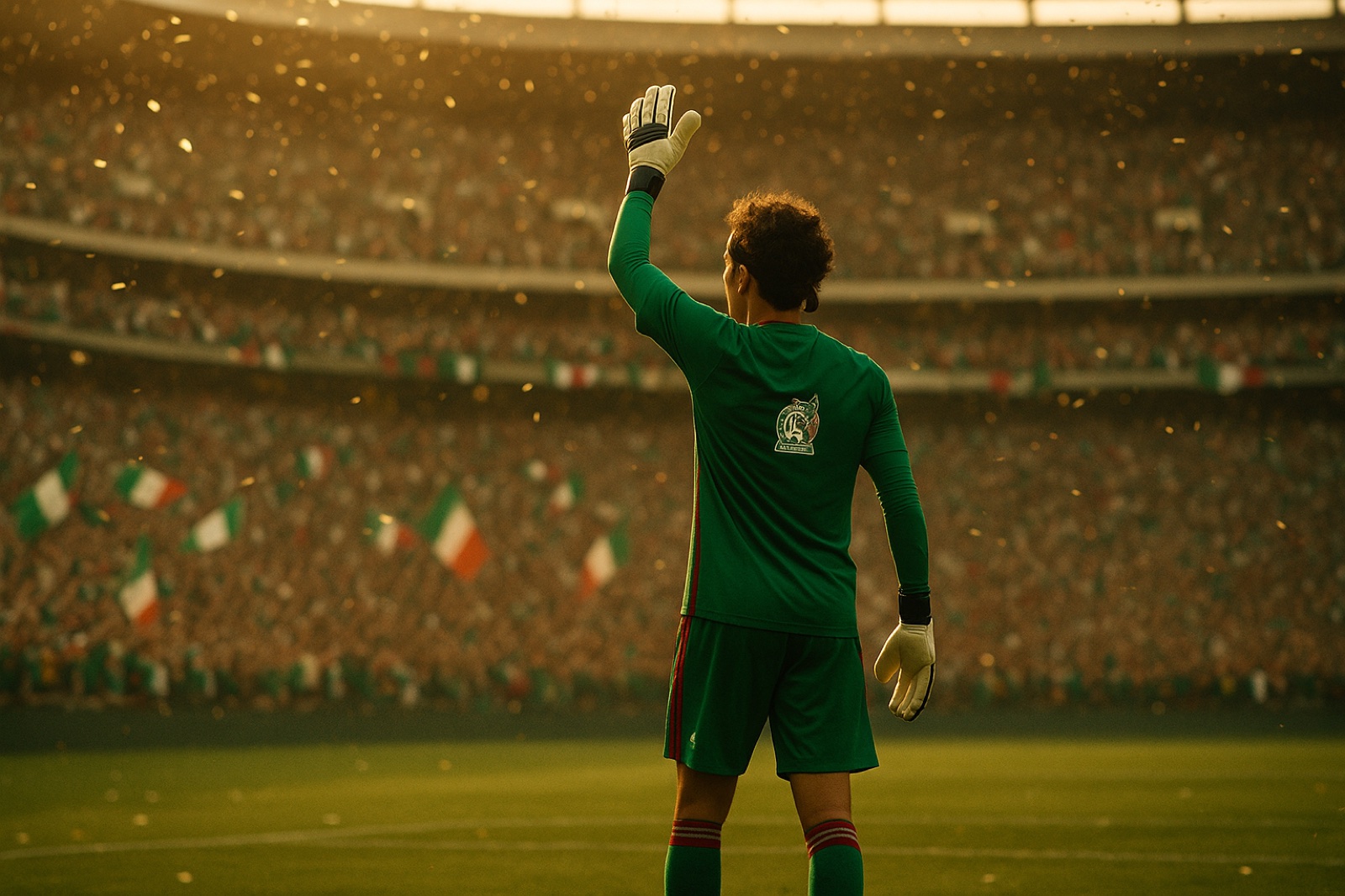
When the final whistle blew on Mexico’s 3-0 win over Czechia at Estadio Azteca, the scoreline wasn’t what made 87,000 people get to their feet. It was the man standing between the posts, wiping his eyes, while an entire stadium chanted his name.
Guillermo Ochoa had just told the world this was it. His fifth World Cup. His last one. And Mexico didn’t wait for the tournament to end to say goodbye — they said it right there, mid-celebration, before he’d even left the pitch.
Here’s the strange part. Ochoa has never lifted a World Cup. He’s never even gotten Mexico past the round of 16. If you’re scoring this by trophies, his case is thin. This tournament will crown a champion soon enough, and the split-screen moment after that final whistle will get replayed for years — but nobody in Estadio Azteca that night was doing the math on trophies. They were doing math on something else entirely — something a scoreboard was never built to track.
Sixteen Years in the One Job Everyone Forgets Exists
Ochoa made his World Cup debut in 2010. He’s still starting in 2026. In the sixteen years between, he became one of only a handful of goalkeepers on earth to play in five World Cups — a feat that has almost nothing to do with talent alone and almost everything to do with something harder to measure: staying good enough, healthy enough, and trusted enough for sixteen years, in a sport that chews up and discards players half his age.
Most people who’ve watched a World Cup remember exactly one thing about a goalkeeper: the save. Ochoa’s is 2014, against Brazil, in front of a home crowd that wasn’t even his — a string of stops so absurd that Brazilian fans in the stadium ended up applauding the other team’s goalkeeper. Four years later, he started again as Mexico shocked the defending champions, Germany, in the group stage. Moments like that are why his name gets said with a kind of reverence usually reserved for players who actually won something.
But here’s what almost nobody talks about: those two nights are separated by dozens of matches, hundreds of hours of ordinary, unremarkable soccer, where Ochoa’s entire job was to make sure nothing happened. No goal. No headline. No moment. Just quiet, competent nothing, for ninety minutes, over and over, for years.
That’s the goalkeeper’s actual job description, and it’s a strange one. Strikers get remembered for what they do. Goalkeepers get remembered for what doesn’t happen on their watch. Their competence is measured in absence — the disaster that never occurred, the shot that should have gone in and didn’t, the collapse that got quietly prevented before anyone in the stands even registered the danger. It’s a job with no highlight reel for going well. You only make the news for failing.
A Stadium That Clapped for the Wrong Reason (On Purpose)
Which is what made Estadio Azteca’s reaction so unusual. Cristiano Ronaldo is chasing the one trophy that’s eluded him his entire career, and the story of his final World Cup is, understandably, a story about a man still hungry for the thing he hasn’t won. Ochoa’s send-off was the opposite kind of story. Nobody in that crowd was mourning a title he never got. They were celebrating sixteen years of showing up for a job that offers no parade for going well — and finally, on his way out, getting one anyway.
It’s worth sitting with how rare that actually is. Sports, like most of life, tends to reward the visible. The goal-scorer gets the jersey sales. The record-breaker gets the documentary. Even inside this same tournament, the players who get left off All-Star rosters are often the ones doing the least glamorous, most necessary work — the screens, the rotations, the unselfish pass — while a flashier stat line gets the vote. Recognition and merit don’t always land in the same place. Most of the time, the person doing the quiet, essential work doesn’t get the ovation at all. They get overlooked, and they keep doing the job anyway, because somebody has to and it might as well be done well.
Ochoa did that job for sixteen years and the crowd decided, on his way out the door, to notice.
The Math That Isn’t About Trophies
There’s an old idea, much older than professional soccer, that shows up in nearly every wisdom tradition humans have ever produced: that faithfulness in the small, unglamorous, unwitnessed work is worth more — not less — than a single spectacular moment nobody had to sustain. Not the flashy save. The sixteen years of being ready for it. Not the trophy. The showing up, season after season, in a role built entirely around being the last line nobody wants to think about until they desperately need it.
It’s an easy thing to miss, because trophies are visible and faithfulness usually isn’t. A trophy sits in a case. Faithfulness just quietly accumulates, invisible, until enough years pass that people finally notice what was there all along. Something bigger than a stadium scoreboard seems to keep a different kind of ledger — one that counts consistency, not just spectacle. And every so often, for one night, in one stadium, that ledger and the crowd’s applause happen to line up.
Everyone Has a Position Nobody Claps For
Most of us aren’t professional goalkeepers, but almost everyone reading this has an Ochoa job somewhere in their life — the unglamorous position that’s all upkeep and vigilance and no scoreboard. The parent doing the unseen, unpaid, unphotographed work of holding a household together. The employee whose whole job is making sure nothing breaks, which means the only time anyone notices them is the one week something does. The friend who’s quietly, consistently there, with no highlight reel to show for it.
Nobody schedules a retirement ceremony for that kind of faithfulness. Most of the time, it just keeps happening, unnoticed, until it doesn’t happen anymore and everyone realizes what it was worth.
Ochoa got his ovation. Most people doing the quiet, essential work of their own lives never will — not from a stadium, anyway. But the standing ovation was never really the point. It was just, for one night, proof that the quiet years counted for something all along.
Something to Think About
If you had to name the “Ochoa job” in your own life — the unglamorous, necessary thing you do that nobody applauds — what would it be? Drop your answer in the comments below.
Share This
- Guillermo Ochoa never won a World Cup. He just spent 16 years being the reason his team didn’t lose the ones that mattered. There’s a kind of scorekeeping that isn’t about trophies.
- The goalkeeper’s whole job is measured in what doesn’t happen. No highlight reel for going well — you only make the news for failing. Ochoa did it for 16 years and finally got the ovation for it.
- Everyone has an “Ochoa job” — the unglamorous, thankless thing you keep doing well with no one clapping. Turns out that might be the part that actually counts most.
Common Questions
Why did Guillermo Ochoa get a standing ovation even though Mexico never won the World Cup with him?
Ochoa announced his retirement from international soccer during Mexico’s 2026 World Cup run, and fans at Estadio Azteca gave him an emotional send-off during a 3-0 win over Czechia. The ovation wasn’t about a trophy — Mexico never advanced past the round of 16 during his tenure — it was in recognition of sixteen years of consistent, high-level performance in a position where success is often invisible.
How many World Cups has Guillermo Ochoa played in?
The 2026 tournament marks Ochoa’s fifth World Cup as Mexico’s starting goalkeeper, a rare accomplishment shared by very few players in the sport’s history, spanning from his debut in 2010 through 2026.
What is Guillermo Ochoa best known for?
Ochoa is best known for a series of remarkable saves against Brazil during the 2014 World Cup and for starting in Mexico’s upset win over defending champion Germany in the 2018 World Cup group stage.
Why is a goalkeeper’s job considered thankless compared to other soccer positions?
A goalkeeper’s success is largely measured by absence — the goals that don’t happen, the disasters that get quietly prevented. Unlike strikers or midfielders, who are remembered for visible, celebrated plays, goalkeepers often only draw attention when something goes wrong, making years of quiet competence easy to overlook.
What does Guillermo Ochoa’s story say about recognition and hard work?
It’s a reminder that visible achievement and genuine faithfulness don’t always overlap — the flashiest moments get remembered, but the quiet, sustained effort behind them is what actually makes those moments possible, even when it goes unnoticed for years at a time.