 0
0
 0
0
Tomorrow at 3 p.m. Eastern, on the exact same patch of grass at MetLife Stadium, two things will happen within about four seconds of each other.
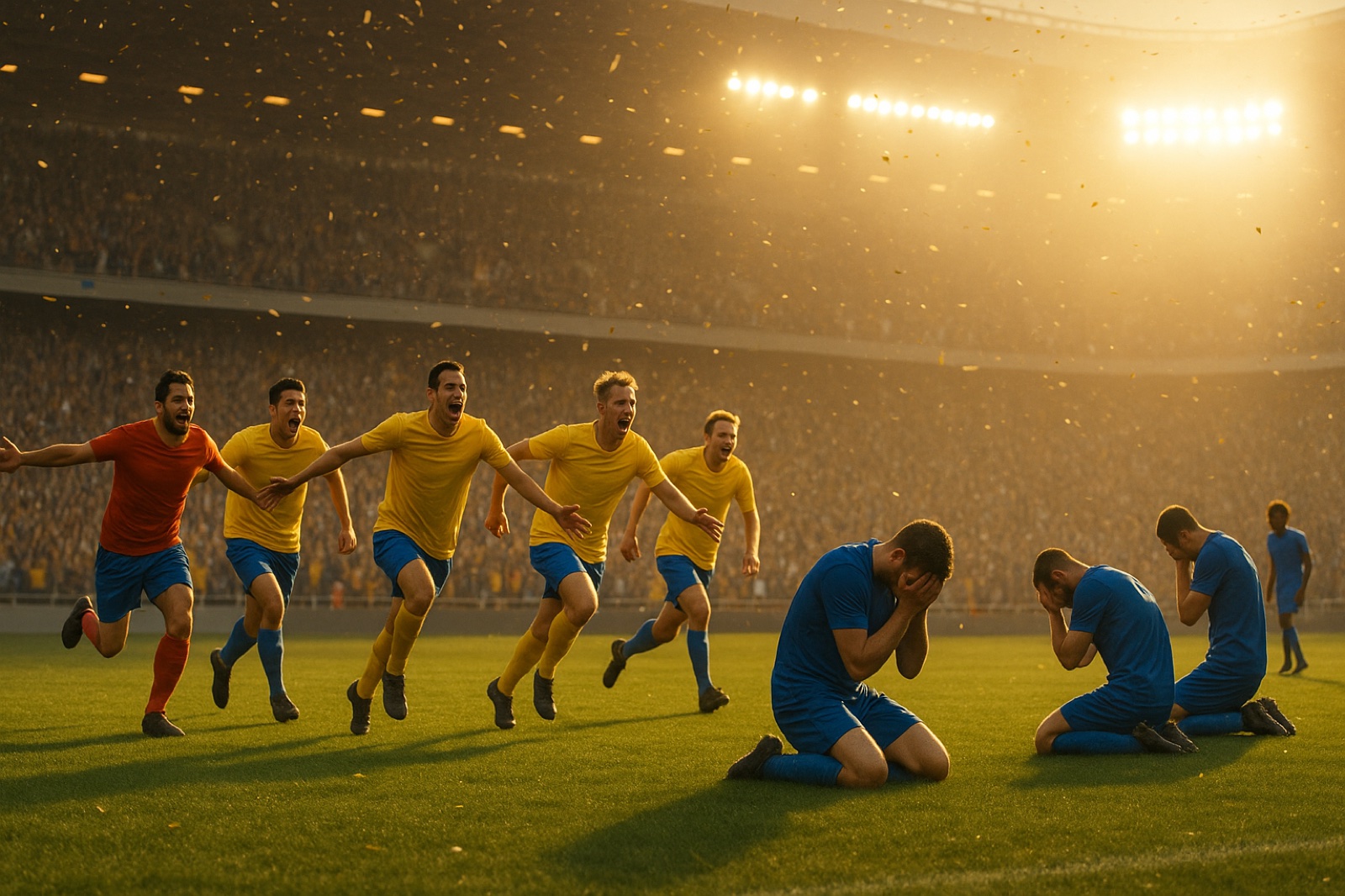
One set of players will start sprinting toward each other, arms out, some of them already crying before they reach the pile. The other set will be on their knees, or flat on their backs, hands over their faces, while 82,500 people roar on the other side of the field like it isn’t happening.
Spain and Argentina meet in the 2026 FIFA World Cup Final on July 19 — the first-ever 48-team tournament, and the culmination of a month that started with 104 matches and ends with one. Spain arrives having allowed a single goal in seven matches, fresh off a 2-0 win over France in the semifinal. Argentina, the defending champion, needed extra time to get past England, 2-1, with Lautaro Martínez scoring the winner two minutes after the restart.
By 5:30 p.m. tomorrow, one of those two teams will not exist anymore in the only form that matters right now. Not because anyone got hurt. Because the thing they spent four years building — training camps, qualifiers, a whole nation’s attention — will have ended in a way that gets filed under “loss” and stays there.
The Shot Broadcasters Never Cut Away From
Here’s something you’ve probably never noticed you were watching: television directors do not point the camera at the winning team first.
In the seconds after a championship match ends, broadcast production teams almost universally hold on the losing side before cutting to the celebration. Sports media researchers have a name for it — the “agony shot” — and it’s been a deliberate part of sports broadcasting since ABC’s Wide World of Sports built an entire opening montage around “the thrill of victory and the agony of defeat” back in the 1960s. Producers know the losing reaction pulls more emotional weight from an audience than the winning one does. It’s not an accident. It’s a choice, made fresh every broadcast, that the losing face is the more watchable face.
Multiply that instinct by a global audience and you get tomorrow: cameras will find the Spanish or Argentine player who missed the decisive chance, hold on his face for three or four unbearable seconds, and move on. Millions of people who have never met him will feel something looking at that face. Almost none of them will be able to explain why.
What Sports Psychologists Actually Call This
There’s real research behind why that moment lands so hard — for the players on the field and for everyone watching from a couch.
Psychologists studying fan behavior have documented a pattern they call BIRGing — Basking In Reflected Glory — the well-known tendency for fans to say “we won” after a victory, folding a team’s success into their own identity. Less discussed is its mirror image: CORFing, Cutting Off Reflected Failure, where fans distance themselves from a loss almost instantly — “they lost,” not “we lost” — protecting their own sense of self from a result they had no part in.
Both instincts reveal the same quiet assumption sitting underneath most competition: that a person’s worth rises and falls with the scoreboard. Fans do it in a few seconds, switching pronouns without thinking. Athletes do it for years. Cristiano Ronaldo just set a World Cup scoring record no one may ever break — and by his own admission, the one trophy he’s chased for two decades has kept slipping through his hands. Ask most elite athletes what they remember most clearly about their careers, and it’s rarely the wins. It’s the shot that didn’t go in.
There’s even a well-documented cognitive shortcut behind it — the peak-end rule, first described by psychologist Daniel Kahneman — which says people judge an entire experience almost entirely by its most intense moment and how it ended, not by the average of everything that happened along the way. A brilliant, disciplined tournament run can get compressed, in a player’s own memory, into four seconds of a missed chance in the 89th minute. The ending doesn’t just conclude the story. It rewrites it.
Ninety Minutes That Are, and Aren’t, the Whole Story
The road to this Final has taken a month, sixteen host cities, and — by some estimates — close to a billion people watching at the same moment, many of them awake at hours their body clocks have no explanation for. That scale is real. So is the result tomorrow — a trophy will be lifted, a record will be set, one country will celebrate in a way that reshapes the next several weeks of its public mood.
None of that is being downplayed here. The moment matters. The effort was real. The score will be final.
But sit with the split-screen for a second longer than the broadcast will let you. Two sets of human beings, identical in every way that counts — same training, same sacrifice, same nerves in the tunnel beforehand — will walk off that field in ninety minutes having been sorted into exactly two categories by a ball crossing a line a certain number of times. And an idea far older than professional sports has always pushed back on the assumption that follows: that the sorting is the whole truth about who they are.
That older idea doesn’t argue the score doesn’t matter. It argues something quieter and, honestly, harder to sit with — that whatever actually makes a person worth something was never up for a vote in the first place, and no scoreline, in any stadium, has the authority to revise it. Not the crowd’s roar. Not the camera holding four extra seconds on a losing face. Something underneath all of that had already been decided, long before kickoff, by something bigger than either sideline.
What to Actually Watch For Tomorrow
You’ll watch the celebration tomorrow. Everyone will. It’s built to be watched — the flags, the pile of bodies, the manager getting doused, the trophy lift under fireworks.
But try watching the other side too, for longer than the broadcast wants you to. Not with pity — with attention. Notice that the players collapsed on the grass ten feet away are made of the exact same stuff as the ones celebrating: the same discipline, the same years, the same nerve it took to walk out there at all. The scoreboard sorted them. It didn’t define them. Those are two different jobs, and only one of them belongs to a game.
Discussion Question
When the Final ends tomorrow and the cameras find both sidelines within seconds of each other, which reaction do you think will actually hold your attention longer — and what do you think that says about what we’re all really watching for?
Share This
- “Tomorrow one team lifts a trophy and the other collapses on the same ten feet of grass. I can’t stop thinking about what that split-screen moment is actually measuring — and what it isn’t.”
- “Sports psychologists have real names for this: BIRGing when your team wins, CORFing when it doesn’t. Either way, a lot of us let a scoreline decide something it was never actually qualified to decide.”
- “Win or lose tomorrow, the scoreboard was never the whole story. #WorldCupFinal2026”
Common Questions
When is the 2026 World Cup Final and who is playing?
The 2026 FIFA World Cup Final is scheduled for July 19, 2026, at MetLife Stadium in East Rutherford, New Jersey, with kickoff at 3 p.m. local time (19:00 GMT). It features Spain — unbeaten through the tournament and coming off a 2-0 semifinal win over France — against defending champion Argentina, which beat England 2-1 in extra time in their semifinal.
Why do TV cameras focus on the losing team after a championship game?
Broadcast directors have deliberately held the camera on losing players’ reactions since at least the 1960s, when ABC’s Wide World of Sports built its identity around “the thrill of victory and the agony of defeat.” Sports media researchers call these moments “agony shots” — producers have long known that a losing reaction pulls stronger emotional engagement from viewers than a winning celebration does.
What are “BIRGing” and “CORFing” in sports psychology?
BIRGing (Basking In Reflected Glory) describes fans folding a team’s win into their own identity — saying “we won.” CORFing (Cutting Off Reflected Failure) is its opposite: fans distancing themselves from a loss almost instantly, switching to “they lost.” Both reveal how easily people let a scoreboard they had no control over shape their own sense of self.
What is the “peak-end rule” and how does it relate to losing a championship?
The peak-end rule, first described by psychologist Daniel Kahneman, holds that people judge an entire experience mainly by its most intense moment and how it ended — not by the average of everything that happened. For an athlete, that means a whole tournament of disciplined, excellent play can get compressed in memory into a single missed chance at the end. The ending doesn’t just close the story; it tends to rewrite how the whole story gets remembered.
Does losing a game actually say anything true about a person’s worth?
Not according to an idea far older than organized sports — one that holds a person’s worth was never something a final score, a crowd’s reaction, or a camera’s four extra seconds had the authority to decide in the first place. The scoreboard can sort who wins. It was never built to define who someone is.