 0
0
 0
0
If you have a Clusia on a windowsill, it may be doing something right now that almost no other tree on Earth can do. It is waiting for dark.
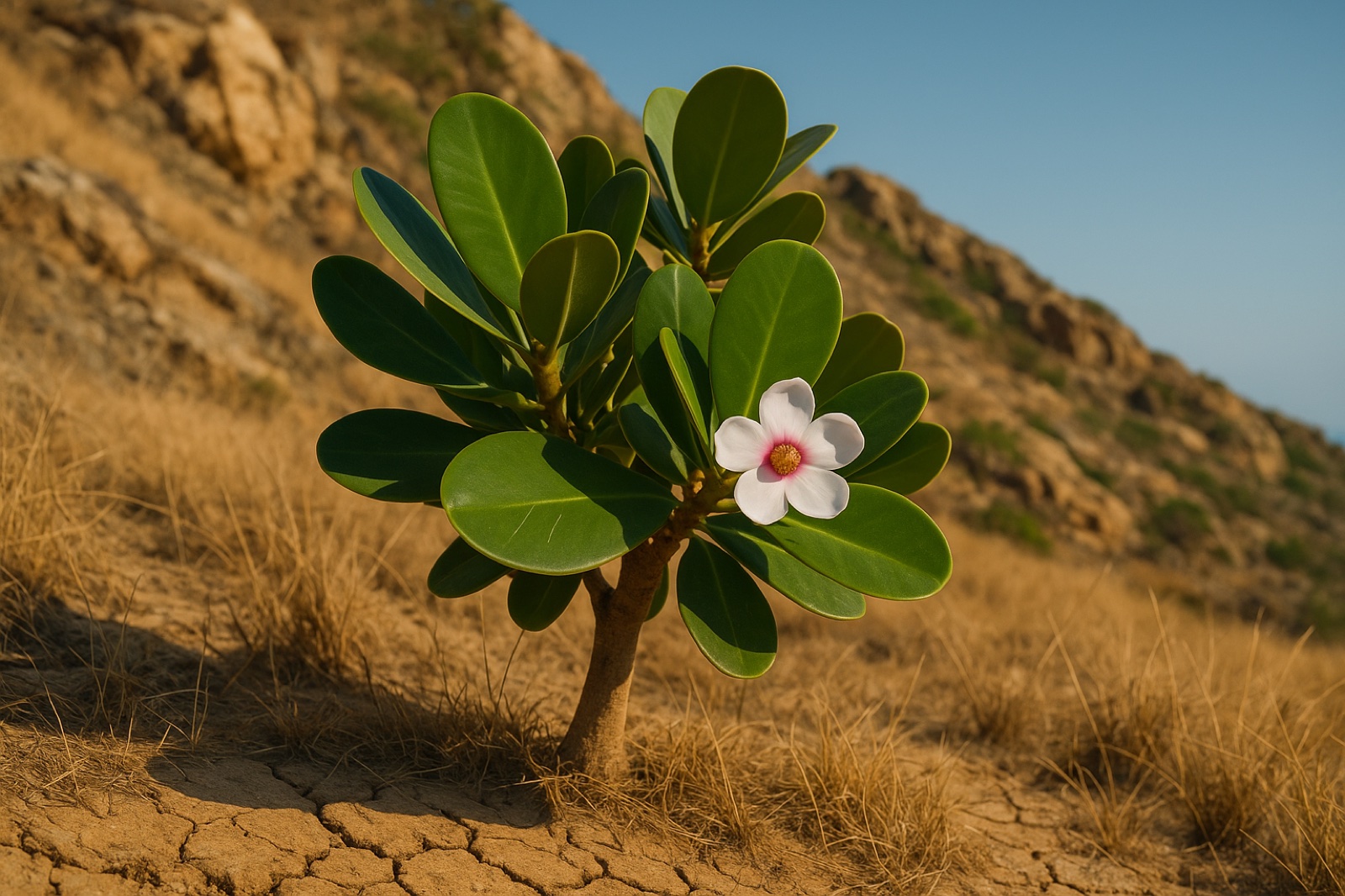
Most plants breathe in by day. Clusia, the thick-leaved tropical tree sold as a houseplant and sometimes called the autograph tree, can do the opposite. It keeps its tiny leaf pores shut in the heat of the day and opens them at night. As far as scientists know, it is the only genus of trees that works this way. A genome study from the University of Vienna, published in Nature Communications this year, has now shown how it learned the trick. The answer is stranger, and more hopeful, than you might expect.
What Makes Clusia Different From Every Other Tree
Every leaf is covered in tiny openings called stomata. They let carbon dioxide in so the plant can make sugar from sunlight. But there is a cost. Every time a pore opens, water slips out.
For a tree in the midday sun, that is a hard trade. Open up and lose water. Close up and go hungry.
A small group of plants solved this long ago with a system called CAM photosynthesis. Pineapples use it. So do many cacti and succulents. The idea is simple:
- At night, when the air is cool, the plant opens its pores and takes in carbon dioxide. It stores it as an acid, a bit like packing a lunch.
- By day, the plant shuts its pores tight to hold its water in. Then it unpacks that stored carbon and uses the sunlight to make food.
The result is a plant that can need much less water than its neighbours. That is why this system turns up in deserts and dry, rocky places. Finding it in a tree is the surprise. The Vienna researchers describe Clusia as the only known trees that practise CAM.
Three Clusia Species, Three Different Answers to Drought
The team, led by Wolfram Weckwerth with Hannes Kramml and Johannes Herpell, read the full genomes of three Clusia species. They expected one story. They found three.
- Clusia rosea, the autograph tree, goes all in. It keeps its pores shut through the day and does its breathing at night.
- Clusia minor lives a normal daytime life, like most plants. But when drought comes, it switches the night system on.
- Clusia major sits in the middle. It works mostly by day, with a faint night cycle running in the background even when water is plentiful.
That second one is the quiet marvel. Clusia minor carries a whole survival system it does not use most of the time. It only reaches for it when the dry season arrives.
How Clusia’s Genes Were Rewired, Not Just Copied
You might guess that a tree with a special skill simply gained extra genes. The real story is more interesting.
All three species are what scientists call ancient polyploids. Far back in their history, their whole genome was copied, so they carried double sets of genes. Then, over a very long time, those doubled genomes were trimmed and rearranged.
“In the process, gene copies are lost, deactivated or take on new functions,” says Kramml. Herpell adds that the genes needed for storing carbon dioxide at night were “particularly affected.”
Weckwerth sums it up in one line: “The genomes have not simply multiplied; over millions of years, they have been reorganised, reduced and functionally rewired.”
Read that again. Reduced. Part of how Clusia became so good at surviving drought was by losing things, not only by gaining them. Some gene copies went silent. Others were freed up to do new jobs. The result was a tree that could keep living when the water ran out.
The team also found that this night system did not arrive in one single leap. It was shaped through repeated rounds of genome reshuffling. That helps explain why three close cousins ended up with three different versions of it.
Why Scientists Care: Crops for a Drier World
This matters outside the rainforest. Droughts are hitting farms and cities in many parts of the world, as we saw when Puerto Rico’s rainy season simply never arrived. Because CAM plants need far less water, the researchers say their findings could one day help adapt crops to drier conditions.
It is worth being honest about the size of that claim. Nobody is growing a night-breathing wheat field yet. The research tells us which genes are involved and how they were reshaped. Turning that into real crops will take much more work. For now, it is a map, not a harvest.
Clusia joins a long list of living things that surprise us by thriving where they should not. There is the deep-sea microbe that survives heat near boiling point, and the black-bloomed devil flower that lives underground in Thailand. Each one had to solve a problem most life never faces.
The Autograph Tree: Write Your Name on a Clusia Leaf
Here is the detail that makes people fall in love with Clusia rosea. Its leaves are thick and leathery. If you scratch a word into one with a fingernail, the mark stays. Gardeners and botanical gardens say the writing lasts until the leaf falls. That is how it earned the name autograph tree.
It is a fitting name for a plant whose real story is written somewhere you cannot see: deep in its genes, and in the hours after sunset.
What a Tree That Works in the Dark Can Teach Us
We tend to judge strength by what happens in daylight. The busy hours. The visible work. The things people can see.
Clusia does its most important work when no one is watching. By the time the sun is up and the heat is on, the real preparation is already done. The tree just holds still, keeps its water, and uses what it gathered in the dark.
There is a very old piece of wisdom about a tree like that. It pictures a tree planted beside hidden water, with roots reaching down to a stream no one can see. When the heat comes, its leaves stay green. It does not worry in the year of drought. It keeps bearing fruit. Whoever first wrote those words was not talking about botany. They were talking about people, and about where a person draws strength from when the dry season comes.
Clusia minor is a good picture of that. Most days, you would never know it carries a second way to live. The strength is hidden until it is needed. Then, when the rain stops, it simply switches on.
Maybe you are in a dry season yourself right now. Maybe your strength looks thin from the outside. It is worth remembering that some of the deepest work in a living thing happens at night, and out of sight. And some of what gets trimmed away in a hard season turns out to be part of what helps you last.
If you keep a Clusia at home, go easy on the watering can. It was built for dry spells. Care guides agree it does not like soggy roots. It is a tree that learned to wait for the cool of the evening, and it seems to be telling us we could learn to do the same.
Discussion Question
Clusia minor keeps a whole survival system switched off until drought arrives. Do you think people are the same, with strengths we do not find until a hard season forces them out? Tell us what you think in the comments below.
Share This
- “Clusia is the only known tree that breathes at night so it can hold on to its water by day. It does its most important work in the dark. I needed that picture today.”
- “One Clusia species lives a normal life until drought comes, then switches on a hidden night-time survival system. Some strength only shows up in the dry season.”
- “Scientists found Clusia got better at surviving drought partly by LOSING gene copies, not just gaining them. Some of what gets trimmed away in a hard season is what helps you last.”
Clusia: Questions and Answers
What is Clusia?
Clusia is a genus of tropical trees and shrubs from the Americas, known for thick, leathery, paddle-shaped leaves. Clusia rosea, often sold as a houseplant, is called the autograph tree because words scratched into its leaves stay visible until the leaf falls. Clusia is the only known genus of trees that can use CAM photosynthesis, a water-saving system that lets the plant take in carbon dioxide at night.
Why does Clusia breathe at night?
Clusia opens its leaf pores at night to save water. Open pores let in carbon dioxide but also let water escape, and water loss is much higher in the heat of the day. By taking in carbon dioxide during the cool night, storing it as an acid, and keeping its pores closed in daylight, Clusia can make food from sunlight while losing far less water. This system is called CAM photosynthesis.
What did the 2026 Clusia genome study find?
A University of Vienna team led by Wolfram Weckwerth sequenced the genomes of Clusia rosea, Clusia minor and Clusia major and published the results in Nature Communications in 2026. They found all three are ancient polyploids whose doubled genomes were later trimmed and rearranged. Genes involved in storing carbon dioxide at night were especially affected. The three species use CAM in different ways: Clusia rosea relies on it heavily, Clusia minor switches it on only under drought, and Clusia major runs a faint version alongside normal daytime photosynthesis.
Why is Clusia rosea called the autograph tree?
Clusia rosea is called the autograph tree because its thick, leathery leaves hold marks scratched into them. If a name or word is scratched into a leaf with a fingernail, the writing remains visible until the leaf falls from the tree.
How often should you water a Clusia houseplant?
A Clusia houseplant generally prefers to dry out a little between waterings and does not like soggy roots. Clusia species evolved to cope with dry spells, and some can switch to a water-saving night-time form of photosynthesis during drought. Checking that the top few centimetres of soil are dry before watering is a common rule of thumb in care guides.