 0
0
 0
0
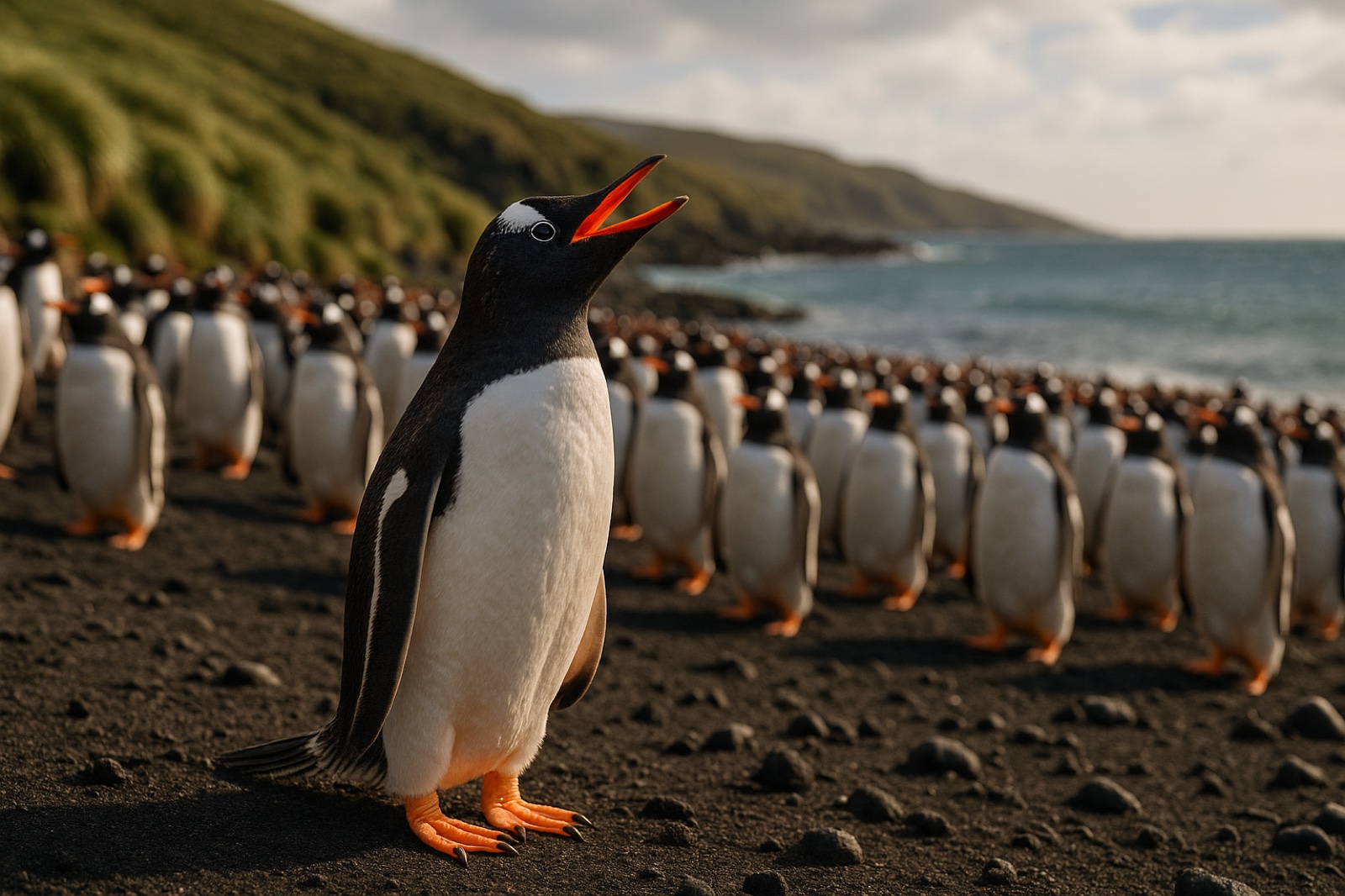
For years, scientists walked past it. They counted it and photographed it. They wrote it into their notebooks as a gentoo penguin: the one with the bright orange beak, the white patch over each eye and the busy, waddling walk.
It was a gentoo penguin. It just wasn’t the gentoo penguin everyone thought it was.
In May 2026, a team of scientists from Chile and the United States said the birds living on the remote Kerguelen Islands in the southern Indian Ocean belong to a species of their own. They called it the southeastern gentoo penguin, Pygoscelis kerguelensis. UC Berkeley’s announcement called it the first new penguin species named in more than 100 years. The full study came out in the journal Communications Biology, and it was widely reported again in September.
This bird had been standing in plain sight the whole time. And it has more to say about being overlooked than you might expect.
What Is the New Penguin Species?
The new penguin species is the southeastern gentoo. It lives on the Kerguelen Islands and probably on nearby Heard Island too. These are some of the loneliest places on Earth, more than 3,000 km (nearly 2,000 miles) from any land where people live all year round.
The researchers didn’t just add one new penguin. They split the gentoo into four species:
- Northern gentoo (Pygoscelis papua): the Falkland/Malvinas Islands and Martillo Island, off South America.
- Southern gentoo (Pygoscelis ellsworthi): the Antarctic Peninsula, coastal Antarctica and South Georgia.
- Eastern gentoo (Pygoscelis taeniata): the Crozet, Marion and Macquarie Islands.
- Southeastern gentoo (Pygoscelis kerguelensis): Kerguelen, and likely Heard Island. This is the brand-new one.
To work this out, the team read the whole genome of 64 penguins from 10 breeding colonies. The study was led by first author Daly Noll of the University of Chile, with senior authors Juliana Vianna (Andrés Bello National University), Rauri Bowie (UC Berkeley) and Elie Poulin (University of Chile). The researchers estimate that the four groups went their separate ways sometime in the last 300,000 to 500,000 years.
A “Cryptic Species”: Why Nobody Noticed
Scientists have a name for this kind of animal: a cryptic species. That means a species that is truly different on the inside but looks almost the same as its cousins on the outside.
According to Berkeley, apart from slight differences in size and in its calls, the southeastern gentoo looks like every other gentoo. You could stand in the middle of a colony and never know. The big difference only showed up in the genes.
Across all four species, the team found differences in coloring, calls, breeding times, diet and how the birds feed. They also found signs that each group has adapted to its own home. The southern gentoo, which lives in the coldest places, showed changes in genes linked to making heat, storing fat and sensing light. The eastern gentoo showed changes linked to carrying and using oxygen. The northern gentoo showed changes linked to digestion and the heart.
So these birds weren’t just “a bit different.” Each one had been quietly shaped for its own corner of the ocean.
The Part the Headlines Skipped
Here is the twist most reports left out. This isn’t the first time someone has tried to split the gentoo.
In 2020, a different team (Joshua Tyler, Jane Younger and colleagues, writing in Ecology and Evolution) also argued that the gentoo was really four species. But they drew the map differently. They gave the Kerguelen birds the old name taeniata, first put forward in 1927. They also named a new species of their own for South Georgia: Pygoscelis poncetii, after the polar biologist Sally Poncet.
The 2026 study reshuffles that picture. South Georgia’s birds now sit with the southern gentoo. The name taeniata moves to Crozet, Marion and Macquarie. And the Kerguelen birds get a brand-new name all of their own.
So “first new penguin species in more than 100 years” is Berkeley’s claim, and it depends on which version of the family tree you accept. Rauri Bowie put it plainly: “There’s probably no species of penguin where the taxonomy has been more debated than the gentoo penguin.” Scientists may still argue about the lines for years.
But notice what both teams agree on. The Kerguelen penguins were never just “more gentoos.” Two separate teams, years apart, looked closely at those birds and found something distinct. The only question was what to call them.
Why the Name Matters Now
This isn’t just about labels. A name decides what gets protected.
The researchers modeled what the future looks like under moderate climate change. By 2050, the three island species (northern, eastern and southeastern) could lose suitable habitat on all the islands where they live now. Only the southern gentoo is expected to be fine, and its range may even grow farther into Antarctica.
And the new species is a small population to begin with. As long as it was lumped in with a big, healthy-looking gentoo population, its trouble was hidden inside someone else’s numbers. “It’s very important that conservation institutions in all the different countries involved recognize and take appropriate action,” said Juliana Vianna.
That’s the quiet danger of being overlooked. It isn’t only that nobody knows your name. It’s that nobody notices when you’re struggling, because you look like everyone who’s doing fine.
You Can Be in a Crowd and Still Go Unseen
Maybe you know that feeling. You show up. You do what everyone else does. You look, from the outside, like you fit right in. And yet no one has really seen you: the specific you, with your own history and your own quiet struggles.
If that’s you, you’re not alone. We wrote about it in why you can feel invisible even when you’re not short on confidence. Here’s the thing the penguin story makes clear: being unnamed is not the same as being ordinary. The southeastern gentoo was distinct for hundreds of thousands of years before anyone wrote it down. The difference was always real. People just hadn’t caught up.
And the penguins themselves were never confused. Penguins are famous for finding their partners and chicks by voice in a crowded, noisy colony. One of the few outward differences in this new species is its call. The birds were telling each other exactly who they were the whole time. It was only us who weren’t listening closely enough.
There’s an old idea, far older than any science journal, that the one who made the stars counts every single one and calls each by name. Whatever you make of that, it lands differently after a story like this. Long before a genome lab in Chile read a single strand of DNA, every one of those birds was already exactly what it was. Known, in a sense, before anyone knew.
Being unnamed by people is not the same as being unknown.
What Comes Next
Nature keeps doing this. A frog in Ecuador turned out to be filed under the wrong name. A Himalayan pangolin was “new” to science but had been named long before. The more closely we look, the more we find things that were there all along.
For the southeastern gentoo, the next chapter is protection. Now that it has a name, it can be counted on its own, watched on its own, and fought for on its own.
Maybe that’s worth remembering on the days you feel like one more face in the crowd. The world may not have noticed yet. That doesn’t make you any less real, or any less yours.
Source: the study by Noll, Vianna, Bowie, Poulin and colleagues, published in Communications Biology (2026), and UC Berkeley’s announcement.
Questions People Ask About the New Penguin Species
What is the new penguin species discovered in 2026?
The new penguin species is the southeastern gentoo penguin, Pygoscelis kerguelensis. It lives on the Kerguelen Islands in the southern Indian Ocean and likely on nearby Heard Island. Scientists from Chile and the United States described it in 2026 after reading the whole genomes of 64 gentoo penguins from 10 colonies. UC Berkeley described it as the first new penguin species named in more than 100 years.
How many species of gentoo penguin are there now?
A 2026 study in Communications Biology splits the gentoo penguin into four species: the northern gentoo (Pygoscelis papua) of the Falkland/Malvinas and Martillo Islands, the southern gentoo (Pygoscelis ellsworthi) of Antarctica and South Georgia, the eastern gentoo (Pygoscelis taeniata) of the Crozet, Marion and Macquarie Islands, and the new southeastern gentoo (Pygoscelis kerguelensis) of the Kerguelen Islands. Gentoo classification has long been debated, and not every authority may adopt the split right away.
What is a cryptic species?
A cryptic species is a species that is genetically distinct but looks almost identical to a related species, so it goes unrecognized for a long time. The southeastern gentoo penguin is an example: apart from slight differences in size and calls, it looks like other gentoo penguins, and its separate identity only became clear through genetic analysis.
Why were the Kerguelen penguins overlooked for so long?
The Kerguelen gentoo penguins look very similar to other gentoos, and the Kerguelen Islands are extremely remote, more than 3,000 km (nearly 2,000 miles) from any permanently inhabited land, which makes them hard to study. A 2020 study had already argued the Kerguelen birds were distinct, but a separate name for them only came with the 2026 whole-genome study.
Is the new southeastern gentoo penguin endangered?
The southeastern gentoo penguin has a small population, and researchers project that under moderate climate change, the island-dwelling gentoo species could lose suitable habitat on all the islands where they currently live by 2050. Recognizing it as a separate species means its population can be tracked and protected on its own rather than hidden inside the larger gentoo count.
Discussion Question
Does giving something a name change how much we care about it? Should the penguin get special protection now that it’s “new,” even though the birds themselves haven’t changed at all? Tell us what you think in the comments below.
Share This
Post 1: A new penguin species was hiding in plain sight on a remote island, looking just like every other gentoo. Being unnamed isn’t the same as being ordinary. https://bgodinspired.com/index.php/nature-and-creation/new-penguin-species-southeastern-gentoo/
Post 2: Scientists just split the gentoo penguin into four species. One of them is brand new, has a small population, and could lose its island home by 2050. Worth a read: https://bgodinspired.com/index.php/nature-and-creation/new-penguin-species-southeastern-gentoo/
Post 3: The penguins were never confused about who they were. They were calling to each other in their own voice the whole time. We just weren’t listening closely enough. https://bgodinspired.com/index.php/nature-and-creation/new-penguin-species-southeastern-gentoo/