 0
0
 0
0
In a museum in London there is a pangolin skin that left Nepal in 1836. For most of the time since, it has been filed under the wrong name.
Not slightly wrong — wrong in the way that erases something. The label said this animal belonged to a common species found far to the east. So officially, that is what it was.
In 2026, scientists pulled DNA out of that nearly 190-year-old skin. The result confirmed the Himalayan pangolin as a species of its own, living quietly across Nepal and northern India.
The surprising part is not that the record was wrong. It is who had it right, and how long ago.
The Man Who Saw It First
In 1836, a British diplomat named Brian Houghton Hodgson was posted in the Kathmandu Valley. He spent his spare hours doing what almost nobody around him was doing: writing careful notes about the animals he found.
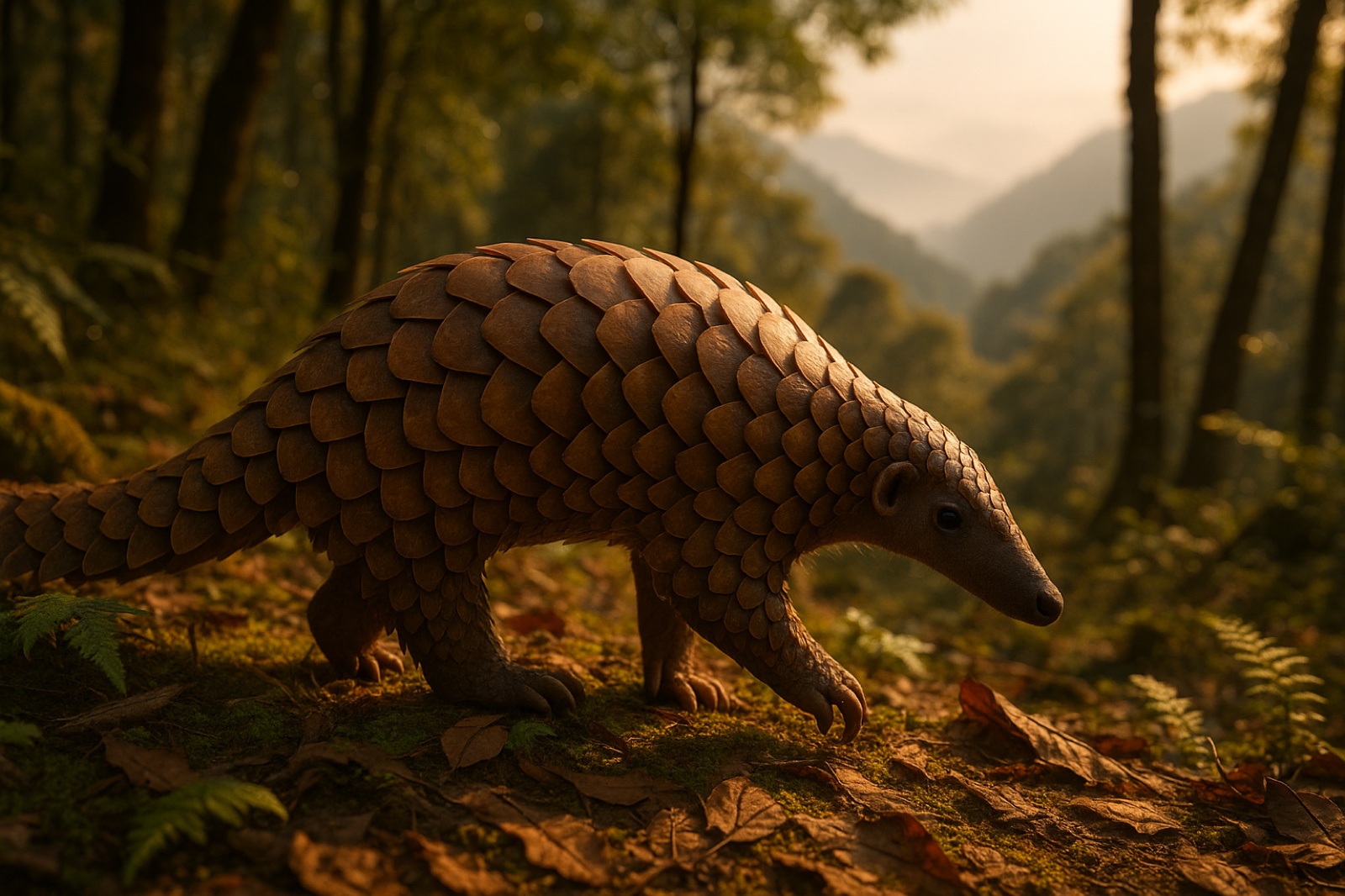
He got hold of a pangolin — the scaled, ant-eating mammal that curls into a ball when something frightens it — and noticed it did not match what had already been described. He wrote about the ear. “The external ear, though small, is perfectly distinct,” he recorded. Then he counted the scales, row by row, across the head, the body and the tail.
He gave the animal a name that pointed straight at that ear. Then he shipped the skin to London, where it has sat ever since.
He was right. It took 190 years for anyone to prove it.
How a Species Disappeared From the Record
Science did not reject Hodgson’s animal in one dramatic moment. It let it dissolve.
In 1918 the name was demoted — no longer a species, just a regional variety of something bigger. By 1951 even that was gone. The Himalayan animal was folded entirely into the Chinese pangolin, with no separate identity left at all.
That is how most things vanish from a record. Not by being argued down. By being tidied away.
And the reason is almost boring. Nobody yet had the tools to test the difference. The skulls looked similar enough. The scales were close enough. One species was simpler to carry than two, so one species is what the books said — and every generation of scientists after that inherited the tidy version.
This happens more often than the confidence of a textbook suggests. The standard answer for what holds a proton together stood for about fifty years before new collider data started pointing somewhere stranger.
Then, in 2025, Someone Found It Again
Nearly two centuries later, a separate team was working on pangolin scales seized from traffickers. The genetics did not fit the Chinese pangolin at all.
They concluded they were looking at an animal science had never described, and in early 2025 they published it as a brand-new species under a brand-new name: the Indo-Burmese pangolin.
They were right about the animal. They simply did not know it already had a name.
What the 190-Year-Old DNA Proved
The argument was settled by going back to the skin.
A large international team — around twenty researchers spread across a dozen institutions in seven countries, led by Narayan Prasad Koju — spent 2019 to 2024 working through museum collections in London, Chicago and Kunming. They measured 44 skulls and 26 skins. They sequenced 55 full genomes and 70 smaller mitochondrial ones. And, hardest of all, they pulled readable DNA out of Hodgson’s 1836 specimen.
It matched. The animal in the drawer and the animals being pulled out of the illegal trade today are the same species — and that species is not the Chinese pangolin. The work was published in the journal Communications Biology in July 2026.
Why the Older Name Wins
Here is where a genetics paper turns unusually human.
In the naming of animals, the first valid name published is the one that counts. Not the most popular. Not the most recent. The first. So the 2025 name became what taxonomists call a junior synonym — still recorded in the literature, no longer in use — and the species now carries the name Hodgson gave it in 1836.
Mukesh Thakur, one of the researchers behind the 2025 name, explained plainly why they had missed it. The old name, he said, “was very old — very classical — and it had not been popularized or even recognized by IUCN, nor was it in the major databases.”
Read that twice, because it is the whole story in one sentence. The correct answer was never lost. It was published, in a journal, under the animal’s own name. It just was not in the systems anybody actually checks.
The Part That Actually Helps the Animal
Pangolins are among the most heavily trafficked mammals in the world. Their scales are stripped and shipped in bulk, and once a scale is off the animal, it is very hard to say where it came from.
A confirmed genetic profile changes that. Enforcement teams can test seized scales, say which species they came from, and narrow down which region is being emptied. That turns a warehouse of evidence into something closer to a map.
The findings were not all encouraging. Himalayan pangolins sampled around the Kathmandu Valley showed unusually high levels of inbreeding — the signature of a population that has grown small and cut off. The Chinese pangolin is listed as critically endangered, and the lead researcher expects this species will most likely land in that category too. At the time the study was published, the IUCN’s pangolin specialists had not yet formally recognised it.
The Thing That Never Changed
Through all of it — the naming, the demotion, the erasure, the rediscovery, the argument over whose name goes on it — the pangolin was unaffected.
It did not become a species in July 2026. It did not stop being one in 1951. It carried on digging, sleeping and curling into a ball when something frightened it, entirely uninterested in the filing system.
Which is worth sitting with, because most of us have been filed at some point too. Somebody looked quickly, wrote something down, and it stuck — in a family, in a school, at work, in a room where you were not present to correct it. And the tidy version travelled further than the true one, because tidy versions usually do. That is also why feeling worthless can feel so much like a verdict when it was only ever somebody’s quick note.
There is an old idea, far older than any museum catalogue, that God was never reading the label. That you were made deliberately, as a particular thing — and that the account kept of you somewhere beyond all this paperwork has been accurate the entire time, including through the long stretch when nobody else had it right.
It does not make being misfiled stop stinging. It just means the misfiling was never the record that counted.
If the question underneath all of that — what you were actually made for, apart from other people’s descriptions — is one you have been circling, our free What Is My Purpose? assessment is a quiet place to start.
What finally settled the pangolin question was not a louder argument. It was going back to the original evidence: the thing Hodgson left behind, sitting in a drawer, patient, still carrying the truth of what it was long after everyone had agreed to call it something else.
Nearly two hundred years is a long time to be filed wrong. The animal did not spend a single day of it being anything other than itself.
A Question Worth Arguing About
Here is the one we keep going back and forth on. When a species finally gets its name settled, who should get the credit — the person who saw the difference first, or the team that actually proved it?
Hodgson noticed it in 1836 but had no way to demonstrate it. The 2026 team demonstrated it but did not notice it first. The rules hand it to whoever published the name earliest. Is that the right rule, or just the tidiest one? Tell us what you think in the comments.
Share This
- A pangolin skin sat in a London museum for 190 years under the wrong name. Scientists finally sequenced its DNA — and it turned out the man who named it in 1836 had been right the whole time. https://bgodinspired.com/index.php/nature-and-creation/himalayan-pangolin-new-species/
- My favourite detail in this: the correct name for the Himalayan pangolin was never lost. It was published in 1836 and sat there in plain sight. It just wasn’t in the databases anyone checks. https://bgodinspired.com/index.php/nature-and-creation/himalayan-pangolin-new-species/
- In 1918 they demoted it. By 1951 they had erased it completely. In 2025 a different team “discovered” it as brand new. In 2026 the DNA proved it had been correctly named 190 years earlier. The animal, meanwhile, never noticed. https://bgodinspired.com/index.php/nature-and-creation/himalayan-pangolin-new-species/
Questions People Ask
What is the Himalayan pangolin?
The Himalayan pangolin is a scaled, ant-eating mammal found in the Himalayan foothills across Nepal, northern India, Bhutan and Myanmar. It was first described in 1836 from a specimen collected in the Kathmandu Valley, and in July 2026 a study in the journal Communications Biology confirmed it as a species distinct from the Chinese pangolin, using DNA taken from that original 190-year-old museum skin.
Why was the Himalayan pangolin classified as a Chinese pangolin for so long?
The Himalayan pangolin was named as its own species in 1836, but in 1918 it was demoted to a subspecies, and by 1951 it had been absorbed entirely into the Chinese pangolin with no separate identity left. Researchers at the time had no genetic tools to test the difference, and the skulls and scales of the two animals look broadly similar, so the simpler single-species classification was carried forward in the scientific literature for decades.
What happened to the name Indo-Burmese pangolin?
In early 2025, a team studying pangolin scales seized from traffickers described what they believed was an undescribed species and named it the Indo-Burmese pangolin. DNA from an 1836 museum specimen later showed their animal was the same one that had already been named in 1836. Because animal naming rules give priority to the earliest published valid name, the 2025 name was reduced to a junior synonym — still on record in the scientific literature, but no longer the name in use.
How does confirming the Himalayan pangolin help stop trafficking?
Pangolins are among the most heavily trafficked mammals in the world, and once scales have been removed from an animal it is extremely difficult to identify their origin. Now that the Himalayan pangolin has a confirmed genetic profile, enforcement teams can test seized scales, determine which species they came from, and narrow down the region where the poaching is happening — which allows conservation and enforcement effort to be aimed at the right places.
Is the Himalayan pangolin endangered?
The Chinese pangolin, which the Himalayan pangolin was previously grouped with, is listed by the IUCN as critically endangered, and the lead researcher on the 2026 study expects the Himalayan pangolin will most likely fall into that category as well. Animals sampled around the Kathmandu Valley showed unusually high levels of inbreeding, a sign of a small and isolated population. At the time the study was published, the IUCN’s pangolin specialist group had not yet formally recognised it as a separate species.