 0
0
 0
0
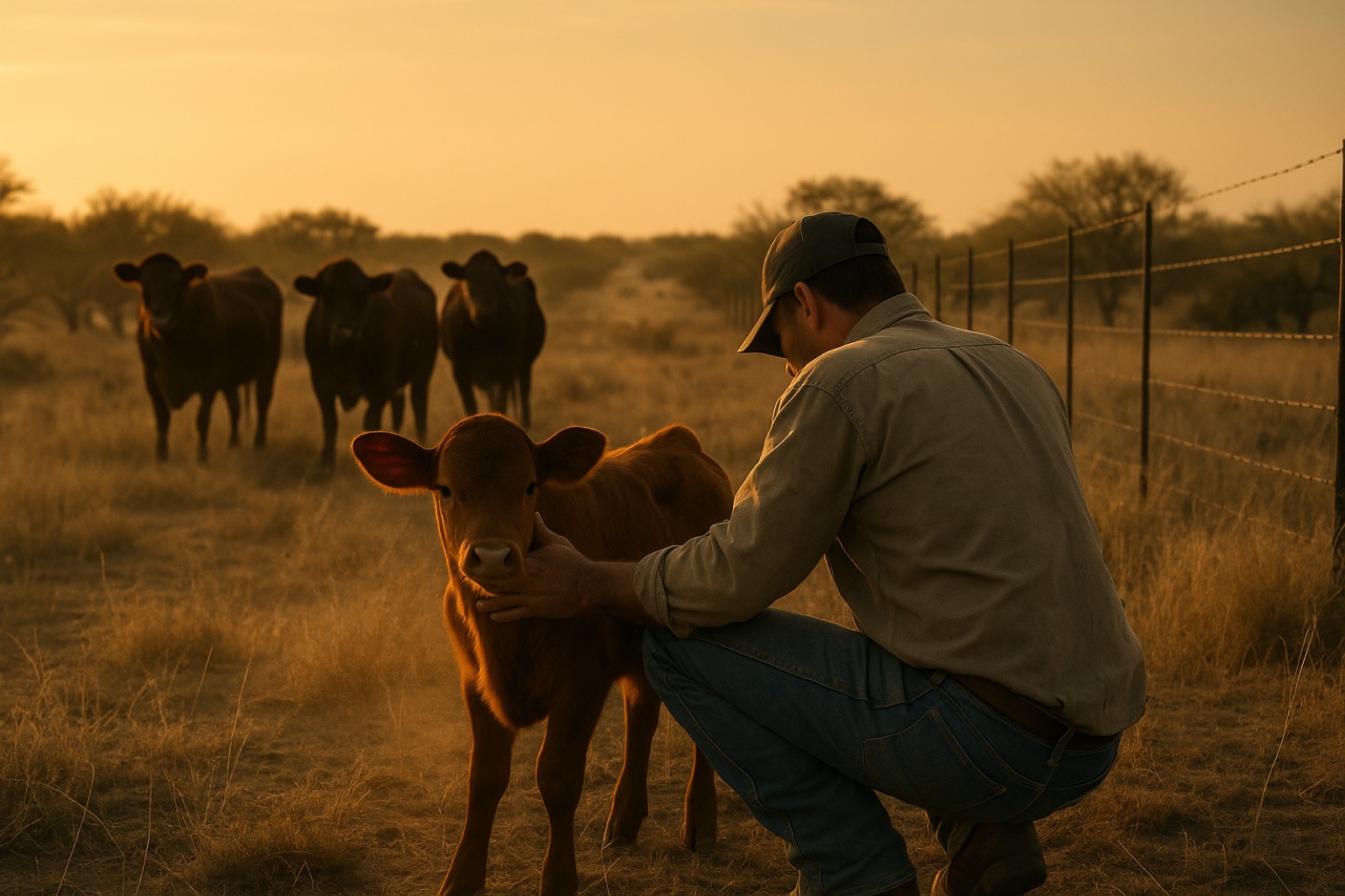
On 3 June 2026, a vet in Zavala County, Texas looked at a three-week-old calf and confirmed something that had not been confirmed on American soil in forty years. The calf had New World screwworm.
Eighteen days later there were fifteen confirmed cases across Texas and New Mexico — cattle, goats, sheep, and one dog.
If you have never heard of this thing, the short version is that it is a fly, and the fly is not the problem. The larvae are. And the story of how America got rid of it the first time is one of the strangest, most quietly brilliant things anyone has ever done to a species. It is also the reason it came back.
What the New World Screwworm Actually Does
Most flies that bother livestock are after something already dead. This one is not.
The female lays her eggs at the edge of an open wound on a warm-blooded animal — a scratch, a tick bite, the navel of a newborn calf. The larvae hatch and feed on living tissue, burrowing deeper as they go. The wound does not close. It widens, and the smell of it draws more females.
Its scientific name is Cochliomyia hominivorax. The second half of that translates roughly as “man-eater.” Scientists do not usually name things that way unless the name has been earned.
Human cases do happen. They are also, measured against the number of people who live in the affected regions, genuinely rare — a point the researchers tracking this keep making, because the online version of this story has run well ahead of the evidence. Central America and Mexico have documented roughly 2,100 human cases since the current outbreak began in 2023. One traveller returning to the United States from El Salvador was infected in 2025.
The animals are the real story. In the 1950s and 60s this fly tore through herds across the American South, and by the 1970s the United States decided to do something about it that had never been tried at that scale anywhere on earth.
They Beat It With Flies
Not poison. Not traps. Flies.
Here is the vulnerability they found. A female screwworm mates once. Once, in her whole life. She does not shop around and she does not try again.
So if you breed enormous numbers of male screwworms, sterilise them with radiation, and release them over infested country by truck and by aircraft, and if those sterile males outnumber the wild ones badly enough, then most females spend their one mating on a male who cannot give them offspring. She lays. Nothing hatches. The next generation is smaller. Then smaller again.
It is called the sterile insect technique, and it works on almost nothing else, because almost nothing else has that single-mating bottleneck. It is a lock that happened to have a key.
The scale of it is hard to picture. Reporting on the final eradication push puts the requirement at something like 500 million flies exported per week. Not caught — raised. In factories. Deliberately. For years.
By 1982 the New World screwworm was gone from the United States.
Then the Factories Closed
This is the part that almost never gets told, and it is the part that matters.
The fly was not exterminated. It was pushed. The campaign drove it south, out of the United States, out of Mexico, down through Central America until it was held behind a line at the Isthmus of Panama — the narrowest point on the continent, and therefore the cheapest place on earth to hold a wall.
Holding that wall meant one thing: somebody had to keep raising sterile flies forever. Not until the job was done. Forever.
And after the 1970s, most of the domestic production facilities shut down. They were expensive and complicated to run, and the fly was no longer showing up in anybody’s herd, which made the factories look like a line item rather than a wall. A joint Panama–United States programme known as COPEG became the only remaining producer of sterile screwworm flies in the world.
One facility. For a hemisphere.
In 2023 the outbreak was identified in Panama and Costa Rica. In 2024 it crossed the border from Guatemala into Mexico. In June 2026 it reached a calf in Zavala County. Researchers point to a warming climate widening the range of habitat the fly can survive in, and to cattle being moved illegally across the Guatemala–Mexico border, as likely accelerants. The fly did not get stronger. The wall got thinner.
The Numbers Nobody Wants to Say Out Loud
COPEG has pushed production up from somewhere around 20 to 40 million flies a week to roughly 115 million since 2024. That sounds like an enormous response, and it is.
It is also, by the assessment of people working on this, in the region of twenty per cent of what may be needed to clear the fly out of North and Central America again. Against a historic push that ran at ten times that weekly output.
There is new engineering in play. A strain called Novo Fly kills off female larvae early in development, so a batch that used to come out mixed comes out all male — which roughly doubles the useful yield from the same factory floor. And a team at the University of California, San Diego, working with the County of San Diego’s public health service under a CDC-funded programme, has built a county-level risk dashboard led by physician-researcher Eliah Aronoff-Spencer alongside mathematical epidemiologist Natasha Martin. It blends confirmed detections with the environmental conditions the fly likes and, unusually, with news reports — because a rancher talking to a local paper often surfaces days before a lab result does. For now it is restricted to public health officials; the team has said it hopes to open a public version.
The USDA’s own economic modelling puts an outbreak on the scale of the 1976 Texas event at more than 1.8 billion dollars a year in Texas alone.
All of that is the cost of rebuilding something that already existed and was allowed to lapse.
What Actually Happened Here
Read the timeline again and you notice the shape of it. There is no moment where the screwworm defeated anybody. There is no failure at the wall. The wall simply got quieter and thinner over decades in which nothing bad happened, which is precisely what made it look unnecessary.
The victory in 1982 was real. It was also never finished, and the difference between those two things is the whole story.
There is an old strand of spiritual wisdom that has always been oddly uninterested in the moment of victory. It spends very little time on the win. What it returns to, again and again, is the room afterward — swept out, put in order, clean, and standing empty. The warning is never that the old trouble was too strong. The warning is that nothing moved in. And the dangerous thing about an empty room is that it does not feel like a problem. It feels like success.
People who have genuinely come out the other side of something — a habit, a debt, a resentment they carried for twenty years — almost never describe it as a kill. They describe a replacement. A practice they keep. A person who checks on them on Tuesdays. A few minutes in the morning where the whole thing gets handed over to God before the day starts making demands. The language varies enormously. The shape does not. What holds is not the absence of the old thing. It is the presence of something else, maintained on days when it feels completely unnecessary.
That is also, it turns out, what staying consistent actually costs. Not intensity. Upkeep.
The Wall Is Being Rebuilt
Right now, in Panama, there are people whose entire job is raising flies that will never have offspring, loading them onto aircraft, and letting them go over country where the wild ones are. Almost nobody outside the industry knows their names. Nothing visible happens on the days they succeed.
It is worth sitting with how strange that is. The most effective assault ever launched on an insect looks, from the outside, like a man releasing insects. The win is invisible. The failure is not.
We have written before about the insect nobody missed until it vanished, and about why most mosquitoes never bite anyone at all. Creatures we would happily delete keep turning out to be load-bearing, and the ones we did delete keep turning out to have been held rather than removed.
The calf in Zavala County was three weeks old. Somebody found it early. That is the other half of this story, and the more hopeful half: the thing came back, and it came back into a country where people were looking.
Discussion Question
Here is the one worth arguing about. When a problem stops showing up, is it reasonable to keep paying for the thing that has been holding it back — or is that just money spent on a ghost? Every budget meeting in the world has had this fight. Tell us where you land in the comments.
Share This
- The US got rid of the screwworm by dropping millions of sterile flies out of aeroplanes. It worked because the female mates exactly once in her life. Then the factories closed, and it’s back in Texas: https://bgodinspired.com/index.php/nature-and-creation/new-world-screwworm-back-in-texas/
- “The fly did not get stronger. The wall got thinner.” Forty years after America eradicated the New World screwworm, it turned up in a three-week-old calf. The reason why is uncomfortably familiar. https://bgodinspired.com/index.php/nature-and-creation/new-world-screwworm-back-in-texas/
- Reading about how the screwworm was beaten and then came back, and I cannot stop thinking about how many things in my own life I declared finished and quietly stopped maintaining. https://bgodinspired.com/index.php/nature-and-creation/new-world-screwworm-back-in-texas/
Q&A
What is the New World screwworm?
The New World screwworm (Cochliomyia hominivorax) is a parasitic fly native to the Americas. Unlike most flies, its larvae feed on the living tissue of warm-blooded animals rather than dead tissue. Females lay eggs at the edge of an open wound — often a small one, such as a tick bite or the navel of a newborn animal — and the hatched larvae burrow inward, enlarging the wound. It primarily affects livestock, but wildlife, pets and, rarely, humans can be infected.
Why is the screwworm back in Texas in 2026?
The screwworm was eradicated from the United States by 1982 and pushed south to a containment line at the Isthmus of Panama, held in place by the continuous release of sterile flies. An outbreak was identified in Panama and Costa Rica in 2023, crossed from Guatemala into Mexico in 2024, and reached Texas by June 2026. The first confirmed US case was a three-week-old calf in Zavala County on 3 June 2026; fifteen cases across Texas and New Mexico were confirmed by 21 June. Researchers cite a warming climate expanding suitable habitat and the illegal movement of cattle across the Guatemala–Mexico border as likely contributing factors.
How does the sterile insect technique work?
Male screwworm flies are mass-reared and sterilised with radiation, then released in huge numbers by truck and aircraft over infested areas. The technique works because a female screwworm mates only once in her lifetime. If she mates with a sterile male, the eggs she lays never hatch, and the population shrinks with each generation. Reporting on the original US eradication campaign puts the final push at roughly 500 million flies released per week. The method is highly effective against this species precisely because of that single-mating biology, which most insects do not share.
Is the New World screwworm dangerous to humans?
Human infection is possible but rare relative to the population of the affected regions. Central America and Mexico have documented roughly 2,100 human cases since the current outbreak began in 2023, and one case was reported in a traveller returning to the United States from El Salvador in 2025. Researchers working on the outbreak have repeatedly noted that online coverage has outpaced the actual level of human risk. The primary damage is to livestock, and the primary cost is agricultural.
How much would a screwworm outbreak cost?
United States Department of Agriculture economic modelling estimates that an outbreak on the scale of the 1976 Texas event would cost more than 1.8 billion dollars a year in Texas alone. Current sterile-fly production stands at roughly 115 million flies per week, raised from about 20 to 40 million before 2024 — which those working on the response assess to be in the region of twenty per cent of what may be required to clear the fly from North and Central America again.