 0
0
 0
0
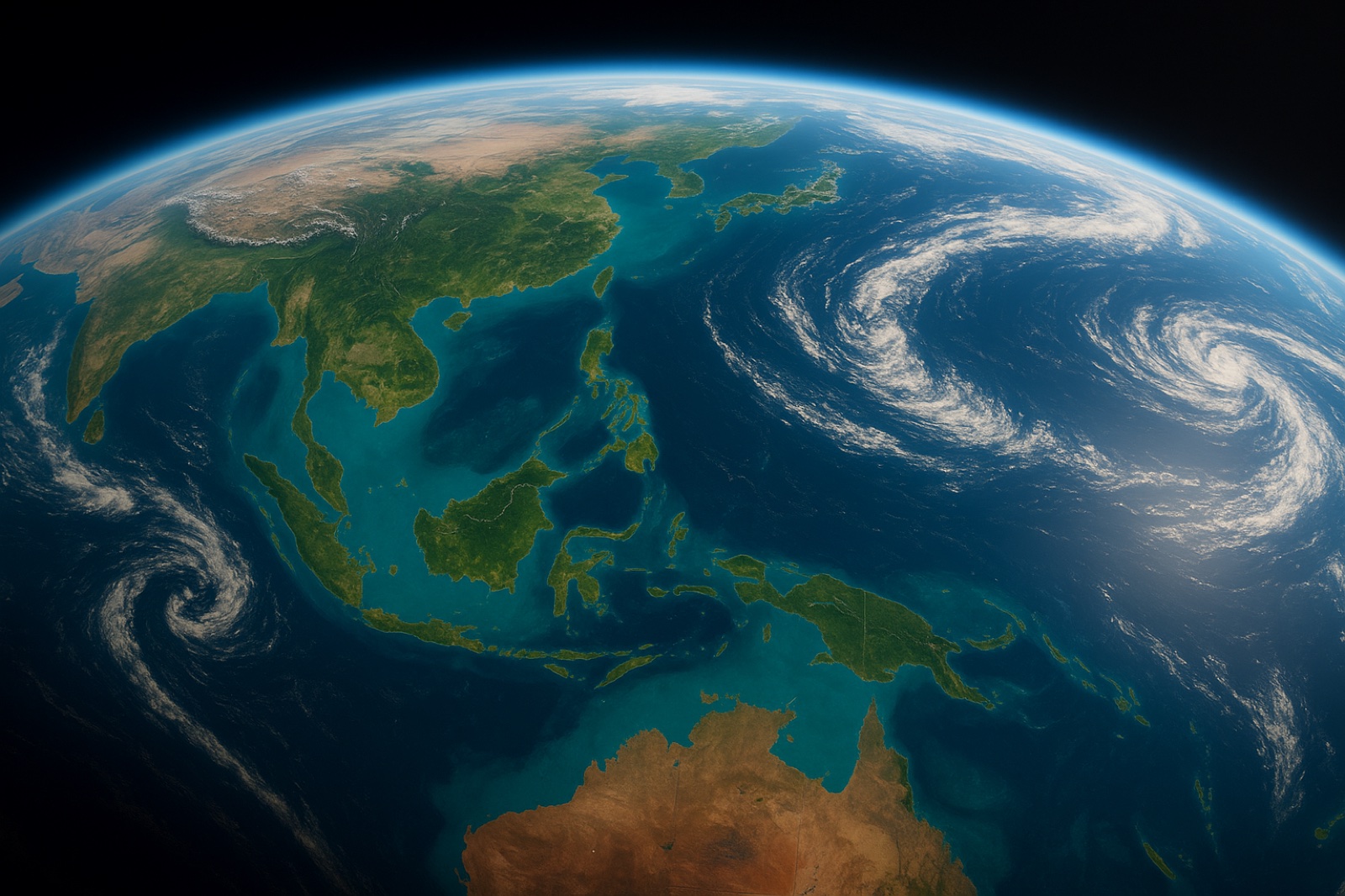
For about 400 years, two of the biggest oceans on Earth have moved like dance partners. When the Pacific shifted, the Indian Ocean usually followed. That link between the Indian and Pacific Oceans is one of the quiet tools scientists use to get a head start on what the rains will do.
Now a new study says the partners have stopped moving in step. And the scientists behind it don’t call it normal. The lead author calls it “really quite exceptional.”
Here is what they found, how they could possibly know, and why a change far out at sea matters to anyone who has ever waited for rain.
How the Indian and Pacific Oceans Stay in Step
Picture a giant loop of air over the tropical Pacific. Warm, wet air rises on one side, drifts across the sky, and sinks again far away. Scientists call it the Walker circulation. It is big enough to push weather around half the planet.
For centuries, when that loop of air changed, the warmth of the tropical Indian Ocean changed with it. The Pacific led. The Indian Ocean followed.
That matters more than it sounds. A pattern you can count on is a pattern you can forecast with. The researchers say stable links between ocean basins are one source of climate predictability — one of the reasons anyone can say ahead of time whether a season is more likely to be wet or dry.
The study was written by Shawn Wang (who did the work at the Woods Hole Oceanographic Institution and is now at the University of Colorado Boulder), with Delia Oppo and Caroline Ummenhofer of Woods Hole. It was published in Nature Communications in August 2026. You can read the institute’s summary of the research here.
Who Kept the Records? Corals, Trees and Caves
Here is the part most headlines skip. Ship and satellite measurements only cover a small slice of those 400 years. Wang said it plainly: “The modern data we have is limited and doesn’t go back far enough.”
So the team read nature’s own diaries.
- Corals grow in yearly bands, and the chemistry of each band carries a trace of the water it grew in.
- Tree rings hold a record of wet years and dry years.
- Stalagmites — the stone spikes that rise from cave floors — build up in thin layers shaped by the water dripping onto them.
Put those records together with modern measurements and computer simulations of the past thousand years, and the team could rebuild the rhythm of both oceans from the early 1600s onward. It is the same idea behind how scientists spot fake ancient pottery: time leaves a mark, if you know where to look.
And this is the surprise. With only a few decades of modern data, the link between the oceans looked like a fixed rule. The long record showed something different. The link had bent before.
When Tambora Knocked the Oceans Apart
In 1815, Mount Tambora in Indonesia erupted. It was one of the most powerful eruptions in recorded history, and it threw gas and ash high into the sky. The next year was so cold in parts of Europe and North America that 1816 became known as the “Year Without a Summer.” (If you have ever wondered why some volcanoes blow apart like that while others just ooze, here is the hidden reason.)
Tambora was not alone. Between about 1810 and 1850, a run of large tropical eruptions sent sulfur gases into the upper air. The study found that during those decades, the link between the two oceans weakened. The dance partners lost the beat.
But then something important happened. After 1850, the link came back. The two oceans found their rhythm again.
That recovery is what makes the newest finding stand out.
Why Scientists Call the Break “Exceptional”
Since the 1980s, the link has been coming apart again. This time there is no run of giant eruptions to explain it.
When the team compared the modern pattern with a thousand years of reconstructions and simulations, today’s link fell outside the normal range of both — including the volcano years. Wang described the current breakdown as unprecedented compared with anything seen in the last thousand years or so.
Ummenhofer named what the team believes is driving it: “A key finding is that global warming and human emissions are now overwhelming the Pacific’s natural influence on the Indian Ocean.”
Oppo added a detail that is easy to read past: “The Indian Ocean is a huge heat reservoir, and it can decouple from what the Pacific Ocean is doing.” In other words, the Indian Ocean was never simply a follower. It always had the ability to go its own way. Now it is.
The researchers are also honest about what they don’t know. Their simulations did not reproduce every detail of the 1800s disruption. And exactly how the Pacific’s great loop of air will change as warming continues is still unclear.
What This Means for the Rains
All around the Indian Ocean, life runs on rain arriving on time. Farmers in East Africa, South Asia, Southeast Asia and Australia plant by it. Towns and cities fill their water supplies by it.
When one ocean reliably follows another, forecasters can watch the first to get an early read on the second. If that link keeps slipping, one of those early reads becomes less dependable. The researchers say their findings matter for managing climate risk and water supplies.
That doesn’t mean forecasts stop working. It means one old shortcut can’t be trusted the way it used to be — and the people who plan for rain will need to lean on other signals too.
When a Pattern You Trusted Starts to Slip
Most of us will never think about the Walker circulation. But everyone knows the feeling underneath this story. We all lean on patterns. The rains that come in the same month every year. The bus that always shows up. The friend who always answers. We rarely notice how much we trust a pattern until it breaks.
There is an old promise, far older than any forecast, that as long as the earth remains, planting and harvest, cold and heat, summer and winter will not stop. Read it closely and you notice what it doesn’t say. It never promised that our patterns would hold, or that our shortcuts would always work. It was a promise about God’s faithfulness — not about our ability to read the sky.
What Comes Next
The scientists behind this study aren’t shouting. They are doing what careful forecasters do: noticing early that an old rule is changing, and saying so, so the people who plan around rain can plan better.
And the story is a good reminder that our planet is more connected than any map shows. Sometimes a change in one place starts on the other side of the world — the way Antarctica’s record ice gain came from a warm ocean far away.
So the next time the rains come late, or early, you’ll know a little more of the story. Somewhere far out at sea, two old dance partners are working out a new rhythm. And corals, trees and quiet caves are still keeping the record.
Discussion Question
What pattern in your own life do you trust without ever thinking about it — and how would you know if it started to change? Tell us in the comments.
Share This
For 400 years the Pacific and Indian Oceans moved together. Even Tambora only broke the link for a while. Scientists say it’s breaking again now, and they call it exceptional. https://bgodinspired.com/?p=115506
I didn’t know corals, tree rings and cave stalagmites could tell us what two oceans were doing in the 1600s. That is how scientists spotted this change. https://bgodinspired.com/?p=115506
A good reminder that the patterns we lean on most are the ones we notice least. Scientists found that a 400-year link between two oceans is coming apart — and what it means for the rains is worth a read: https://bgodinspired.com/?p=115506
Questions People Ask About the Indian and Pacific Ocean Link
What is the link between the Indian and Pacific Oceans?
For most of the past 400 years, climate patterns in the tropical Indian Ocean have tended to follow changes in the Pacific Ocean. A huge loop of air over the tropical Pacific, called the Walker circulation, influenced temperatures across the tropical Indian Ocean. Because the two oceans usually moved together, scientists could use the Pacific to help anticipate rainfall and climate changes around the Indian Ocean.
Why is the link between the Indian and Pacific Oceans breaking down?
A 2026 study in Nature Communications by Shawn Wang, Delia Oppo and Caroline Ummenhofer found that the link has weakened sharply since the 1980s. The researchers say global warming and human emissions are now overwhelming the Pacific’s natural influence on the Indian Ocean. They describe the modern breakdown as unprecedented compared with roughly the last thousand years.
How did the Mount Tambora eruption affect the oceans?
Mount Tambora in Indonesia erupted in 1815, during a period between about 1810 and 1850 when several large tropical volcanic eruptions sent sulfur gases high into the atmosphere. A 2026 study found that these eruptions temporarily weakened the connection between Pacific and Indian Ocean climate patterns. After about 1850, the connection recovered.
How do scientists know what the oceans did 400 years ago?
Scientists use natural records called paleoclimate archives. Corals grow in yearly bands that store chemical traces of the seawater around them, tree rings record wet and dry years, and cave stalagmites build up in layers shaped by dripping water. Combining these records with modern measurements and climate simulations lets researchers rebuild ocean and rainfall patterns back to the early 1600s.
Does the breaking ocean link affect rainfall forecasts?
It can make one forecasting tool less reliable. Stable connections between ocean basins are one source of climate predictability, because changes in one ocean give an early signal about another. If the Indian Ocean increasingly behaves independently of the Pacific, forecasters in regions such as East Africa, South Asia, Southeast Asia and Australia may need to rely more on other signals when predicting seasonal rain.