 0
0
 0
0
In 2007, a team in northern Australia caught a big male saltwater crocodile, flew him by helicopter across Cape York Peninsula, and let him go on the other coast. By water, around the tip of the peninsula, that was more than 400 kilometres from the river where he had been caught.
He went home anyway. He spent some time near the release spot first. Then he swam more than 400 kilometres in about 20 days, right back to where he started. At the time, it was the longest trip home ever recorded for any crocodile.
That is what saltwater crocodiles are known for. Move one, and it tries to come back. So when researchers in Bangladesh set crocodiles free in a huge mangrove forest and followed them by satellite, they had every reason to expect the same thing.
Some of them did something else. They stayed where they were put.
Do Saltwater Crocodiles Always Swim Home?
Scientists call it homing: an animal finding its way back to a place it knows. For people who manage crocodiles, it matters a lot. Catching a crocodile that lives too close to a village and moving it far away sounds like a fix.
The Australian study showed why it often isn’t. Three large males were moved 56, 99 and 411 kilometres along the coast. All three came back to where they had been caught.
So the question in Bangladesh was a very practical one. If you release a crocodile, will it stay? Or will it leave and go looking for home?
And if you have ever moved somewhere you didn’t choose, you may already know the pull these animals feel.
Five Crocodiles in the Sundarbans
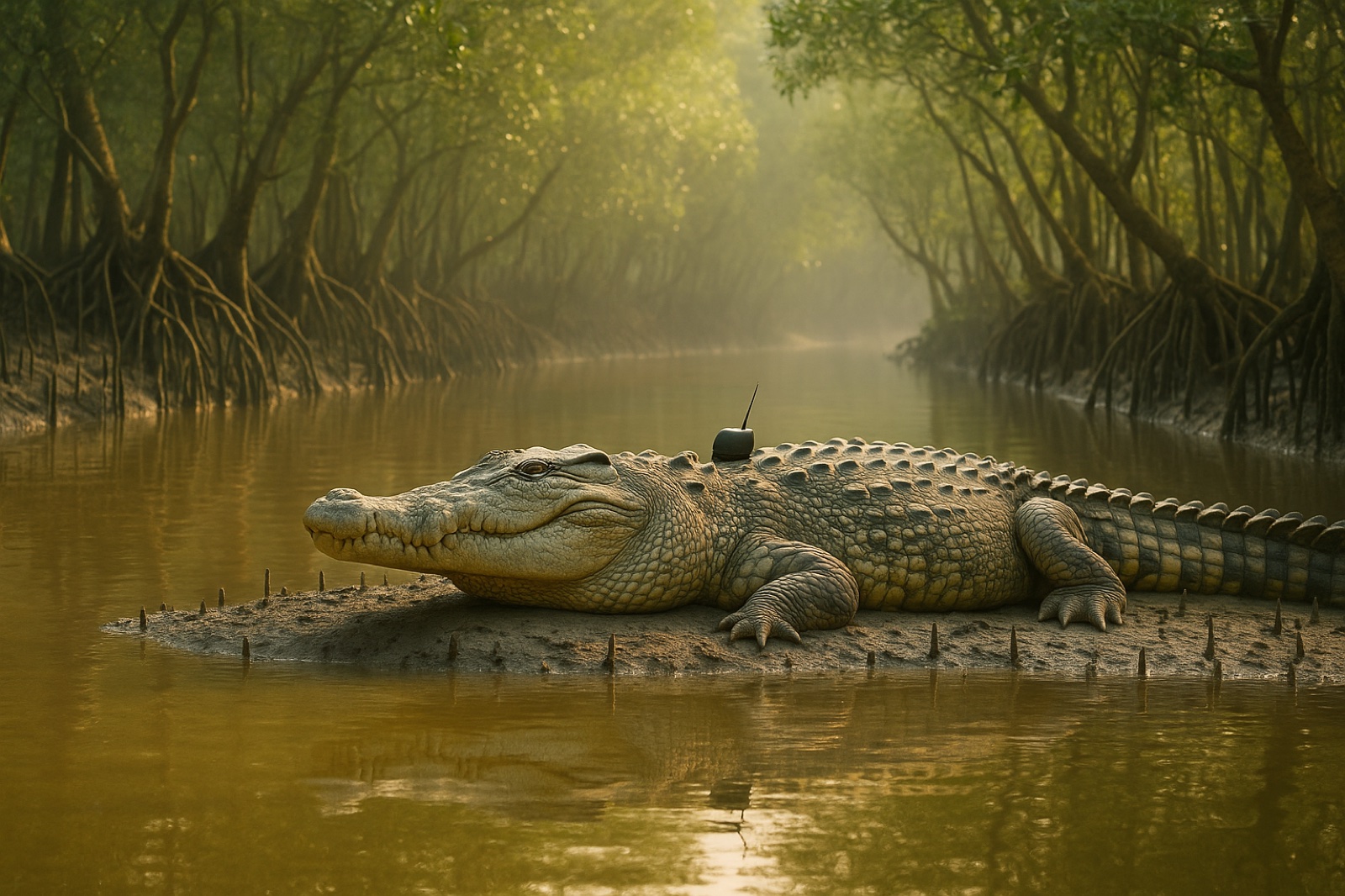
The Sundarbans is one of the biggest mangrove forests in the world. It stretches along the coast of Bangladesh and India, a maze of muddy channels and tidal rivers. It is also where almost all of Bangladesh’s last saltwater crocodiles live.
There are not many left. Crocodiles there were hunted hard for their skins, right up until the 1970s. They have been protected by law since 1973, but the most recent survey estimated only about 140 adult saltwater crocodiles in the whole country.
To help, Bangladesh’s forest department breeds crocodiles at its Karamjal centre and releases them into the forest. By 2024 it had let around 200 go since 2016. But nobody could say what happened to them after that. “We do not know the survival rate of the released crocodiles and whether the habitat is suitable for them,” Mihir Kumar Doe, a senior forest official, told the environmental news site Mongabay in 2024.
So in 2024 and early 2025, a research team that included scientists from Murdoch University in Australia fitted five mature crocodiles with satellite tags and followed them for roughly two to four months each:
- Three females raised in captivity — Juliet, Madhu and Potia — that had spent between 8 and 22 years in captivity.
- One local wild crocodile, Harbaria, caught in the Sundarbans and let go in the same spot. This was the comparison: a crocodile simply living its normal life.
- One wild crocodile moved far from home. Jongra was rescued from Shariatpur, well away from the forest, in 2022. He was kept for 16 months, then released in the Sundarbans about 130 kilometres from where he was caught.
What the Satellite Tags Showed
Jongra did exactly what a saltwater crocodile is supposed to do. He moved like he had somewhere to be. On some days he covered more than 30 kilometres, and he ranged over an unusually large area. The researchers described it as clear homing behaviour. Bangladesh’s Prothom Alo newspaper later reported that he travelled 473 kilometres in 64 days, through rivers in Bagerhat, Pirojpur and Gopalganj.
He never made it. When the tracking ended, he still had not reached the place he had been taken from.
The three captive-raised females did something completely different. In the words of Associate Professor Ru Somaweera of Murdoch University, they “showed no evidence of trying to go back to their breeding facility.” Instead, they “settled into small, well-defined areas and moved in much the same way as the local wild crocodile.”
Sit with that for a second. One crocodile swam hundreds of kilometres toward a home he never reached. Three others, released 25 kilometres or more from the only home they had known for years, simply began living where they were.
Why Didn’t the Captive Crocodiles Try to Go Home?
The researchers gave their paper, published in the journal Wildlife Research, a question for a title: What is home? It is a better question than it sounds.
Homing runs on memory. An animal can only head back to a place it has a mental map of — a river it has hunted in, a bank it has rested on, the shape of the water. Jongra had that map. He had lived wild. Moving him did not erase it, so he followed it.
The captive-raised females had spent years in a breeding centre. A pond is a kind of home, but it is not a place out in the forest with a route leading back to it. The most natural reading of the results is that their map simply didn’t point anywhere they could swim. So they did what the wild local crocodile did. They found a patch of forest and made it theirs.
A few honest limits. This was five crocodiles, not five hundred, so nobody can prove why they behaved as they did. The tags stopped sending signals after a few months, so no one knows how the crocodiles are doing now. And a crocodile settling in doesn’t tell us it is “content.” These are reptiles, and it would be silly to pretend we know what one feels.
But here is the part that really matters for the crocodiles. Many release programmes let go of hatchlings, and baby crocodiles have low survival rates. If older captive-raised crocodiles stay close to where they are released, they could be a better way to rebuild a population of about 140. As Somaweera put it, “releasing subadult and adult captive-reared crocodiles can be a viable strategy to strengthen wild populations.”
The Pull of Home Isn’t Just a Crocodile Thing
If you have ever moved somewhere you didn’t really choose, some of this may feel familiar.
Maybe you left for work and send money back to people you miss. Maybe you moved for school, or marriage, or because staying wasn’t safe. Maybe life just picked you up and set you down somewhere new. Either way, part of you may still be swimming toward the old place. You read the news from home first. You keep your “real life” on hold until you can go back.
That pull is not a flaw. It is memory doing its job. It means you had a place that mattered. And if the ache is bigger than that — a longing for somewhere you can’t even name — you are not broken for feeling that, either.
But Jongra’s trip has a hard edge. He spent his strength on 473 kilometres toward a place he never reached, while the water right under him was real and full of life.
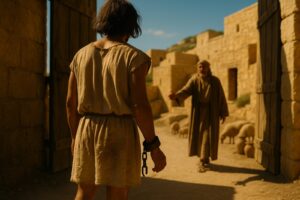
There is a very old letter about exactly this. More than 2,500 years ago, whole families were marched out of Jerusalem and taken to Babylon, far from everything they knew. What they wanted most was to go home. The letter that reached them did not tell them to keep their bags packed by the door. It told them to build houses and live in them. Plant gardens and eat what grew. Raise their families there, and work for the good of the city they had been taken to — because God had not been left behind in the old place. God could be found right where they were. (That letter has a surprising story of its own, especially for anyone working far from family.)
It never asked them to stop loving home. It just told them not to put their lives on hold while they missed it.
Small Ways to Settle Where You Are
None of these cost money, and none of them mean giving up on home:
- Learn the names of two neighbours, or of the person at the shop you use most.
- Find one spot that can be yours — a bench, a window, a short walk at the same time each day.
- Grow something, even one plant in a cup.
- Do one small good thing for the place you live now.
- Keep calling home. Settling here and loving there are not opposites.
And if a move has left you lonelier than you expected, the free How Lonely Am I? check takes a few minutes and is a gentle place to start.
Three crocodiles in a mangrove forest in Bangladesh will never know they taught anyone anything. They just found a stretch of muddy water and began to live there. Wherever you have landed, there may be more solid ground under you than you think.
What Do You Think?
Is “home” the place you came from, or the place you are learning to live in now? Can it honestly be both? Tell us in the comments.
Share This With Someone Far From Home
Know someone who moved and is still half-living in the old place? Send them this:
Saltwater crocodiles are famous for swimming hundreds of km to get home. In Bangladesh, three raised in captivity were set free and just… stayed. Made a home right where they were put. https://bgodinspired.com/index.php/nature-and-creation/saltwater-crocodiles-released-stayed-put/
One crocodile swam 473 km trying to get home and never made it. Three others settled in and started living. I’ve been the first crocodile for a while now. Maybe it’s time to plant something. https://bgodinspired.com/index.php/nature-and-creation/saltwater-crocodiles-released-stayed-put/
A study in Bangladesh asked a strange question about crocodiles: “What is home?” The answer made me think about everyone I know who moved far from family for work. https://bgodinspired.com/index.php/nature-and-creation/saltwater-crocodiles-released-stayed-put/
Questions People Ask About Saltwater Crocodiles and Homing (Q&A)
Do saltwater crocodiles return home if they are relocated?
Often, yes. In a 2007 satellite-tracking study in northern Australia, published in PLOS ONE, three large male saltwater crocodiles were moved 56, 99 and 411 kilometres of coastline away from where they were caught, and all three returned. The crocodile moved furthest travelled more than 400 kilometres in about 20 days. This homing ability is why relocating a wild saltwater crocodile far away often fails to keep it away.
What did the 2026 Bangladesh saltwater crocodile study find?
A 2026 study in the journal Wildlife Research tracked five mature saltwater crocodiles by satellite in the Sundarbans mangrove forest of Bangladesh. A wild crocodile released about 130 kilometres from where it was caught showed clear homing behaviour, sometimes travelling more than 30 kilometres in a day. Three females held in captivity for 8 to 22 years showed no sign of trying to return to their breeding centre and instead settled into small, well-defined areas, moving much like a local wild crocodile.
Why didn’t captive-raised crocodiles try to return home?
Homing relies on spatial memory of familiar places. A wild crocodile moved away from its home range still remembers that range, so it tries to return. Crocodiles raised for years in a breeding centre have no wild home range to navigate back to, which is the most likely reason captive-reared saltwater crocodiles released in Bangladesh’s Sundarbans settled into small areas instead of travelling. The study tracked only five crocodiles, so this explanation has not been proven.
How many saltwater crocodiles are left in Bangladesh?
The most recent survey estimated only about 140 mature saltwater crocodiles in Bangladesh, living mainly in the Sundarbans mangrove forest. The population was heavily hunted for skins until the 1970s and has been legally protected since 1973. Bangladesh’s forest department breeds saltwater crocodiles at the Karamjal centre and releases them into the Sundarbans to help the wild population recover.
Is it normal to feel homesick after moving somewhere new?
Yes. Homesickness after a move is common, whether the move was for work, study, marriage or safety, and it is a sign that a previous place mattered. Small, free steps can help a new place start to feel like home: learning neighbours’ names, keeping a simple daily routine, finding one regular spot, doing something good for the local community, and staying in touch with people back home rather than choosing between the two places.