 0
0
 0
0
Your feed probably looks a little strange right now.
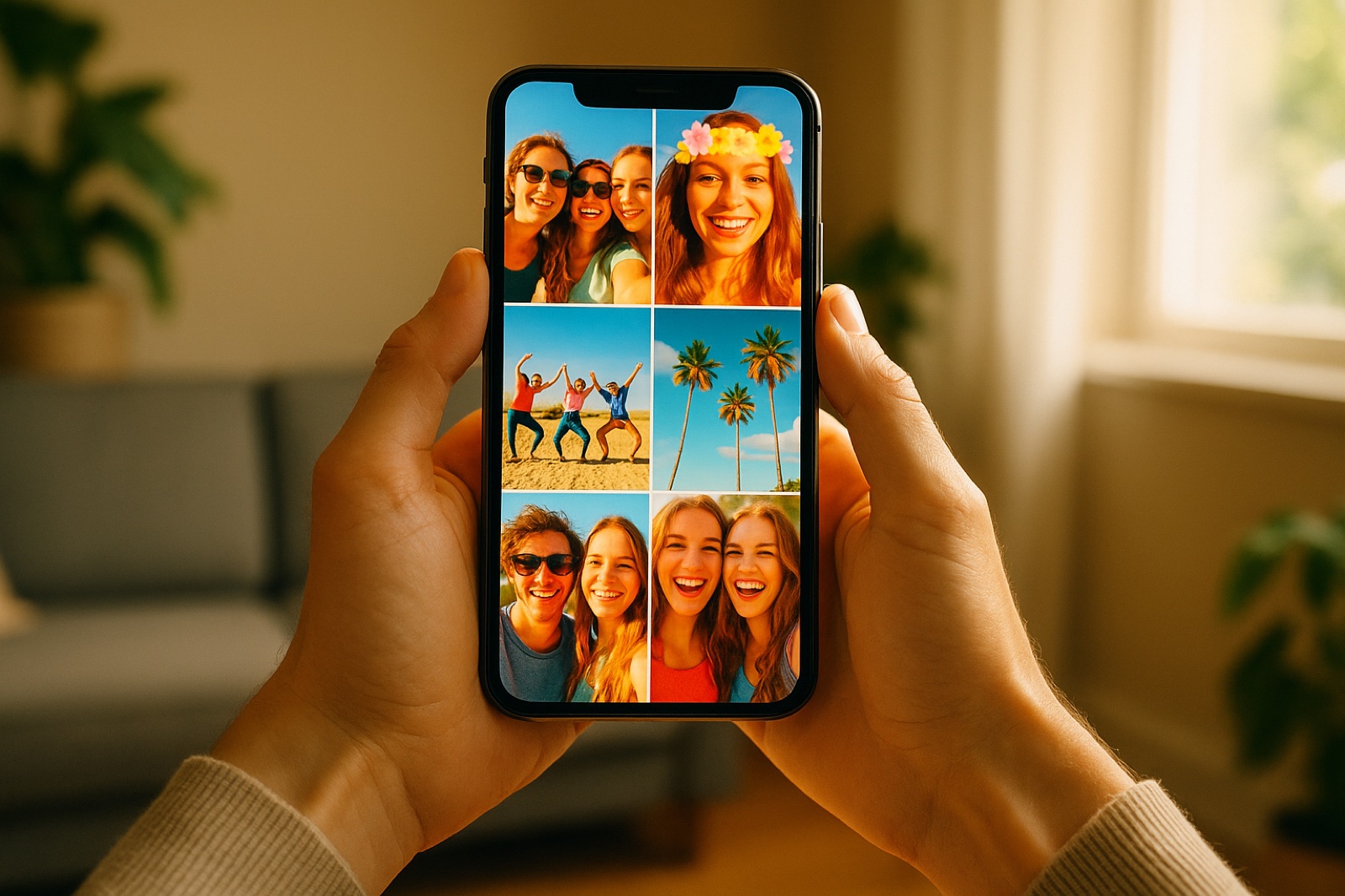
Flower crown filters. Dog ears. Photos so bright and oversaturated they almost hurt to look at. Someone flipping a water bottle onto a table. Someone dabbing. A song you have not thought about in nearly ten years playing under all of it.
The caption is usually some version of the same six words: 2026 is the new 2016.
It is one of the biggest things on the internet this year, and it is worth understanding — not because nostalgia is bad, but because this particular wave is doing something quietly interesting. There is a part of 2016 that almost nobody is posting. And the reason for that is not laziness or dishonesty. It is built into how your memory works.
What “2026 Is the New 2016” Actually Is
The phrase surfaced in the last days of December 2025 and spread quickly through early 2026. One creator suggested treating 1 January as a kind of reset day — a day to bring back 2016 internet culture on purpose. People did.
What came flooding back was very specific:
- Snapchat’s puppy-dog and flower-crown filters
- Bright, oversaturated, slightly blurry phone selfies
- The bottle flip challenge, the mannequin challenge, dabbing
- Pokémon Go, Vine, Dubsmash, Musical.ly
- The music — Drake, the Weeknd, Justin Bieber, the Chainsmokers, and Zara Larsson’s “Lush Life,” which found its way back onto charts a decade later
- The films — Zootopia, Moana, La La Land, Rogue One, Deadpool, Captain America: Civil War
The BBC reported that searches for “2016” on TikTok rose sharply in the first days of January, and millions of videos were made using period-accurate filters. The hashtag #BringBack2016 followed close behind.
Ask people why, and the answer is remarkably consistent. Not “2016 was better.” Something more specific: 2016 was the last time being online felt social. Before the feed became a performance. Before everything was sorted by an algorithm rather than by your friends. Before a large share of what you scroll past was made by a machine.
That is a real ache, and it is worth taking seriously before we say anything else about it.
The Part of 2016 Nobody Is Posting
Here is the thing you notice once you look for it.
Scroll for an hour and you will find the songs, the filters, the films, the challenges, the fashion. You will not find the news.
2016 was a heavy year. It carried elections, referendums, conflict, and losses that dominated the headlines for months at a time. Writing in Vogue, Madeleine Schulz pointed out that the trend focuses on fashion, music and social media — and specifically not on the political events of that year. Other commentators have made the same observation: the wave romanticises 2016 while leaving out most of what actually made it hard.
Nobody organised that. There was no meeting. Millions of people independently reached back into the same twelve months and, without discussing it, all grabbed the same half.
That is not a conspiracy. That is a mechanism.
Your Memory Is Doing This on Purpose
Psychologists have a name for it: the fading affect bias.
The finding is simple and it has held up across decades of research. The emotion attached to unpleasant memories fades faster than the emotion attached to pleasant ones. Both memories stay. The sting drains out of one much quicker than the warmth drains out of the other.
W. Richard Walker and John J. Skowronski, the psychologists who formalised and tested this most thoroughly, found the effect begins remarkably fast — within hours of an event — and keeps widening over months and years. Which means that after ten years, the gap is enormous. You are not choosing to remember 2016 as bright. By now it genuinely is brighter, in there, than it was when you lived it.
Now here is the part that changes how you should feel about all of it.
Walker and Skowronski did not present this as a flaw. One of their papers on it is titled, almost impatiently, “The Fading Affect Bias: But What the Hell Is It For?” Their answer was that it looks like a feature — an emotion-regulating mechanism that keeps a person’s view of themselves, the world and the future tilted toward hope. A mind that held every past pain at full volume would be very accurate and completely unable to get out of bed.
So the editing is not a character failure. It is closer to healing. Your memory is not lying to you about 2016. It is doing the same thing to 2016 that it has already done, quietly, to every hard year you have survived.
The Detail That Changes the Whole Trend
There is one more thing, and once you see it, it is hard to unsee.
Look at who is actually posting. The trend is driven overwhelmingly by Gen Z — which means most of the people captioning photos “wake up, it’s 2016” were somewhere between primary school and secondary school when that year happened.
They were not editing the hard news out of 2016. They were never carrying it in the first place.
A twelve-year-old in 2016 did not follow a referendum. A ten-year-old did not track an election. They had the songs and the filters and the films, and somebody else in the house absorbed the rest of it. The feeling being reached for is not really that year. It is the experience of a world that was still being held by somebody else, before the weight of it got handed over.
Which reframes the whole wave. Millions of people are not homesick for 2016. They are homesick for not being responsible for everything yet. And that is a much more honest thing to feel, and a much harder one, because you cannot get it back by downloading a filter.
An Old Story With the Same Edit In It
This is not new. It is not even close to new.
There is a story thousands of years old about a group of people who had just walked out of slavery. A few months into the desert, tired and uncertain and eating the same thing every day, they started reminiscing — out loud — about the food back where they had come from. The fish. The cucumbers, the melons, the onions, the garlic. They described it as food they had eaten freely.
Freely. In slavery.
They kept the menu and deleted the chains. Same edit. Same mechanism. Roughly three thousand years earlier, with no phones involved. It seems to be one of the oldest and most reliable things a human mind does — and the old writings treat it not as a scandal but as something to be gently aware of, because a people convinced the past was better will not walk toward what is ahead of them. That is usually the point where God shows up in that story: not to argue about the fish, but to feed them where they actually were.
What to Do With a Mind Built This Way
You are not going to switch the fading affect bias off, and you would not want to. It is doing you a service.
But you can stop letting it draw the map.
A few things that cost nothing:
- Finish the sentence. When you catch yourself saying a year was better, add the part your memory dropped. Not to ruin it — just to make the comparison fair.
- Name what you actually miss. Nine times out of ten it is not the year. It is being younger, or lighter, or held. Naming it accurately is the only way to look for it in the present instead of the past.
- Remember the bias runs forward too. This year will also be edited kindly, ten years from now, by the same mechanism. The hard part of right now is already scheduled to fade. That is not wishful thinking; it is the documented pattern.
- Take the photo anyway. Badly. Oversaturated. That is genuinely what people are nostalgic for — not the quality, the lack of performance.
If the wave has left you feeling a bit unmoored about where you actually are now, our free What Is My Purpose? assessment is a decent five-minute reset — it asks about the present rather than the past. And if you want the science of why an old song can knock the wind out of you, we went deep on that in why music makes you cry. The same tug shows up when you realise you are the same age your parents were in that photo.
The filters will pass. They always do. But it is worth noticing that the thing you are reaching back for was never stored in a year — and a year is the one place you definitely cannot go and get it.
A Question Worth Sitting With
Is the 2016 nostalgia wave harmless fun, or does a decade of highlight-reel remembering quietly make the present harder to live in? There is a real case on both sides. Tell us which one you land on in the comments — we read them.
Share This
- Turns out “2026 is the new 2016” isn’t really about 2016. Your brain deletes the sting from bad memories faster than the warmth from good ones — psychologists have measured it. Explains a lot: https://bgodinspired.com/index.php/entertainment/2026-is-the-new-2016-part-we-edited-out/
- Everyone posting flower crown filters was about eleven years old in 2016. They didn’t edit out that year’s hard news. They were never carrying it. That’s not nostalgia for a year, that’s nostalgia for not being responsible yet: https://bgodinspired.com/index.php/entertainment/2026-is-the-new-2016-part-we-edited-out/
- Best thing I’ve read on the 2016 nostalgia wave — and it’s not a lecture about living in the past. It’s kinder than that, and it ends somewhere I didn’t expect: https://bgodinspired.com/index.php/entertainment/2026-is-the-new-2016-part-we-edited-out/
Questions People Are Asking
What does “2026 is the new 2016” mean?
“2026 is the new 2016” is a social media trend that began in late December 2025 and spread through early 2026, in which people recreate and repost the internet culture of 2016 — Snapchat’s puppy-dog and flower-crown filters, oversaturated phone selfies, the bottle flip and mannequin challenges, dabbing, Pokémon Go, and the music and films of that year. The BBC reported that TikTok searches for “2016” rose sharply in the first days of January 2026.
Why are people nostalgic for 2016?
The most common explanation given by participants and commentators is that 2016 felt like the last year social media was genuinely social — before feeds were heavily sorted by algorithms, before the pandemic, and before large volumes of AI-generated content appeared online. The trend is driven mainly by Gen Z, most of whom were children or teenagers in 2016.
Does the 2016 nostalgia trend leave anything out?
Yes. Commentators have noted that the trend focuses almost entirely on fashion, music, films and social media, and omits the year’s major political and news events. Writing in Vogue, Madeleine Schulz specifically observed that the nostalgia is aimed at cultural trends rather than the politics of that year.
Why do bad memories fade faster than good ones?
This is a documented effect in psychology called the fading affect bias. The emotion attached to unpleasant autobiographical memories weakens faster than the emotion attached to pleasant ones. Researchers W. Richard Walker and John J. Skowronski found the effect begins within hours of an event and continues to widen over months and years. They concluded it appears to serve a purpose — helping people maintain an optimistic view of themselves, the world and the future.
Is it unhealthy to be nostalgic?
Not in itself. Nostalgia is a normal product of how memory works, and the research suggests the softening of painful memories helps people stay hopeful. It becomes a problem only when a heavily edited version of the past is used as a fair comparison against an unedited present — because the past will always win that comparison, and no year lived in real time can compete with a decade of gentle editing.