 0
0
 0
0
Researchers in Oregon went looking for a virus they had every reason to find. They checked blood. They checked tissue. They checked the quiet hiding places where this particular virus is famous for waiting out treatment for years.
Nothing.
The study behind the recent headlines about an HIV cure in newborns was published in the journal Nature Microbiology in August 2026. It is genuinely remarkable. It is also not quite what the headlines said it was.
And the detail that stops you is not the one that got printed.
When a body fights an infection, it keeps receipts. Specialized immune cells. Antibodies shaped to that exact intruder. A kind of biological scar that says, in effect, something happened here. The researchers went looking for those receipts too.
They were not there either.
Why “HIV Cure in Newborns” Is Not the Right Phrase Yet
Start with the caution, because it matters.
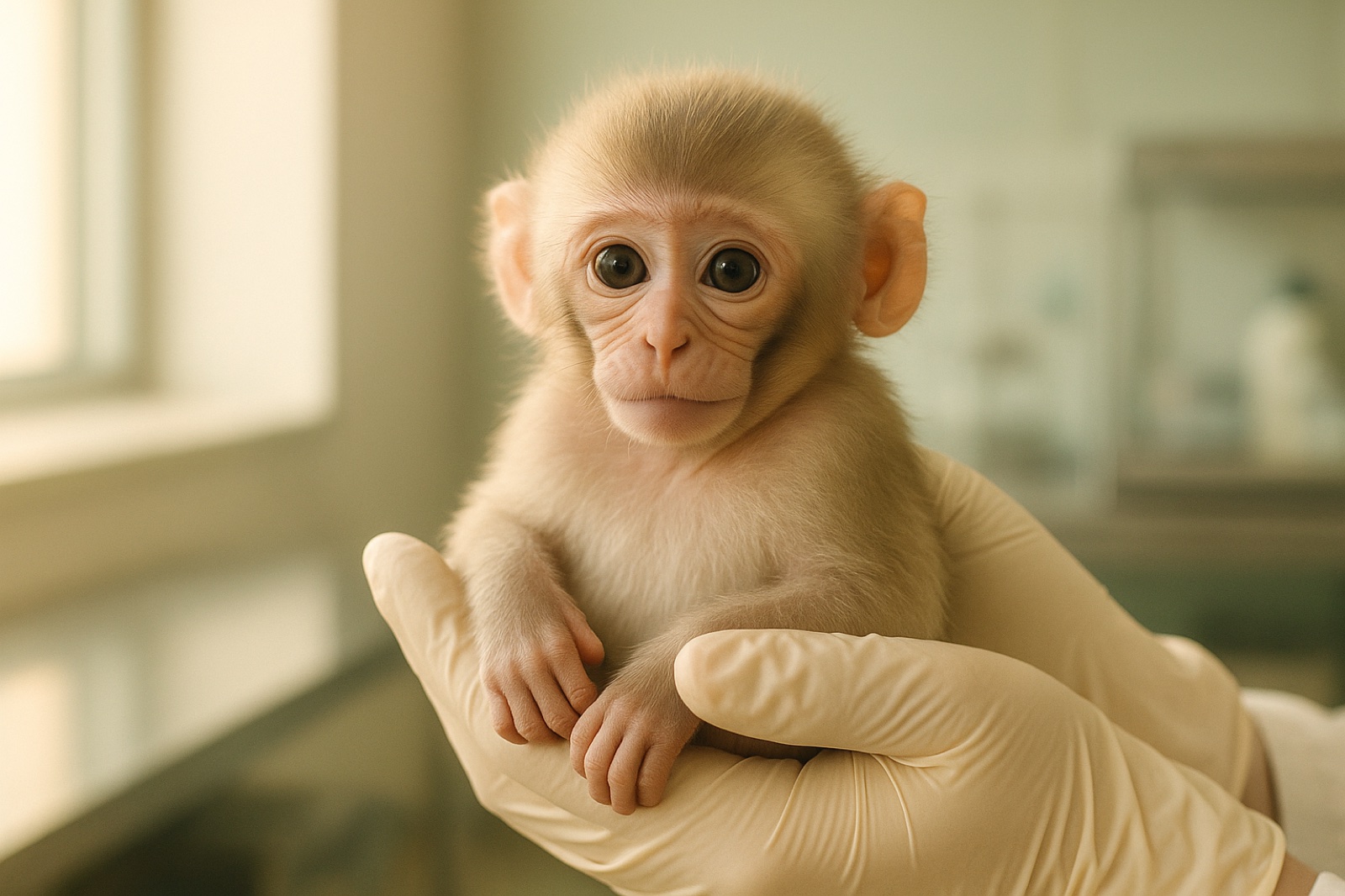
The infants in this study were monkeys — rhesus macaques, raised at primate research centers in Oregon and California. Not human babies.
The virus was not HIV either. It was SHIV, a hybrid built for laboratory work that carries HIV’s outer coat on a body the monkey immune system will actually respond to. HIV on its own does not infect monkeys the way it infects people, so this is the standard stand-in.
And the number of infants who received the full three-part treatment was eight. Eight animals. That is a signal, not a settled result.
The researchers are the first to say so. Their own framing is that this could justify a clinical trial in human newborns one day. A hope, not a headline.
But strip the caution away and something is still sitting there worth looking at.
For more than forty years, HIV has been the defining example of a condition you manage rather than a condition you finish. Treatment got extraordinarily good. People live long, full lives. But the virus stays — parked in cells that are not doing anything, invisible to drugs, waiting. Stop treatment and it comes back. That is the whole story of HIV in one sentence, and it has been true for four decades.
Which is why this study lands the way it does. The question underneath it is not really a virology question. It is a question most of us recognize from somewhere much closer to home: can a thing actually be over? Or does everything just get managed, quietly, forever?
If that question is one you have been carrying — about something in your own life, not a virus — there is a free guide we put together about exactly that. No cost, nothing to buy.
Eight Infants, Three Drugs, and a 72-Hour Window
Here is what actually happened.
The full study ran across 55 infant macaques. Different groups got different combinations — some one drug, some two, some the complete regimen. Eight received all three at once.
The infants were exposed to the virus by mouth, around the time of birth. That route is deliberate. It mirrors the way a baby can be exposed to HIV during delivery or through breastfeeding, which is still how most children with HIV acquire it worldwide.
Treatment started 72 hours after exposure. And this is the part that is easy to skim past: by that point the virus was already in their blood, already replicating. This was not prevention. The infection had begun.
The three parts were:
- Standard antiretroviral therapy — the daily drugs already used worldwide to suppress HIV.
- Two broadly neutralizing antibodies — lab-made antibodies that latch onto the virus itself. Given once.
- Leronlimab — an experimental antibody that blocks CCR5, the doorway on the surface of a cell that this virus strongly prefers to use. Given weekly, nine times.
The regimen ran for roughly six months. Then it stopped. And everyone waited.
Timing keeps turning out to be the whole game in this kind of research. A separate line of antiviral work found much the same thing last year, where the same drug either stopped a virus completely or barely helped at all, depending entirely on when it arrived. The medicine did not change. The moment did.
None of the Three Worked Alone
This is the finding that gets the least attention and probably deserves the most.
The neutralizing antibodies on their own did not stop the virus from establishing a hidden reservoir — and that held true whether or not daily antiretroviral therapy was running alongside them.
Leronlimab on its own did not prevent it either. It did do something real: it noticeably reduced how much virus settled into lymph tissue and the gut, which are exactly the places this virus likes to disappear into. But reduced is not gone.
Only the combination worked. All three, together, inside that narrow window.
There is no hero drug in this story. There is no single thing that, given early enough, does the job. Every component failed on its own terms. It took all of them arriving at once, at the beginning, before the thing had a chance to settle in and become permanent.
Then They Tried to Make It Come Back
Here is where the study earns its attention, and it is the part almost no coverage mentioned.
Not finding a virus is weak evidence. Absence is slippery. This virus is genuinely good at hiding, and “we looked and did not see it” has been wrong before.
So the researchers did something more aggressive. They stripped out the animals’ CD8 T cells.
CD8 T cells are the immune system’s enforcers. They are a large part of why a lurking virus stays lurking — they patrol, they suppress, they keep a lid on things. If a virus were still present but being quietly held down, then removing the guards is precisely how you would flush it into the open.
They removed the guards.
Nothing came back.
Tissue samples taken as far out as 84 weeks after the original exposure turned up no detectable virus. And when they looked for the immune system’s memory of the fight — the antiviral response that a real, established infection leaves behind as a matter of course — that was absent too.
Not suppressed. Not controlled. As far as the available tests could tell, never fully established at all.
What the Researchers Still Do Not Know
Quite a lot, and they say so plainly.
They do not know why the combination worked so well. That is not modesty; the mechanism is genuinely unresolved.
They also do not know how wide the window is. Jonah Sacha, who co-led the work at Oregon Health & Science University’s Oregon National Primate Research Center, put the open question directly: “Could it work a week after infection? Two weeks? How far can you go after infection, and still purge the virus?” As he noted, they only tested out to three days.
Then there is everything else standing between this and a treated human infant. Dosing for newborns is unsettled. Leronlimab is still experimental. Monkeys are not people, SHIV is not HIV, and eight is eight. The work was co-led with Nancy Haigwood, and the full paper is published in Nature Microbiology if you want the primary source rather than a summary of one.
This is an early, striking result in an animal model. It is not a cure. Anyone telling you otherwise is selling something.
Handled Once, Instead of Managed Forever
Still — sit with the shape of it for a second.
Everything about how we talk about the past assumes management. You process it. You work through it. You learn to live with it. You keep it under control. The best outcome anyone really promises is that the thing gets quieter, and that you get better at carrying it.
There is an old idea, far older than any of this, that sits in a strangely similar shape. It shows up in ancient writing about being forgiven, and the odd part has always been the wording. It does not say the record is sealed. It does not say it is filed away, or overlooked, or held quietly in reserve. It says God chooses not to remember it at all.
People have argued about that line for centuries, mostly because it sounds too generous to be structurally sound. Surely something has to keep the receipt. Surely there is a file somewhere.
And then a lab goes looking for the immune scar and cannot find one.
The Part That Stays With You
Most of us are managing something. A version of ourselves we would rather not have been. A thing we said. A stretch of years we handle by not looking directly at them.
And most of the advice on offer is management advice. Cope better. Reframe it. Make peace with the weight.
Which is fine, and often necessary. But it is worth noticing how rarely anyone suggests the other possibility — that a thing might actually be finished, rather than skillfully held. If that idea is uncomfortable, it is usually because the past has taught us that nothing ever really lets go. It is also worth asking which records you are still keeping about other people, which is a quieter version of the same question — this short assessment walks through it if you want somewhere to start.
Eight infant monkeys are not proof of anything about your life. They are eight animals in one study in Oregon, and the honest scientific summary is that this is promising and unfinished.
But somewhere in that lab, people went looking for a thing everyone was certain would be there, and it was not. Not hiding. Not suppressed. Just not there.
That has never been the story with this virus before. It is a strange, good week for the idea that some things end.
A Question Worth Sitting With
Do you think most things in life genuinely end, or do we just get better at carrying them? There is no correct answer here and both positions are defensible — tell us which one you actually believe in the comments.
Worth Passing Along
Short version:
They gave eight newborn monkeys three drugs within 72 hours of exposure. A year after treatment stopped, researchers could not find the virus — or any sign the body had ever fought it. https://bgodinspired.com/index.php/health-and-wellness/hiv-cure-in-newborns-monkey-study/
The detail nobody covered:
They did not just fail to find the virus. They deliberately stripped out the immune cells that keep a hidden virus suppressed, to force it into the open if it was there. Nothing came back. That is the difference between “controlled” and “gone.” https://bgodinspired.com/index.php/health-and-wellness/hiv-cure-in-newborns-monkey-study/
For the skeptic in your group chat:
Before anyone says “HIV cured” — it was monkeys, it was a hybrid lab virus, and eight animals got the full treatment. Still one of the more remarkable things published this year: https://bgodinspired.com/index.php/health-and-wellness/hiv-cure-in-newborns-monkey-study/
Questions People Are Asking
Has HIV been cured in newborns?
No. A study published in Nature Microbiology in August 2026 found that a three-part treatment cleared a HIV-like virus in eight newborn rhesus macaques, with no detectable virus roughly a year after treatment stopped. The subjects were monkeys, not human infants, and the virus was SHIV — a laboratory hybrid carrying HIV’s outer coat. Researchers describe the result as grounds for a possible future clinical trial in human newborns, not as a cure.
What were the three drugs in the newborn HIV study?
The regimen combined standard antiretroviral therapy given daily, two broadly neutralizing antibodies given as a single dose, and leronlimab — an experimental monoclonal antibody that blocks the CCR5 receptor the virus uses to enter cells — given weekly for nine doses. Treatment began 72 hours after exposure and ran for approximately six months. None of the three components prevented the virus from establishing a hidden reservoir when tested on its own.
Why does timing matter so much with HIV treatment?
HIV establishes a latent reservoir — copies of the virus parked inside long-lived cells that are not actively producing virus, which makes them invisible to antiretroviral drugs and to the immune system. Once that reservoir forms, stopping treatment allows the virus to return. The Oregon study targeted the window before the reservoir was fully established, starting treatment 72 hours after exposure. Researchers have not yet determined how much later the same approach could still work.
Why do researchers use SHIV instead of HIV in monkey studies?
HIV does not infect monkeys the way it infects humans, so it cannot be studied directly in them. SHIV is a chimeric virus engineered for research: it combines the outer envelope proteins of HIV with the internal structure of SIV, the related virus that does infect monkeys. This lets researchers test HIV-targeting antibodies and drugs in a living animal. Results in SHIV models are informative but do not automatically transfer to human HIV infection.
What is a latent HIV reservoir?
A latent HIV reservoir is a population of cells carrying integrated HIV genetic material that are not currently producing new virus. Because antiretroviral drugs act on actively replicating virus, these dormant cells are unaffected by treatment and can reactivate later. The existence of this reservoir is the main reason HIV is currently a lifelong managed condition rather than a curable one, and eliminating or preventing it is the central goal of HIV cure research.