 0
0
 0
0
For a while now, the most admired thing a person could be online was unbothered.
Flat voice. Half a smile. The message left on read. A shrug where a reaction used to go. Whatever you wanted, the rule was that you must never look like you wanted it very much.
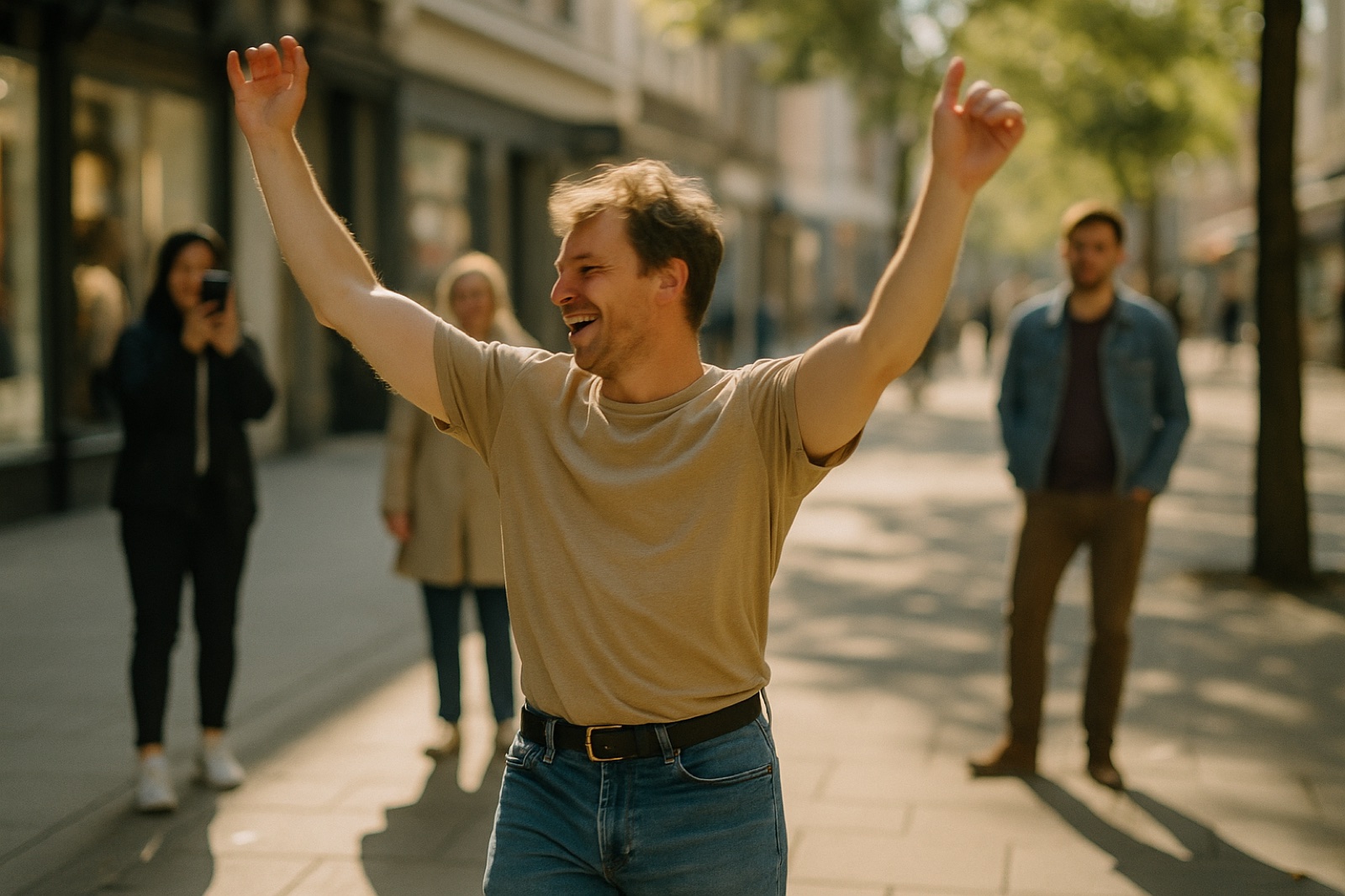
Then, around the middle of this year, feeds began filling with the exact opposite. People dancing badly in the street. People filming themselves grinning about something small. People saying plainly that they loved something, with no irony laid over the top.
It has a name now — the not very nonchalant trend — and it is spreading fast, mostly because it is a relief.
What the “not very nonchalant” trend actually is
The format is simple, which is part of why it travelled. One sound, one take, and footage of you visibly enjoying something. Dancing. Laughing. Arriving somewhere you were excited to arrive.
No editing polish. No cool. The whole point is that the joy is not being managed for the camera.
It is a direct answer to what people had started calling the nonchalant era — the deadpan, unimpressed, carefully-uninterested style that had been the default for a couple of years. That style is not being argued with. It is being ignored, loudly, by people who look like they are having a much better time.
And that is the interesting part. Nobody won a debate here. The mask just stopped being worth wearing.
Being unbothered was never about being calm
Here is the thing nonchalance was always quietly doing for you.
If you never admit you wanted something, nobody can watch you not get it. If you never say you like a person, nobody sees you get turned down. If you keep your voice flat about the job, the trip, the song, the friendship, then when it falls through, you have already pre-agreed that it did not matter.
That is not coolness. That is insurance.
And like most insurance, it works. It really does reduce the amount of humiliation available to you. That is why so many people bought it, and why it is genuinely hard to put down.
But the premium is steep, and it gets charged somewhere you do not notice for years: a mask that stops people from seeing you lose also stops people from seeing you. Nobody can meet a shrug. Friendship, work, love — all of it requires someone to know what you actually want, and the entire skill of being unbothered is making sure they never find out.
It is the same bargain hiding inside a lot of what gets sold as self-improvement right now. Solo-maxxing works too — the calm it delivers is real — and the cost is filed under the same heading. Less exposure. Less risk. Less of you available to anyone.
The line at the centre of the trend
Here is the part almost nobody mentions when the trend gets written up.
The audio the whole thing is built on is not a joke and it is not a beat drop. It is a person saying: “I don’t like being nonchalant. Why would I hide the joy God gave me?”
That is the sentence. That is what all those clips of people dancing in the street are set to.
Most of the people using that sound are using it for their own reasons, and plenty have never thought about the second half of it for a second. Fair enough. But it is worth noticing what the sentence actually argues, because it is not the argument you would expect from a rebellion against cool.
It does not say my joy is mine and I will show it if I want. It says the joy was given. And you do not hide a gift to protect your reputation. Hiding it would be strange.
Somebody already lost this argument three thousand years ago
There is an old account, roughly three thousand years old, of a king who did the least nonchalant thing imaginable in front of his entire capital city.
He was bringing something sacred into his city, and he danced the whole way. Not a dignified processional walk. He danced with everything he had, in a plain linen garment, in front of soldiers, servants, and anyone who happened to be standing there.
Someone was watching from a window. Not a stranger — his own wife, herself a king’s daughter, looking down from inside his own house. And she despised him for it.
She met him afterwards and said what people always say in that situation, which is a version of you embarrassed yourself. Look at you. In front of the staff. Like some fool with no self-respect.
His answer is the whole thing. He did not apologise, did not explain that he had got carried away, did not promise to keep it down next time. He told her the dancing was not for her, and then he went further: he would be more undignified than that, and lower in his own eyes than that, before he would turn it down.
The mockery came from the closest possible range, from someone who mattered, from above. That is always where it comes from. Strangers cannot make you self-conscious. Only people whose opinion you had already agreed to care about can do that.
And here is the detail almost everyone reads straight past.
That dance was the second attempt. The first attempt to bring the sacred thing into the city had ended with a man dead on the road. The king was angry about it, then frightened by it, and he called the whole plan off and left the thing sitting in someone else’s house for three months.
So the dancing was not a good mood. It was not the confidence of a man to whom nothing bad had happened. It was joy on the far side of a failure and a real fear — which is the only kind most of us are ever offered, and the only kind that means anything.
The claim sitting underneath the whole story is the same one sitting underneath that audio clip: the joy was never his achievement to guard in the first place. It was given. Given things are meant to be shown.
What it costs to drop the act
Do not let anyone tell you the risk is imaginary. It is not.
Being visibly excited about something in front of people who are not is genuinely exposing. You can be laughed at. You can be the only one clapping. You can love a thing that turns out not to love you back, in public, where it was seen.
Nonchalance was protecting you from something real. It is just that it was charging you for a policy that only pays out in scenarios where you had already decided to lose.
There is a reason so much of the internet aches for a period that felt warmer and less guarded — the same ache running under the “2026 is the new 2016” wave. People are not really missing a year. They are missing being allowed to like things out loud.
The only question worth answering, then, is the narrow one: what do you care about enough to look uncool for? Not everything. Just the two or three things. If you cannot name them quickly, that is worth an honest half hour — a short core values check will get you closer than another evening of scrolling will.
Because you cannot drop the mask for everything at once, and you should not try. You only need to drop it where it is standing in front of something that matters.
Try one true sentence
You do not need to dance in the street. Most of us are never going to, and the trend is not really asking us to.
Try one sentence instead. Say a true thing about what you want or what you loved, out loud, to one person today, without the softener on the end.
Not “it was pretty good I guess.” Just: I loved that. I’ve been looking forward to this all week. I’m really glad you called.
It will feel like more exposure than it is. The other person will almost never react the way the fear says. And you will have found out something that the flat voice was designed to keep you from ever finding out — that being caught caring is survivable, and that most people are quietly relieved when somebody else goes first.
The mask was never protecting anything worth keeping.
What do you think?
Was the unbothered era actually about being calm, or was it always about being safe? And do you think a trend can genuinely change how people behave offline, or does it stay on the feed? Tell us how you see it in the comments — we read them.
Share this
- Being “unbothered” was never coolness. It was insurance — you can’t be seen losing something you never admitted you wanted. The bill comes later. https://bgodinspired.com/index.php/personal-growth-and-life-skills/not-very-nonchalant-trend/
- The “not very nonchalant” trend is people dancing badly in public on purpose, and I have not stopped thinking about why it feels like such a relief. https://bgodinspired.com/index.php/personal-growth-and-life-skills/not-very-nonchalant-trend/
- A mask that stops people watching you lose also stops people seeing you. Nobody can meet a shrug. https://bgodinspired.com/index.php/personal-growth-and-life-skills/not-very-nonchalant-trend/
Questions people are asking
What is the “not very nonchalant” trend?
The “not very nonchalant” trend is a social media format that took off in mid-2026 in which people post unedited, single-take footage of themselves visibly enjoying something — dancing, laughing, celebrating a small win — instead of performing the detached, deadpan style that had been popular. It is set to an original audio clip whose central line is “I don’t like being nonchalant. Why would I hide the joy God gave me?” The format is a direct reaction against what had been called the “nonchalant era.”
Why did being nonchalant become popular in the first place?
Appearing unbothered functions as emotional insurance. If a person never admits they wanted something, no one can watch them fail to get it, and any disappointment can be dismissed as unimportant after the fact. That protection is real, which is why the posture spread so widely. The cost is that the same detachment that hides a person’s losses also hides the person — friendships, work and relationships all depend on other people knowing what you actually want.
Is caring openly about things actually good for you?
Openly expressing enthusiasm carries real social risk: being laughed at, being the only visibly excited person in the room, or being publicly disappointed. But permanently masking what matters to you removes the information other people need in order to connect with you, support you, or offer you the thing you want. Most people find that expressing a genuine reaction to one person at a time — rather than performing it publicly — is where the shift actually starts.
Is there an old story about someone being mocked for showing joy?
Yes. An account roughly three thousand years old describes a king dancing without restraint through his own capital city while bringing a sacred object into it, wearing a plain linen garment in front of soldiers and servants. A member of his own household watched from a window, was disgusted, and afterwards told him he had humiliated himself in front of the staff. He answered that he would go further still rather than tone it down. The same account notes that an earlier attempt at the same procession had ended in a death and that the king had abandoned the plan in fear for three months beforehand — so the dancing followed a failure rather than replacing one.
How do you stop caring what other people think?
Complete indifference to others’ opinions is neither realistic nor desirable — mockery lands hardest when it comes from people who are close, and that closeness is usually worth keeping. A more workable approach is narrowing the question: identify the two or three things you care about enough to risk looking foolish for, and stay guarded about the rest. Naming those few things specifically does more than trying to become universally unbothered.