 0
0
 0
0
The Gospel Counts the Gifts. It Never Counts the Men.
In a box somewhere, packed in newspaper eleven months of the year, there is a small nativity set — and at the front of it, three figures kneeling. One old, one middle-aged, one young. Usually one of them wearing a crown.
Matthew is the only writer in the entire Bible who mentions these men at all. He never says how many there were.
Were There Three Wise Men? What Matthew 2 Actually Says
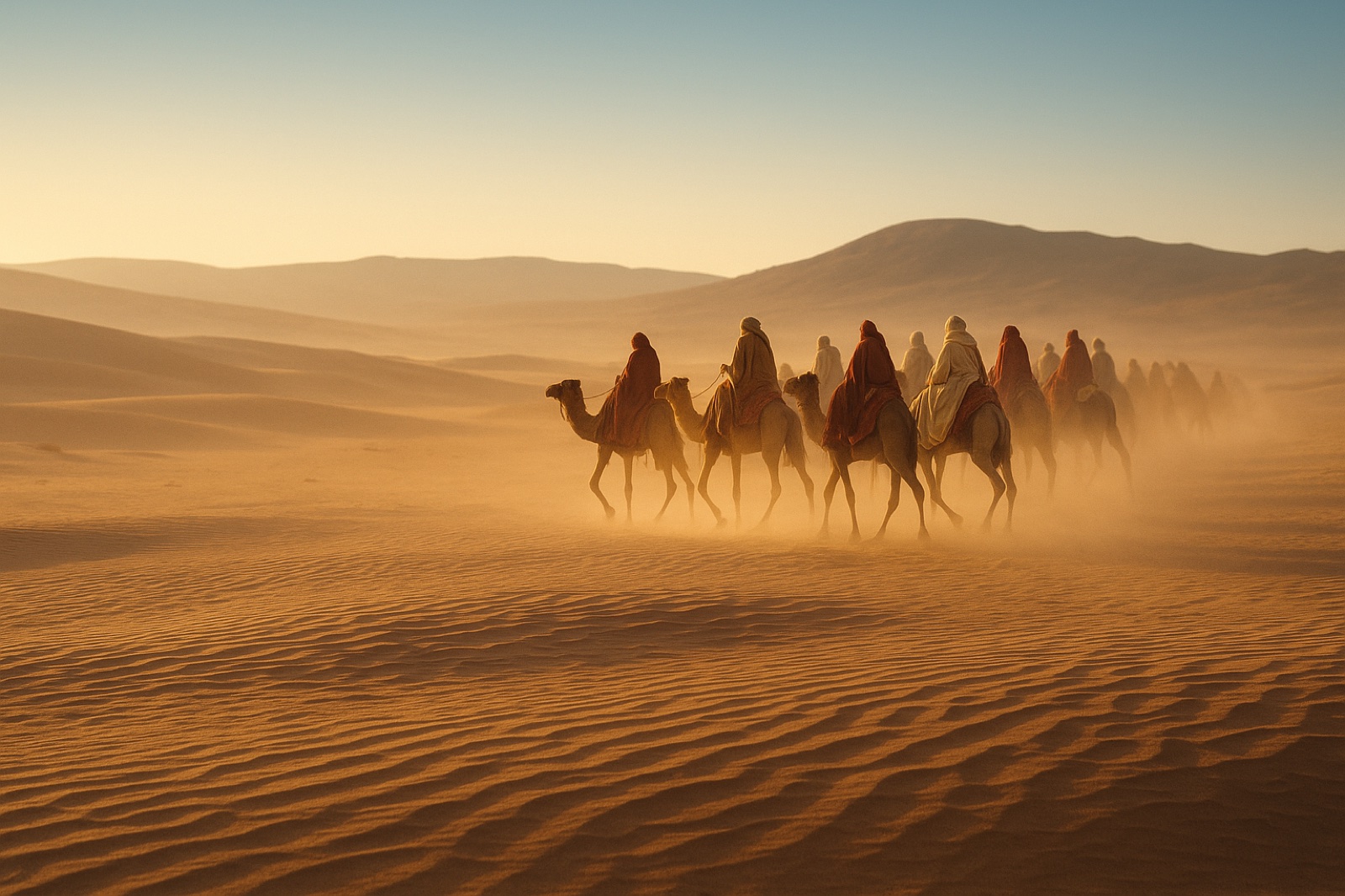
The whole account runs to twelve verses, and it opens like this: “Now when Jesus was born in Bethlehem of Judaea in the days of Herod the king, behold, there came wise men from the east to Jerusalem” (Matthew 2:1).
Wise men. No number. The Greek word is magoi — the term for the priestly, star-reading class of Persia and Babylon. These were professionals. Reading the sky was their trade, the way accountancy or medicine is somebody’s trade now.
Then verse 11: “And when they were come into the house, they saw the young child with Mary his mother, and fell down, and worshipped him: and when they had opened their treasures, they presented unto him gifts; gold, and frankincense and myrrh.”
Three gifts. Named, listed, counted. And nowhere — not in Matthew 2, not anywhere else in scripture — a count of the men.
Three is a fair guess. It is not so much wrong as inferred, and the inference has been running so long it now feels like text. But nothing in the passage assigns one gift to one man. What Matthew says is that they opened their treasures and presented gifts. Plural men, plural treasures, three named items.
And while you are in verse 11, notice the word house. Not a stable. Not a manger. Luke’s shepherds find a baby lying in a feeding trough on the night he is born (Luke 2:16). Matthew’s visitors walk through a door.
How much later? Herod tells us, and he is a horrible source for a warm detail. He “enquired of them diligently what time the star appeared” (Matthew 2:7), did the arithmetic, and then “slew all the children that were in Bethlehem, and in all the coasts thereof, from two years old and under, according to the time which he had diligently inquired of the wise men” (Matthew 2:16). Two years is the outer edge of Herod’s own calculation.
You will often see a second argument for the delay: that Matthew’s word for the child, paidion, means a toddler, while Luke’s brephos means a newborn. That one is weaker than it sounds. Luke uses paidion of the same child a few verses later, at the temple and again as he grows (Luke 2:27, 2:40). The solid evidence is not a vocabulary contrast. It is a house, and a king’s own estimate.
Where “Three Kings” Came From
The number three enters the record in the third century, with the writer Origen, who arrived at it the way most people still do — by counting the presents. Before that, and around it, Christians did not agree with each other. Wall paintings in the Roman catacombs disagree on the page: one shows four visitors, another shows two. Further east, a Syriac work known as the Revelation of the Magi tells the story with twelve.
The crowns came from somewhere else again. Matthew never calls them kings. But Psalm 72:10 says “The kings of Tarshish and of the isles shall bring presents: the kings of Sheba and Seba shall offer gifts,” and Isaiah 60:6 promises camels arriving with “gold and incense.” Read Matthew 2 with those two lines already in your head, and royalty appears on the page. The crowns are the prophets laid over the Gospel — a reading, and a beautiful one, but a reading.
Here is the part that almost never gets said out loud. The word Matthew chose for these men shows up again later in the New Testament, and it is not a compliment. In Acts 13:6 Paul runs into “a certain sorcerer, a false prophet, a Jew, whose name was Barjesus” — same root word, translated sorcerer, and Paul confronts him without much patience. So the first people in Matthew’s Gospel to fall down and worship Jesus come from a profession scripture elsewhere treats with real suspicion. Not a crowned delegation. Foreign specialists in a discipline the Bible warns about, following the one sign they had been trained their whole lives to read, and arriving anyway. If that tension interests you, we have looked at it directly in is it a sin to read your horoscope.
Which is worth sitting with, because it is the same pattern Matthew keeps using. He opens his Gospel with a family tree that goes out of its way to keep four outsider women in it, and we wrote about that in the four women in Jesus’ family tree Matthew refused to cut. Then he opens the story proper with foreigners at the door, asking after the one Israel had been promised — and the title they use, King of the Jews, is one nobody in Jerusalem seems to have been expecting to hear from strangers.
Actions to Take This Week
Read Matthew 2:1-12 straight through tonight and mark every number the text actually gives you.
Pick one thing you are certain the Bible says, look up the chapter it comes from, and read the verses either side of it before you repeat it again.
Name one person you have quietly written off as an unlikely candidate for God’s attention, and pray for them by name today.
A Prayer for Anyone Still Travelling Toward God
God, I have carried a lot of things I never checked. Some of them I inherited, some I invented, and some I just never questioned because everyone around me said the same thing. Thank you that the story is bigger and stranger than the version I had. Thank you that the first people to kneel were outsiders nobody sent for. If I am still a long way out, keep me moving. I would rather arrive late than not come at all. Amen.
Journal Prompts
What is one belief about faith you have held for years without ever checking where it came from?
The magi followed the only sign they had. What is the one sign you have been given, and what would following it actually cost you this month?
Who in your life would you place at the far edge of God’s interest — and what does it do to you to imagine them arriving first?
Herod asked exactly the right questions and used the answers to do harm. Where in your life is good information not producing a good response?
Share This
I grew up counting three wise men. Matthew counts three gifts and never once counts the men. The people God let in first were never numbered — they were just let in.
#Christmas #BibleStudy #Matthew2 #Nativity #FaithEveryday
Q&A: Matthew Never Says There Were Three Wise Men
Were there three wise men in the Bible?
The Bible never gives a number. Matthew 2 is the only passage in scripture that mentions the wise men, and it counts the gifts — gold, frankincense and myrrh — without ever counting the visitors. Three is an old and reasonable inference drawn from the three gifts, not something the text states.
Were the wise men kings?
Matthew never calls them kings. He calls them magoi, star-readers from the east. The royal picture comes from later Christian reading of Psalm 72:10 and Isaiah 60:6, which describe kings bringing gifts and camels carrying gold and incense to God’s light.
Were the wise men at the stable with the shepherds?
No. Luke places the shepherds at a manger on the night of the birth (Luke 2:16). Matthew 2:11 says the wise men “were come into the house” — a different setting, and by every indication a later visit. Nativity scenes combine two separate accounts into one picture.
How old was Jesus when the wise men came?
Scripture does not say directly, but Herod’s reaction sets an outer limit. He asked the visitors precisely when the star had appeared, then killed the boys of Bethlehem “from two years old and under, according to the time” (Matthew 2:16). That puts Jesus somewhere between a few months and about two years old.
What were the names of the three wise men?
The Bible gives no names. Caspar, Melchior and Balthasar come from later Christian tradition, centuries after Matthew wrote, and other early traditions disagree — a Syriac text called the Revelation of the Magi tells the story with twelve travellers instead of three.
What Matthew Chose to Put on the Record
Go back to the nativity set. Three figures, one crowned, kneeling at a stable. Almost every element of that arrangement is something the church added, and most of it was added out of love — from the Psalms, from Isaiah, from a tidy instinct to match one gift to one man.
But look at what Matthew kept. He did not preserve their number, their names, their rank or their country. He preserved two verbs: they fell down, and they worshipped. The men stay anonymous and uncounted. Their posture is the only thing he puts on the record.
Which quietly leaves a space at the front of that scene, because if the story never says how many there were, it also never says the group is closed.
What is the detail about the Christmas story you were most surprised to find isn’t in the Bible? Tell us in the comments — and if you would like to test the rest of what you think you know, we built a free round of Christmas Bible trivia where every answer shows you the exact verse it came from.
Watch the original short: Matthew Never Says There Were Three Wise Men on YouTube.