 0
0
 0
0
Almost nobody reads Matthew chapter 1.
You open the New Testament with good intentions, and the first thing waiting for you is a wall of names you cannot pronounce. Esrom. Aminadab. Salathiel. So you skim down to verse 18, where the story finally starts, and you tell yourself you missed nothing.
You missed four women in Jesus’ family tree — and every single one of them is someone a careful editor would have cut.
A family tree was never just a family tree
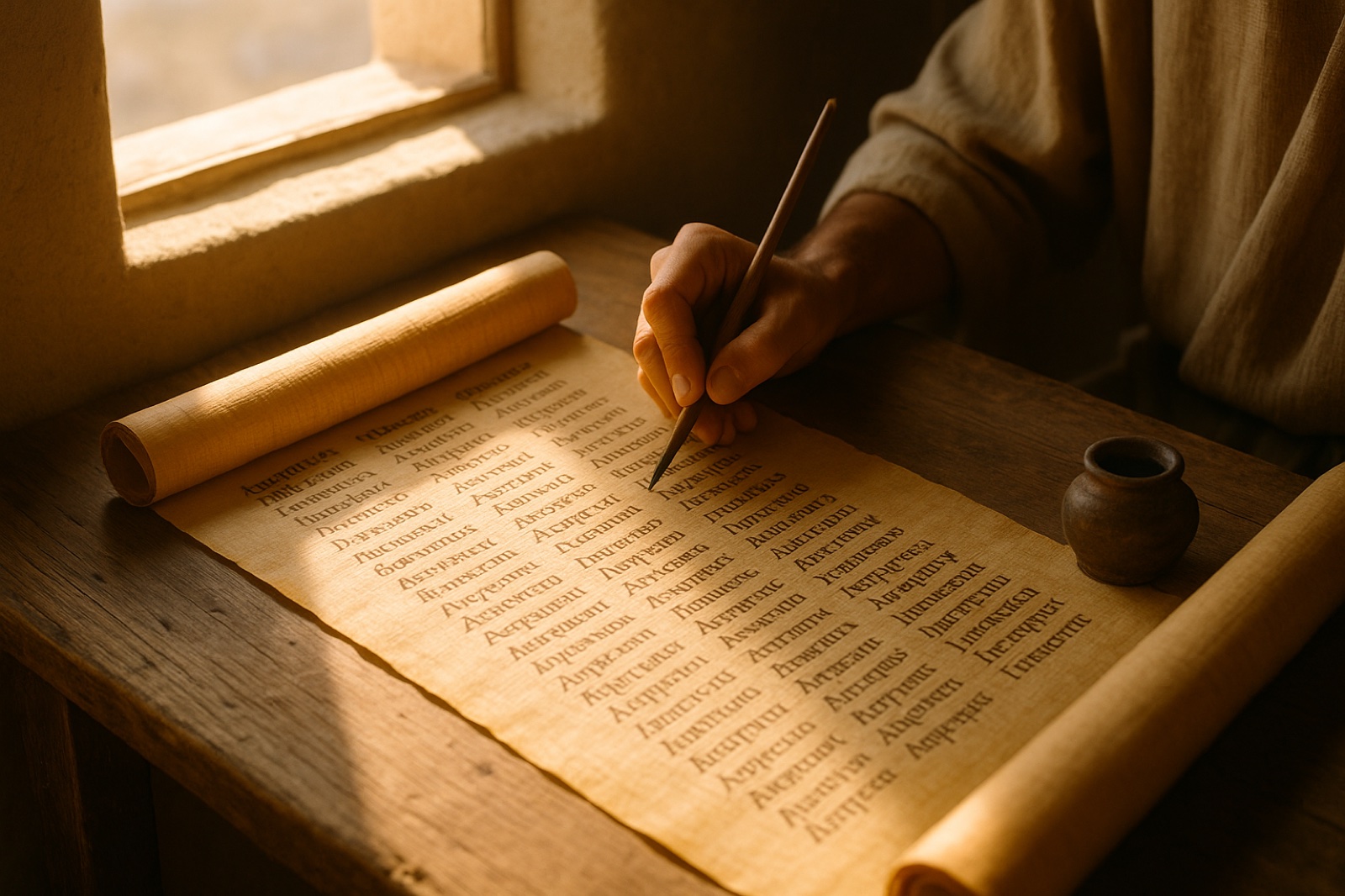
In the ancient world, a genealogy was not a hobby. It was paperwork.
Your list of names decided which tribe you belonged to, what land you could inherit, and whether you were allowed to serve as a priest. It was your proof of identity, and losing it had real consequences. When the exiles came back from Babylon, some families could not produce their record. Ezra 2:62 says it plainly: “These sought their register among those that were reckoned by genealogy, but they were not found: therefore were they, as polluted, put from the priesthood.”
Read that again. People lost their place because of a document.
So when a first-century writer sat down to open a book about the Messiah with a family line, he knew exactly what he was doing. That list had one job: prove this man has the right pedigree. Clean. Royal. Unquestionable.
Which is what makes verses 3, 5 and 6 so strange.
The four women in Jesus’ family tree, in Matthew’s own words
Four times the pattern of “begat” breaks, and a woman’s name appears where no woman had to appear at all.
Tamar. “And Judas begat Phares and Zara of Thamar; and Phares begat Esrom; and Esrom begat Aram” (Matthew 1:3). Her story is Genesis 38 — a widow twice over, denied what she was owed by her father-in-law Judah, who disguises herself and secures the child she was promised. When the truth comes out, Judah’s own verdict is recorded: “She hath been more righteous than I” (Genesis 38:26).
Rahab. “And Salmon begat Booz of Rachab” (Matthew 1:5). A woman of Jericho, a city under judgment, described in Joshua as a harlot. Hebrews puts her in the roll call of faith: “By faith the harlot Rahab perished not with them that believed not, when she had received the spies with peace” (Hebrews 11:31). The Bible does not scrub her old job out of the sentence. It leaves it right there, next to the word faith.
Ruth. “and Booz begat Obed of Ruth” (Matthew 1:5). A Moabite widow — foreign, poor, gleaning leftover grain in someone else’s field. Boaz says of her, “all the city of my people doth know that thou art a virtuous woman” (Ruth 3:11).
And then the fourth one, who does not get a name at all. “And Jesse begat David the king; and David the king begat Solomon of her that had been the wife of Urias” (Matthew 1:6).
Bathsheba is in the list. But Matthew does not write “Bathsheba.” He writes her that had been the wife of Urias — and by naming the husband David wronged, he makes it impossible to read that verse without remembering what David did.
The most famous king in Israel’s history gets his worst moment written into the family record of the Messiah. Not hinted at. Filed.
Here is the part almost everyone reads past
Matthew was not shy about editing. He tells you so himself.
“So all the generations from Abraham to David are fourteen generations; and from David until the carrying away into Babylon are fourteen generations; and from the carrying away into Babylon unto Christ are fourteen generations” (Matthew 1:17).
Three sets of fourteen. A neat, memorable, deliberate shape.
And to get that shape, names came out. Matthew 1:8 reads: “And Asa begat Josaphat; and Josaphat begat Joram; and Joram begat Ozias.” Straight from Joram to Ozias. But the Old Testament records list rulers in between those two — men who actually sat on the throne of Judah. They are simply not in Matthew’s version. Most readers take this as compression to fit the pattern; whatever the reason, the list is clearly not a complete record.
Sit with that for a second.
He left out kings. Actual kings, actual ancestors, men whose absence nobody would question.
And he kept Tamar. He kept Rahab. He kept Ruth. He kept the sentence that says her that had been the wife of Urias.
This is the thing the chapter is quietly shouting. The four women are not in there because Matthew was careless, or because he ran out of room to trim. He was already trimming. He had the scissors in his hand. He cut royalty and kept the scandal.
Belonging was never about a clean record. It was about a kept one.
Nobody fully agrees on why — and that is worth saying out loud
If someone tells you they know exactly why these four are there, be a little careful. Matthew never explains himself, and readers have landed in different places for a very long time.
Some point to outsider status: Rahab is from Jericho, Ruth is a Moabitess, and Bathsheba is identified by a husband called Uriah the Hittite. On this reading, the family line was signalling from the start that this Messiah was not going to belong to one nation only. (Worth noting honestly: Tamar’s own background is never stated in Genesis, so this pattern is suggested rather than airtight.)
Others point to irregular circumstances — each of the four enters the line through a situation that would have raised eyebrows, which prepares the reader for a young woman found pregnant before her wedding in verse 18.
Others point to initiative — in every one of the four accounts, the woman acts, and the line continues because she did.
Plenty of people hold more than one of these at once. The honest answer is that scripture states the fact and not the reason. What is not in dispute is the fact itself: they are on the list, on purpose, with their histories attached.
There is a fifth woman — and the sentence breaks
Read to the end of the list and something odd happens to the grammar.
For sixteen verses it is begat, begat, begat. Then: “And Jacob begat Joseph the husband of Mary, of whom was born Jesus, who is called Christ” (Matthew 1:16).
Joseph does not beget anyone. The chain simply stops. And in the Greek, that little phrase “of whom” is feminine and singular — it points to Mary alone, not to Joseph, a detail translators and commentators have noted for centuries.
So the fifth woman is Mary. A teenager in a small town, pregnant in a way her neighbours would have had a very short and very cruel word for. If you had just arrived at verse 16 cold, you might think she is the one who does not fit.
But Matthew has spent the whole chapter making sure you would not think that. By the time you reach her, you have already met four women whose stories were kept rather than cleaned. She is not the exception in this family. She is the pattern.
The list you keep of yourself
Most of us carry a private version of Matthew 1.
It is the short list of things you would take out before letting anyone see the whole of your life. The year you do not talk about. The relationship you would rather nobody asked about. The thing you did when you were nineteen and broke. The parent you cannot explain. You have an editor in your head, and that editor is very confident about what disqualifies you.
Here is what Matthew 1 does to that editor.
The surprise is not that God let these women in despite their histories. If that were the point, the smart move would have been to include them and stay quiet about the details — write “Rahab” and leave Jericho out of it. That is not what happened. The details were written down, kept, copied, read aloud in gatherings for two thousand years.
Which means the record was never the obstacle. The record was the message.
You have been treating your history as the reason you are not really in. Matthew treats history exactly like that as the reason the family line is worth reading. If God had wanted a tidy story, the material was there — there were kings available, and Matthew proved he was willing to leave people out. God kept the ones the world would have cut.
You are not the first person to assume you would not survive the edit. You are just reading a list that was assembled specifically so you would know otherwise.
Three things you can do in the next ten minutes
- Read Matthew 1:1-17 out loud. It takes about three minutes. Do not skim it this time. Slow down at verses 3, 5 and 6 and say those four names on purpose.
- Write your own one line. On paper, on your phone, anywhere private — write the single thing you would cut from your story before showing it to anyone. Then write next to it: still on the list. You do not have to feel it yet. Write it anyway.
- Say it to one person. The hardest one, and the one that changes the most. Tell one safe human being the thing you have been editing out. Not the whole story. One sentence of it.
Journaling prompts
- When you imagine God reading your life back to you, which part do you brace for? What changes if that part was written down deliberately rather than discovered by accident?
- Where did you first learn that belonging has to be earned with a clean record? Whose rules are those, and are you still living by them?
A prayer for the part you would cut
God, You already know the line in my story I keep trying to delete. I have spent years assuming it is the reason I do not really belong here. Thank You that the family line You chose is full of people I would have edited out, and that their stories were kept instead of cleaned up. Help me stop auditioning for a place I have already been given. Today, let me live like someone whose record is safe with You.
One question worth sitting with
Why do you think Matthew wrote “her that had been the wife of Urias” instead of simply writing Bathsheba’s name — was he protecting her, or refusing to let David’s story be tidied up? Tell us how you read it in the comments.
Share this
- Matthew left kings out of Jesus’ family tree to make the numbers work. He kept Tamar, Rahab, Ruth and the wife of Uriah. He had the scissors in his hand and cut royalty instead of scandal.
- I always skipped Matthew 1. Turns out it is the chapter with the most to say to anyone convinced their past disqualifies them.
- Belonging was never about a clean record. It was about a kept one.
Questions people ask about the women in Jesus’ family tree
Who are the four women named in Jesus’ genealogy in Matthew 1?
Matthew 1 names Tamar (verse 3), Rahab and Ruth (verse 5), and Bathsheba (verse 6), though Bathsheba is not named directly — the text calls her “her that had been the wife of Urias.” Mary is named in verse 16, which brings the total number of women in the chapter to five.
Why did Matthew include women in Jesus’ family tree at all?
Ancient genealogies normally traced fathers only, so including women was unusual. Matthew never explains his reason, and readers have offered several: that the four are connected to non-Israelite nations, that each entered the family line through irregular circumstances, or that each took decisive action that kept the line going. Scripture states the fact and not the reason, so any single explanation is an interpretation rather than a settled answer.
Is Bathsheba named in Matthew 1?
No. Matthew 1:6 reads, “And Jesse begat David the king; and David the king begat Solomon of her that had been the wife of Urias.” She is identified by her marriage to Uriah rather than by her own name, which keeps David’s wrongdoing visible inside the family record of the Messiah.
Does Matthew’s genealogy list every generation from Abraham to Jesus?
No. Matthew 1:17 arranges the line into three sets of fourteen generations, and to fit that pattern some names are absent. Matthew 1:8 goes straight from Joram to Ozias, while Old Testament records list rulers of Judah between those two. The list is a structured summary, not a complete register.
What does Matthew 1 mean for someone who feels disqualified by their past?
Matthew was clearly willing to leave names out — he omitted kings to fit his three-part structure. He did not omit Tamar, Rahab, Ruth, or the woman identified as Uriah’s wife, and he did not omit the details of their stories either. The family line of Jesus was recorded with its scandals intact, which means a difficult history is not treated in scripture as grounds for exclusion.
Keep going
If Rahab’s place in this list is the one that unsettles you most, her full story is worth its own read: Rahab was a prostitute in a city God destroyed — and she is in Jesus’ family tree. And for the opposite problem, there is a man in scripture whose missing family record is the entire point: Melchizedek, the priest with no genealogy.
If reading this stirred up the old feeling that you are further away than everyone else, our free How Close Am I to God? assessment is a gentle, honest place to start — it takes a couple of minutes and it will not shame you.