 0
0
 0
0
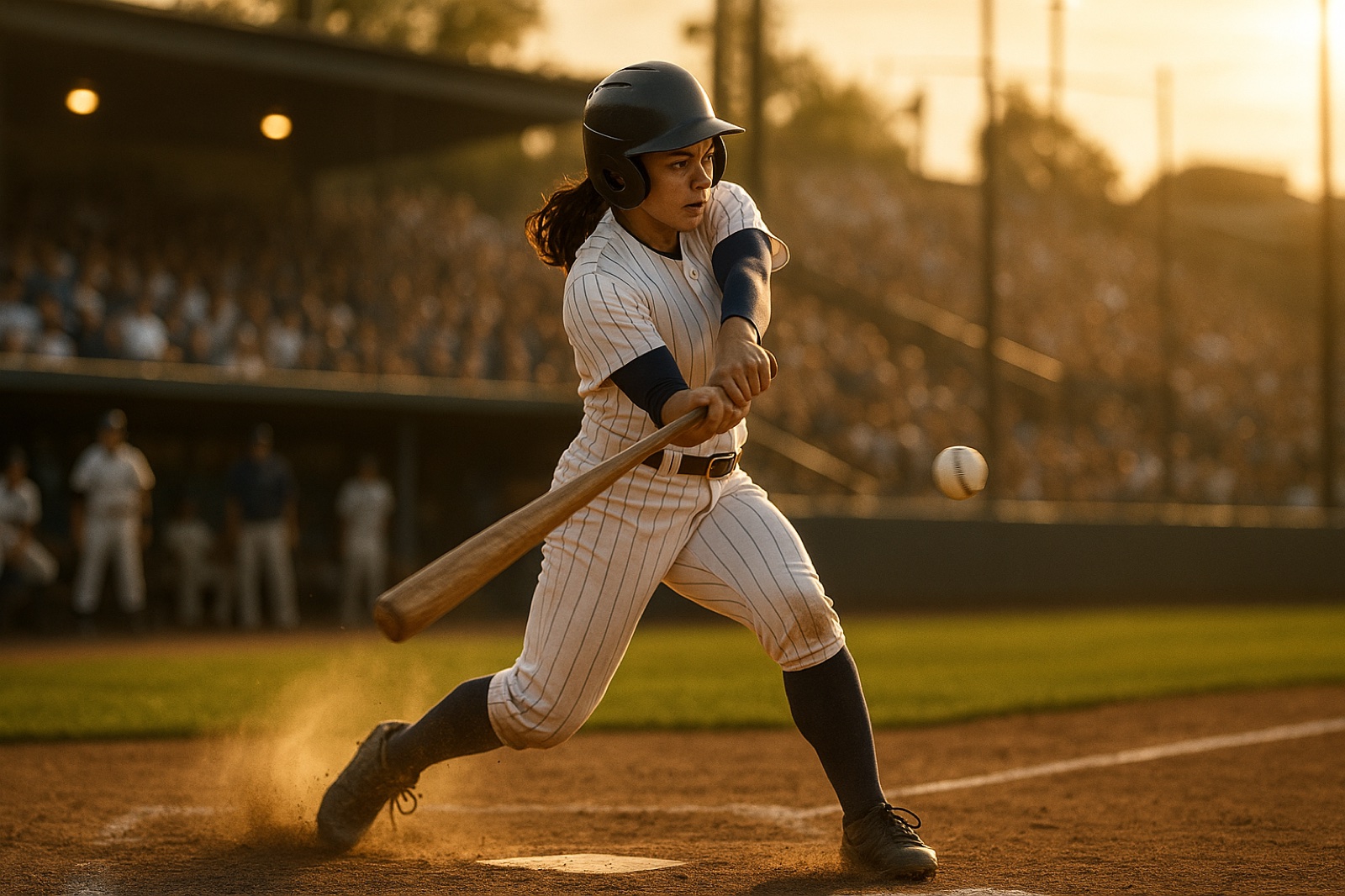
On August 1, 2026, at Robin Roberts Stadium in Springfield, Illinois, something happened that hadn’t happened on American soil in more than seventy years: women took the field as a professional baseball league. Not softball. Not an exhibition weekend. A real, paid, opening-night professional season, with a schedule, a stadium, and a name — the Women’s Pro Baseball League.
If that sentence surprised you, you’re not alone. Most people assume women’s professional baseball ended somewhere in a black-and-white photograph, and in a way, it did.
The Last Time This Happened, It Was 1954
The All-American Girls Professional Baseball League ran from 1943 to 1954 — the league immortalized in A League of Their Own, the one with the lipstick rules and the chaperones and, underneath all of that, genuinely excellent baseball. More than 600 women played in it across twelve seasons. Then it folded, and for the next seventy-plus years, “professional women’s baseball” wasn’t a career path in America. It was a museum exhibit.
Softball absorbed the athletes. Title IX built scholarships. But baseball itself — the sport, the diamond, the specific mechanics women had once played at a professional level — quietly closed its doors to them as a paying career, even while plenty of women kept playing the game itself at every level below “professional,” often better than most people watching gave them credit for.
Why It Took This Long
Co-founders Justine Siegal and Keith Stein didn’t build the WPBL overnight. Siegal has spent years pushing baseball’s doors open from the inside — she was the first woman to coach in Major League Baseball, throwing batting practice to big-league rosters back when that alone made national news. Stein brought the business infrastructure to turn a long-held vision into an actual, funded, staffed professional league.
What finally changed wasn’t one breakthrough. It was a slow accumulation of things: a generation of girls who grew up with real coaching and real competition, a sports media landscape finally willing to cover women’s leagues as more than a novelty, and enough investors willing to bet that “there is a market for this” wasn’t wishful thinking. Every one of those pieces had to be true at the same time. For seventy years, at least one of them wasn’t.
That’s the part that’s easy to miss in a highlight reel: readiness and opportunity rarely arrive together. Usually one shows up years before the other, and someone has to hold on through the gap.
“Our Time Is Now”
In the coverage around opening night, both founders used almost identical language: they described a league that had been “waiting over 70 years” to exist, and a moment they were calling, simply, “our time is now.” It’s a phrase that shows up a lot in sports — every underdog says their time has come. But this one carries a different weight, because the wait wasn’t a season or a rebuilding year. It was a lifetime, passed down. Most of the women who played in that first AAGPBL season in 1943 didn’t live to see this one.
Standing at home plate in Springfield, the players on that opening-night roster were, in a real sense, finishing an inning that started before their grandmothers were born.
An Old Idea About Waiting
There’s an old story — one of the more overlooked ones in the Bible — about a young woman placed, seemingly by accident, in exactly the right position at exactly the right moment to change the outcome for her entire people. No one had promised her that timing would work out. She just happened to be there when the door opened, after generations of nothing happening at all. The line most people remember from her story isn’t a promise that things will move fast. It’s the opposite: a suggestion that maybe she’d been positioned for this long before she understood why — that some doors only open once everything underneath them has quietly finished lining up.
It’s an old idea, and it shows up again and again outside of any one religion or era: that waiting isn’t always the absence of progress. Sometimes it’s the slow, invisible part of the progress — the part nobody photographs, right up until the night someone finally walks through the door that’s been building itself the whole time.
You don’t have to believe in anything in particular to recognize that shape in your own life. Most of us are holding onto something we haven’t seen move in years. The WPBL’s opening night doesn’t prove that every long wait ends in a stadium full of people cheering. But it’s a decent reminder that some of them do — and that the people who finally walk through those doors are usually the ones who kept showing up on the ordinary days when nothing seemed to be happening at all.
If you’ve ever wondered whether there’s something bigger holding the ordinary, waiting parts of your life together, this short reflection on what it actually feels like to grow closer to God is worth five quiet minutes.
What Happens Next for the League
The WPBL’s opening season is still finding its footing — new leagues always are. Attendance, broadcast reach, and a second wave of investment will decide whether this becomes a lasting institution or a remarkable one-off. But for the athletes who spent years training for a professional path that, statistically, wasn’t supposed to exist for them, opening night already changed something permanent: it proved the path is possible again, on paper and in a stadium.
That matters beyond baseball. The retirement of a legendary jersey number and the 142-year wait for a woman’s Test cricket win at Lord’s are both, in their own way, the same story: women’s sports keep quietly finishing waits that outlasted the people who started them.
Discussion Question
Is there a version of “our time is now” happening in a corner of your own life right now — something you’ve waited on so long you stopped expecting it to move? What would it take for you to notice if it finally did?
Share This
- “Women’s pro baseball just came back after 70 years. The founders’ opening-night quote hit different: ‘our time is now.'”
- “The AAGPBL ended in 1954. The WPBL just played its first game in 2026. That’s not a comeback — that’s a whole generation later.”
- “There’s a stat that says women’s professional baseball has been on pause for over 70 years. There’s also a stadium in Springfield, IL that just proved ‘on pause’ isn’t the same as ‘over.'”
Questions People Are Asking
When did women’s professional baseball start again in the US?
The Women’s Pro Baseball League (WPBL) played its inaugural game on August 1, 2026, at Robin Roberts Stadium in Springfield, Illinois — the first professional women’s baseball league to play in the United States since the All-American Girls Professional Baseball League folded in 1954.
Who founded the WPBL?
The Women’s Pro Baseball League was co-founded by Justine Siegal, the first woman to coach in Major League Baseball, and Keith Stein, who helped build the league’s business and operational structure.
What was the AAGPBL?
The All-American Girls Professional Baseball League was a professional women’s baseball league that operated in the United States from 1943 to 1954. It’s the league depicted in the film A League of Their Own and involved more than 600 players over its twelve seasons.
Why did it take over 70 years for women’s professional baseball to return?
No single event caused the gap. After the AAGPBL folded, most female athletes’ competitive baseball path shifted toward softball, which had more institutional support. Rebuilding a dedicated women’s professional baseball league required a new generation of trained players, sustained media interest, and enough investment to fund a full professional operation — pieces that took decades to align.
Where does the WPBL play its games?
The league’s 2026 inaugural season is centered at Robin Roberts Stadium in Springfield, Illinois.