 0
0
 0
0
You’re staring at your phone, or a spreadsheet, or an email you haven’t sent yet. It’s a real decision — the job, the move, the relationship, the “yes” or “no” you can’t put off much longer. And somewhere underneath the practical weighing of pros and cons, there’s a quieter question you keep circling back to: What does God actually want me to do here?
Most advice on this treats God’s will like a locked door you need the right combination for. Pray more. Read your Bible. Wait for peace. Watch for open doors and closed doors. It’s not bad advice, exactly — but it’s vague enough that you can do all of it and still feel just as stuck as when you started.
There’s a story tucked into Genesis 24 that handles this completely differently. It’s not a teaching passage — nobody stops to explain a principle. It’s just a servant, a well, and a prayer so specific it’s almost startling. And what happens next has been quietly reshaping how I think about “knowing God’s will” ever since I actually slowed down and read it.
The Story at the Well
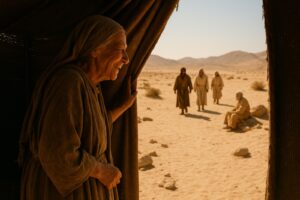
Abraham is old. His son Isaac is unmarried, and Abraham is determined that Isaac won’t marry a woman from the Canaanite families surrounding them — not out of prejudice, but because those households worshipped gods Abraham had walked away from decades earlier when God first called him out of his own country. So Abraham sends his most trusted servant — his estate manager, the man who ran his entire household — on a journey of several hundred miles back to his own relatives, to find a wife for Isaac from among his own people.
That’s the assignment. No name given for the woman. No address. No introduction arranged in advance. Just a servant, ten camels loaded with gifts, and a destination roughly the length of a trip from Chicago to Denver, traveled on foot and by camel through open desert.
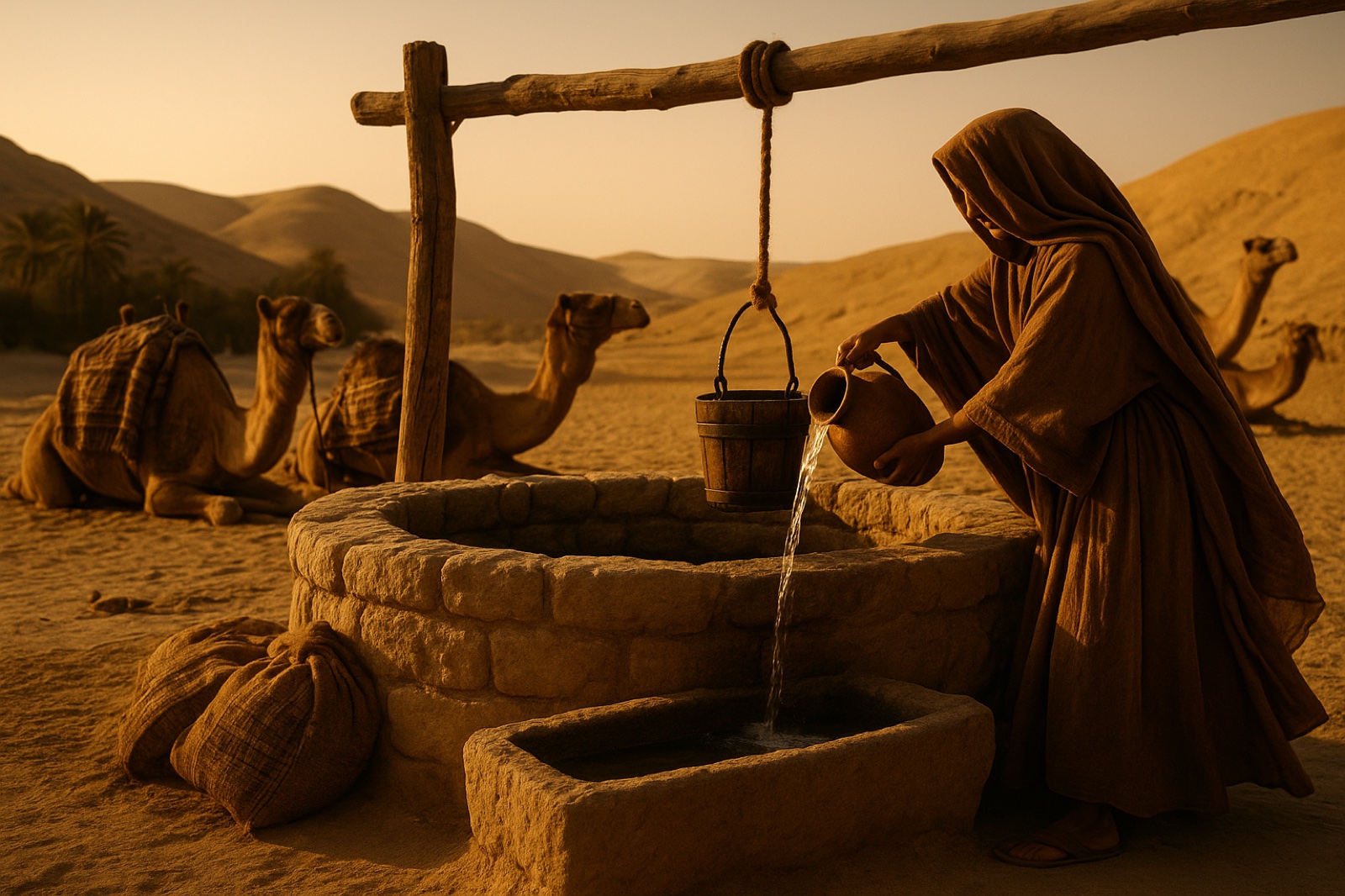
When he finally arrives at the city of Nahor, he does something practical before he does anything spiritual: he makes his camels kneel down by the well outside the city, at the exact time of evening when the women come out to draw water. He positions himself where the answer is most likely to show up. Then, and only then, does he pray.
A Prayer Anyone Could Test
Here’s where the story stops being a nice devotional and starts being genuinely strange. The servant doesn’t ask God for a feeling of peace about whichever woman he happens to like best. He doesn’t ask for a sign in the clouds or a door to swing open on its own. He asks for something specific enough to fail:
“And let it come to pass, that the damsel to whom I shall say, Let down thy pitcher, I pray thee, that I may drink; and she shall say, Drink, and I will also give thy camels drink: let the same be she that thou hast appointed for thy servant Isaac.” (Genesis 24:14, KJV)
Read that again slowly, because the detail matters more than it looks like at first. He’s not asking for a woman who’s willing to give him a drink — that’s just basic hospitality, almost any decent person at a well would do that. He’s asking for a woman who, completely unprompted, offers to water all ten of his camels too. A single camel after a long desert crossing can drink more than twenty gallons. Ten camels means hauling water by hand, bucket after bucket, from a well — for a total stranger, with no one asking her to and nothing in it for her.
That’s not a vague feeling. That’s a test with a real cost attached, chosen precisely because an ordinary person has no natural reason to pass it. If it happened, it would only be because God arranged it.
Before He Even Finished Speaking
What happens next is the part that stops people. Genesis 24:15 says it happened “before he had done speaking” — Rebekah walked out to the well while the prayer was still on his lips. And she does exactly what he asked, down to the last detail, volunteering to water the camels before he even asks her to.
This isn’t a story about luck. It’s a story about a specific ask meeting a specific answer, timed so tightly it couldn’t be mistaken for coincidence. The servant himself seems almost stunned by it — Genesis records him standing there in silence, just watching, before he says a word.
What This Means for the Decision You’re Facing
Here’s the reframe worth sitting with: most “how do I know God’s will” advice assumes the problem is a lack of clarity, so the solution is waiting until clarity arrives. Stand still. Don’t move until you’re sure. Wait for the fog to lift.
The servant does almost the opposite. He travels the several hundred miles. He plans his arrival for the exact hour women would be at the well. He sets his camels down in the most likely spot for an answer to appear. All of that happens before he prays a single word. His prayer isn’t a replacement for moving forward — it’s something he does while he’s already moving forward, already doing the practical, faithful next thing that was in front of him.
Then, instead of asking for a generic feeling, he asks God for something specific enough that he’d actually recognize it when it came. Not “give me peace about this,” which can mean almost anything depending on the day. Something concrete. Something that, if it happened, would be unmistakably from God rather than his own preference in disguise.
If you’ve read other takes on knowing God’s will, you’ve probably noticed most of them stop at “pray about it.” Genesis 24 goes one step further — it shows what praying about it specifically and honestly can actually look like in practice.
Two Things Happening at Once
Sometimes waiting on God looks like doing the next right thing.
The pattern here has two parts, and it only works when you hold both together. First: keep moving toward the decision using the wisdom and information you already have — the servant didn’t wait for a vision before he even left home. Second: ask God something specific enough to actually be answered, not just felt.
It’s worth noticing how differently this reads from asking for a random sign, the way people sometimes look for meaning in repeating numbers or coincidences and try to read God’s will into them after the fact. The servant’s prayer wasn’t superstition dressed up as faith — it was a deliberate, thought-out request, prayed in the middle of doing the practical work that was already his to do. That’s a very different posture than passively waiting for the universe to send a symbol.
And it’s a posture that takes real courage, the same kind Ananias needed in Acts 9 when God asked him to walk toward the very man he feared most. Moving before you have full certainty isn’t reckless — it’s often exactly what faith looks like from the outside.
Try This Today
- Name the decision, in one sentence, in writing. Open your notes app right now and write down the actual thing you’re stuck on — not “I need direction,” but the specific decision itself.
- Write your own “watering the camels” question. Instead of asking God for a vague feeling of peace, write down one specific, real thing that — if it happened — you’d have a hard time explaining away as coincidence. Make it something with a real cost or unlikelihood attached, the way the servant’s ask was.
- Take the one ordinary next step you already know is right — today, not once you feel certain. The servant traveled hundreds of miles and positioned himself at the well before he ever prayed. What’s your version of that? Send the email. Make the call. Show up. Do it before the certainty arrives, not after.
If part of what you’re really asking is how to feel close enough to God to even notice His answers when they come, the free “How Close Am I to God?” assessment is a good next stop — it’s built for exactly this kind of season.
Questions Worth Sitting With
- What decision have you been waiting to feel 100% certain about before you’ll move?
- If you’re honest with yourself: are you standing still hoping for a sign, or are you already “at the well” — doing the practical, faithful next step while you wait for an answer?
- Think of a time God answered something specific in your life, even something small. What made you sure it wasn’t just coincidence?
A Prayer for the Decision You’re Facing
God, I don’t want to keep standing still, waiting to feel completely sure before I’ll move. Give me the courage to take the next step I already know is right, even without every answer in hand yet. And when You do answer — even quietly, even through something as ordinary as a person walking up at exactly the right moment — help me recognize it as You, and not just talk myself out of it as coincidence. Thank You for caring enough about my life to meet me exactly where I’m asking. Amen.
What Do You Think?
Do you think God still gives specific, testable confirmations like this today, or does He guide us differently now that we have Scripture and the Holy Spirit to lean on? We’d love to hear how you think about this — tell us in the comments.
Share This
- “I used to think knowing God’s will meant waiting for a big, obvious sign. Turns out Abraham’s servant just prayed something specific — at a well, while he was already moving — and got his answer before he even finished the sentence.”
- “The part of Genesis 24 nobody talks about: he traveled hundreds of miles and set his camels down at the exact hour women drew water — before he ever prayed. Sometimes ‘waiting on God’ actually looks like doing the next right thing.”
- “Not asking for a vague feeling of peace anymore. Asking specific. Genesis 24:14.”
Common Questions
Who was the servant in Genesis 24?
He’s never named within the chapter itself, though he’s widely assumed to be Eliezer of Damascus — the servant Abraham mentions by name back in Genesis 15:2 as his household’s most senior member. By the time of this journey, he was trusted enough to manage Abraham’s entire estate, which is exactly why Abraham sent him rather than a stranger.
Why did Abraham insist Isaac not marry a Canaanite woman?
It wasn’t about ethnicity — it was about worship. The surrounding Canaanite nations centered their culture around gods Abraham had left behind when God first called him. Abraham wanted his son’s household anchored to the one true God, not folded back into the world he’d already walked away from.
What made the servant’s prayer at the well so specific?
He didn’t ask for a feeling — he asked for a woman who would, completely unprompted, offer to water all ten of his camels after giving him a drink. A single camel can drink more than twenty gallons after a long journey, so this was a costly, unlikely thing to volunteer for. That specificity is exactly what made the answer unmistakable when it came.
How quickly did God answer the prayer?
Genesis 24:15 says it happened “before he had done speaking” — Rebekah appeared at the well while the words were still leaving his mouth.
What can this story teach about knowing God’s will today?
It reframes the whole question. Instead of waiting motionless for a feeling of total certainty, the servant modeled bringing God something specific and real while he was already in motion toward the goal. That combination — a specific ask, paired with faithful movement instead of frozen waiting — is a pattern worth borrowing for whatever decision you’re facing right now.