
 0
0
 0
0
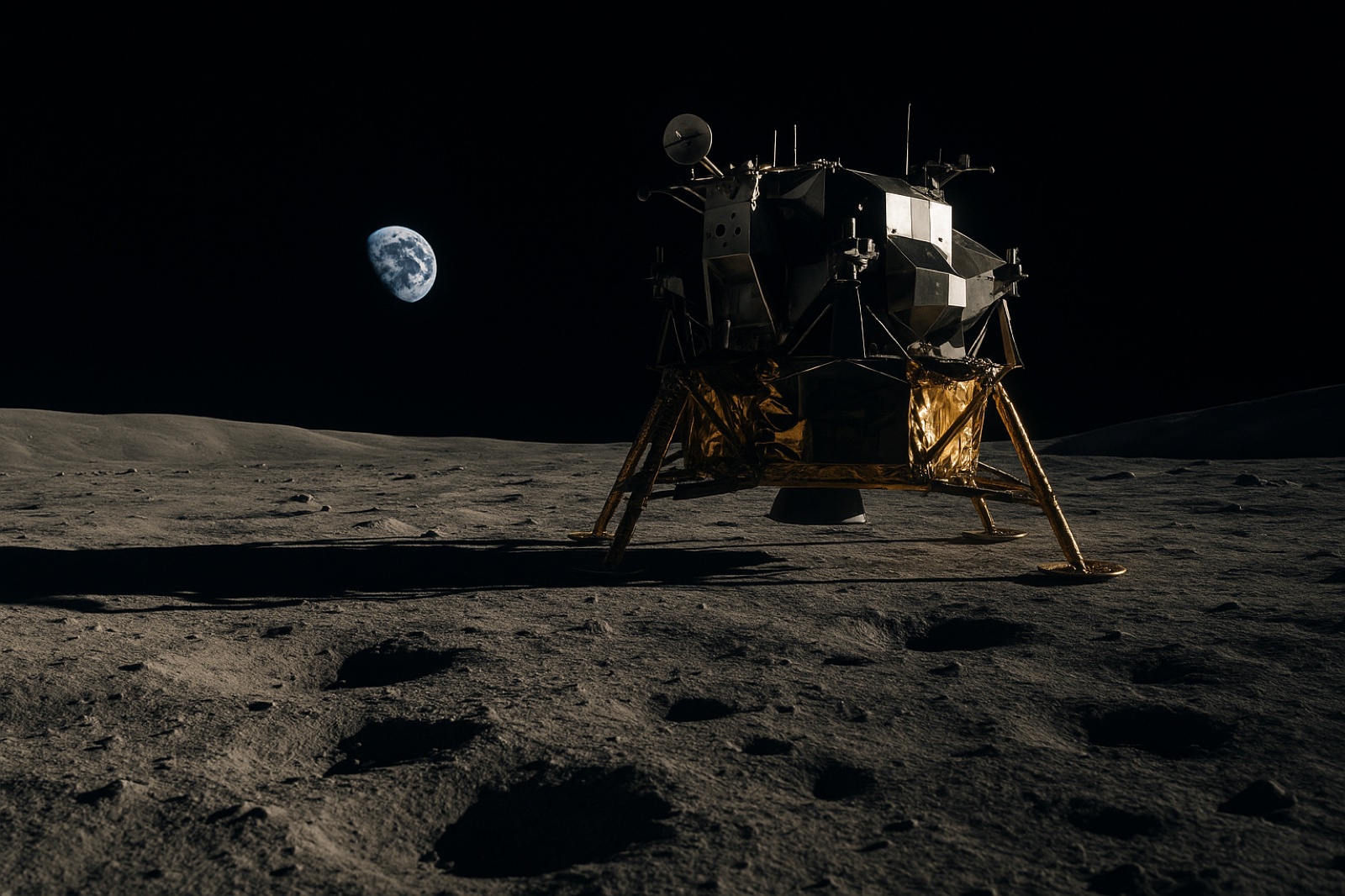
Over the next few years, robots are going to touch down on the Moon again and again. Seventeen separate landings. More than sixty science instruments. A NASA contract worth up to $2.6 billion that doesn’t expire until November 2028.
Not one of those missions carries a person.
Nobody is scheduled to move into a lunar apartment when this program wraps. There’s no colony ribbon-cutting on the calendar. And yet NASA keeps signing checks to send robot after robot to a place where, technically, no one is staying yet.
So what’s actually going on up there — and why does it matter to anyone who isn’t an astronaut?
What NASA Is Actually Testing Before Anyone Moves In
The program is called Commercial Lunar Payload Services, or CLPS (pronounced “clips”), and it works differently than the Apollo missions most people picture when they hear “NASA” and “Moon” in the same sentence. Instead of building and flying its own landers, NASA is paying private companies — five of them currently under contract, out of thirteen eligible — to build the spacecraft and deliver NASA’s science gear to the lunar surface.
The instruments riding along aren’t glamorous. They’re built to answer unglamorous, load-bearing questions: How much ice is actually locked under the polar craters? How does lunar dust behave when it gets kicked up — and how badly does it wreck equipment? What does the radiation environment look like over weeks instead of hours? How stable is the ground where a future habitat might sit?
None of that is exciting the way a moon landing used to be exciting. But it’s the difference between guessing and knowing before you commit years and lives to a plan. NASA’s own language for the goal is direct: these missions exist to “lay the foundation for a long-term human presence” on the Moon, as part of the broader Artemis campaign to return astronauts there. It’s the same instinct behind NASA’s Perseverance rover quietly photographing Earth from Mars — you learn a place, patiently, long before you ever plan to live in it.
This isn’t a new instinct, even if the hardware is. Long before anyone flew to Antarctica to live there, unmanned and lightly-staffed research stations spent decades quietly measuring ice, wind, and soil — figuring out what the continent would actually require of anyone who tried to stay. Deep-sea probes mapped trenches for years before a single submersible carried a crew down to see it firsthand. Scouting a place before settling it isn’t cautious overthinking. It’s just how anything permanent gets built.
Why Send 17 Missions for a Home That May Never Get Built?
Here’s the part that’s easy to miss in the spec sheets: none of these seventeen landings are guaranteed to lead anywhere. Some of the instruments will find dead ends. Some of the technology being tested will fail outright — that’s part of why NASA spreads the risk across five separate companies instead of betting everything on one. A permanent lunar presence isn’t a done deal. It’s a bet, made in installments, on a future nobody currently gets to live in.
And people keep making that exact bet, over and over, in every era. Long before rockets, explorers pushed toward frontiers they weren’t sure they’d survive, let alone settle. Sailors mapped coastlines for kingdoms that would take generations to actually occupy them. Someone always seems to be laying groundwork for a home that isn’t finished yet — sometimes a home they’ll never personally live to see completed.
It raises a question that has nothing to do with rocket fuel: why does “not yet livable” so rarely stop us from building toward it anyway?
The Question Under the Question
There’s an old thread of thought running through a lot of human history — older than rocket science, older than any space agency — that says people were never fully at peace with “temporary.” That something in us keeps reaching past the horizon we can actually see, toward a home we haven’t stood in yet and can’t fully describe, no matter how comfortable the current one gets.
Maybe that’s just ambition wearing a NASA badge. Curiosity with a mission patch. But it’s worth noticing how consistently it shows up — not just in space programs, but in the quieter ways ordinary people keep building, saving, and planning for a future they may not even get to see finished. Plenty of people have named that exact restless, unfinished feeling without ever connecting it to a rocket program. It’s possible that restlessness isn’t a flaw to be fixed. It’s possible it’s pointing at something real, even if the coordinates aren’t on any star chart.
What This Actually Means for the Rest of Us
Whatever finally lands on the Moon to stay — if anything ever does — it will have been built on seventeen landings’ worth of unglamorous, mostly invisible groundwork. Nobody will remember the specific ice-detection instrument that quietly confirmed there was enough water to work with. That’s usually how permanent things get built: in increments too small to make headlines, by people willing to invest in a home they might not personally get to stand in.
It’s a strange kind of hope, when you think about it — spending $2.6 billion on a place no one lives yet, on the working assumption that someday, someone will.
What Do You Think?
If humanity is willing to spend billions preparing a home on the Moon that nobody will occupy for years — maybe decades — what does that say about how we think about “home” in general? Is chasing a place you may never actually live in wisdom, wishful thinking, or something else entirely? Tell us in the comments below.
Frequently Asked Questions
How many Moon landings does NASA have planned through its Commercial Lunar Payload Services program?
NASA has awarded 17 separate lunar deliveries to five commercial vendors under its Commercial Lunar Payload Services (CLPS) program, with a combined contract value of up to $2.6 billion through November 2028.
What is NASA’s Commercial Lunar Payload Services (CLPS) program?
CLPS is a NASA initiative that pays private aerospace companies to build and fly robotic landers carrying NASA science and technology instruments to the Moon, rather than NASA building and flying its own spacecraft for every mission.
Why is NASA sending robots to the Moon before any astronauts live there?
The robotic missions are designed to answer practical questions — how much ice exists at the lunar poles, how lunar dust behaves, what the radiation environment is like, and how stable different landing sites are — before NASA commits astronauts to a long-term stay. NASA describes the goal as laying the foundation for a long-term human presence on the Moon as part of the Artemis campaign.
How much is NASA spending on these Moon missions?
The CLPS contracts have a combined maximum value of $2.6 billion, structured as indefinite delivery, indefinite quantity agreements running through November 2028.
Is NASA actually planning to build a permanent base on the Moon?
NASA has stated that CLPS missions are meant to lay the groundwork for a long-term human presence on the Moon, but no permanent, continuously-occupied base is currently scheduled — the current missions are scouting and technology-testing steps toward that longer-term goal, not the base itself.
If stories like this one leave you curious about just how big — and how old — the universe actually is, our free How Old Is the Universe? Explorer is worth a few minutes.





Share This
NASA is spending $2.6 billion to land on the Moon 17 times before a single person lives there. The reason isn’t what I expected. 🌕
Wild fact I can’t stop thinking about: NASA has 17 robotic Moon landings planned before anyone actually moves in. We keep building homes for a future we might not personally get to see. Read more:
Everyone’s watching the SpaceX headlines, but the quieter NASA program underneath them might say more about human nature than the rockets do. Worth a read.