 0
0
 0
0
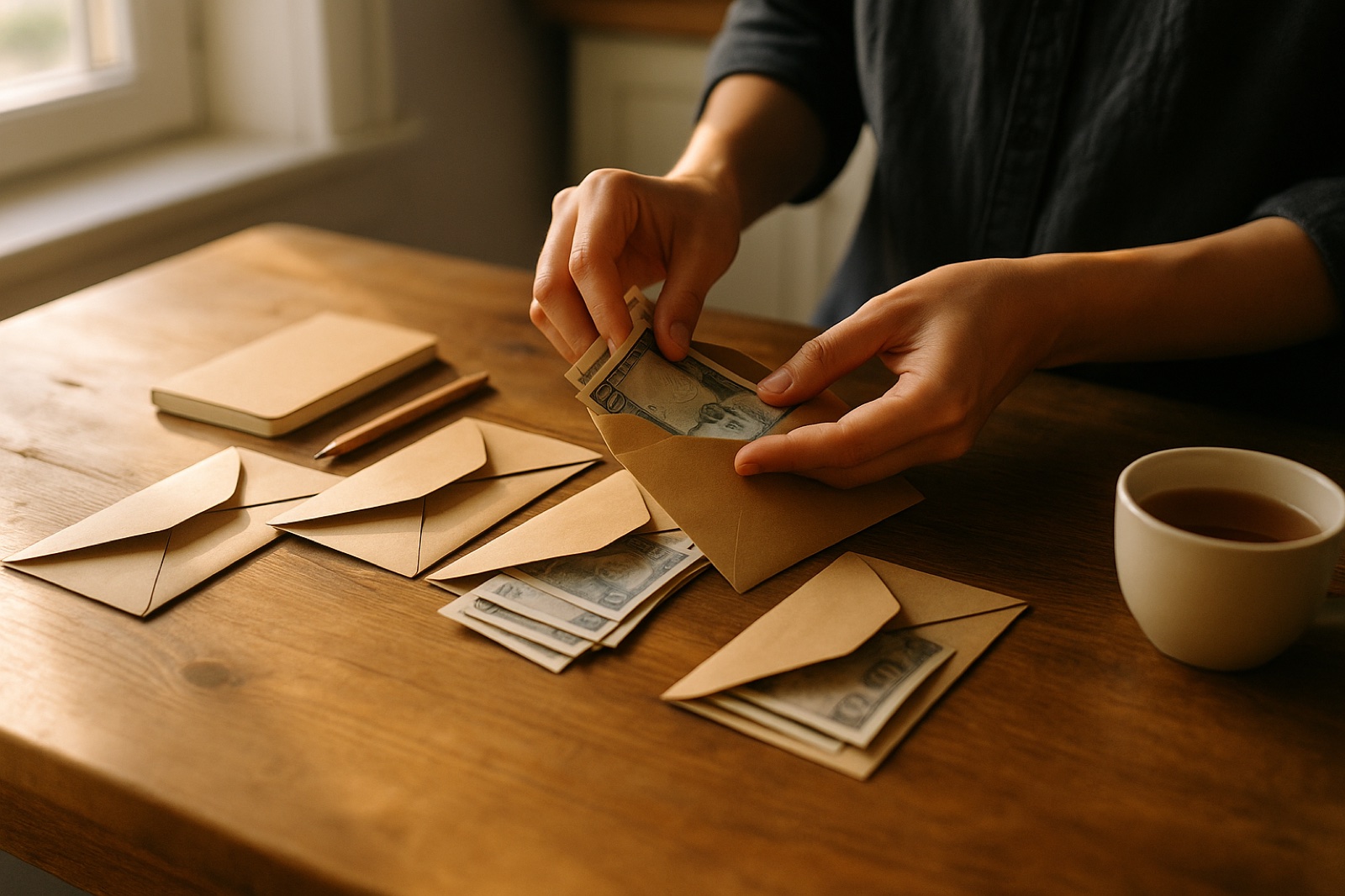
You get paid. You take the money out as cash. Then you sit at the kitchen table and split it into envelopes: one for food, one for bus fare, one for the electricity, one for fun. When an envelope is empty, that thing is done for the month.
That’s cash stuffing. It’s one of the oldest ways to run a household, and it has come back through short videos of people counting notes into bright binders. If you’ve watched one and thought, “Does that actually work, or is it just nice to look at?” this is for you.
What Is Cash Stuffing?
Cash stuffing is a budget you can hold in your hand. You decide ahead of time how much goes to each part of your life. Then you put that exact amount of cash into a labelled envelope. You only spend from the envelope that matches what you’re buying.
It goes by other names too: the envelope system, envelope budgeting, or cash budgeting. The idea isn’t new. Many grandparents ran a home this way, splitting a pay packet into tins, jars or envelopes on the kitchen shelf. What’s new is the binders, the stickers, and the videos.
The whole method rests on one simple thing: you can see how much is left. Not a number on a screen you have to go looking for. A thin envelope in your hand.
How the Envelope Method Works, Step by Step
- Know what’s coming in. Write down what you’ll have for the next pay period, whether that’s a week, two weeks or a month.
- Keep fixed bills separate. Rent, loan payments and anything paid automatically usually stay in the bank. Cash stuffing is for the spending that wobbles.
- Pick a few categories. Four to six is plenty to start. Common ones: food, transport, household things, eating out, gifts, and one “just in case.”
- Fill the envelopes on payday. Take out the cash and divide it. Write the amount on the front.
- Spend only from the right envelope. Buying groceries? The grocery envelope comes with you. The others stay home.
- When it’s empty, stop. Or, if you truly must, move money from another envelope on purpose, knowing that envelope now has less.
- Decide what happens to leftovers. Many people move whatever is left into a savings envelope. That little pile is often the most encouraging part.
If you’d like to work out the numbers before you start, our free budget calculator will help you see where your money is going now, so your envelopes start from real life instead of a guess.
Why Paying With Cash Can Change How Much You Spend
Researchers have a name for the small sting you feel when you hand over money: the “pain of paying.” With cash, you watch it leave. With a card or a phone, you tap and it’s gone before you feel much at all.
In a well-known experiment at MIT in 2001, economists Drazen Prelec and Duncan Simester ran auctions for sports tickets. People told they’d pay by card bid far more than people told they’d pay in cash — in some cases roughly double — for the very same tickets.
Twenty years later, some of the same researchers put people in brain scanners while they made real purchases. When people were shown the credit card, a part of the brain linked to reward lit up, and it didn’t matter much what the item cost. The study, published in Scientific Reports in 2021, suggested cards don’t just soften the pain of paying. They can also press the accelerator.
The Part the Videos Leave Out
Here’s what most cash stuffing videos won’t tell you. In 2024, a team of researchers in Australia pulled together decades of this work: 392 results from 71 studies. Their conclusion was that paying without cash really does lead people to spend more. But the effect is small. And it has gotten weaker over time, as people have grown used to cards.
They found something else, too. The gap was biggest when people were buying things to be seen with, and it mostly disappeared for giving, like tips and donations.
So if the “pain of paying” were the whole story, cash stuffing would be a small trick that fades. That means the real power is probably somewhere else. It’s in the envelope, not the cash.
A card has no bottom you can feel. An envelope does. You make the hard choices once, calmly, at the kitchen table, instead of fifty times at fifty checkouts. And when the envelope is empty, the decision has already been made. You don’t need willpower in the shop. You needed it on payday.
That’s also why the method works even if you never touch a banknote. Plenty of people now do “digital cash stuffing” with separate bank pots, separate mobile wallets, or a simple list on their phone. The label and the limit matter more than the paper. (If your trouble is less the plan and more the moment of buying, our guide on how to stop impulse buying goes deeper on that gap.)
The Honest Downsides of Cash Stuffing
- Cash can be lost or stolen. There’s no fraud protection on an envelope. Keep most envelopes at home, and carry only what that trip needs.
- It earns nothing. Money sitting in a drawer doesn’t grow. Big savings are usually safer in an account.
- Not everything takes cash. Online shopping and many bills need a card or transfer. That’s fine; leave those out of the envelopes.
- Getting cash can cost money. Some machines and banks charge fees. One withdrawal on payday beats many small ones.
- The binders are optional. Nothing about this method needs anything bought. Plain paper envelopes work exactly the same.
And one more: cash stuffing won’t fix having too little. If the envelopes are empty because there simply isn’t enough coming in, that isn’t a failure of discipline. It’s a hard season, and it deserves kindness, not a new system to feel bad about.
The Old Idea Inside the Envelope
What an envelope really does is make “enough” visible. Not unlimited. Not zero. A set portion, sized to this stretch of time.
People have been asking for exactly that for a very long time. One of the oldest money prayers anyone ever wrote down, tucked into the Bible’s book of wise sayings, doesn’t ask God for wealth at all. It asks for neither poverty nor riches — just the food that’s right for today. And the reason it gives is surprisingly practical: too little might push a person to do something desperate, and too much might make them forget God entirely. Both ends of the envelope, named about three thousand years before anyone made a binder.
Maybe that’s why watching someone fill envelopes feels strangely calming. It isn’t really about the cash. It’s about knowing, for this week, that there’s a portion — and that the portion is enough.
If you try it, start small. One envelope for the thing that most often gets away from you. See how the month feels. You might find, like a lot of people do, that the quiet of a plan is worth more than the money it saves. (And if bigger pay rises never seem to leave you better off, you may recognise yourself in what lifestyle creep is, too.)
Cash Stuffing Q&A
What is cash stuffing?
Cash stuffing is a way of budgeting where you take your spending money out as cash and divide it into labelled envelopes, one for each category such as food, transport or eating out. You only spend from the matching envelope, and when an envelope is empty, spending in that category stops until the next pay period. It is also called the envelope system or envelope budgeting.
Does cash stuffing actually help people spend less?
Research suggests paying with cash does lead to somewhat less spending than paying by card, an effect often linked to the “pain of paying.” A 2024 meta-analysis of 71 studies found the effect is real but small and has weakened over time as people have become used to cards. Much of cash stuffing’s usefulness likely comes from the envelopes themselves: they set a visible, fixed limit for each category ahead of time.
Can you do cash stuffing without using physical cash?
Yes. Many people use “digital cash stuffing,” setting up separate bank pots, separate mobile money wallets, or a simple written list with a limit for each category. The key parts of the envelope method are a label and a limit decided in advance, which work the same way whether the money is paper or digital.
What are the risks of cash stuffing?
The main risks of cash stuffing are that cash can be lost or stolen with no fraud protection, cash kept at home earns no interest, some bills and online purchases cannot be paid in cash, and withdrawing cash can come with fees. Keeping most envelopes at home, carrying only what a trip needs, and keeping larger savings in an account reduce these risks.
How many envelopes should a beginner use for cash stuffing?
Most beginners do best with four to six envelopes covering the spending that changes from week to week, such as food, transport, household items, eating out, gifts and an emergency or “just in case” envelope. Fixed bills like rent are usually left in the bank. Starting with a single envelope for the category that most often goes over budget is also a simple way to try the method.
Let’s Talk About It
Do you think cash stuffing works because of the cash, or because of the envelopes? Would you ever try it, or does carrying cash feel like more trouble than it’s worth where you live? Tell us in the comments below.
Share This
“Turns out cash stuffing’s power isn’t really the cash. It’s that an envelope has a bottom you can feel. Decide once on payday, not fifty times at the checkout. https://bgodinspired.com/index.php/money-and-finance/what-is-cash-stuffing/”
“Been watching cash stuffing videos and wondered if it actually works. This explains the research honestly, including the downsides the videos skip. Worth a read if you’re trying to get a grip on spending: https://bgodinspired.com/index.php/money-and-finance/what-is-cash-stuffing/”