 0
0
 0
0
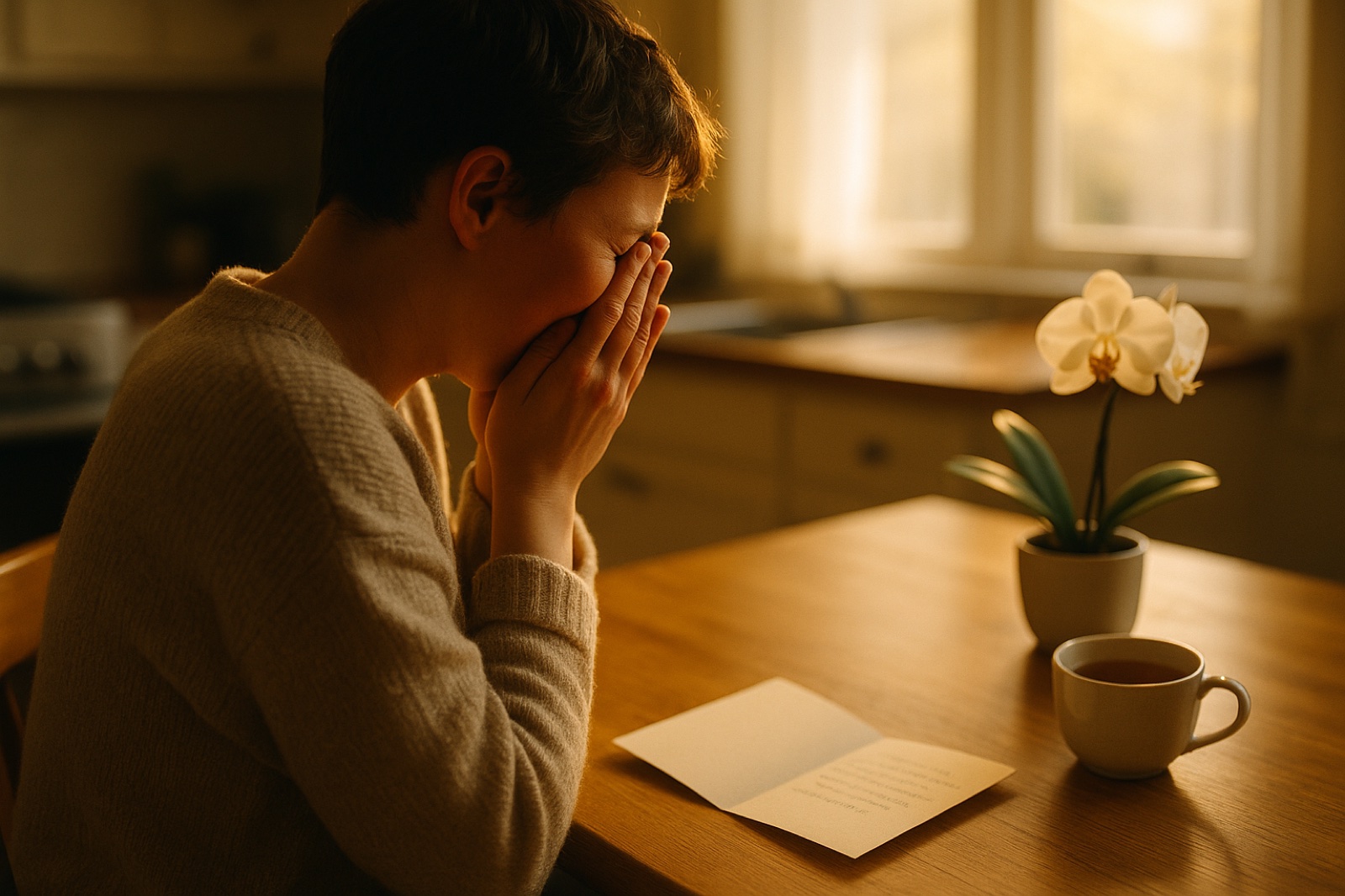
A song in a shop makes your throat go tight. A small bit of criticism at work sits in your stomach until bedtime. Good news makes you so happy you almost feel silly about it. And when you get angry, it arrives all at once, hot and fast, before you have had time to decide anything.
Other people seem to feel the same things at a lower volume. You have probably been told so. You’re too sensitive. Calm down. It’s not that big a deal.
So at some point you typed the question into a search bar: why do I feel emotions so intensely? Usually with a second, quieter question under it: is something wrong with me?
There is a real answer. And one part of it almost never gets mentioned, even though it may be the most useful part.
Why do I feel emotions so intensely?
For most people, it is mainly down to how they are built. You are not failing at a skill.
People really do differ in how strongly they react to the same event. Psychologists have studied this for decades. The best-known name for it comes from the researcher Elaine Aron, who with Arthur Aron described what they called sensory processing sensitivity in the 1990s. You will see it online as “highly sensitive person,” or HSP.
The idea is simple. Some nervous systems take in more and process it more deeply. More detail and more meaning get noticed, and more feeling rides along with them. Nobody picks this. It shows up early, and it tends to stay.
That is the part most articles cover. Here is the part they usually skip.
The finding almost nobody tells you: it works both ways
In 2018, a team led by Francesca Lionetti and Michael Pluess published a study of 906 adults in the journal Translational Psychiatry. Instead of splitting people into “sensitive” and “not sensitive,” they looked for natural groups. They found three, and gave them flower names:
- Dandelions, about 29% of the sample. Low sensitivity. They grow almost anywhere.
- Tulips, about 40%. In the middle.
- Orchids, about 31%. High sensitivity. They struggle in poor conditions and flourish in good ones.
So if you feel things intensely, you are not a rare exception. In that sample, roughly one person in three was an orchid.
But the detail worth slowing down for is this. When the researchers deliberately put people in a good mood, the orchids reacted more strongly to it than the other groups did. Their sensitivity was not only a faster road to hurt. It was a faster road to joy as well.
Researchers have a name for this wider idea: differential susceptibility. In plain words, the same wiring that makes a bad environment hit you harder also lets a good one reach you more deeply.
Think about what that does to the usual advice. “Just feel less” would not only take the edge off the hard days. It would take the colour out of the good ones. The volume knob does not come in a version that only turns down the painful channel.
One honest caveat, because the study says so itself. The orchid group also scored higher on neuroticism, which is a tendency toward worry and negative mood. Sensitivity is not all upside. It is a stronger signal in both directions, and that is exactly why it needs looking after.
What makes it louder than it needs to be
Your baseline is mostly given. But some things turn the volume up on top of it, and some of those you can do something about.
The biggest one is sleep. In a 2007 brain-scan study, Seung-Schik Yoo, Matthew Walker and colleagues kept healthy volunteers awake for about 35 hours, then showed them upsetting images. The emotional alarm centre of the brain, the amygdala, reacted at least 60% more than it did in people who had slept. The part of the brain that normally calms that reaction down was also less connected to it.
That was one night of lost sleep in a lab, not months of short nights in real life. But the direction is clear. A tired brain makes every feeling bigger. If your reactions have been especially hard to hold lately, check your sleep before you judge your character. Our free Why Can’t I Sleep? assessment takes a few minutes and shows you what is most likely keeping you up.
Other things that commonly raise the volume: hunger, long stretches of stress, too much noise and input, and not having had one quiet moment all day. None of these are flaws. They are load.
What actually helps (no money, no therapist, no spare time)
- Name it with a precise word. “Bad” is vague. “Embarrassed,” “left out,” “disappointed” or “scared” is specific. A precise name tells you what the feeling is about. Once you know that, it is easier to know what to do with it.
- Put a gap between the wave and the reply. A strong feeling is information. It is not an instruction. You do not need to feel less. You only need a few breaths between feeling it and acting on it. Walk to another room, drink some water, and send the message later.
- Lower the load on hard days. Sleep, food, and a few minutes without input do more than trying to “think positive.” If crowds and noise are what tip you over, it helps to plan your exit before you get overstimulated.
- Let the good things land fully. You pick up small good things more strongly than most people do. So actually notice them: light through a window, a kind message, a meal someone made for you. It is not an indulgence. It is the other half of how you are built.
If your intensity is mostly about other people’s pain, such as carrying someone’s bad news for a week or losing an evening to one sad story, that has its own research and its own fix. We looked at it in why you feel everything so deeply.
When it is worth talking to someone
Nobody can diagnose you through a screen, and this is not an attempt to. But some patterns are worth saying out loud to a doctor, a health worker or someone you trust:
- The intensity is new, or it suddenly got much worse.
- Your moods swing hard and fast, in ways that feel out of your control.
- Strong emotions keep damaging your relationships or your work.
- Feelings come with hopelessness, or thoughts of hurting yourself or not wanting to be here.
These can have causes that respond well to help. Asking is not weakness. It is information-gathering.
The opposite problem is real too. If what you are living with right now is less “too much” and more “nothing at all,” that is its own thing, and we wrote about why emotional numbness is not really feeling nothing.
A snort at a graveside
There is an old story that people who feel things intensely might want to read again, because of a word hidden in it.
A man named Lazarus has died. His sisters are crying, and so is everyone who came to mourn with them. Jesus, who was his close friend, arrives four days late. The story says plainly that he already intended to bring Lazarus back.
He knew how the day would end. And still, when he saw them weeping, the original Greek says something happened to him that most English translations soften. The word is embrimaomai. In older Greek it was used of horses snorting. In the few other places it appears in the Gospels, it describes a stern warning or angry indignation. So the first emotion recorded at that grave was not gentle sadness. It was something closer to a hard, physical snort of anger, and it happened twice.
Then came the famous two words, the shortest verse in most English Bibles: Jesus wept. The Greek word for his tears is different from the one used for the loud crying around him. His was quieter, the kind of tears that run down your face without a sound. That word appears nowhere else in the New Testament.
Scholars still argue about exactly what he was angry at: death itself, the grief it caused, or something in the crowd. Nobody can settle that with certainty. What nobody argues about is the size of it. Anger, then tears, from someone who was minutes away from fixing the problem.
Whatever you make of who he was, the story does something that most advice does not. It shows the strongest feelings in the room belonging to the steadiest person in the room. Nobody tells him to calm down. The intensity was not what stopped him from acting. It seems to be what moved him to act.
Maybe that is what intense feeling was always meant to be: love at full volume, pointed at what matters, and trusted to someone bigger than the moment. It was never a fault that needed fixing.
Where that leaves you
You will probably always feel things more than the people around you. That is not going to change, and from what the research shows, you would not really want it to.
The work is not turning yourself down. It is getting enough sleep that the dial is not stuck on maximum. It is leaving a gap between the wave and the reply. And it is letting good things land as fully as the hard ones do.
Tonight something small will probably get to you, a song or a sentence or a look on someone’s face. When it does, you do not have to apologise for it. It is the same wiring that lets the good things reach you.
A Question Worth Arguing About
If you could press a button and feel everything at half the volume, the bad days and the good ones, would you press it? Tell us which way you would go, and why, in the comments. People split on this one more than you might expect.
If This Is Worth Passing On
- “Turns out the wiring that makes bad days hit harder is the same wiring that makes good days hit harder too. ‘Just feel less’ would cost you both. https://bgodinspired.com/index.php/health-and-wellness/why-do-i-feel-emotions-so-intensely/”
- “Researchers split 906 adults into dandelions, tulips and orchids. About 1 in 3 were orchids: highly sensitive, struggling in bad conditions and flourishing in good ones. If you feel everything intensely, you’re not rare. https://bgodinspired.com/index.php/health-and-wellness/why-do-i-feel-emotions-so-intensely/”
- “One night without sleep made the brain’s alarm centre react at least 60% more to upsetting images. If your feelings have been huge lately, check your sleep before you judge yourself. https://bgodinspired.com/index.php/health-and-wellness/why-do-i-feel-emotions-so-intensely/”
Questions People Ask About Intense Emotions
Why do I feel emotions so intensely?
Feeling emotions intensely is usually a normal difference in temperament rather than a disorder. Psychologists Elaine and Arthur Aron described a trait called sensory processing sensitivity, often called being a “highly sensitive person,” in which the nervous system takes in and processes experiences more deeply. A 2018 study of 906 adults by Lionetti, Pluess and colleagues found that about 31% fell into a high-sensitivity group. Temporary factors such as lack of sleep, hunger, stress and overstimulation can make emotions feel stronger still. Intensity that is sudden, new or out of control is worth raising with a doctor or health worker.
Is being highly sensitive a bad thing?
High sensitivity is not simply a weakness. In the 2018 “dandelions, tulips and orchids” study published in Translational Psychiatry, the most sensitive group reacted more strongly than other groups when researchers induced a positive mood, which suggests that sensitivity amplifies good experiences as well as bad ones. The same group also scored higher on neuroticism, so sensitive people can be more affected by stress and poor conditions. Researchers call this pattern differential susceptibility: more affected by a bad environment, and more able to benefit from a good one.
Does lack of sleep make emotions stronger?
Yes. In a 2007 brain-imaging study published in Current Biology, Seung-Schik Yoo, Matthew Walker and colleagues kept healthy volunteers awake for about 35 hours and then showed them negative images. The amygdala, a brain region central to emotional reactions, showed at least 60% more activity than in people who had slept normally. The connection to the prefrontal cortex, which helps regulate emotional responses, was also weaker. Protecting sleep is one of the most practical, no-cost ways to reduce emotional overreaction.
How do I stop overreacting to my emotions?
The goal is usually not to feel less but to put space between a feeling and a response. Practical steps that need no money or professional help include naming the emotion with a specific word such as “embarrassed” or “disappointed” rather than “bad,” waiting a few breaths or leaving the room before replying, and reducing load by protecting sleep, eating regularly and taking short breaks from noise and screens. If strong emotions are regularly damaging relationships or work, or feel out of control, speaking with a doctor or health worker is a sensible next step.
What does embrimaomai mean?
Embrimaomai is an ancient Greek verb whose older, literal sense was used of horses snorting. In the New Testament it describes stern warnings and angry indignation, and it appears twice in the Gospel of John’s account of Jesus at the tomb of his friend Lazarus, where it is often softened in English to “groaned” or “deeply moved.” Many scholars read it there as a strong, physical expression of anger or indignation. Scholars still debate exactly what that anger was directed at. It comes just before Jesus weeps, and just before he raises Lazarus.