 0
0
 0
0
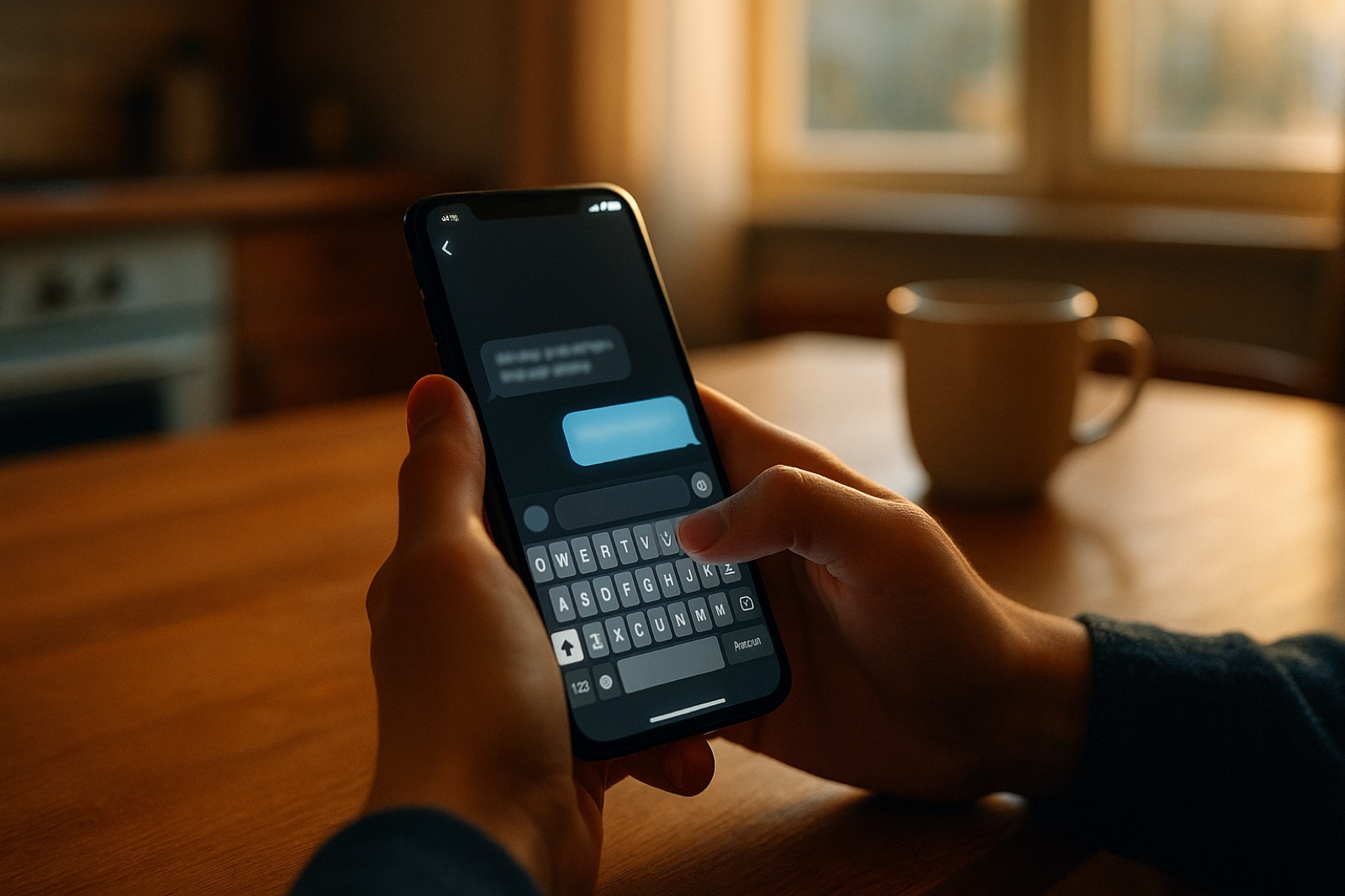
Somewhere in your phone right now is an app that will talk to you at 3 a.m. It will never get tired of you. It will never say the wrong thing, never cancel plans, never leave you on read. For millions of people who feel isolated, that has started to sound less like science fiction and more like a solution — a chatbot that’s always there, always kind, always yours.
So when researchers at the University of British Columbia set out to test whether an AI chatbot could actually ease loneliness, a lot of people expected the AI to win. It didn’t.
What the UBC Study Actually Found
Lead researcher Ruo-Ning Li and her team ran a randomized study with 296 first-semester college students — a group researchers already know is at high risk for loneliness, since it’s the moment people leave their hometown friends and family behind and have to start over. The study split students into groups: some spent time texting back and forth with an AI chatbot loneliness app is built around, and others were paired up to text with a real stranger, another student they’d never met.
Both groups had conversations. Both groups were told to just talk, get to know the other “person,” see where it went. Then researchers measured how lonely each group felt afterward.
The students who texted a real, unscripted human stranger came out feeling less lonely than the students who talked to the chatbot — even though the chatbot conversations were, on paper, more polished. The AI never fumbled a response. It never went quiet for twenty minutes because it was in class. It said the “right” thing almost every time. And it still didn’t work as well as an awkward, imperfect conversation with a real person neither of them had met before.
This isn’t the only research pointing that direction. Other 2026 research on AI companion apps has found similar cracks — chatbots marketed as a cure for isolation sometimes deepen it instead, quietly training people to expect less friction from every relationship, including the human ones.
Why a Text From a Stranger Beats a “Perfect” AI Response
On the surface this seems backwards. Shouldn’t the flawless conversation partner win? Researchers think the answer comes down to one thing the AI can never fake: the chatbot doesn’t need anything back from you.
A real stranger can be bored by you. They can be delighted by you. They can choose to keep talking, or not. That risk — the fact that a real person’s attention has to be earned and can be lost — is exactly what makes it mean something when they stay. Psychologists call part of this “mattering”: the felt sense that you matter to someone else, that your presence changes their experience, not just theirs changes yours. A chatbot has nothing to lose by talking to you, so it can never fully give you the feeling of mattering. It can only simulate the shape of a relationship, never the stakes of one.
That gap matters even more for people already struggling to connect. Adult friendship has been quietly getting harder to build for years — fewer shared spaces, more scheduling friction, more of daily life mediated by a screen instead of a room. An always-available AI can feel like it’s solving that problem. This study suggests it’s often just replacing the discomfort of reaching out to a real person with something that feels similar, but isn’t.
It’s worth noting how attached people can still get to these tools despite that gap. When one country recently restricted AI companion apps, users described real grief — mourning a relationship that, by every honest measure, had never been able to need them back.
An Old Idea, Long Before Any of This
Here’s the part that stops you for a second. This isn’t actually a new discovery about human beings. It’s one of the oldest ideas on record.
The very first book of the Bible opens with a strange line, right in the middle of describing a world God calls “good” over and over again. For the first time in the whole creation story, something is named as not good — and it isn’t sin, or suffering, or scarcity. It’s being alone. Before anything had gone wrong, the text says the one unfinished piece of a good world was a human being without another human being to be known by.
Three and a half thousand years later, a university lab ran an experiment to find out what actually eases loneliness, and the answer came back the same: not a flawless simulation of connection, but a real person, capable of choosing you back. Ancient wisdom didn’t have data. It just noticed something true about how people are built, and said it plainly. The data eventually caught up.
So What Do You Actually Do With That?
Probably not delete every app on your phone. AI tools aren’t the enemy here, and plenty of people use them for genuinely useful things. But if you’ve noticed yourself reaching for a chatbot instead of a person when the loneliness hits — worth sitting with why. Not out of guilt. Just curiosity. What would it cost to text an actual person today instead, even a small, low-stakes one? An old coworker. A cousin you haven’t talked to in months. Someone from a class who seemed interesting.
The study says the awkward version, the one where someone might not text back right away, is the one that actually works.
Try This Today
- Pick one real person — not a group chat, one person — and send a message with no agenda other than checking in.
- Resist the urge to perfect the message first. The study’s “winning” conversations weren’t polished. They were just real.
- If no one comes to mind, that’s information too — it might be time to widen the circle, not deepen the scroll.
Discussion Question
Do you think AI companion apps are filling a real gap in modern life, or quietly making the loneliness problem worse by making real connection feel optional? Drop your take in the comments — we’d genuinely like to know where you land on this one.
Share This
- “A UBC study just proved something wild: texting a total stranger beats talking to a ‘perfect’ AI chatbot for curing loneliness. The AI was never the problem being lonely — it just can’t need you back. 🧵” (bgodinspired.com)
- “Turns out the cure for loneliness isn’t a flawless chatbot response. It’s a real person who might not text back. New UBC study says the risk is the whole point.”
- “296 students. Two groups. One texted an AI, one texted a stranger. The humans won. Here’s why an imperfect real conversation beats a perfect fake one.”
Questions People Are Asking
Does texting an AI chatbot actually help with loneliness?
It can offer short-term comfort, but a 2026 University of British Columbia study found that texting a real, unfamiliar person reduced loneliness more than texting an AI chatbot did, even when the chatbot’s responses were more polished. Researchers believe this is because a real person’s attention has to be earned and can be withdrawn, which makes their presence feel meaningful in a way a chatbot’s constant availability cannot.
What was the UBC loneliness and AI chatbot study?
Researcher Ruo-Ning Li led a randomized study of 296 first-semester college students, a group especially prone to loneliness. Some students had text conversations with an AI chatbot; others were paired with a real stranger to text with. The group that talked to a real person reported lower loneliness afterward than the group that talked to the chatbot.
Why did a stranger beat an AI at reducing loneliness?
Researchers point to the concept of “mattering” — the sense that another person’s experience genuinely changes because of you. A chatbot has nothing to gain or lose from the conversation, so it can’t fully deliver that feeling. A real stranger, who could lose interest and doesn’t, gives the interaction real stakes.
Can AI companion apps make loneliness worse?
Some 2026 research suggests they can, particularly when they replace effortful human connection instead of supplementing it. Relying on an always-available AI can lower a person’s tolerance for the normal friction of building real relationships, making it feel even harder to reach out to actual people over time.
Is there an ancient text that already described this?
Yes — the opening chapters of Genesis describe a newly created, “good” world where the one thing named as not good is a human being without another human being to know and be known by. Long before modern loneliness research, this ancient idea pointed at the same conclusion: people are built for real, mutual relationship, not simulated companionship.