 0
0
 0
0
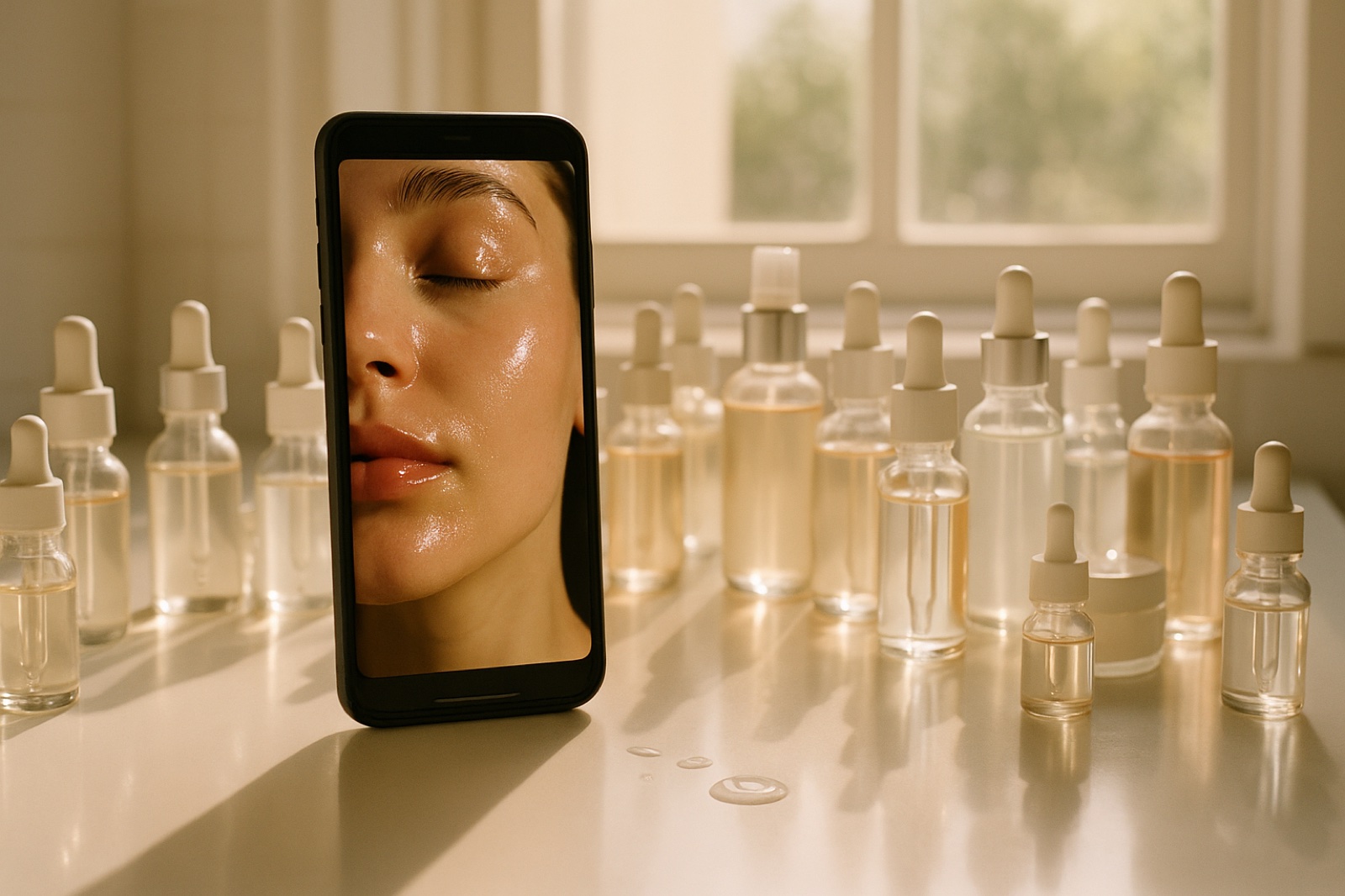
You have probably seen it. A face so smooth and shiny it looks like it is made of glass. Then a hand holds up a bottle. Then another. Then six more. “Do this every night,” the video says, “and you’ll wake up with glass skin.”
A team of skin doctors decided to check what those videos were really telling people. They watched the most popular glass skin videos on TikTok and scored every claim. What they found is worth knowing before you buy the next bottle.
Almost 95% of the videos contained at least one misleading claim. And not one of them was made by a dermatologist.
What Is Glass Skin?
Glass skin is a beauty goal that grew out of Korean skincare. The researchers in this study described it as skin that is “clear, smooth and deeply hydrated.” On social media it usually means more than that: no visible pores, no bumps, no marks, and a wet-looking glow that catches the light like a window.
The usual way to chase it is a long routine. Cleansers, toners, essences, serums, acids, creams, all layered on top of each other, often morning and night.
There is nothing wrong with wanting your skin to feel good. Caring for your body is a kind thing to do. The question this study asked is a different one: are the people teaching these routines telling the truth about them?
What Dermatologists Found in 38 Glass Skin Videos
The study was led by Dr. Maria Lúcia Paysano and presented at the European Academy of Dermatology and Venereology (EADV) Congress 2026. In May 2026 the team set up a brand-new TikTok account with no history, so the app could not tailor results to them. They searched five terms about Korean skincare and glass skin, took the top videos, and after removing ones that did not fit, studied 38 of them closely.
Here is what they found:
- Almost 95% had at least one misleading claim.
- 84% did not account for different skin types. One routine, offered to everyone.
- 45% pushed stacking lots of strong “active” ingredients without safety advice.
- 32% promised instant results.
- About 82% were made by influencers who were not doctors, 11% by beauty brands, and 8% by other beauty creators. None were made by dermatologists.
- Every one of the 38 was rated unreliable or less reliable, and none cited a source.
The missing safety advice may be the most striking part. In Dr. Paysano’s words: “Only one of the 38 videos mentioned irritation risk, only two addressed sun protection, none mentioned contact dermatitis risk and none recommended consulting a dermatologist.”
It is worth being honest about what this study is and is not. Thirty-eight videos is a small sample, and this was a conference presentation, not yet a full paper checked by other scientists. It does not prove every skincare video is wrong. It does show a clear pattern in the videos people are most likely to see.
What Happened to the People Who Followed Along
Here is the part most of the coverage skipped. A separate study shown at the same congress looked at the other end of the screen: real patients.
Doctors followed 94 people who came in with a new or worse skin problem after using products they had seen promoted on social media. The products most often involved were chemical exfoliants (the acids that peel off the top layer of skin), then retinoids, vitamin C serums, and niacinamide.
Two details stand out:
- Nearly half of these patients had copied a complete routine from social media, step by step.
- 63% were using more than three active ingredients at the same time.
The most common result was irritated, inflamed skin (irritant contact dermatitis). Others had acne break out or get worse, rosacea flare up, or dark marks left behind after the irritation. A small number had mild chemical burns.
Put the two studies side by side and the picture is plain. The videos rarely warn you. The people who trust them most completely are the ones who get hurt.
Why Someone Else’s Routine Can Hurt Your Skin
Skin is not one thing. Some skin is oily, some is dry, some is easily upset. Skin changes with age, weather, hormones, and medicine. A routine that works on one person’s face, under good lights, after good sleep, may be far too much for yours.
Your skin also has a job. Its outer layer is a barrier. It keeps water in and keeps irritants out. Strong acids and other actives work by changing that outer layer. A little can help. A lot, stacked together, every day, can wear that barrier down, and then skin gets red, tight, stingy, and spotty. As Dr. Paysano put it, following these routines without guidance “may contribute to irritation, over-exfoliation, acne flares or skin barrier disruption, particularly when multiple active ingredients are combined.”
That is the quiet irony of glass skin. Chasing a flawless surface too hard can damage the very surface you were trying to perfect.
What Real, Healthy Skin Actually Looks Like
Real skin has pores. Every person does. They are the openings that let oil and sweat reach the surface, and they are part of how skin stays healthy. Real skin has texture. It has small lines where it moves. It changes from week to week.
Much of what looks like glass on a phone is light, angle, a fresh layer of product, and sometimes a filter. You are comparing your face in a bathroom mirror to a face at its brightest second, chosen out of many takes.
If you have ever looked at your own skin after one of those videos and felt like something was wrong with you, that is worth noticing. Nothing was wrong with you. You were looking at a standard that skin was never built to meet. We wrote about a very different way of seeing worn and imperfect things in our piece on the meaning of wabi-sabi, the Japanese eye for beauty in what is simple and unfinished.
The Jar and What It Holds
There is an old image from an ancient letter that comes to mind here. The writer said people are like plain clay jars, the kind every household had. Not polished. Not see-through. Chipped at the edges, maybe. And yet the writer said these ordinary jars were made to carry a treasure, something from God placed inside them.
The point was never that the jar was ugly. The point was that nobody should mistake the jar for the treasure.
Glass skin asks your face to be the treasure. It asks the surface to be flawless and clear, so clear you can almost see through it. But the oldest wisdom about people says the most valuable thing about you was never on the surface. It is what you carry: the way you love, the way you notice people, the life inside the jar.
Actions to Take Before You Try a Viral Routine
- Be wary of “instant” and “for everyone.” The researchers specifically warned against content promising instant or universal results.
- Add one new product at a time. If your skin reacts, you will know which one did it.
- Test it small first. Try a new product on a small patch of skin for a few days before putting it all over your face.
- Don’t stack strong actives. More acids and serums at once is not more results. It is more risk.
- Protect your skin from the sun. Shade, a hat, and sunscreen if you can get it. This was missing from almost every video studied.
- Stop if it stings. Burning, peeling, or a new rash is your skin asking you to stop, not proof that it is working.
- Ask a professional if you can. If you already have a skin condition, the researchers advise talking to a dermatologist. If that isn’t possible where you live, a pharmacist or local clinic is a good place to start.
The same goes for what you breathe at home, by the way. Products that smell “clean” are not always gentle, as we found when researchers measured what scented cleaners release indoors.
The Mirror Tomorrow Morning
Tomorrow you will look in a mirror. You might see a pore, a mark, a dry patch. That is not a failure. That is skin, doing its job, protecting the person inside it.
Take care of it gently. Be choosy about who you let teach you. And remember that the face in the mirror is a jar, not the treasure. What you carry matters more than how the surface shines. If you want a picture of that, look at how the Japanese art of kintsugi puts gold right on the crack.
Glass Skin Q&A
What is glass skin?
Glass skin is a beauty goal that came from Korean skincare. It describes skin that looks clear, smooth, and deeply hydrated, often with a shiny, wet-looking glow. On social media it is usually chased with long routines of layered products like toners, essences, serums, and acids.
Are glass skin TikTok videos reliable?
Mostly not, according to a study presented at the EADV Congress 2026. Dermatologists reviewed 38 popular TikTok videos about Korean skincare and glass skin and found almost 95% contained at least one misleading claim. All 38 were rated unreliable or less reliable, none cited sources, and none were made by dermatologists. The sample was small, so it shows a pattern rather than proving every video is wrong.
Can viral skincare routines damage your skin?
They can. A separate study presented at the EADV Congress 2026 looked at 94 patients whose skin got worse after using products promoted on social media. Nearly half had copied a full routine from social media, and 63% were using more than three active ingredients at once. The most common problem was irritated, inflamed skin, followed by acne, rosacea flares, dark marks, and in a few cases mild chemical burns.
Is it normal to have visible pores?
Yes. Every person has pores. They are openings that let oil and sweat reach the skin’s surface and are part of healthy skin. Faces that look poreless online are usually shaped by lighting, camera angle, fresh product on the skin, or filters.
How can I try a new skincare routine safely?
Add one new product at a time, test it on a small patch of skin for a few days first, avoid stacking several strong active ingredients like acids and retinoids together, protect your skin from the sun, and stop if a product burns or causes a rash. People with an existing skin condition should ask a dermatologist, pharmacist, or local clinic before starting.
Discussion Question
Who should get to set the standard for what “good skin” looks like: doctors, influencers, or the people living in that skin? Tell us what you think in the comments below.
Share This
“Almost 95% of viral glass skin TikToks made a misleading claim. None were made by a dermatologist. None told viewers to see one. Read this before your next 8-step routine: https://bgodinspired.com/index.php/health-and-wellness/glass-skin-tiktok-misleading-claims/”
“I didn’t know nearly half the people hurt by viral skincare routines had copied the whole thing step by step. This one made me rethink my bathroom shelf. https://bgodinspired.com/index.php/health-and-wellness/glass-skin-tiktok-misleading-claims/”
“Real skin has pores. Real skin has texture. The face in the mirror is a jar, not the treasure. Worth a read: https://bgodinspired.com/index.php/health-and-wellness/glass-skin-tiktok-misleading-claims/”
Sources: EADV Congress 2026 press materials as reported by Medical Xpress and Dermatology Times.